



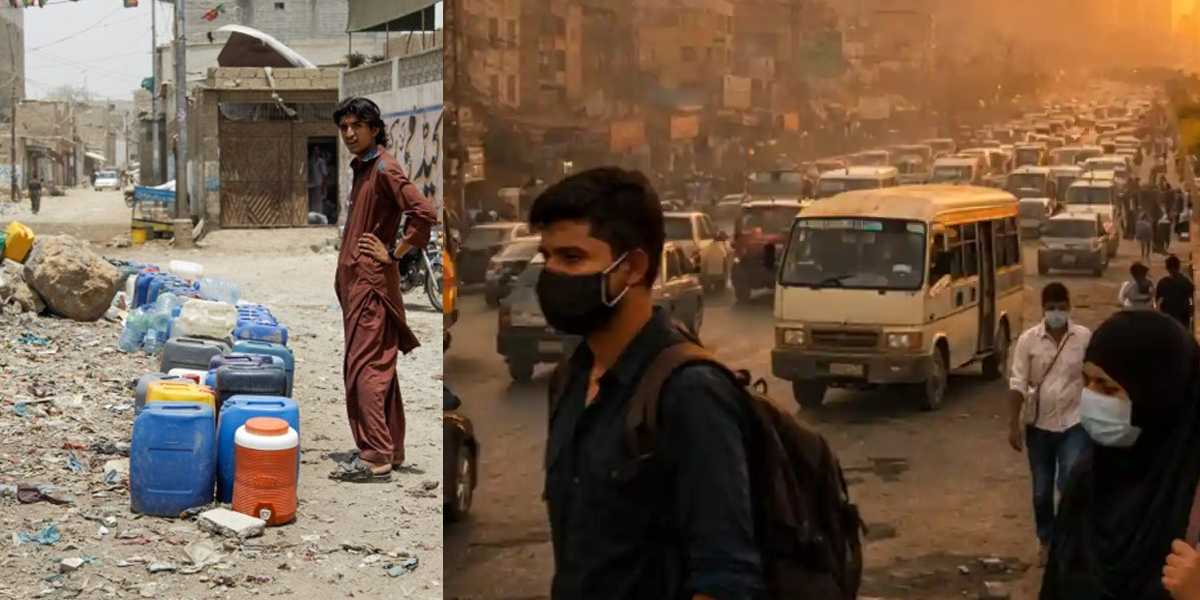
Karachi’s Transport Pollution, K-IV Failure, and the Making of a Heatwave Catastrophe
A Comprehensive Research Report on Air Quality, Climate Change, and Governance Failure
Author: Engineer Arshad H. Abbasi
Independent Energy, Water & Climate Change Expert
Preface by Imtiaz Gul, Executive Director, Centre for Research and Security Studies (CRSS)Edited by Engineer Musa Arshad Abbasi
Published by:
Centre for Research and Security Studies (CRSS)
Plot 14M, Ali Plaza, F-8 Markaz, Islamabad, 44000 | Tel: (051) 8314801
www.crss.pk
Report ID: CRSS-May 2026 AQ in Karachi | May 2026
Preface
By Imtiaz Gul, Executive Director, Centre for Research and Security Studies (CRSS), Islamabad
CRSS has always played a key role in disseminating rigorous, evidence-based reports on air quality — because the worst air quality is the mother of heatwaves and climate change. In particular, our earlier publication, The Dark Clouds of Pakistan: An Investigative Report on Air Pollution and Smog (2023), served as a reference document for policymakers, media, and civil society. The present report builds on that foundation, narrowing the focus to Karachi — Pakistan’s largest metropolis and economic heart — while widening the analytical lens to cover two decades of data, denial, and deterioration.
At CRSS, we understand that the relationship between poor air quality and climate change is not linear — it is a vicious cycle. Air pollution contains short-lived climate pollutants — such as black carbon and methane — as well as long-lived greenhouse gases. These substances trap heat, accelerate global warming, and alter weather patterns. In turn, higher temperatures intensify the photochemical formation of ground-level ozone, prolong smog episodes, and fuel more frequent and intense wildfires — all of which further degrade air quality. Karachi’s summer heatwaves, amplified by transport-generated NOx and CO, are a textbook example of this deadly feedback loop.
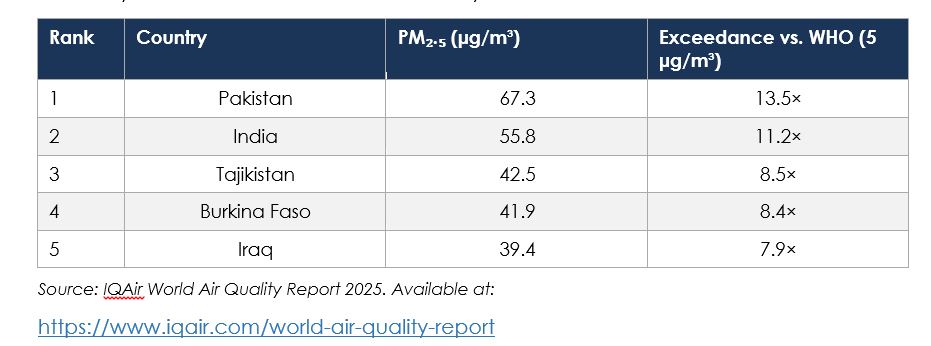
As of early 2026, according to the 2025 IQAir World Air Quality Report, Pakistan and Bangladesh are ranked as the most polluted countries on Earth based on average fine particulate matter (PM₂.₅) concentrations. Pakistan recorded 67.3 µg/m³ annual average PM₂.₅ — more than 13 times the WHO guideline of 5 µg/m³. Karachi recorded 45.9 µg/m³ — still nine times above the safe limit — translating into an estimated 22,000 premature deaths annually in Pakistan.
Two long-pending engineering failures stand out as emblematic of Karachi’s self-inflicted crisis. First, the K-IV Water Supply Project, conceived in 2002 to supply 650 MGD from Keenjhar Lake to Karachi via a 121-kilometre pipeline, remains incomplete in 2026, after 24 years of institutional neglect. Second, fuel adulteration — the criminal mixing of CO₂ with LPG cylinders and the contamination of petrol and diesel — continues unchecked. In February 2026 alone, CO₂-adulterated LPG cylinders killed at least 16 people in Karachi.
Author’s Note
Engineer Arshad H. Abbasi
I was born in the arms of the mountains. My village lies high in the hills of Murree, where nature was not something to be studied from reports or satellite images — it was life itself. Our home had two verandas: one opened toward the green slopes of Patriata Peak, while the other looked far across the horizon to the snow-covered crown of Apharwat Peak in the Pir Panjal range. Before I could even understand the world, those mountains were already teaching me silence, honesty, balance, and respect for nature.
Since childhood, I grew up beneath crystal-clear blue skies, among pine and deodar forests, flowing streams, cold winds, snow-covered peaks, and landscapes untouched by smoke or noise. Mountain ecosystems are fragile yet deeply alive — where every tree, slope, stream, and glacier forms part of a delicate environmental balance. Living there taught me that when nature is disturbed, it does not collapse immediately; it suffers slowly, silently, and painfully.
Later, when I became a professional engineer, I understood even more clearly that engineering is not merely about concrete, machinery, or infrastructure. True engineering is a responsibility toward humanity and the environment. Engineers hold the power either to destroy ecosystems through greed and negligence or to protect societies through honesty, science, and sustainable solutions.
Environmental engineering, air quality management, renewable energy systems, emission control technologies, and sustainable urban planning are not academic subjects to me — they are moral responsibilities. Engineers are meant to solve problems, not hide them. We are meant to reduce pollution, improve public health, and protect future generations through truth-based professional judgment.
Unfortunately, over the years, I witnessed something deeply painful.
When the Punjab government initiated the New Murree Project by cutting ancient conifer forests in Patriata, many highly qualified climate experts — including foreign-educated PhDs — publicly justified the destruction. At that moment, I realized that climate change and environmental protection had increasingly become industries for funding, consultancy, and personal careers rather than matters of ethics, responsibility, and truth.
I also observed the same pattern in Karachi. For years, donor-funded studies on Karachi’s climate change, air pollution, and urban environment were produced with impressive graphs, satellite imagery, colourful charts, and technical language. Yet most of these reports failed to identify the real causes of Karachi’s environmental collapse because the same institutions responsible for the crisis often sat on the governing boards of those studies. As a result, many reports became decoration pieces for conferences and offices rather than roadmaps for reform.
Sometimes, while reading such reports, I felt as if modern environmental experts had become like court historians of ancient kingdoms — writing only what rulers wished to hear.
Karachi continued to suffer while expensive consultancy reports prescribed sweet pills instead of real treatment. But throughout my professional journey, despite pressures, criticism, and difficulties, I made one commitment to myself: no matter the consequences, I would always present my honest professional opinion based on engineering principles, scientific evidence, and truth. Even if the sky falls or the earth breaks apart, professional integrity must not collapse.
This report is written with that same commitment. I have deliberately highlighted the root causes of Karachi’s worsening air quality, intensifying heatwaves, and rising temperatures — even if doing so may discomfort policymakers, regulators, institutions, consultants, or vested interests. Because unless the real causes are acknowledged, Karachi cannot heal.
This report establishes that Karachi’s environmental crisis is not accidental. It is the direct outcome of unchecked transport emissions, fuel adulteration, regulatory failure, uncontrolled urban sprawl, destruction of green spaces, and above all, the prolonged failure to complete the K-IV water supply project, which forced thousands of diesel water tankers onto the city’s roads every day, worsening pollution, traffic, road destruction, and urban heat accumulation.
Without addressing these structural failures, discussions on climate change, heatwaves, or air quality in Karachi will remain incomplete.
I strongly believe that this report should not be viewed merely as another environmental study. It should be treated as a medical prescription for a sick city — a diagnosis based on evidence, professional honesty, and scientific responsibility. Everything else is fiction, public relations, or temporary cosmetics. Pakistan does not lack intelligence, talent, or resources. What it lacks is the courage to honour unbiased, professional, and honest expertise over political convenience and consultancy culture. Until truth-based engineering and environmental professionalism are respected, the country will continue losing both its environment and its future while millions are spent on reports that solve nothing. Karachi today is not just battling pollution or heat. It is battling decades of silence, negligence, compromised professionalism, and unfinished promises.
If this report helps even slightly in forcing institutions to confront the truth, protect future generations, and restore dignity to scientific and engineering integrity, then my efforts will have been worthwhile.
Disclaimer
The views, findings, analysis, and conclusions expressed in this report are solely those of the author, Engineer Arshad H. Abbasi, who takes full personal and professional responsibility for its contents.
These views do not necessarily reflect the official position, policies, or opinions of the Center for Research and Security Studies (CRSS), its management, affiliates, or partners. CRSS bears no responsibility or liability for any statements, interpretations, or conclusions presented in this report.
Executive Summary
- This report presents a comprehensive scientific, environmental, and governance-based assessment of Karachi’s worsening air pollution, intensifying heatwaves, and rising urban temperatures over the last twenty-two years (2004–2026). Drawing upon findings from the PCSIR baseline assessment (2004), SEPA monitoring campaigns (2020/2024), the Pakistan Air Quality Initiative (PAQI) report Unveiling Karachi’s Air: A Scientific Foundation for a Clean Air City, The Friday Times policy critique (2026), and the International Journal for Social Sciences study on Urban Sprawl and Land-Use Transformation in Karachi (2000–2025), the report establishes that Karachi’s environmental collapse is primarily driven by three interconnected structural causes:
- The dominance of transport-sector emissions, the non-availability of piped water infrastructure due to the failure of the K-IV project, and Massive land-use change and uncontrolled urban expansion.
- Together, these factors have transformed Karachi into one of the world’s most environmentally stressed megacities, where air pollution, water scarcity, urban heat, and governance failures are no longer separate crises but parts of the same ecological emergency.
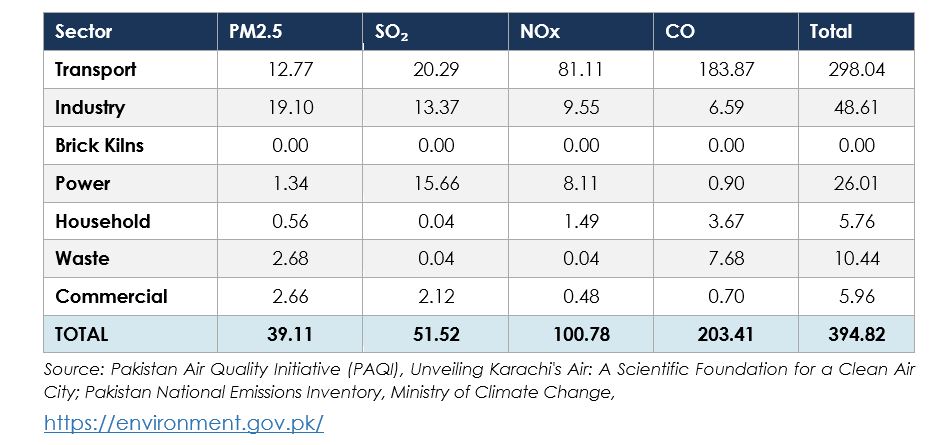
- Karachi’s atmosphere now carries an estimated annual pollution burden of 394.82 kilotons, including 39.11 kilotons of PM₂.₅, 51.52 kilotons of sulphur dioxide (SO₂), 100.78 kilotons of nitrogen oxides (NOx), and 203.41 kilotons of carbon monoxide (CO). Per capita PM₂.₅ emissions alone amount to approximately 1.86 kilograms annually per resident.
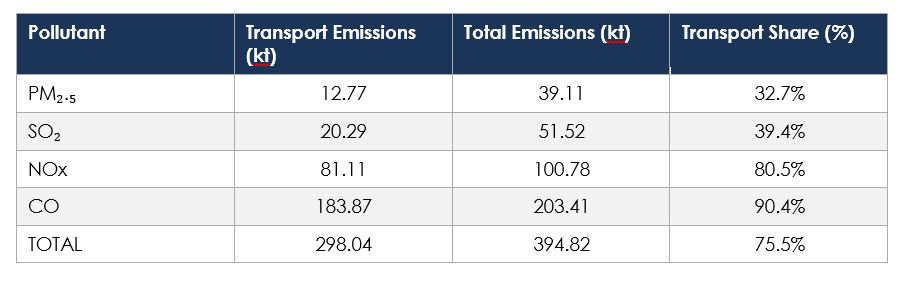
- The report identifies the transport sector as the single largest contributor to Karachi’s toxic air. Vehicular emissions account for 75.5% of the city’s total pollution burden, including 90.4% of all carbon monoxide emissions and 80.5% of nitrogen oxides. Transport also contributes 33% of particulate matter emissions, while industries contribute 49% of PM₂.₅ These emissions are primarily fueled by poor-quality diesel and petrol containing excessive sulphur, benzene, and other harmful chemicals.
- The widespread use of smuggled high-sulphur Iranian diesel, often sold openly at roadside stalls in densely populated areas, is identified as one of the principal drivers of Karachi’s smog and worsening air quality. Much of this fuel contains sulphur concentrations around 500ppm and remains far below Euro-5 or Euro-6 environmental standards. During combustion, this fuel releases large volumes of particulate matter, sulphur dioxide, nitrogen oxides, benzene, and carcinogenic volatile organic compounds, contributing to dense photochemical smog similar to the “Los Angeles smog” phenomenon.
- The report highlights that Pakistan has repeatedly failed to implement cleaner Euro-5 and Euro-6 fuel standards despite policy commitments dating back to 2008. Regulatory failures by OGRA and the Ministry of Petroleum allowed outdated refining systems to continue operating, even while neighboring countries such as India and China successfully transitioned to Euro-6 compliant fuels after confronting similar pollution crises.
- A major federal inquiry commission constituted in July 2020 further exposed extensive collusion between OGRA, HDIP, and oil marketing companies, enabling widespread fuel adulteration and regulatory breakdown. The commission reportedly recommended dissolving OGRA and HDIP because of ineffective oversight and their inability to prevent large-scale adulteration of petrol, diesel, and LPG. However, the recommendations were never implemented due to pressure from powerful adulteration networks and vested interests.
- The report also documents the deadly consequences of fuel adulteration. Toxic LPG adulterated with CO₂ and other unsafe substances caused multiple fatal incidents, including the deaths of at least 16 people in Karachi during February 2026 alone. Adulterated transport fuels similarly continue to expose millions of residents to toxic pollutants associated with respiratory disease, cardiovascular illness, cancer risks, and premature mortality.
- Karachi’s air quality deterioration has accelerated dramatically over the last two decades. In 2004, all five major gaseous pollutants remained within World Health Organization (WHO) safety limits, meaning Karachi was still broadly compliant with international air quality standards. However, by 2020, 51 out of 90 monitored locations exceeded Sindh Environmental Quality Standards for particulate matter. Korangi recorded PM₂.₅ levels of 385.98 µg/m³ — nearly 26 times higher than the WHO’s recommended 24-hour safe limit of 15 µg/m³. By 2025, Karachi’s annual PM₂.₅ concentration reached 45.9 µg/m³, more than nine times the WHO annual guideline of 5 µg/m³. Pakistan itself ranked as the world’s most polluted country in the 2025 IQAir World Air Quality Report.
- However, one of the report’s most significant findings is that Karachi’s worsening climate crisis is deeply linked to its unresolved water crisis — a connection that has largely remained absent from public discourse.
- The unfinished K-IV Water Supply Project is identified as one of the city’s most neglected environmental failures and a major hidden contributor to worsening air pollution and heatwaves. Originally designed to supply 260 million gallons of water daily (MGD) from Keenjhar Lake, K-IV has remained trapped in delays, redesigns, cost escalations, governance disputes, and allegations of corruption for nearly twenty-four years.
- The project’s estimated cost has escalated from approximately Rs25 billion to more than Rs253 billion, with projections approaching Rs300 billion after revised approvals. Transparency International Pakistan raised serious allegations regarding unjustified engineering changes, including replacing the original canal-based design with an expensive pressurized steel pipeline system without sufficient technical studies. The organization also questioned missing geotechnical investigations, exclusion of key infrastructure components, lack of proper hydraulic modeling, and potential irregularities in procurement and route redesign.
- Simultaneously, the Auditor General of Pakistan’s Audit Report (2024–25) massively reported financial irregularities associated with K-IV, including unrecovered contractor mobilization advances, non-imposition of liquidated damages despite severe delays, irregular payments and procurement violations.
- unauthorised expenditures, non-compliance with tax and stamp duty regulations, and repeated audit objections ignored over several years.
- Auditor General of Pakistan noted that despite years of political promises, progress on major project packages remained critically low, with several filtration and pumping components still below 30% completion levels as of 2024–25.
- The report establishes that the non-completion of K-IV has directly forced Karachi into dependence on an unregulated tanker economy involving more than 14,000 diesel-powered water tankers operating daily across the city. These tankers have become moving sources of particulate pollution, black carbon emissions, road destruction, traffic congestion, noise pollution, and fatal accidents.
- Critically, the report argues that this tanker dependency has become one of the hidden structural drivers of Karachi’s heatwaves and deteriorating air quality. Thousands of diesel tankers continuously circulating across densely populated urban corridors intensify fuel combustion, heat accumulation, traffic congestion, and road degradation, thereby amplifying the urban heat island effect.
- This report concludes that meaningful improvement in Karachi’s air quality and heatwave intensity cannot be achieved without urgently completing the K-IV project and restoring reliable piped water infrastructure. As long as the city remains dependent on diesel tanker operations for water access, efforts to reduce emissions and control urban heat will remain fundamentally ineffective.
- At the same time, Karachi’s rapid and unplanned urban expansion has dramatically intensified the city’s climate vulnerability. The study on urban sprawl reveals that informal built-up areas expanded from 144.31 km² in 2000 to 217.19 km² in 2020 and are projected to reach 317.63 km² by 2060. Total built-up area nearly tripled from approximately 729 km² in 2000 to 1,582 km² in 2020 and may exceed 2,050 km² by 2025.
- This urban expansion occurred largely at the expense of vegetation, agricultural land, barren open spaces, and water bodies. Vegetation and agricultural land declined from 580 km² to 200 km² — a net loss of approximately 380 km² — while barren land shrank from 820 km² to 390 km². Water bodies also reduced in size over the same period.
- The disappearance of green spaces and open land has severely weakened Karachi’s natural cooling systems and intensified the urban heat island effect, making the city increasingly vulnerable to extreme temperatures and prolonged heatwaves.
- This report ultimately concludes that Karachi’s worsening air pollution and rising temperatures are not accidental environmental trends but the direct result of failed governance, fuel adulteration, unchecked transport emissions, non-availability of piped water infrastructure, and destructive land-use transformation.
- Karachi’s tragedy is therefore not only environmental — it is institutional, political, and deeply human.
- It is visible in children breathing toxic air, families dying from adulterated fuel, citizens living without water, roads overwhelmed by deadly tankers, shrinking green spaces, and millions enduring unbearable heat in a city where corruption, negligence, and unfinished promises have transformed basic urban survival into a daily crisis.
2. Introduction and Background
2.1 Karachi: The City and Its Burdens
Karachi is Pakistan’s largest metropolitan city, the financial and industrial capital of the nation, and one of the world’s most populous urban agglomerations. With an official population of approximately 20.3 million based on the 2023 Digital Census — though independent estimates and civic planning discussions suggest the actual figure may exceed 30 to 35 million due to continuous internal migration — the city generates approximately 65% of Pakistan’s national revenue and hosts the country’s largest port, busiest airport, and densest concentration of industrial activity.
Situated on the Arabian Sea, Karachi occupies a flat and undulating plain with mountains to the west. Two rivers — the Malir and the Lyari — flow southward through the city and discharge into the Arabian Sea. The city’s administrative geography is fractured across multiple land-owning agencies: the central core around Clifton and the Defence Housing Authority (DHA) falls under federal-military control; the northeast district of Malir is provincially governed; and cooperative housing societies are regulated by the city government. This institutional fragmentation is itself a driver of unplanned urban sprawl and its attendant environmental consequences.
The topography and sea-breeze climatology that once made Karachi one of South Asia’s more temperate coastal cities have been progressively overridden by anthropogenic changes. The urban heat island effect — documented empirically by Baqa et al. (2022) in their study of spatiotemporal variations in Karachi’s urban thermal environment — has intensified as built-up area tripled over 25 years, while green cover collapsed by 65.5%.
2.2 The Heatwave-Air Quality Nexus
Since the catastrophic heatwave of June 2015, which claimed approximately 1,200 lives in Karachi alone, the city has experienced recurrent summer mortality events. The 2015 heatwave was widely attributed to extreme temperatures, low humidity, and power outages that disabled air conditioning. But this meteorological framing obscured a deeper chemical reality: Karachi’s air pollution is not merely a co-occurring problem with heatwaves — it is a causal amplifier of heatwave mortality.
Under Karachi’s intense summer sunlight, nitrogen oxides (NOx) and volatile organic compounds (VOCs) from vehicle exhausts undergo photochemical reactions to produce ground-level ozone (O₃). Carbon monoxide (CO) participates in catalytic ozone production cycles. Ground-level ozone is a potent respiratory irritant that compromises pulmonary function, reduces heat tolerance, and significantly increases cardiovascular and respiratory mortality during thermal stress events. This report establishes that Karachi’s air quality is not a consequence of heatwaves — it is a primary driver of their lethality.
2.3 A Three-Decade Urban Transformation
The spatial transformation of Karachi between 2000 and 2025 provides essential context for understanding the air quality crisis. Based on the International Journal for Social Sciences (Vol. 5, Issue 2(a), 2026) study on Urban Sprawl and Land-Use Transformation in Karachi (2000–2025): Satellite-Based Analysis and Impacts on Peri-Urban Areas, the built-up area of Karachi expanded from 729 km² in 2000 to an estimated 2,050 km² by 2025 — a 181% increase, or near-tripling of urban extent in 25 years.
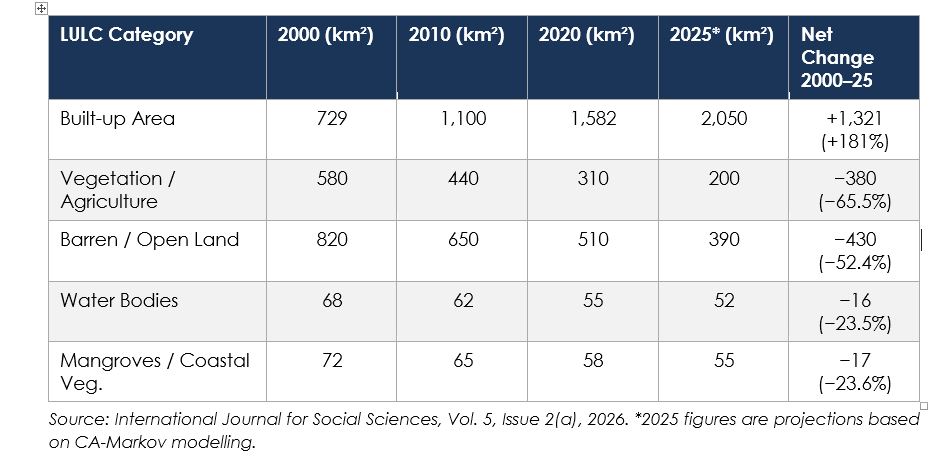
The loss of 380 km² of vegetation and agricultural land — 65.5% of Karachi’s 2000 green cover — has profound implications for urban heat regulation, particulate matter deposition, and atmospheric chemistry. Trees and vegetation function as natural air purifiers, removing PM₂.₅ through leaf surface deposition, and as natural coolants through evapotranspiration. Their systematic removal has eliminated both functions simultaneously. The expansion of bare, heated built-up surfaces — roads, rooftops, and concrete — has increased the urban heat island intensity and created more favourable conditions for photochemical ozone formation.
2.4 Purpose and Scope of This Report
This report has three primary objectives: to synthesise the available air quality data from 2004, 2020/2024, and 2026 into a coherent, longitudinal assessment; to quantify the magnitude and trajectory of Karachi’s air quality deterioration over two decades; and to identify the specific policy failures and engineering gaps that have enabled this deterioration — with the ultimate aim of providing an actionable blueprint for improved air quality and reduced heatwave mortality.
3. Methodology: Comparing Three Studies Across Two Decades
3.1 Source Studies
Study A (2004): Hashmi, D.R., Shaikh, G.H., & Usmani, T.H. — ‘Air Quality in the Atmosphere of Karachi City — An Overview.’ Journal of the Chemical Society of Pakistan, Vol. 27, No. 1, 2005. Field work conducted in winter 2004 at five stations. Available at: https://www.jcsp.org.pk/
Study B (2020/2024): Mughal, N.A., Gabol, W.A., Sabir, M.I., Halepoto, M.R., & Hussain, F.S. — ‘Towards Clean Air in Karachi: Scientific Framework and Imperative for a Comprehensive Real-Time Air Quality Monitoring System.’ SEPA, 2024. Paper No. 373. Field work conducted in November 2020 at 90+ locations.
Study C (2026): Arshad H Abbasi — ‘Karachi Is Not Dying from Heat — It Is Suffering from Policy Failure.’ The Friday Times, May 5, 2026. Analysis based on Pakistan National Emissions Inventory and IQAir 2025 data. PAQI report analyses data from 13 newly installed air quality monitors. Available at: https://thefridaytimes.com/
Reference Report (2023): Arshad H Abbasi — ‘The Dark Clouds of Pakistan: An Investigative Report on Air Pollution & Smog.’ CRSS, 2023. This report, authored by the same writer, established the national framework within which Karachi’s crisis is now situated.
ACADEMIA International Journal for Social Sciences, Volume 5, Issue 2(a), 2026, Urban Sprawl and Land-Use Transformation in Karachi (2000–2025): Satellite-Based
Pakistan Air Quality Initiative (PAQI), the report
Audit Report on Ministry of Water Resources Audit Year 2024-25
2025 IQAir World Air Quality Report
All four volumes of the Inquiry Commission to investigate the ineffectiveness of OGRA, the National Oil Regulator, and the Hydrocarbon Development Institute of Pakistan (HDIP).
Internal Reports of OGRA on adulteration in LPG, petrol, and diesel
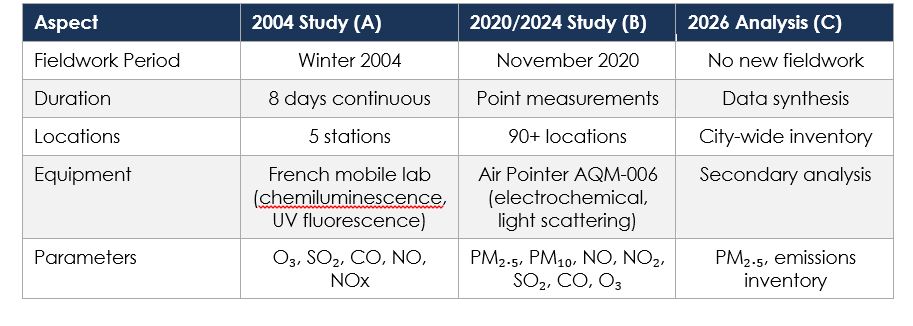
3.2 Methodological Comparison
 3.3 Limitations and Caveats
The 2004 study did not measure particulate matter (PM₂.₅ or PM₁₀), making direct comparison with later studies incomplete for the most health-critical pollutants. The 2020 study was conducted in a single month (November), which may underestimate summer concentrations when photochemical ozone production is highest. The 2026 emissions inventory represents annual totals rather than real-time monitoring data. These limitations are noted where relevant but do not fundamentally compromise the longitudinal conclusions.
4. The 2004 Baseline: A City in Compliance
4.1 Measurement Context
The 2004 air quality assessment by Hashmi, Shaikh, and Usmani constitutes the only available baseline measurement of Karachi’s atmospheric gaseous pollutants prior to the current crisis. Conducted over eight continuous days in winter 2004 using a French mobile laboratory equipped with chemiluminescence detectors (for NO and NOx), UV fluorescence (for SO₂), and non-dispersive infrared (for CO), the study measured concentrations at five strategic stations representing industrial, commercial, residential, and traffic-intensive zones.
4.2 Key Findings
The critical finding of the 2004 study is that all five measured gaseous pollutants — SO₂, CO, NO, NOx, and O₃ — were within WHO guidelines and Pakistani National Environmental Quality Standards (NEQS) at all five monitoring stations. The highest recorded values were:
- SO₂: Maximum 53 µg/m³ (WHO 24-hour guideline: 125 µg/m³) — well within limits.
- CO: Maximum 4.2 mg/m³ (WHO 8-hour guideline: 10 mg/m³) — well within limits.
- NO₂: Maximum 87 µg/m³ (WHO annual guideline: 40 µg/m³) — approaching but not exceeding annual limit.
- O₃: Maximum 98 µg/m³ (WHO 8-hour guideline: 100 µg/m³) — marginally below limit.
Crucially, the 2004 study did not measure particulate matter. This omission reflects the scientific and regulatory thinking of the time, when gaseous pollutants were considered the primary air quality concern. The PM₂.₅ crisis that would emerge over the following two decades was entirely unmeasured and unrecognised.
4.3 Significance of the Baseline
The 2004 compliance data is not merely historical trivia. It establishes that Karachi’s air quality crisis is entirely anthropogenic in origin, manufactured over two decades by specific, identifiable policy failures. The city was not always in violation of health standards. It became so through the compounding failures documented in this report: unchecked vehicular fleet growth, K-IV non-completion, fuel adulteration, and regulatory paralysis. This is a crisis of governance, not geography.
5. The 2020/2024 Assessment: The Emergence of the Particulate Matter Crisis
5.1 Study Design and Coverage
The 2020/2024 SEPA study by Mughal et al. represents the most geographically comprehensive air quality assessment ever conducted in Karachi. Using the Air Pointer AQM-006 portable monitoring instrument, which measures PM₂.₅, PM₁₀, NO, NO₂, SO₂, CO, and O₃ simultaneously via electrochemical sensors and light scattering, the team conducted point measurements at more than 90 locations across all major districts of the city in November 2020. The resulting dataset, published in 2024, forms the empirical foundation for the current crisis diagnosis.
5.2 The Scale of Non-Compliance
Of the 90+ monitored locations, 51 — more than half — exceeded SEQS standards for particulate matter. This is a stark contrast with the 100% compliance recorded for gaseous pollutants in 2004. The geographic spread of exceedances was city-wide, not confined to industrial zones. This finding is critical: it demonstrates that the air quality crisis had, by 2020, penetrated residential, commercial, and coastal areas previously considered relatively clean.
5.3 Peak Concentrations: The Korangi Catastrophe
The most alarming single finding of the 2020 study was the peak PM₂.₅ concentration recorded at Korangi Industrial Area: 385.98 µg/m³. This figure is:
- 7 times the WHO 24-hour PM₂.₅ guideline of 15 µg/m³.
- 4 times the SEQS 24-hour limit of 60 µg/m³.
- More than 8 times the annual average PM₂.₅ concentration recorded for Karachi by IQAir in 2025.
Korangi is Karachi’s most intensively industrialised district, housing chemical, pharmaceutical, textile, leather, and light engineering industries alongside densely populated residential neighbourhoods. The co-location of industrial sources with residential populations — itself a product of unplanned urban expansion — creates acute exposure scenarios that have no parallel in compliant cities.
The peak PM₁₀ concentration was even higher: 801.2 µg/m³, recorded in the same industrial corridor. Both figures represent public health emergencies by any standard.
5.4 Hotspot Districts
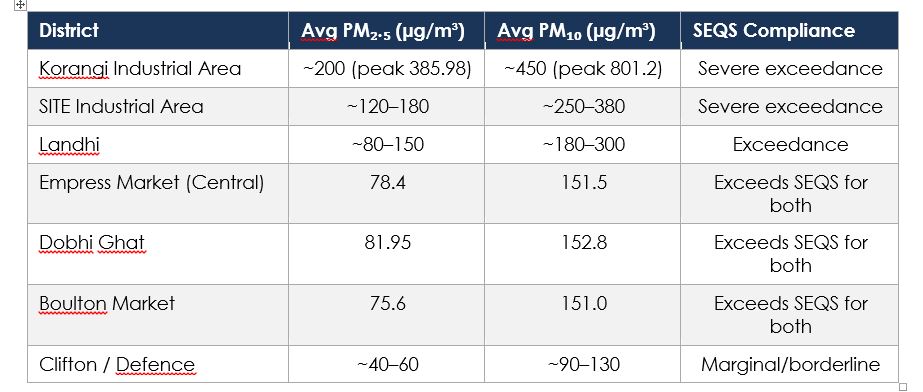 The data from Empress Market, Dobhi Ghat, and Boulton Market is particularly significant: these are commercial, not industrial, zones. Their high PM₂.₅ levels demonstrate that vehicular traffic, open burning, and market activities — including the diesel tanker fleet supplying water to unserved households — are major independent contributors to Karachi’s particulate burden.
6. The 2026 Policy Diagnosis: Transport as the Dominant Source
6.1 Pakistan National Emissions Inventory for Karachi
The 2026 analysis, published by Engineer Arshad H. Abbasi in The Friday Times on May 5, 2026, draws upon Pakistan’s official National Emissions Inventory for Karachi — a document that had been produced, presented, and then effectively ignored by the Ministry of Climate Change. The inventory provides the single most important statistical finding in this report: the transport sector accounts for 75.5% of Karachi’s total pollution burden across all sectors and all four key pollutants.
6.2 Emissions Inventory — Full Sectoral Breakdown
The following table presents the complete emissions inventory for Karachi, as published in the PAQI report Unveiling Karachi’s Air: A Scientific Foundation for a Clean Air City. All values are in kilotons (kt) per year.
6.3 Transport Sector Dominance by Pollutant
6.4 The Photochemical Amplification Mechanism
The dominance of transport emissions — particularly NOx (80.5% from transport) and CO (90.4% from transport) — is not merely a static pollution burden. Under Karachi’s intense summer sunlight, these precursor pollutants undergo a cascade of photochemical reactions with profound public health consequences:
NOx + VOCs + sunlight → O₃ (ground-level ozone)
CO + OH• → HO₂• + CO₂ → catalytic ozone production cycle
The rate of ozone formation rises exponentially with temperature. In Karachi’s summer months (May–August), when ambient temperatures routinely exceed 38°C and solar irradiance is near its annual peak, the photochemical reaction rates are at their highest. Transport emissions thus amplify heatwave mortality through a precise mechanism: they convert thermal stress into simultaneous respiratory distress, reducing the body’s capacity to thermoregulate while simultaneously impairing pulmonary and cardiovascular function.
This is the chemical explanation for why Karachi’s heatwaves are increasingly lethal beyond what temperature records alone would predict: the city’s air is saturated with the photochemical precursors of ozone, generated overwhelmingly by its ageing, unregulated vehicle fleet and its adulterated fuel supply.
7. The K-IV Water Project Failure and Its Pollution Link
7.1 Project Background and History
The Greater Karachi Bulk Water Supply Scheme (K-IV) was conceived in 2002 with a singular purpose: to address Karachi’s chronic and worsening water shortage by drawing 650 million gallons per day (MGD) from Keenjhar Lake — Pakistan’s largest freshwater lake — through a 120 to 121-kilometre pipeline to the city. The project was formally approved in 2011 at an estimated cost of Rs 25.5 billion. In 2026, it remains incomplete.
The cost has escalated to an estimated Rs 150–191 billion — six to seven times the original estimate. The timeline has stretched to 24 years and counting. No comparable engineering project in Pakistani history has endured such a prolonged gestation without completion. The project’s failure is not an engineering problem. It is a governance problem, sustained by institutional fragmentation, political interference, contractual disputes, and the deliberate inaction of parties who profit from the status quo.
7.2 Comparative Infrastructure Timelines
The following comparison contextualises the K-IV failure within historical infrastructure benchmarks, demonstrating that the obstacles cited are wholly disproportionate to the challenge:
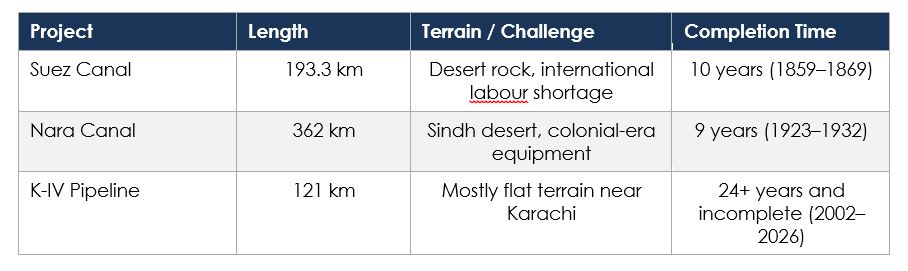
The Suez Canal — 193 km through desert rock, completed with 19th-century technology in 10 years — renders the K-IV failure inexcusable on any technical grounds. The Nara Canal, a 362-km irrigation conduit through the Sindh desert completed in 9 years with colonial-era equipment, provides a second indicting precedent within Pakistan’s own history.
7.3 The Water Tanker Fleet: A Mobile Pollution Source
The direct consequence of K-IV’s non-completion is that approximately 50% of Karachi’s 23 million residents — some 10–12 million people — lack consistent access to piped water. Access to piped water in Karachi is approximately 50%, with estimates suggesting that nearly half of the city’s households lack a direct connection. Even for those connected, the service is often unreliable and insufficient, with water typically available for only three hours a day, three days a week on average.
In addition, approximately 35% to 40% of the piped water supply is lost due to leakages and theft within the distribution network — a wastage rate that compounds the shortage and further inflates the demand serviced by tankers.
To fill this gap, an estimated 10,000 to 12,000 private diesel-powered water tankers operate across Karachi daily. These vehicles are predominantly old, unregulated, and maintained to no emissions standard. Their collective contribution to Karachi’s air quality crisis is substantial and directly attributable to K-IV’s incompleteness.
7.4 Estimated Annual Tanker Fleet Emissions
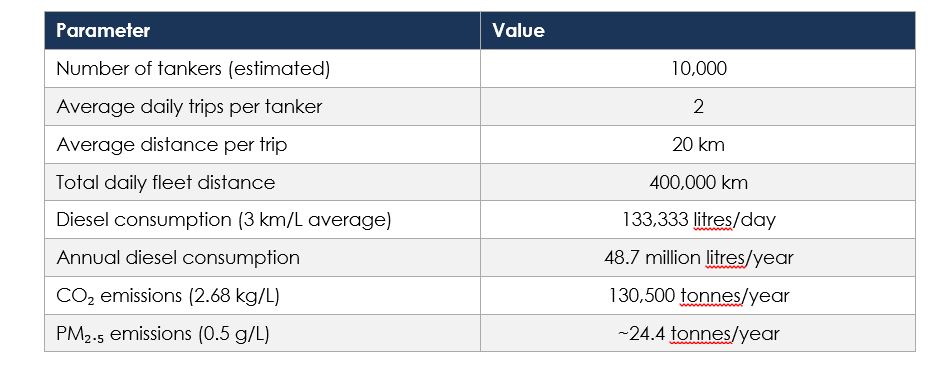
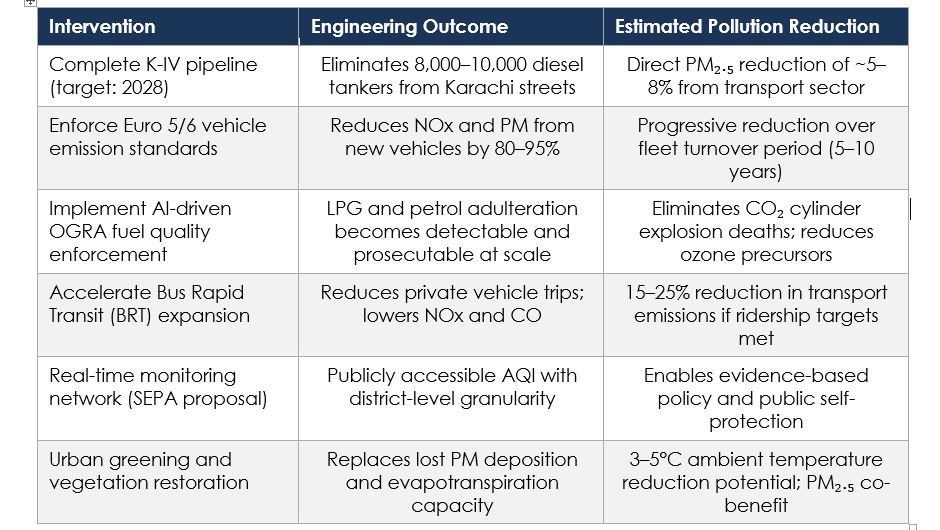
Completing K-IV would eliminate 8,000 to 10,000 diesel tankers from Karachi streets — a direct, measurable, and permanent reduction in transport-related PM₂.₅ and NOx emissions. No vehicle regulation, no fuel quality standard, and no public health campaign can replicate the pollution reduction achievable by the simple completion of a water pipeline that was designed 24 years ago.
8. Fuel Adulteration: The Criminal Chemistry of Karachi’s Air
8.1 LPG Adulteration with CO₂: An Invisible Killer
The Oil and Gas Regulatory Authority (OGRA) was established with a mandate to regulate Pakistan’s oil and gas sector, ensuring fuel quality, consumer safety, and environmental compliance. In practice, OGRA has presided over — and, critics argue, enabled through negligence — one of the most dangerous forms of fuel fraud in the country’s history: the systematic adulteration of LPG cylinders with carbon dioxide (CO₂).
CO₂ is denser and cheaper than liquefied petroleum gas (LPG), which is primarily propane and butane. Unscrupulous suppliers inject CO₂ into LPG cylinders to increase their weight — the basis on which they are sold — without providing the corresponding energy content. The consequences are threefold: consumers are defrauded of fuel; the resulting mixture burns incompletely, producing higher carbon monoxide (CO) emissions and unburned hydrocarbons; and the CO₂-LPG mixture creates unstable high-pressure cylinders with a dramatically elevated risk of explosion.
In February 2026 alone, CO₂-adulterated LPG cylinder explosions killed at least 16 people in Karachi. The Senate of Pakistan has taken formal notice of LPG adulteration multiple times. Yet the responsible OGRA member received a four-year extension of tenure — a fact that requires no further commentary on the state of regulatory accountability in Pakistan.
Environmental Consequences of LPG Adulteration
- Incomplete combustion of CO₂-adulterated LPG produces elevated CO emissions, directly adding to Karachi’s CO burden (already at 203.41 kt/year total).
- Direct CO₂ release during explosions or venting constitutes a greenhouse gas emission without any corresponding energy benefit.
- The increased cylinder handling risks — and the resulting replacement of exploded cylinders — generate additional logistics traffic, adding diesel emissions to the city’s air burden.
- Households forced to use adulterated LPG experience longer cooking times and higher fuel consumption for equivalent energy output, compounding exposure and cost.
8.2 Petrol and Diesel Adulteration: Aliphatic Hydrocarbon Solvents
The adulteration of petrol and diesel fuel is a parallel crisis operating through a different but equally damaging chemical mechanism. Raids by enforcement agencies have repeatedly seized consignments of aliphatic hydrocarbon solvent — a chemical generally used in the manufacturing of paints and industrial coatings — being mixed with petrol and diesel for retail sale. This solvent is sold at approximately Rs 100 per litre cheaper than petrol, making the adulteration highly profitable.
The chemical consequences of aliphatic hydrocarbon solvent adulteration are severe:
- Aliphatic solvents have different combustion characteristics from petrol, producing higher emissions of unburned hydrocarbons (UHCs) and volatile organic compounds (VOCs) — key precursors of ground-level ozone.
- The solvent’s lower octane rating causes engine knock and incomplete combustion, increasing PM and CO emissions.
- Vehicle engines running on adulterated fuel suffer accelerated wear, increasing the frequency of mechanical breakdowns and uncontrolled emissions from malfunctioning systems.
- The VOC emissions from solvent-adulterated petrol react with transport-sector NOx under summer sunlight to produce ozone at rates significantly higher than those predicted from clean fuel combustion.
OGRA’s role in enabling this adulteration is, again, one of regulatory failure. Random fuel quality testing at petrol stations and depots — a basic regulatory function — is conducted so infrequently and so non-randomly that it provides no meaningful deterrent. The result is a market in which adulterated fuel is the norm, not the exception, in the lower-income fuel supply chain that serves the majority of Karachi’s vehicle fleet.
8.3 Smuggled Petrol and Diesel: The Sulphur Catastrophe
A third category of fuel contamination operates at the border: the influx of smuggled petrol and diesel from Iran and Afghanistan, both of which permit fuel with dramatically higher sulphur content than Pakistan’s own (already permissive) standards. Iranian smuggled diesel, in particular, is estimated to contain sulphur concentrations of 5,000 to 10,000 parts per million (ppm) — compared to the 500 ppm limit in Pakistan’s official SEQS and the 10 ppm limit in Euro 6 standards.
Sulphur in fuel combustion produces sulphur dioxide (SO₂). Karachi’s emissions inventory shows 51.52 kt/year of SO₂, of which the transport sector contributes 39.4% — a proportionately high figure for a sector not typically considered a major SO₂ source in countries with clean fuel standards. This elevated transport SO₂ contribution is directly attributable to sulphur-contaminated fuel, both from domestic adulteration and from smuggled imports.
In the atmosphere, SO₂ undergoes further reactions:
- SO₂ + OH → H₂SO₄ (sulphuric acid aerosol) — contributing to secondary PM₂.₅ formation.
- SO₂ is a major respiratory irritant in its own right, causing bronchospasm and exacerbating asthma.
- Sulphate aerosols scatter solar radiation, contributing to regional haze and reducing visibility.
- Long-range transport of SO₂ and sulphate aerosols affects air quality in surrounding regions, including Karachi’s peri-urban and coastal zones.
The scale of smuggled fuel penetration into Pakistan’s transport fuel market has never been comprehensively quantified, but anecdotal and enforcement data consistently suggest it is substantial — particularly in Balochistan and Karachi’s commercial transport sector, where price differentials make smuggled fuel economically irresistible to fleet operators.
9. Global Context: Pakistan in the 2025 IQAir Rankings
9.1 Pakistan: The World’s Most Polluted Country
The 2025 IQAir World Air Quality Report — covering 9,446 cities across 143 countries — ranked Pakistan as the most polluted country on Earth by average PM₂.₅ concentration. This ranking represents a catastrophic indictment of two decades of air quality governance and places Pakistan alongside Bangladesh at the top of a global pollution hierarchy that claims millions of lives annually.
9.2 Pakistani Cities in Comparative Perspective
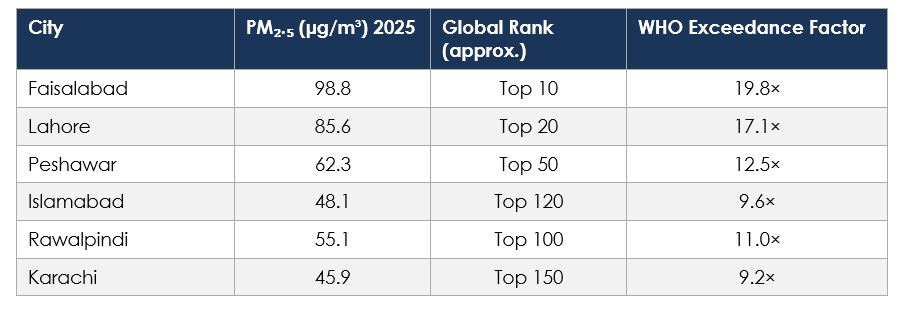
Karachi’s position as the least polluted major Pakistani city — at 45.9 µg/m³, still 9.2 times the WHO limit — is cold comfort. That a city of 20–35 million people, on a coastal site with natural sea breeze dispersion, records PM₂.₅ nine times the safe limit is a measure not of success but of the scale of the challenge.
An Ipsos survey conducted in November 2024 found that 70% of all Pakistanis report health issues related to smog and air pollution exposure. The IQAir report estimates that Pakistan’s air quality crisis claims approximately 22,000 lives annually from ambient air pollution exposure — a figure that translates to approximately 60 preventable deaths every single day.
10. Urban Sprawl, Heat Islands, and the Loss of Natural Buffering
10.1 The Spatial Explosion of Karachi
The International Journal for Social Sciences (Volume 5, Issue 2(a), 2026) study on Urban Sprawl and Land-Use Transformation in Karachi (2000–2025) provides satellite-based evidence of a spatial transformation that has fundamentally altered the city’s atmospheric conditions. Using supervised classification of multi-temporal Landsat satellite images with overall classification accuracies of 87.4% (2000), 85.9% (2010), and 86.8% (2020) — and kappa coefficients of 0.83 to 0.85 representing good to very good classification accuracy — the study documents changes that are unambiguous in their direction and alarming in their magnitude.
The built-up area of Karachi expanded from 729 km² in 2000 to an estimated 2,050 km² by 2025 — a 181% increase representing a near-tripling of urban extent in 25 years, at an average annual growth rate of 4.7%. The largest conversion episodes occurred in the 2010–2020 period: 310 km² of barren land and 130 km² of vegetation were converted to built-up use in a single decade.
CA-Markov simulation projections by Baqa et al. (2021), published in MDPI Land, project a further expansion of built-up land from 584.78 km² in 2020 to 652.59 km² in 2030. Informal settlement growth has been separately tracked: informal built-up area grew from 144.31 km² in 2000 to 217.19 km² in 2020 — an increase of 72.88 km² — with projections of 317.63 km² by 2060.
10.2 Green Cover Collapse and Its Atmospheric Consequences
The loss of 380 km² of vegetation and agricultural land — 65.5% of Karachi’s 2000 green cover — is not merely an aesthetic or ecological loss. It represents the systematic dismantling of the city’s natural air quality management infrastructure. Vegetation performs multiple atmospheric functions simultaneously:
- Particulate matter deposition: Leaf surfaces capture PM₂.₅ and PM₁₀ through impaction and diffusion. A mature tree can remove between 1.5 and 7.0 kg of particulate matter per year depending on species, leaf area index, and local PM concentrations.
- Evapotranspiration cooling: Vegetation releases water vapour, reducing surface temperatures by 2–8°C in urban environments. The loss of 380 km² of vegetated cover translates to a measurable increase in urban heat island intensity.
- VOC sequestration: Some tree species oxidise ground-level ozone and sequester NOx, directly reducing photochemical ozone formation rates.
- Wind buffering: Vegetation reduces wind-driven resuspension of road dust and bare-soil particles — a significant contributor to PM₁₀ in Karachi’s arid urban environment.
The mangrove ecosystems along Karachi’s coastline — reduced from 72 km² in 2000 to 55 km² in 2025 — provide an additional buffering function. Coastal mangroves moderate sea breezes and provide particulate deposition surfaces for marine and coastal aerosols. Their loss reduces the natural ventilation and cleansing capacity of Karachi’s coastal geography.
10.3 The Urban Heat Island Effect
The study by Baqa et al. (2022) on spatiotemporal variations in Karachi’s urban thermal environment confirmed a positive association between built-up area expansion and land surface temperature rise. As concrete, asphalt, and rooftop surfaces replace vegetated and barren land, the city’s surface energy balance shifts: more solar energy is absorbed and re-emitted as longwave radiation (heat), less is consumed in evapotranspiration. The result is systematically higher ambient temperatures in urbanised areas compared to surrounding rural zones — the urban heat island effect.
In Karachi, this effect is compounded by the city’s industrial heat output, waste heat from air conditioning systems, and reduced wind penetration in densely built informal settlements. The urban heat island effectively creates a warmer background temperature against which heatwave events are superimposed — raising the mortality threshold and extending the duration of lethal heat exposure.
11. Policy Malpractice: Reading but Ignoring the Data
11.1 The Diagnostic Analogy
When a physician orders a full blood panel and then writes a prescription without reading the results, that constitutes medical malpractice. When a ministry commissions a comprehensive emissions inventory — one that reveals the transport sector’s 75.5% share of total pollution — and then produces heatwave response documents that speak exclusively of meteorological factors (high temperatures, low humidity, stagnant air masses) without once referencing the emissions data, that constitutes environmental policy malpractice of a different order — one that costs not individual patients but entire urban populations.
11.2 The Emissions Inventory That Was Never Read
Pakistan’s National Emissions Inventory for Karachi exists. It has been formally prepared and presented. It reveals that transport contributes 75.5% of total emissions; that 90.4% of all carbon monoxide in Karachi’s atmosphere comes from the transport sector; and that 80.5% of all nitrogen oxides — the primary precursor of photochemical ozone — come from transport. This document has never, in any serious policy output from the Ministry of Climate Change, been directly confronted and acted upon.
The PAQI report — Unveiling Karachi’s Air: A Scientific Foundation for a Clean Air City — was prepared with the explicit intent of providing a scientific foundation for clean air policy. The Pakistan Air Quality Initiative installed 13 new air quality monitors across the city, establishing the first real-time monitoring network in Karachi’s history. Experts stress the need for more scientific efforts to monitor pollution and its effects. Yet as of May 2026, the policy response has consisted primarily of seasonal heatwave advisories, public education campaigns, and the establishment of additional study committees.
11.3 OGRA’s Regulatory Failure
The Oil and Gas Regulatory Authority (OGRA) bears specific, documented responsibility for two of the four primary pollution drivers identified in this report. On LPG adulteration: the systematic mixing of CO₂ into LPG cylinders — a practice so widespread that it caused 16 deaths in a single month in February 2026 — has occurred under OGRA’s regulatory watch. The Senate of Pakistan has raised the issue formally and repeatedly. The responsible OGRA member received a four-year extension. This sequence of events — regulatory failure, public mortality, political consequence-free continuation — defines what systemic institutional corruption looks like in environmental governance terms.
On petrol and diesel adulteration: OGRA’s mandate includes ensuring fuel quality standards compliance across the fuel supply chain. The systematic availability of aliphatic hydrocarbon solvent-adulterated petrol and high-sulphur smuggled diesel at retail outlets throughout Karachi is a direct indictment of the frequency, rigour, and independence of OGRA’s enforcement operations. No regulator conducting genuine random testing at meaningful scale could permit this level of contamination to persist.
11.4 The K-IV Accountability Gap
The Greater Karachi Bulk Water Supply Scheme (K-IV) has passed through the oversight of multiple federal and provincial administrations, multiple contractors, multiple cost revisions — from Rs 25.5 billion to Rs 150–191 billion — and multiple completion deadlines, none of which have been met. The project was approved in 2011. Construction contracts have been signed, disputed, cancelled, and re-signed. No individual, no institution, and no political actor has been held accountable for the 24-year failure to deliver 121 kilometres of water pipeline in terrain described, in engineering assessments, as ‘mostly flat.’
The consequence of this accountability vacuum is 10,000 to 12,000 diesel tankers on Karachi’s streets — mobile pollution sources whose entire reason for existence is the failure to complete infrastructure conceived before most of their drivers were born.
12. Direct Comparative Analysis: 2004 vs. 2020 vs. 2026
12.1 Core Indicators — Three-Period Comparison
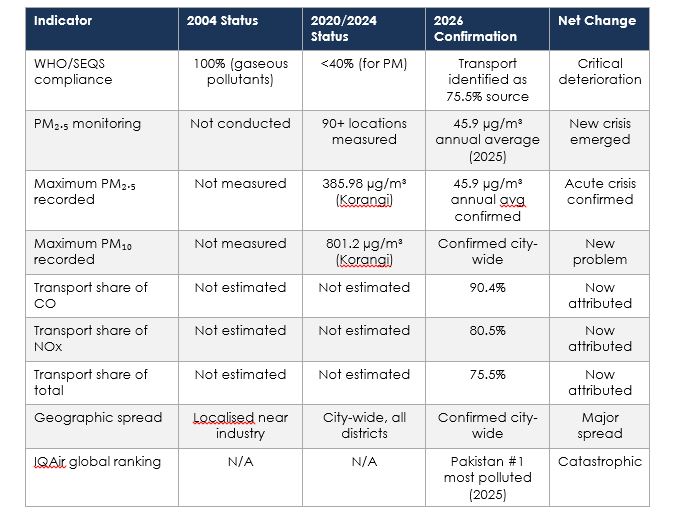
12.2 Temporal Trend Analysis
2004 → 2020 (16 years)
- Emergence of particulate matter as the dominant air quality crisis — unmeasured and unrecognised in 2004.
- Geographic spread from industrial zones to entire city, including commercial and residential areas.
- Compliance eroded from 100% (for gaseous pollutants) to majority violation across 90+ monitored locations.
- Per capita PM₂.₅ emissions reached approximately 1.86 kg/year by 2020.
2020 → 2026 (6 years)
- Causal attribution refined to transport sector: 75.5% of total pollution.
- Pakistan achieved global #1 most polluted country ranking in 2025 IQAir report.
- K-IV remained incomplete — 24 years after conception.
- LPG adulteration deaths in Karachi: at least 16 in February 2026 alone.
- PAQI installed 13 real-time air quality monitors — first systematic network in Karachi’s history.
12.3 The Attribution Revolution
The most significant development between 2020 and 2026 is not a change in measured concentrations but a change in causal understanding. The 2026 analysis provides the causal link previously missing from public discourse: Karachi’s air quality crisis is primarily a transport-sector crisis. This is established not by opinion or modelling inference but by Pakistan’s own official emissions inventory. Transport: 75.5%. NOx from transport: 80.5%. CO from transport: 90.4%. These are the address of the problem, written in plain numbers, publicly available to any institution willing to read them.
13. Health Burden: The Epidemiology of Karachi’s Air Quality Crisis
13.1 Premature Mortality
The IQAir 2025 World Air Quality Report estimates that Pakistan’s air quality crisis causes approximately 22,000 premature deaths annually from ambient air pollution exposure. Karachi, as Pakistan’s largest city and the one with the highest absolute population at risk, bears a disproportionate share of this burden. Even at its relatively lower PM₂.₅ of 45.9 µg/m³ compared to Lahore or Faisalabad, Karachi’s total exposed population — potentially 30–35 million — generates an extremely large absolute health burden.
The Health Effects Institute’s State of Global Air 2020 report places Pakistan among the countries with the highest attributable burden of disease from PM₂.₅ exposure. Conditions with the strongest dose-response relationship to PM₂.₅ include:
- Ischaemic heart disease and stroke — the leading cause of PM₂.₅-attributable death globally.
- Chronic obstructive pulmonary disease (COPD) — directly exacerbated by PM₂.₅, SO₂, and ozone.
- Lung cancer — with a dose-response relationship established above 10 µg/m³ annual average PM₂.₅.
- Acute lower respiratory infections — disproportionately affecting children under 5.
- Type 2 diabetes — with emerging evidence linking PM₂.₅ exposure to metabolic dysregulation.
13.2 Heatwave Mortality Amplification
The 2015 Karachi heatwave killed approximately 1,200 people. Subsequent heatwave events have continued to generate excess mortality, with the toll correlating not only with peak temperature but with background PM₂.₅ concentrations and ozone levels in the days preceding peak heat. The mechanism is well-established: ozone at concentrations above 70 µg/m³ (Karachi frequently exceeds this threshold during summer) reduces lung capacity by 5–20% even in healthy adults. This respiratory impairment directly reduces the body’s capacity to dissipate heat through cardiovascular mechanisms, increasing the risk of heat stroke and cardiac arrest.
An Ipsos survey (November 2024) found that 70% of all Pakistanis report health issues related to smog exposure — a proportion that would, if replicated at Karachi’s scale, represent 14–24 million individuals experiencing pollution-related health effects. The survey did not distinguish between seasonal and year-round impacts, nor between respiratory and cardiovascular presentations, but it represents the largest available public health signal regarding air quality in Pakistan.
13.3 Vulnerable Populations
Several population subgroups face disproportionate exposure and vulnerability in Karachi’s air quality crisis:
- Informal settlement residents: Living closer to major roads, industrial zones, and open burning sites, with lower access to healthcare and less ability to avoid exposure through behaviour modification (e.g., indoor air filtration).
- Water tanker-dependent households: Whose dependence on the diesel tanker fleet directly concentrates exposure to diesel exhaust PM near water collection points, typically in densely populated low-income areas.
- Children: Whose developing respiratory and immune systems make them more vulnerable to particulate matter and ozone exposure, with evidence of lifelong lung function deficits from early childhood exposure.
- Outdoor workers: Including tanker drivers themselves, street vendors, construction workers, and traffic police — who experience full-day exposure to ambient air quality at ground level.
- The elderly and those with pre-existing cardiovascular or respiratory disease — for whom the PM₂.₅-ozone combination in summer represents a life-threatening exposure.
14. Recommendations for Immediate Action
14.1 Engineering Interventions with Quantified Outcomes
14.2 Regulatory Reforms
- Update SEQS to align with WHO 2021 Air Quality Guidelines (PM₂.₅ annual: 5 µg/m³; 24-hour: 15 µg/m³).
- Enforce fuel quality standards at random intervals with independent third-party testing — not self-reported compliance.
- Criminalise LPG adulteration with mandatory prison sentences for repeat offenders and corporate liability for distributors.
- Establish an independent air quality regulator, insulated from political interference, with prosecutorial powers.
- Mandate annual emissions testing for all commercial vehicles, including water tankers.
- Introduce a high-sulphur fuel surcharge at the border to eliminate the economic incentive for smuggled diesel imports.
14.3 Monitoring Infrastructure
The 2024 SEPA report proposed a comprehensive real-time air quality monitoring system comprising strategically positioned continuous monitoring stations integrated with Karachi’s Integrated Command Control Centre (ICCC), with real-time data feeding a publicly accessible Air Quality Index (AQI). The PAQI has already installed 13 monitors as a foundation. The proposal requires immediate full funding, with a target of at least 50 monitoring stations across all major districts and 5 mobile monitoring units for hotspot and incident response.
SEPA Air Quality Monitoring Proposal — https://sepa.gov.pk/
14.4 Public Health Measures
- Establish a real-time health advisory system linked to AQI readings, with automated alerts to hospitals, schools, and vulnerable household registries.
- Equip public hospitals in high-exposure districts (Korangi, SITE, Landhi) with respiratory emergency capacity and year-round smog season preparedness.
- Commission a comprehensive burden-of-disease study specific to Karachi air pollution, with household-level socioeconomic disaggregation.
- Provide subsidised air purifiers to schools and primary healthcare facilities in the five worst-affected districts.
15. Future Outlook: Can Karachi Be Saved?
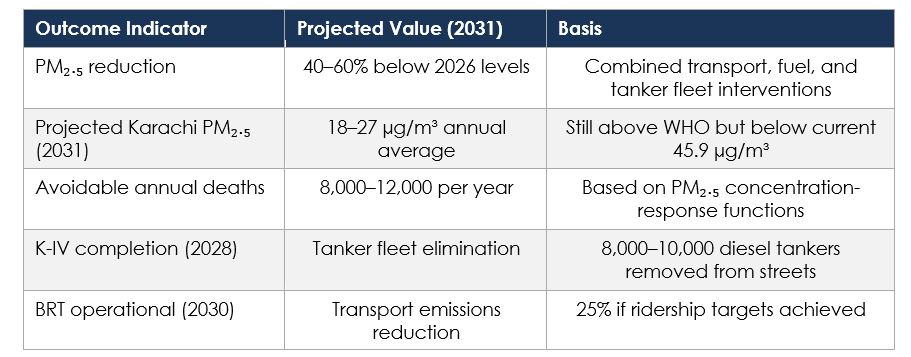
15.1 The Optimistic Scenario (2026–2031)
If all recommendations in Section 14 are implemented within five years:
15.2 The Business-as-Usual Scenario
If current policies continue unchanged, trajectory modelling based on observed 2004–2026 trends projects:
- PM₂.₅ increasing at 2–3% annually — consistent with the 2004–2026 trend.
- Projected Karachi PM₂.₅ by 2031: 52–60 µg/m³ annual average — approaching Lahore’s current levels.
- Annual deaths from air pollution (2031): 30,000+ based on extrapolated exposure-response relationships.
- Heatwave mortality per event: worsening due to photochemical amplification of increasing NOx and CO baseline.
- K-IV still incomplete: no reduction in tanker fleet until alternative provision is made.
15.3 A Reason for Cautious Hope
The National Disaster Management Authority (NDMA) is now led by an engineer. This matters institutionally: an engineer reads an emissions inventory as actionable data, not as the beginning of another study. The Pakistan Air Quality Initiative has demonstrated that real-time monitoring infrastructure can be installed at scale. The SEPA study has provided the scientific framework. The PAQI report has provided the sectoral attribution. The author’s own 2023 report, The Dark Clouds of Pakistan, provided the national context. All the tools needed to address Karachi’s air quality crisis exist. The engineering solutions are known. What remains is the political will to act on data already available.
16. Conclusion
16.1 Summary of Findings
This comparative analysis of Karachi’s air quality over twenty-two years (2004–2026) reveals a trajectory of significant and accelerating deterioration, driven by identifiable and correctable policy failures:
- In 2004, all measured gaseous pollutants were within WHO guidelines. Particulate matter was unmeasured and not considered a significant concern.
- By 2020, particulate matter had emerged as the dominant air quality crisis. 51 of 90 monitored locations exceeded SEQS. Peak PM₂.₅ reached 385.98 µg/m³ in Korangi —7 times the WHO 24-hour guideline. The geographic spread had expanded from industrial zones to the entire city.
- By 2025, Karachi’s annual average PM₂.₅ was 45.9 µg/m³ —2 times the WHO annual guideline. Pakistan was ranked the world’s most polluted country.
- By 2026, the causal diagnosis was complete: the transport sector accounts for 75.5% of total pollution, including 90.4% of CO and 80.5% of NOx. K-IV remains incomplete after 24 years. OGRA permits LPG adulteration that kills Karachiites in their homes.
16.2 The Root Causes, Restated
The worst air quality in Karachi — which is the mother of heatwaves, high temperatures, and the changing climate of the city — has four specific, non-meteorological, policy-addressable causes:
- The K-IV Water Supply Project failure: 24 years of institutional negligence that forces 10,000–12,000 diesel tankers onto Karachi’s streets, generating 24.4 tonnes of PM₂.₅ and 130,500 tonnes of CO₂
- LPG adulteration with CO₂, enabled by OGRA regulatory negligence: producing excess CO emissions, greenhouse gas releases, and lethal cylinder explosions in domestic settings.
- Petrol and diesel adulteration with aliphatic hydrocarbon solvents: producing elevated VOC, UHC, and PM emissions that dramatically amplify ozone formation under summer conditions.
- High-sulphur smuggled petrol and diesel: contributing disproportionately to Karachi’s SO₂ burden and secondary sulphate aerosol PM₂.₅
16.3 The Path Forward
The emissions inventory is not a conjecture. It is a finding. Transport: 75.5%. NOx from transport: 80.5%. CO from transport: 90.4%. These numbers constitute the address of the problem. The cure requires engineers who understand the chemistry — not consultants who understand the billing.
When Karachi has water in every pipe, clean fuel in every cylinder, and efficiency built into every watt of energy it consumes, its summers will cease to be a death sentence. That day is possible. It requires not a single new study. It requires only the will to act on the one we already have.
References
Primary Sources
[1] Hashmi, D.R., Shaikh, G.H., & Usmani, T.H. (2005). Air Quality in the Atmosphere of Karachi City — An Overview. Journal of the Chemical Society of Pakistan, Vol. 27, No. 1, pp. 6–12.
[2] Mughal, N.A., Gabol, W.A., Sabir, M.I., Halepoto, M.R., & Hussain, F.S. (2024). Towards Clean Air in Karachi: Scientific Framework and Imperative for a Comprehensive Real-Time Air Quality Monitoring System. SEPA. Paper No. 373, pp. 189–207.
[3] Abbasi, A.H. (2026, May 5). Karachi Is Not Dying from Heat — It Is Suffering from Policy Failure. The Friday Times.
[4] Abbasi, A.H. (2023). The Dark Clouds of Pakistan: An Investigative Report on Air Pollution & Smog. Centre for Research and Security Studies (CRSS), Islamabad.
[5] Pakistan Air Quality Initiative (PAQI). (2024). Unveiling Karachi’s Air: A Scientific Foundation for a Clean Air City. PAQI, Karachi.
Secondary Sources
[6] IQAir. (2025). World Air Quality Report 2025: Region & City PM₂.₅ Ranking (9,446 Cities, 143 Countries). IQAir Group, Goldach, Switzerland.
https://www.iqair.com/world-air-quality-report
[7] IQAir. (2025). Pakistan Air Quality Data: Karachi PM₂.₅.
https://www.iqair.com/pakistan/sindh/karachi
[8] World Health Organization. (2021). WHO Global Air Quality Guidelines. WHO, Geneva. ISBN 978-92-4-003422-8.
https://www.who.int/publications/i/item/9789240034228
[9] International Journal for Social Sciences. (2026). Urban Sprawl and Land-Use Transformation in Karachi (2000–2025): Satellite-Based Analysis and Impacts on Peri-Urban Areas. Volume 5, Issue 2(a). ISSN-L.
[10] Baqa, M.U., et al. (2022). Spatiotemporal Variations in Urban Thermal Environment in Karachi (2000–2020). Remote Sensing, MDPI.
https://www.mdpi.com/journal/remotesensing
[11] Baqa, M.U., et al. (2021). CA-Markov Modelling of Land Use/Land Cover Change in Karachi: 1990–2020 and Projections to 2030. MDPI Land, 10(11).
https://www.mdpi.com/journal/land
[12] Mahboob, M.A., et al. (2017). Urban Sprawl in Karachi: Built-Up Area Expansion 1991–2013. Remote Sensing Applications: Society and Environment.
[13] Sindh Environmental Quality Standards (SEQS). (2010). National Environmental Quality Standards for Ambient Air. Government of Sindh / Government of Pakistan.
[14] Pakistan National Emissions Inventory for Karachi. Ministry of Climate Change.
[15] Ipsos Pakistan. (2024, November). Smog Survey: Public Health Impacts of Air Pollution in Pakistan.
[16] Karachi Water & Sewerage Board (KWSB). K-IV Water Supply Project Documentation.
[17] Dawn News. (2026, February). LPG Cylinder Explosions in Karachi: 16 Dead from Adulterated Gas.
[18] Health Effects Institute. (2020). State of Global Air 2020. Health Effects Institute, Boston, MA.
https://www.stateofglobalair.org/
[19] Khan, S., & Dawood, A. (2023). Governance Gaps and Peri-Urban Vulnerability in Karachi. Urban Studies Pakistan.
[20] Commissioner Karachi, Government of Sindh. (2023). Digital Census — Population Data.
https://commissionerkarachi.gos.pk/population
Technical Reference
Unit conversions used in this report: SO₂: 1 ppb = 2.86 µg/m³ (at 25°C, 1013 hPa) | CO: 1 ppm = 1.25 mg/m³ (at 0°C, 1013 hPa) | NO: 1 ppb = 1.34 µg/m³ | NO₂: 1 ppb = 2.05 µg/m³ | O₃: 1 ppb = 2.00 µg/m³
Abbreviations
AQI: Air Quality Index | BRT: Bus Rapid Transit | CO: Carbon monoxide | CO₂: Carbon dioxide | CRSS: Centre for Research and Security Studies | DXA: Dxa units (1/1440th of an inch) | K-IV: Greater Karachi Bulk Water Supply Scheme (Phase IV) | KWSB: Karachi Water & Sewerage Board | LPG: Liquefied petroleum gas | MGD: Million gallons per day | NDMA: National Disaster Management Authority | NOx: Nitrogen oxides | OGRA: Oil and Gas Regulatory Authority | O₃: Ozone | PAQI: Pakistan Air Quality Initiative | PCSIR: Pakistan Council of Scientific and Industrial Research | PM₂.₅: Fine particulate matter (≤2.5 µm diameter) | PM₁₀: Coarse particulate matter (≤10 µm diameter) | SEPA: Sindh Environmental Protection Agency | SEQS: Sindh Environmental Quality Standards | SO₂: Sulphur dioxide | UHC: Unburned hydrocarbon | VOC: Volatile organic compound | WHO: World Health Organisation
About the Author
Engineer Arshad H. Abbasi is an independent energy, water, and climate change expert and a prolific writer on the political economy of Pakistan’s environmental and infrastructure crises. As a co-founder of the Energy Excellence Centres at NUST and UET Peshawar, he has played a foundational role in building institutional capacity for energy research in Pakistan. He writes from his home in the Murree Hills, with no land in Karachi — a declaration of independence that, he argues, is the only condition under which the truth about policy malpractice can be spoken without compromise.
His technical expertise has been sought on Pakistan’s most intractable challenges: the K-IV water project, the circular debt crisis in the power sector, the inefficiency of Independent Power Producers (IPPs), the shale gas potential in Pakistan, and the governance failures that transform monsoons into national disasters.
About CRSS
The Centre for Research and Security Studies (CRSS) is an Islamabad-based independent think tank dedicated to research, analysis, and outreach on conflict, security, governance, and development issues in Pakistan and the broader South Asian region. CRSS has played a leading role in disseminating rigorous, evidence-based reports on air quality, energy policy, and climate change since its founding.
www.crss.pk
© Centre for Research and Security Studies (CRSS) | May 2026 | All rights reserved