



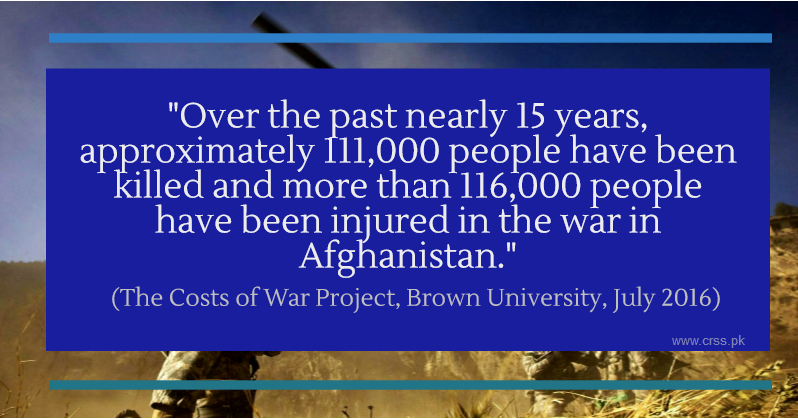
Afghanistan and Pakistan have been engaged in their current wars for nearly 15 years, and the cost in human lives and health has been enormous: the combined death toll is 173,000 dead and more than 183,000 seriously wounded. The wars in Afghanistan and Pakistan remain interrelated, not least because the border is porous between the two countries, but also because the United States has put resources into the fighting on both sides of that border. On 6 July 2016, U.S. President Barack Obama announced that the planned reductions of U.S. troops in Afghanistan would be delayed. He said, “I strongly believe that it is in our national security interest, especially after all the blood and treasure we’ve invested in Afghanistan over the years, that we give our Afghan partners the very best opportunity to succeed.” The war has cost the United States more than $800 billion in direct appropriations to the State Department and Department of Defense. As the Costs of War project has documented, there are many other economic costs in the US, Afghanistan and Pakistan.
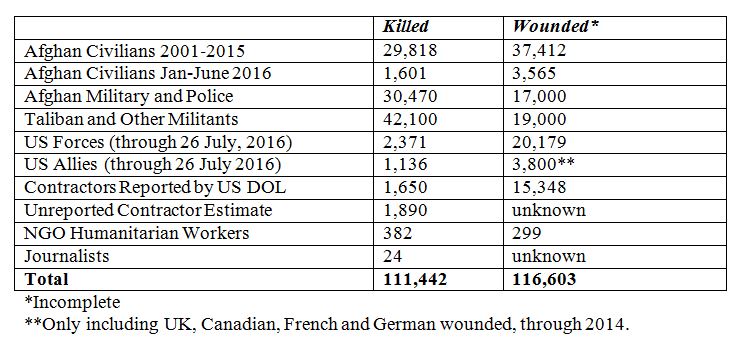
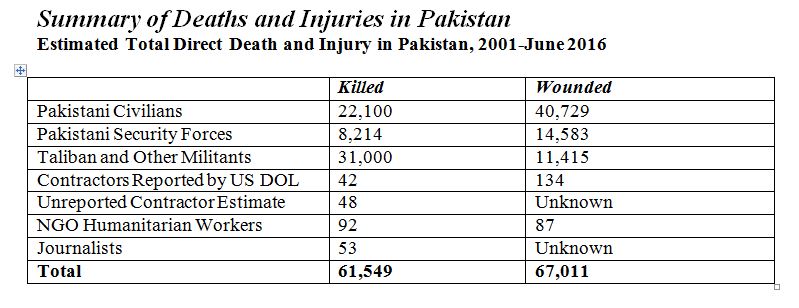
Over the past nearly 15 years, approximately 111,000 people have been killed and more than 116,000 people have been injured in the war in Afghanistan. Of these, more than 31,000 of the dead are Afghan civilians. The war in Pakistan, which began as Al Qaeda and the Taliban fled from Afghanistan into the northwest region of Pakistan in 2001, has caused almost 62,000 deaths and an additional 67,000 injuries. These numbers are approximations based on the reporting of several sources. The focus in this report is on direct deaths and injuries caused by wartime violence. Indirect deaths, due to the effects of war damage to infrastructure and livelihoods, and usually more numerous than direct deaths, are discussed elsewhere.
Afghan Civilian Death
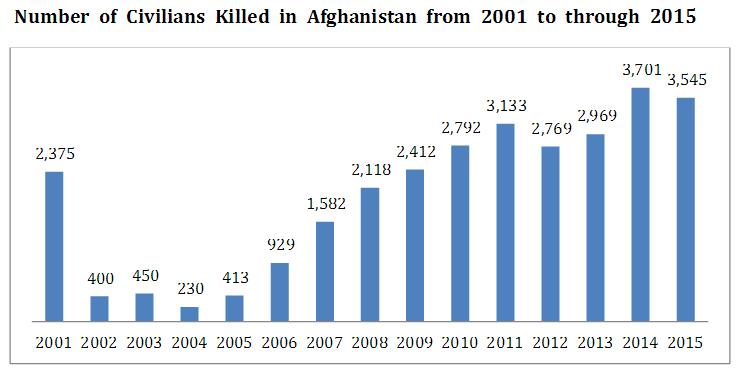
More than 31,000 civilians have been killed in direct violence in Afghanistan since the 7 October 2001 invasion by the United States. But this number is necessarily an estimate, since there were long periods in the war when there was little or no counting civilians killed or injured as a consequence of the fighting.
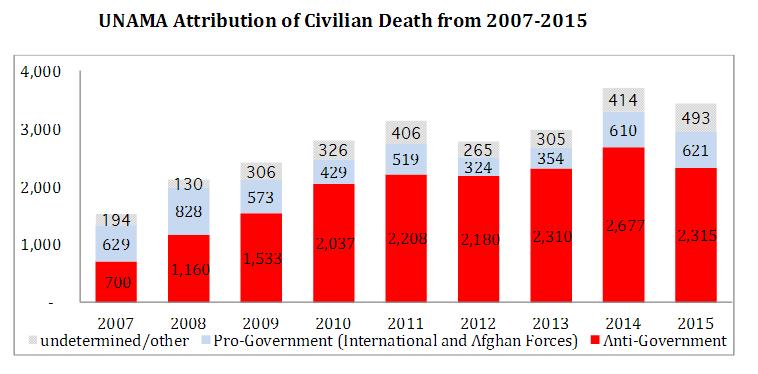
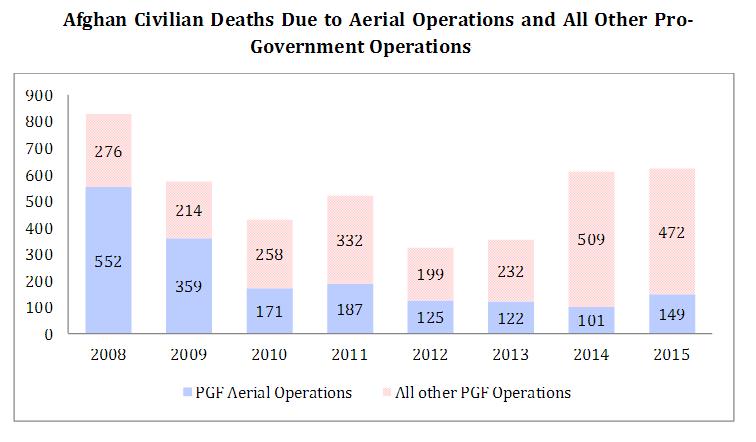
In 2007, UNAMA reported that 41 percent of the direct violent civilian deaths in Afghanistan could be attributed to pro-government forces; that percentage gradually declined to a low of 12 percent in 2012 and 2013. Recently, however, that trend has reversed. The percentage of civilians killed by pro‐government forces (including international and Afghan security forces) increased to 16 and 18 percent, respectively, in 2014 and 2015.
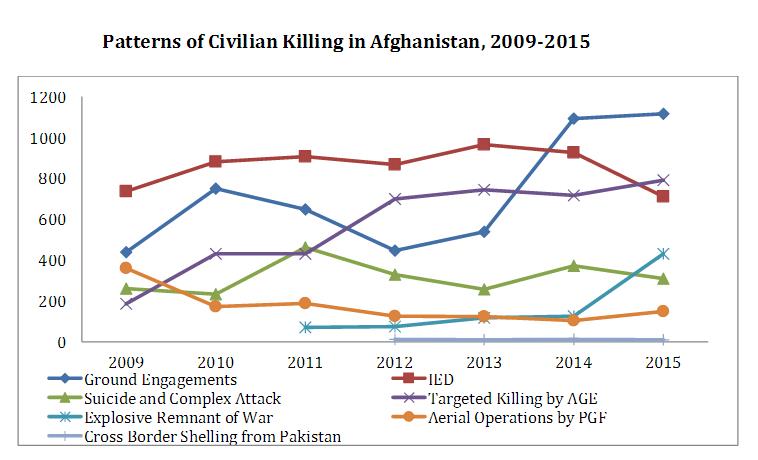
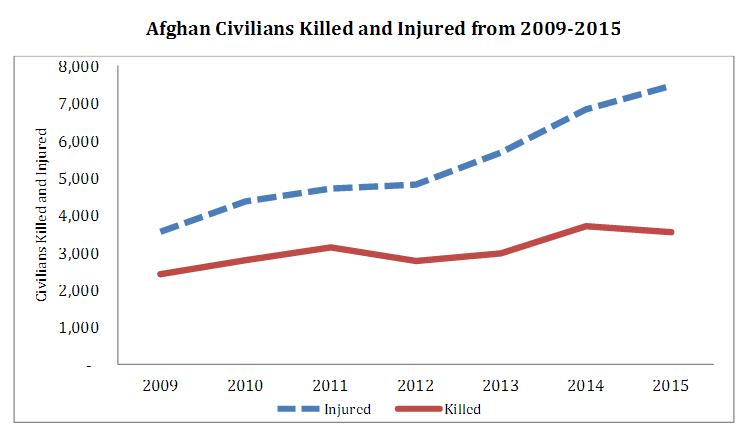
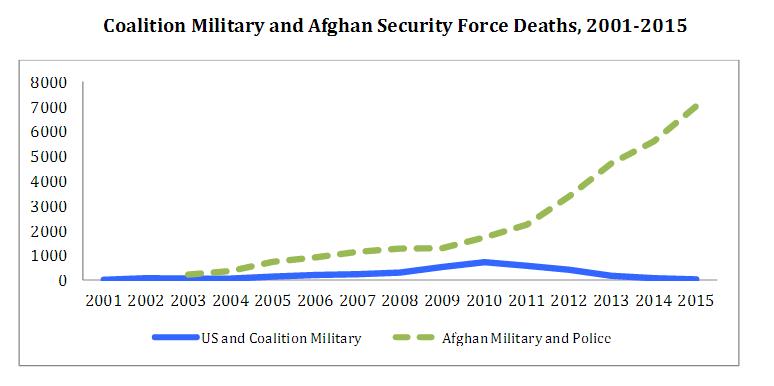
Summary of Deaths and Injuries in Afghanistan
Estimate of Afghans Killed and Injured Directly in War, 2001-2016
The Human Toll in Pakistan
Pakistan remains a hot, albeit underreported, war zone. It is underreported partially because the news media have been targeted for killings by both militants and security forces, and because the Pakistani government controls journalists’ access. Thus, observers often do not agree on the basic indicators of the war, including a disagreement on the number of journalists killed in Pakistan.
The Committee to Protect Journalists counts 53 journalists killed in Pakistan since 2001. UNESCO counts 58 journalists killed from 2001 to mid-2016.
Despite uncertainty and opacity, the total number of people killed in 2015 in Pakistan was lower than in any single previous year since 2007. It is estimated that the war in Pakistan, which began as Al Qaeda and the Taliban fled from Afghanistan into the northwest region of Pakistan in 2001, has directly caused about 62,000 violent deaths and an additional 67,000 injuries from 2001 through 2015. The downward trend in civilian death in Pakistan during 2015 is evident in a number of areas, including US drone strikes, militant suicide attacks, and Pakistani military operations. However, in early 2016, the lethality of the war was on the rise.
US Drone Strikes
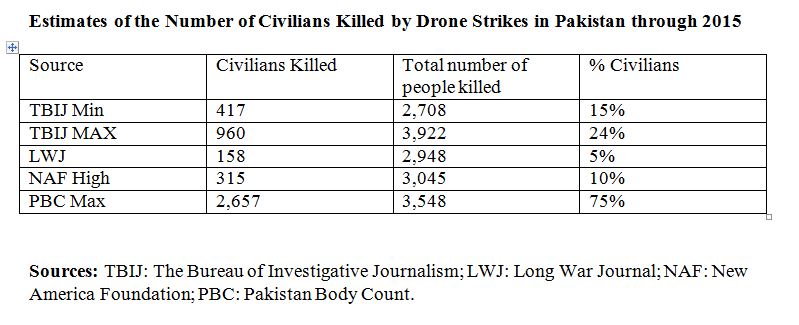
The US targeted killing counter-terrorism strike program remains largely secret, even after the 1 July 2016 release of summary data from the U.S. Director of National Intelligence. The U.S. figures for all deaths in U.S. counter-terrorism strikes for 20 January 2009 to 31 December 2015 in areas “outside active hostilities” — which includes all drone strikes in Pakistan, Yemen, and Somalia — totaled 2,372 – 2,581 combatants and 64 to 116 noncombatants. These figures were not disaggregated by individual war zones and the Obama administration acknowledged that their numbers for all noncombatant deaths in counter-terrorism strikes were lower than non‑governmental assessments, because, they said, they have access to “information that is generally unavailable to nongovernmental organizations.”
Militant Suicide Attacks on Civilians
Pakistani Operations that Harm Civilians

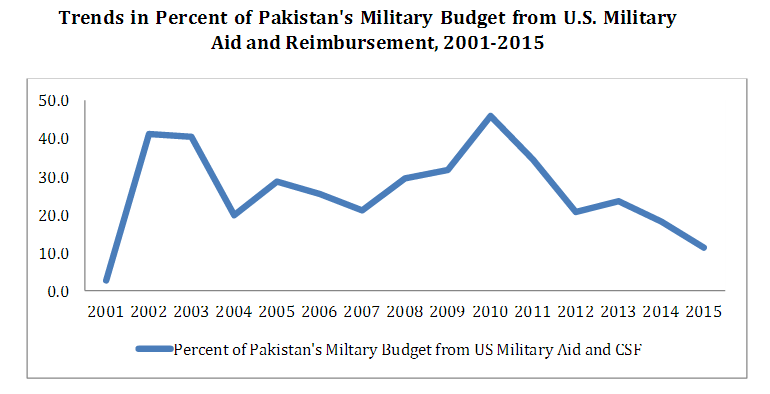
US support of Pakistani Military Spending
Conclusion
We have much more to do to understand the human toll of the long wars in Afghanistan and Pakistan and their interrelationship. There are gaps in the counting of casualties, and likely some manipulation of the official reports of the numbers killed and injured. For instance, although UNAMA reports that the Afghan National Army has killed and wounded civilians in its operations, the Ministry of Defense in Afghanistan reports insurgents killed and wounded in operations, but does not release reports of the number of civilians killed. Nor does the Afghan Ministry of Defense note the numbers of their own forces wounded in their attacks on militants. Further, the US still does not report its drone strikes in Pakistan, nor provide detailed information about the process of the strikes, estimates of civilian casualties, or analysis of the effects of the strikes on surviving civilians. Further, we still know too little about the indirect effects of the wars on long‑term health and welfare.
Despite these areas of uncertainty, there is no disputing the fact that the wars in Afghanistan and Pakistan continue to be devastating for civilians. After nearly fifteen years of war, the combined death toll in the Afghanistan and Pakistan war zone is nearly 173,000 dead and more than 183,000 seriously wounded. The first 6 months of 2016 indicate that there is as much or more war related violence in Afghanistan as in 2015. And, unfortunately, unless the fighting in Afghanistan diminishes, the increased intensity of fighting in Afghanistan will likely spill over into Pakistan.
In view of the importance of this report, only relevant extracts to the region are given. The full report by Brown University is available here.
Disclaimer: Views expressed in the article are not necessarily supported by CRSS.