



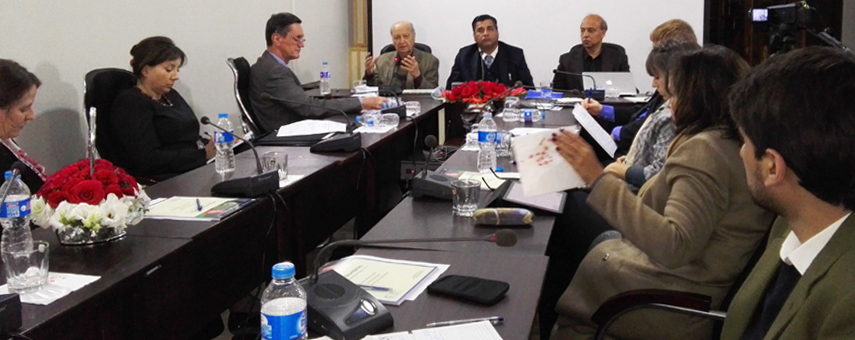
Pakistan and India have both been impacted by the absence of a real bi-lateral relationship; the recent Joint Statement of the Foreign Ministers makes a good attempt to re-initiate the process which was left in 2008; “Comprehensive” dialogue will hopefully be more than a change of nomenclature.”
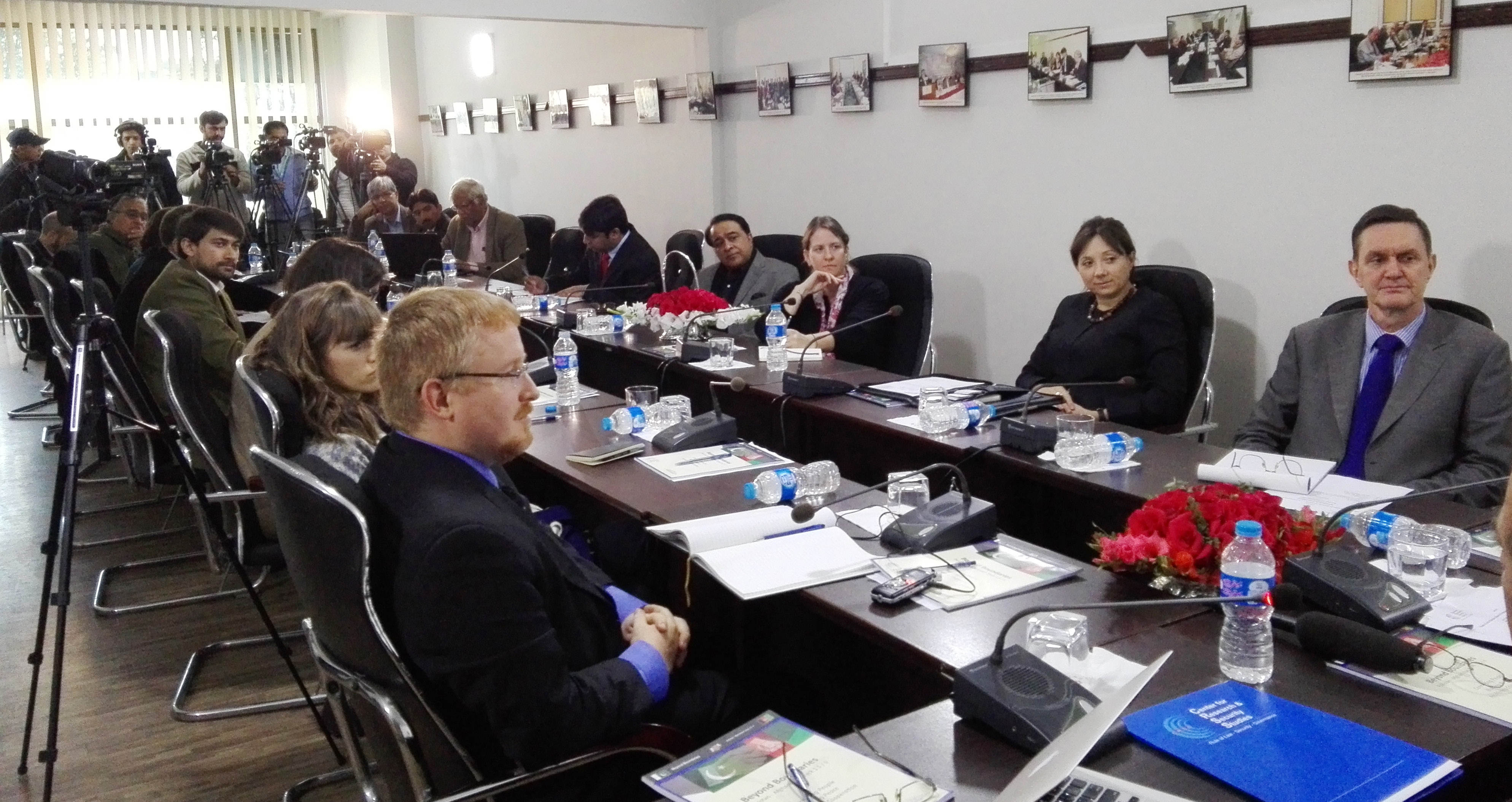
These were some of the comments made by Dr. T.C.A. Raghavan (High Commissioner of India) who was speaking at a seminar “State of India-Pakistan Bilateral Relations – Current Issues & Prospects” organized by Centre for Research and Security studies here on Monday.
The High Commissioner said that relations between most neighboring countries around the world suffer from deadlocks and disputes, the only major exceptions include USA & Canada and countries within the European Union. The challenge is how countries work together to evolve a good, working & mutually beneficial relationship. He said that the post-partition sixty eight year history of India-Pakistan has very little that has contributed to evolution for a real relationship between both countries. Both countries have low level of trade, virtually no bilateral investments and little people to people exchanges. The best minds from both countries have been trying since partition to present solutions acceptable to both sides. The challenge remains: How do we move forward?
Commenting on the recent developments in India and Pakistan he observed that there is a need to contextualize the recent breakthrough in Islamabad. The meeting between the two prime minister in Paris as well as the Bangkok talks between the National Security Advisors of both countries – provided a good basis. He said that the Joint Statement of the two foreign ministers is a very balanced statement which calls for a structured dialogue aimed to accommodate major concerns of both sides.
He noted that “Pakistan has always had a defensive perspective with regards to Kashmir and it disregards and overlooks the concerns which many people of India have about the same issue. If you ask any Indian, Kashmir is an integral part of India, and our constitution recognizes that. How do we move forward on this issue when both sides have firm positions?” Kashmir maybe one of the contentious issues between both countries but it is not the only issue which has negatively affected bi-lateral relations. Responding to a question by Mr. Imtiaz Gul about the Indian position on Kashmir in India-Pakistan dialogue, the Indian High Commissioner said that we regard the occupation of Azad Jammu and Kashmir by Pakistan as illegal and raise the issue in bi-lateral negotiations.
He said he believes that that “Comprehensive” Bi-lateral dialogue, the new name for high-level engagement between India and Pakistan will be more than a change of nomenclature. It will be incorrect to perceive that old issues will not factor in the discussions – rather the aim is to re-initiate dialogue on major bi-lateral concerns and with time add more items which could be taken up. Dr. Raghavan observed that more progress can be achieved when both countries add “real depth” to the relations by increase in trade, increase in people to people and cultural contacts – together with issues which are contentious.
On a question whether there will be a change of approach by both countries, Dr. Raghavan remarked that we should not perceive that previous dialogue processes (Composite Dialogue) did not achieve anything. In the period of 2004-08, there were many confidence building steps taken by both countries. The issues in the comprehensive dialogue will mostly be the same. We have to wait and see whether this attempt will be different than the previous ones to promote peace and develop a workable bi-lateral relationship. He said that it is important that we aim for a shift from geo-strategic towards geo-economic. This will be a big challenge and requires good will of all relevant actors. Pakistan and India have to make efforts to surmount such challenges and move forward for shared peace and prosperity in the region.
On a question about Ufa declaration and whether Indian engagement with Pakistan is contingent on any factors, the High Commissioner said that “Terrorism poses biggest obstacles for improvement of relations between India and Pakistan.” The issue has been on the bi-lateral agenda for more than a decade and we need to recognize each other’s concerns.
Lt. Gen (retd.) Talat Masood noted that for economic development countries need to have a functioning relationship. How can there be more trade when there is instability on the border (Line of Control). Regional cooperation is in the interest of both India and Pakistan and the region will not make real progress unless both countries work together and normalize their relations. In order to build multi-national pipelines and infrastructure, countries must have a good working relationship.
He emphasized that it is a wrong perception that the Pakistani military does not want a good working relation with India. He also noted that Afghanistan will also be a beneficiary of improved India-Pakistan relations – where neither country is trying to hamper the other’s interests.
Gen. Masood said that India and Pakistan are not the only parties in Kashmir dispute but both must recognize people of Kashmir as an important stakeholder. Indian establishment should note that Pakistan has serious concerns about the situation in the valley and the state of human rights in Kashmir. Politically it is impossible for Pakistan to disregard the interests of Kashmiri people in any dialogue with India. The countries of the region must also recognize and support a real change in Pakistan – & serious actions by the Pakistani military to curb terrorism. It is important that we look at the issues more objectively. Both countries and especially Pakistan will benefit out of good relations with India.