



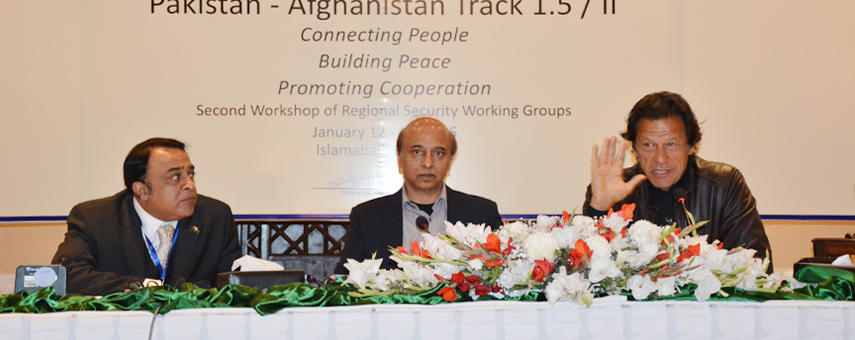
“Afghanistan has suffered for too long and the people in Afghanistan deserve peace as any other country. Pakistan should pursue a policy of non-interference in the internal affairs of Afghanistan, as stated by the government of Pakistan. Peace in Afghanistan will be the key to peace in Pakistan and all efforts should be made to pursue this objective. I am not pro-Taliban; I am anti-war – as war is never a solution for any country.”
These were some of the remarks made by PTI Chairman Mr. Imran Khan in a meeting with Pakistani and Afghan regional security experts on the sidelines of bilateral Track 2 dialogue. He noted that Pakistan itself has suffered a lot due to terrorism. More than 60,000 people have died in Pakistan and over $100 billion worth of losses have been inflicted on the Pakistani nation. Both countries need to work together for peace and security in the region. He said that future of this region doesn’t lie in boundaries and hoped that in future there will be a time when Afghan and Pakistani citizens will have the right of free movement without barriers – similar to European Union.
Mr. Abdul Qadir Baloch (Federal Minister for SAFRON Affairs and Inter-provincial Harmony) was the Chief Guest for the inaugural session. He noted that “People in Pakistan & Afghanistan want a bi-lateral relationship based on trust and mutual respect; both governments should sincerely work towards it. Government of Pakistan is sincere in its desire to cooperate with government of Afghanistan on all issues to bring peace and prosperity in the region.” Mr. Baloch Also observed that “Track 2 dialogues can provide an excellent opportunity for experts of both Pakistan and Afghanistan to discuss issues openly and frankly and remove any existing ambiguities. I strongly hope that the solutions provided by the track 2 working groups would enable both governments to take more meaningful actions for better bi-lateral relations.”
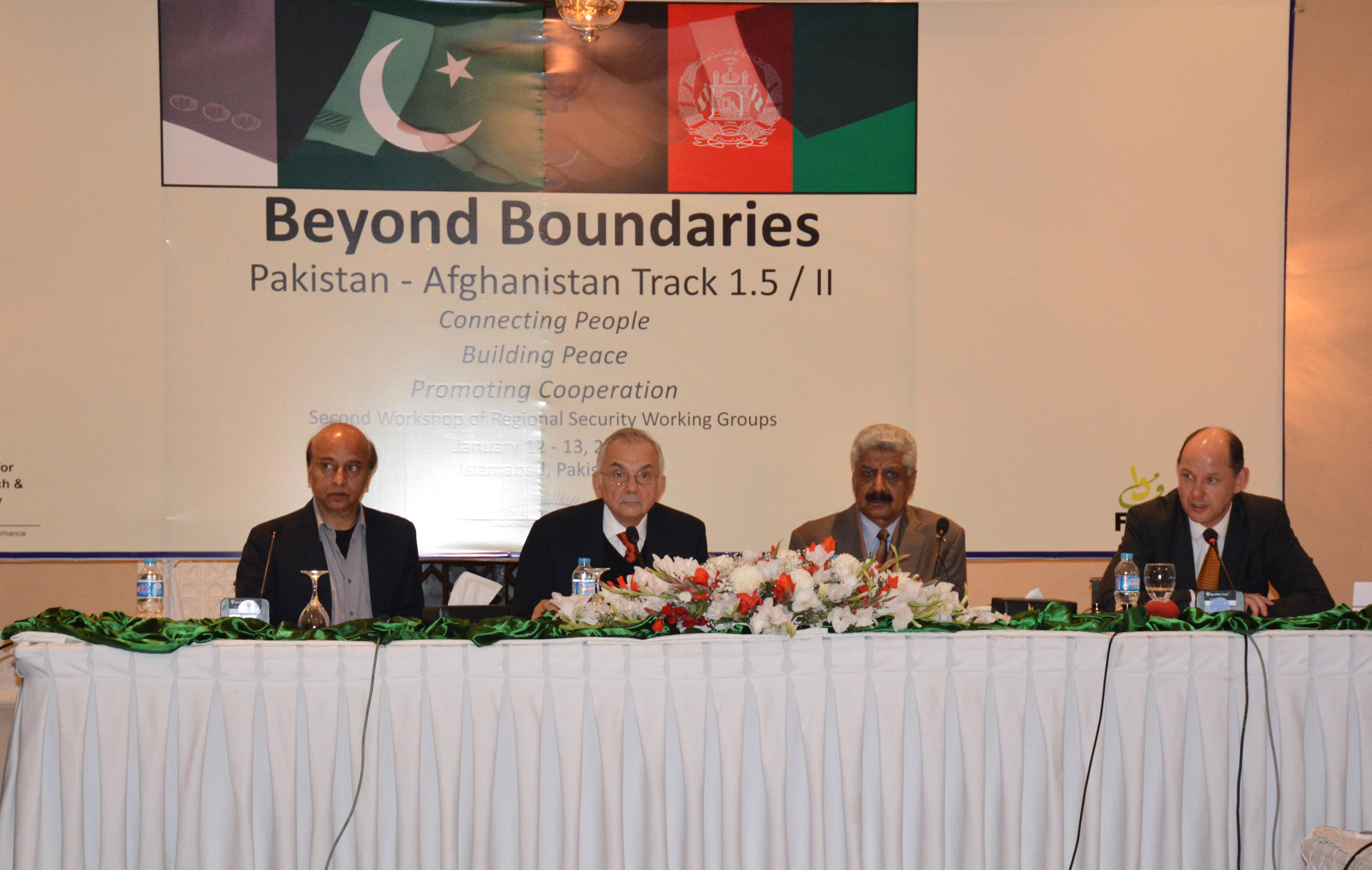
Speaking on the occasion British High Commissioner Mr. Philip Barton commended the efforts of Center for Research and Security Studies (CRSS), DURAN and FIDA for organizing the track 2 dialogue bringing security experts from both countries on one table. He said that “Putting in place functioning systems for cooperation between both countries is a major challenge – something Pakistanis and Afghans have to overcome.”
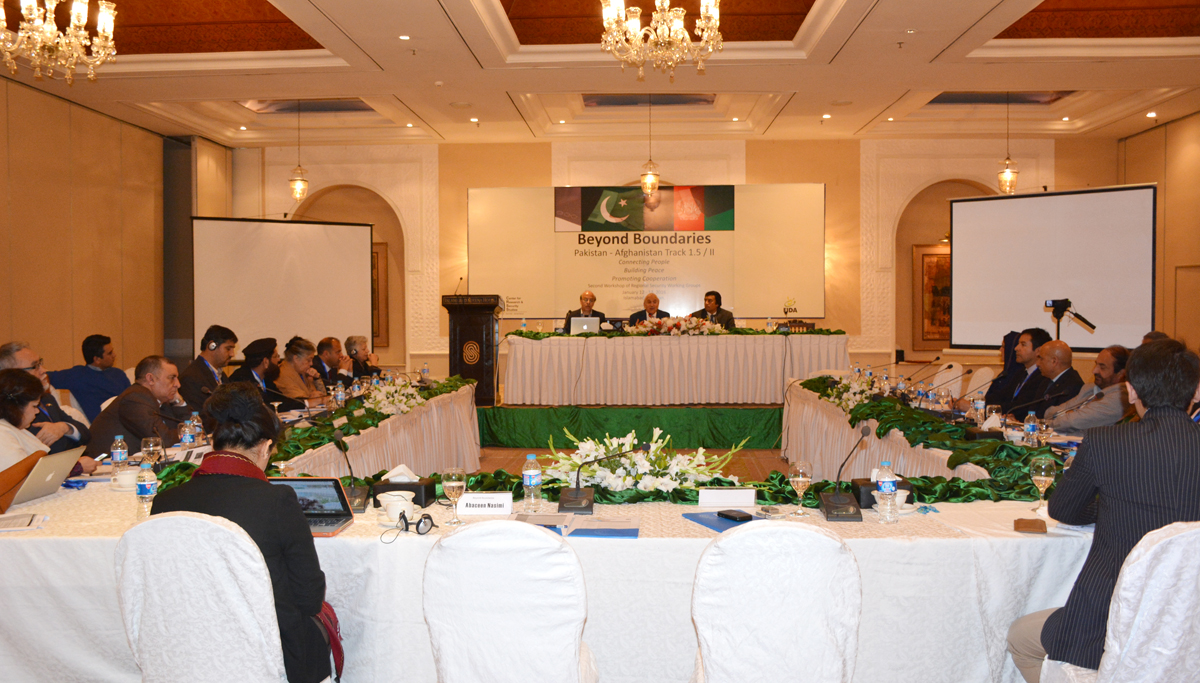
The event was also attended by several security and civil society leaders from Afghanistan and media representatives.
The participants were also given a briefing by Mr. Shahid Chaudhry (Director, Special Afghan Projects Cell) in the Planning Commission of Pakistan. He informed the participants that until now the government of Pakistan allocated $500 million for twenty nine special projects for Afghanistan, out of which 13 have been fully completed. These include infrastructure projects, capacity building trainings, hospitals etc. On a question about Pakistani scholarships for Afghan students, Mr. Chaudhry informed participants that the Pakistani Embassy in Kabul will re-start the process later this month. Both Pakistani and Afghan participants called for the need to monitor these projects to ensure that these commitments are fulfilled and ultimately benefit the people of Afghanistan.
Speaking on the issue of Madrassas, Former Secretary Interior Syed Kamal Shah briefed participants about the initiatives of the Pakistani government on the comprehensive process of madrassa reforms. He noted that as per the new strategy Madrassa reforms have started e.g. Madrassa registration is mandatory and all those who do not register are being closed/will be closed by the Ministry of Interior. No madrassas can be opened without obtaining an NOC (No objection certificate). Through a broader consultative process the government of Pakistan has got the support of Ulema groups on this reform process. He said efforts are also being directed by the government for review of syllabi and checking the financial sources of all Madrassas.
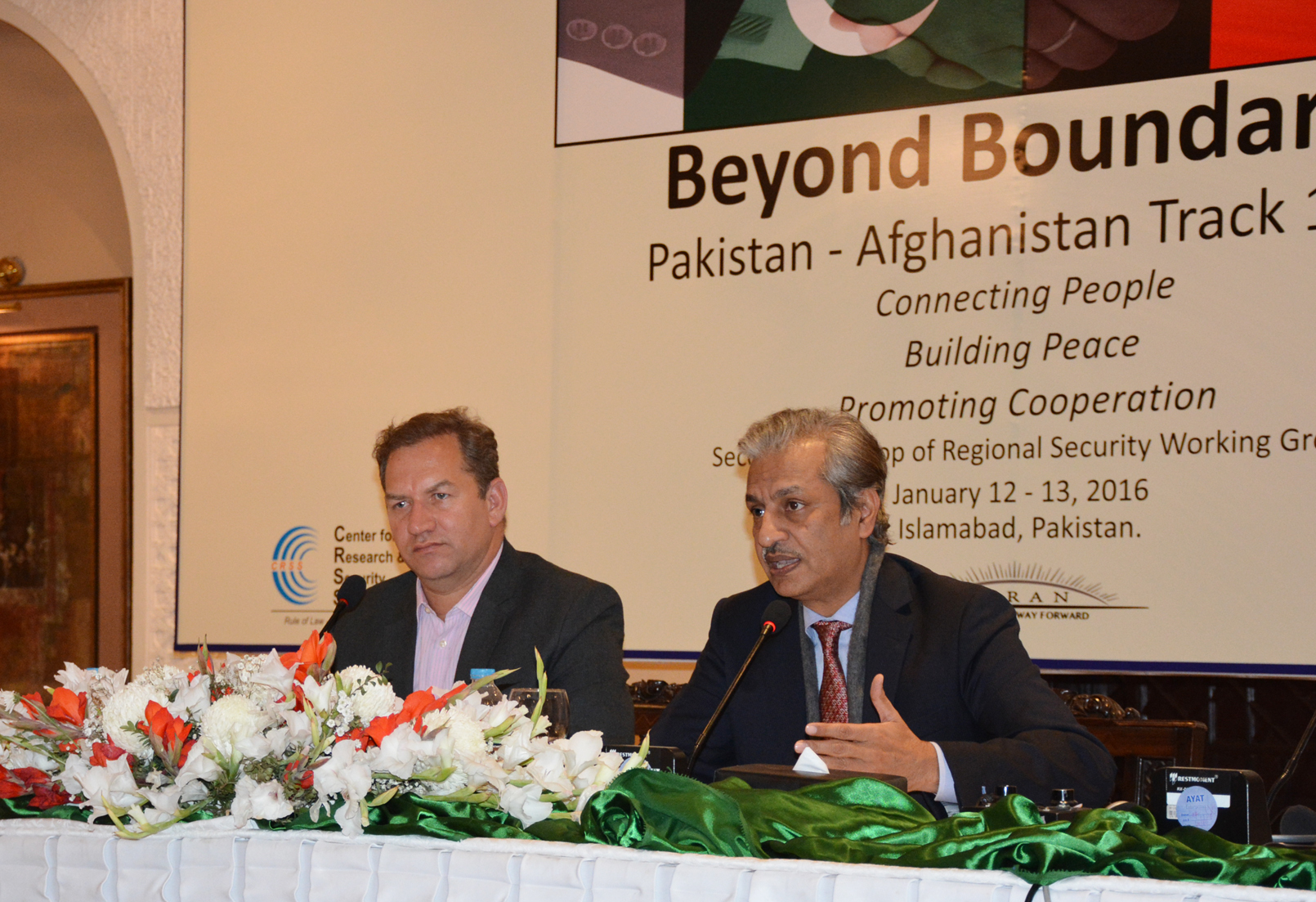
Answering a question during the session on “Role of Media in changing narratives”, PEMRA Chairman Mr. Absar Alam observed that there is a wrong impression in Afghanistan that Afghan TV channels are deliberately banned by the government of Pakistan. It is merely a technical issue of landing rights fee (which Afghan Channels are liable to pay as any other foreign TV channel in Pakistan) which is an obstacle in this regard. Mr. Alam assured the participants on both sides that he will monitor the issue and take it up with relevant authorities in Pakistan.
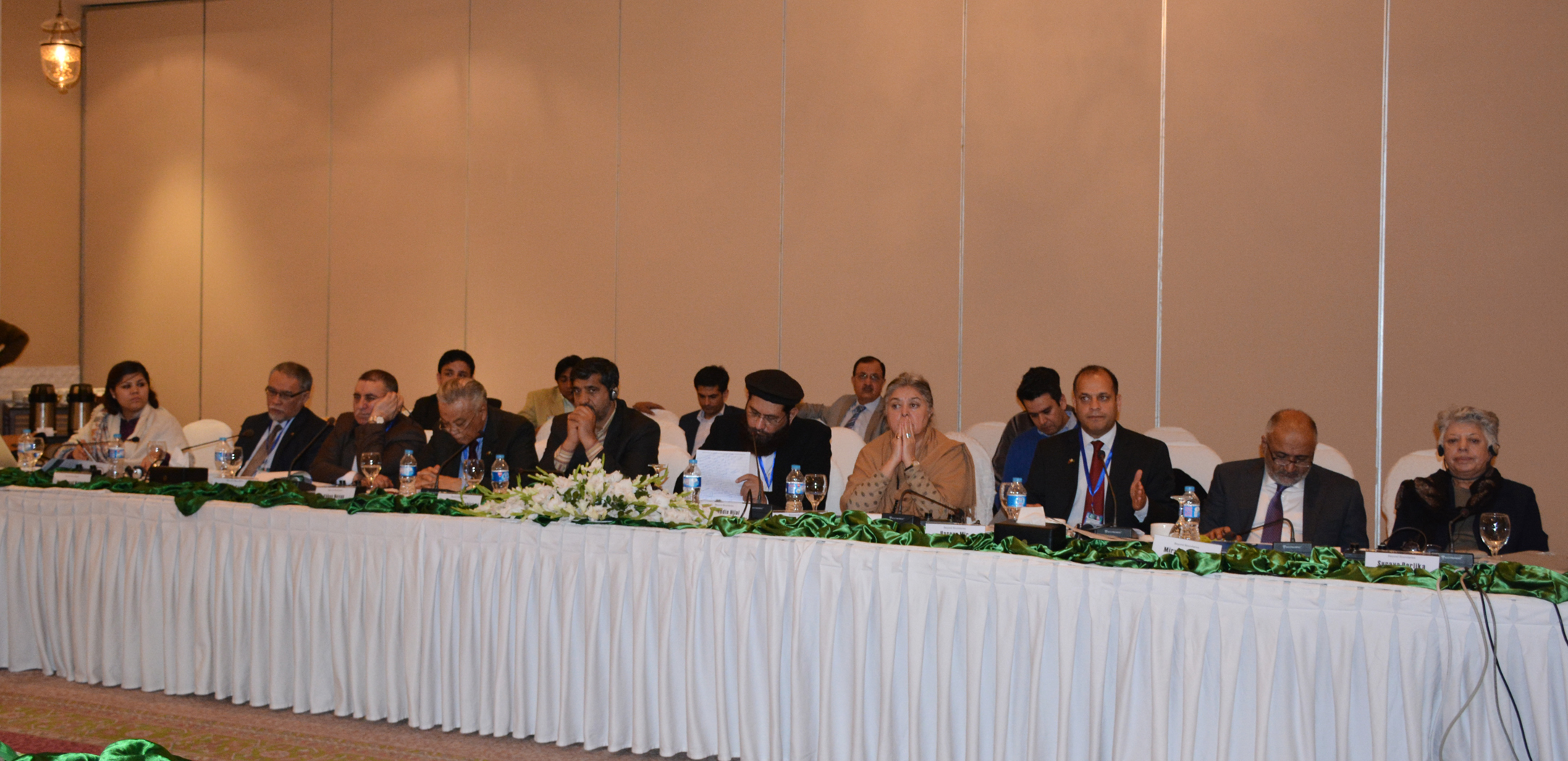
The Afghan Delegation is led by Ms. Mahbouba Seraj (Director, Organization for Research in Peace and Solidarity, Senior Women’s Rights Advocate). Other members include: Gen. Javed Kohistani (Advisor to CEO Dr. Abdullah Abdullah / Senior Military Analyst); Mr. Abbas Noyan (Former Member of Parliament); Mr. Ahmad Saeedi (Former Diplomat); Mr. Mohammad Nateqi (Political Analyst, Former Afghan Diplomat, Member of Afghan Peace delegation to Pakistan); Mr. Qutbuddin Hilal (Presidential Senior Advisor on Peace); Ms. Suraya Parlika (Senior Advocate, Women’s Political Participation); Ms. Wazhma Frogh (Founding Director, Institute for Women, Peace and Security); Mr. Haroon Mir (Political Analyst), Ms. Elay Ershad (Member of Parliament) and Mr. Mirwais Yasini (First Deputy Speaker, Lower House of Afghan Parliament).
The Pakistani delegation is headed by Ms. Shazia Marri (MNA-PPP). Other members include: Dr Shoaib Suddle (former Inspector General Police, Sindh); Lt. Gen (retd.) Asif Yasin Malik (former Defence Secretary); Lt Gen. Arshad Waheed Chaudhry (former Chief of General Staff); Dr. Syiad Ghazi Gulab Jamal (MNA-FATA); Ms. Ayesha Gulalai Wazir (MNA-PTI); Ambassador (retd.) Masood Aslam (Former Ambassador to Mexico), Senator Rozi Khan Kakar (PPP); Mr. Abbas Sarfaraz Khan (Former Federal Minister) and Mr. Tahir Khan (Senior Journalist, Express Tribune/NNI).
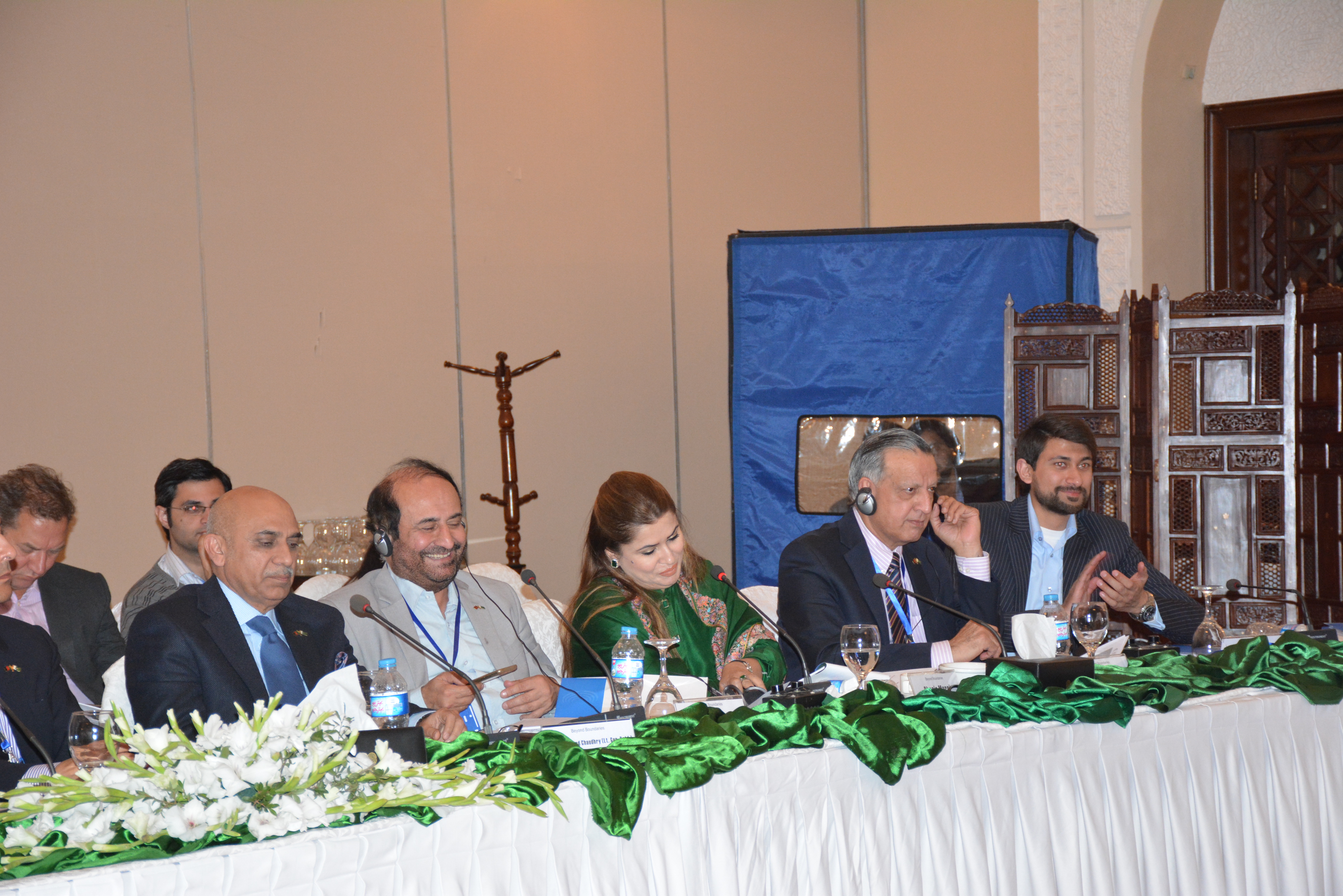
The second meeting of Pak-Afghan Regional Security Groups in Islamabad (12-13 January, 2016) will address critical issues in bi-lateral cooperation on peace and security.
About Beyond Boundaries Track 1.5/2 Dialogue Project
This initiative supported by the British Government is organized by Center of Research and Security Studies (CRSS) in partnership with Duran Research & Analysis (Afghanistan) and the Foundation for Integrated Development Action (FIDA). This project has been launched as part of the efforts to help connect civil society and security stakeholders of both countries, improve relations between Pakistan and Afghanistan. Beyond Boundaries comprises two working groups, the Regional Security Group, and Regional Civil Society Group, aimed at facilitating and promoting people-to-people contacts.
The working groups on Regional Security and Regional Civil Society will address varied themes that are important in the peace process between Afghanistan and Pakistan. It is also meant to build upon existing people to people relations and increase future people-to-people contact.
The key objectives of the initiative are: expanding the peace constituency through friendship groups in both countries; and improving support for better Afghanistan-Pakistan relationship through dialogue among the influential stakeholders and informing policy makers through consensus recommendations.
The Regional Civil Society Group has had two round of talks, in Islamabad (November 2015) and Kabul (December 2015).
The fourth in a series of seven meetings, this marks the second meeting of the Regional Security between senior security and parliamentary stakeholders from both countries.
These talks are taking place at a time of increased hope for mutual cooperation, particularly in the economic arena, especially after the Heart of Asia Conference hosted by Pakistan in early December, the signing of the TAPI Pipeline in Turkmenistan as well as the first Quadrilateral talks in January 2016 (Pakistan, Afghanistan, China and the United States).