



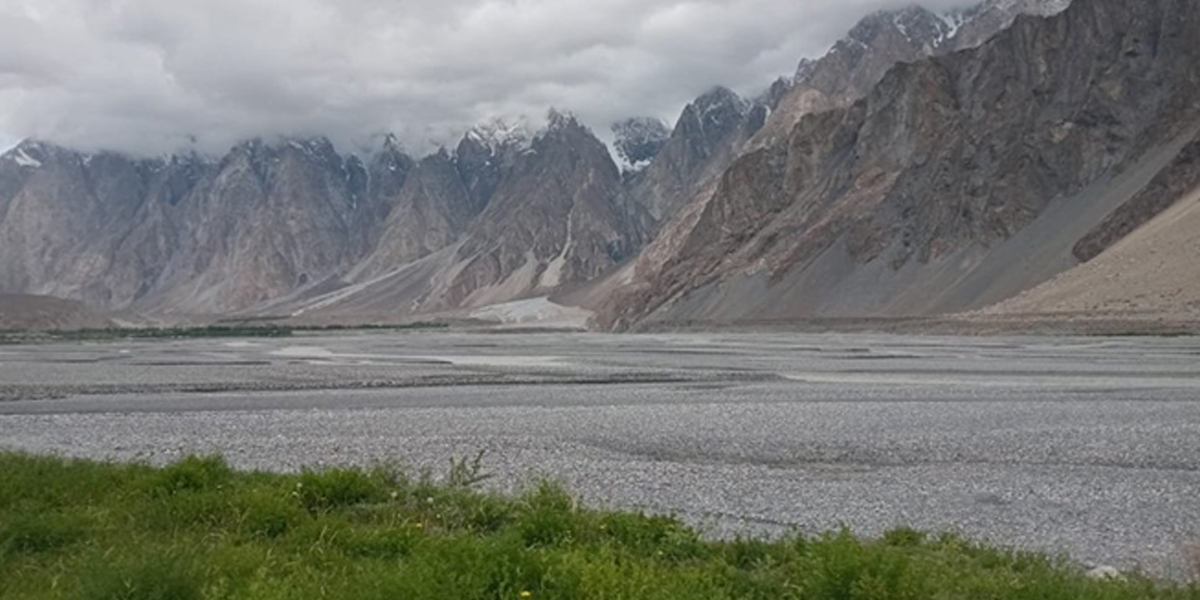
The highland sits at the geographic intersection of the Karakoram, Himalaya, and Hindu Kush mountain ranges, which is rich in natural resources including ice bank, snow accumulation and river network. But its energy infrastructure suffers from severe structural vulnerability due to an exclusive reliance on isolated-hydropower plants, which in numbers stands around 200 units and none of them is built on the perennial flow of four rivers.
As winter approaches, sub-zero temperatures freeze snow and glacial melting and drop discharges in the streams causing a drastic drop in power generation at the exact moment when domestic heating and lighting demands peak. But the four rivers still flow and make it to Tarbela Dam.
Gilgit-Baltistan’s energy gap is both acute and worsening. During winter, baseline peak demand across Gilgit-Baltistan reaches approximately 800 MW against a supply of hardly around 120 MW. In winter, the crisis deepens dramatically, as hydrologic flows collapse, operational hydroelectric output drops while heating, cooking, and lighting demand escalates subjecting major urban centers and remote valleys alike to prolonged blackouts of 18 to 22 hours daily.
But the key rivers do not stop flowing in the winters and the cumulative average discharges of rivers including Astore, Gilgit, Hunza, Shayok, and Kharmang stand at around 10,300 cusecs. Assuming a vertical head of 1000 feet, and efficiency at 85%, this flow can cumulatively generate 741 MW energy. One example of an attempt to build hydro project on run- of- the -river is Hanzel, over the past at least 30 years, that has yet to start physical work on its key civil structure.
The severe 85 % energy supply shortfall is further exacerbated by the region’s surging tourism industry in the summers. As visitor inflows expand rapidly, local hospitality infrastructure has placed unprecedented strain on the local grid. To keep operations running during endless grid failures, commercial hotels rely heavily on polluting diesel and fossil-fuel generators, emitting greenhouse gases. Concurrently, local villagers without access to electricity are forced to burn thousands of tons of wood and biomass for basic cooking and heating needs.
This desperate reliance on firewood has placed immense pressure on the region’s green cover, driving widespread deforestation that extends from wild forest reserves, domestic forest such as willows, Russian Olive to private established fruit orchards, where economically vital trees—such as apricot, apple, and mulberry —are increasingly cut down for fuel.
Wind energy presents a direct counter-cyclical solution to this seasonal power failure. During the freezing winter months, high-altitude atmospheric pressure differentials and thermal variations generate powerful, predictable wind currents through mountain valleys. The narrow topography of GB’s river basins creates a natural Venturi effect, accelerating valley wind speeds. Integrating off-grid micro-wind turbines into localized hybrid microgrids alongside solar photovoltaics and existing micro-hydro units ensures that when water levels drop, wind and battery storage pick up the baseline load, maintaining year-round energy supply consistency.
Deploying wind technology in high-altitude mountain environments is a proven test globally, offering replication model for GB’s rugged terrain. High-elevation wind installations like the Gries Wind Park in Switzerland operate at over 2,460 meters above sea level, using ruggedized, pitch-controlled turbines equipped with heated blades to withstand ice buildup and severe turbulence. In the Chinese highlands of Yunnan and Sichuan, large-scale mountain wind farms operate at altitudes exceeding 3,000 meters. Similarly, Peru’s Huascacocha project in the Andes demonstrates reliable generation above 4,000 meters, while ruggedized turbines across the US Rocky Mountains show how modular micro-siting can deliver decentralized power to off-grid communities.
In remote off-grid communities across Canada, such as Burwash Landing in Yukon, Whitehorse, and Ramea Island in Newfoundland, cold-climate wind projects ranging from 0.4 megawatt to 4 megawatts generate clean electricity for households. Equipped with ice-resistant blades and battery or thermal storage, these wind installations provide reliable electricity for daily home needs, cooking, and electric heating—significantly reducing reliance on expensive diesel during freezing winters.
In the mountainous settlements, targeted site selection can leverage optimal micro-climates and natural wind corridors to effectively harvest wind energy. Strategic locations—including Astore, Attaabad, Diamer, Ghindai, Gulmit, Hussani, Hopper, Jalalabad, Juglot, Khaplu, Manthokha, Passu, Phander, Pingal, Rama, Sadpara, Shandur, Skardu, and Sost—offer ideal topographies, such as river confluences, open floodplains, high mountain passes, and narrow gorge funnels suited for localized wind harvesting.
Universally mega wind projects in the mountains have key challenges and those include logistical constraints in transporting heavy turbines; sub-zero operating temperatures causing ice loading and turbine rotor wear, intermittent wind profiles that risk destabilizing isolated local distribution systems, and a lack of local technical expertise for routine operation and maintenance. To mitigate these challenges, project implementation can prioritize modular, lightweight turbine designs that can be transported using standard local freight and assembled without specialized heavy cranes, paired with cold-climate packages (e.g., active blade de-icing and low-temperature synthetic lubricants). Furthermore, deploying these below 1 MW wind systems within hybrid microgrids—integrating existing micro-hydropower and solar PV with battery energy storage—ensures grid stability during calm periods.
Establishing localized vocational training programs alongside public-private partnerships can foster local technical capacity, lower long-term maintenance costs, and ensure sustainable off-grid energy security for remote GB communities
One of the best ways is to select relevant stakeholders including technical experts and potential investors and people from chamber of commerce and who have the contextual knowledge of to visit potential sites in China to learn about projects. They could be accessed to prepare prefeasibility studies for impact investment which should include village dialogues, consultation with communities where there is high potential of harnessing wind energy with the focus on business model utilities.
Years back, I remember three efforts for testing wind energy harnessing- AKRSP had hired a Canadian consultant who did try to use wind energy for lifting water uphill in Skardu and one was under the tested for cracking the apricot nuts in Hussani Gojal. And in the nineties while working for AKRSP, I privately managed import of a pico wind turbine from Kashghar that was tested for lighting purposes in Gilgit.
A more recent effort was made during the time of Khalid Khurshid as the CM Gilgit-Baltistan for planning a 17 MW wind project proposal in Bunji district Astore. The newly formed GB government, under the leadership of CM Amjad Hussain, can take the lead in making a breakthrough in the implementation of wind energy projects in those fragile ecosystems that can complement business hybrid microgrids across the region which can bridge its severe winter supply-demand gap. This will enable people to have access to consistent clean energy and this initiative will protect its natural and domestic forest cover, build a resilient, year-round green energy infrastructure for complementing climate change adaptation actions, evolve an enabling environment for improving the quality of life of people, contribute to economic growth and employment of young people and accelerate mitigation efforts in the fragile mountain ecology Pakistan.
Muhammad Darjat is a prominent researcher, and climate and development expert based from Gilgit-Baltistan (GB: