



By Elsa Chandio
As the Taliban complete five years in power, UK Special Envoy Richard Lindsay has reflected in an X thread on why Britain continues to engage with Afghanistan and what that engagement has involved during his first year in the role.
Five years after the Taliban returned to power, Afghanistan’s de facto government remains largely unrecognised internationally but is far from disengaged. Britain, like many other governments, has maintained cautious engagement through direct talks in Kabul, humanitarian assistance, support for the UN-led political process, and dialogue with Afghan communities.
Marking his first year as UK Special Envoy to Afghanistan, Richard Lindsay explained why this engagement continues: “Afghanistan’s future matters – to Afghans first and foremost, of course, but also to the region and to the UK.”
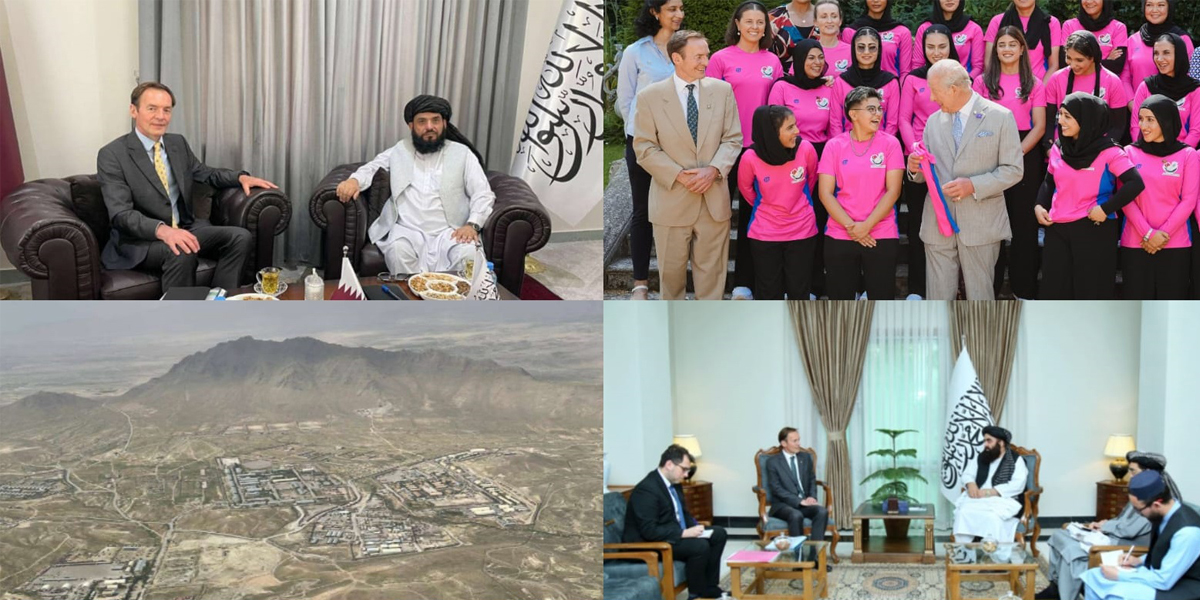
During his visits to Kabul, Lindsay has engaged directly with the Taliban on Britain’s main priorities, including counter-terrorism commitments, regional security threats, and the rights of women and girls. While the UK considers dialogue necessary, he has stressed that it “must be matched by action”, particularly in preventing Afghan territory from being used by terrorist groups and upholding human rights.
Keeping this channel open does not mean formally recognising the Taliban or accepting their policies; it acknowledges that Afghanistan’s political and security problems cannot be addressed without some form of direct communication.
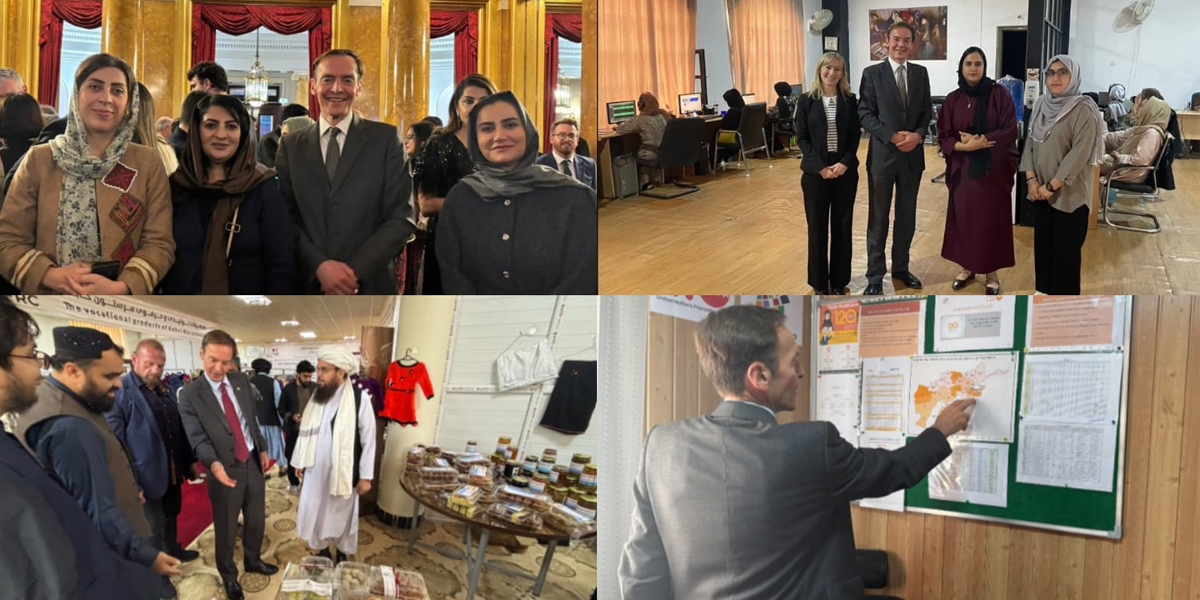
Lindsay’s account of his first year extends beyond meetings with Taliban officials. During his visits, he met Afghan artisans, entrepreneurs, radio presenters, and civil society figures, gaining a closer view of how ordinary Afghans are dealing with economic hardship, political isolation, and restrictions on public life. Their ability to continue working, running businesses, and supporting their communities remains important to Afghanistan’s future.
His meetings in London have provided another channel for hearing Afghan perspectives. Lindsay has engaged with Afghan activists, aid workers, and members of the Afghan Women’s Refugee Cricket Team, allowing the UK to hear from Afghans with different backgrounds and experiences, including those now living outside the country.
Humanitarian assistance remains a significant part of Britain’s involvement. Lindsay has visited UK-supported health and nutrition programmes, education initiatives, protection services, and projects aimed at strengthening livelihoods and climate resilience. These programmes continue to provide essential support to Afghan families at a time when the country faces severe economic and humanitarian pressures.
The UK has renewed this commitment for another three years and will provide £105 million annually, equivalent to approximately 9.2 billion Afghanis, for life-saving services, essential education, protection, livelihoods, and climate resilience.
Besides formal diplomacy and aid, the UK supports people-driven dialogue through Beyond Boundaries, a multitrack process implemented by the Islamabad-based Center for Research and Security Studies (CRSS). The UK has supported the process since its launch in 2015 and continued to do so after the Taliban returned to power in 2021, keeping open a channel through which Afghan and Pakistani stakeholders could remain in contact despite the changed political climate. It brings together religious scholars, tribal elders, former and serving officials, business representatives, journalists, civil society members, women, young people, and border communities to discuss security, the TTP dispute, border management, trade and transit, humanitarian pressures, connectivity, women’s rights, girls’ education, and increasingly hostile narratives on both sides. What makes the process unique is that its agenda is shaped by people who experience the consequences of strained Pakistan–Afghanistan relations. Participants identify problems, explain how decisions made in Islamabad and Kabul affect communities, and develop practical recommendations. These relationships help preserve communication when official engagement stalls, while carrying community-level concerns into Track 1.5 and formal policy discussions.
Britain has also continued to work with international partners through the UN-led political process on Afghanistan. Lindsay has hosted discussions on the need for sustained international engagement as the country faces security concerns, economic pressures, humanitarian needs, and continuing restrictions on women and girls.
Britain’s engagement is spread across direct diplomacy, support for Afghan communities, coordination with international partners, and locally rooted dialogue. These channels serve different purposes and allow the UK to remain involved without reducing Afghanistan to its relations with the Taliban.
Stepping away would not remove the problems emerging from Afghanistan or insulate the region from their effects. Lindsay’s reflections after a year in the role show that the UK intends to remain engaged, continue listening to Afghans from different backgrounds, and support those working for a more inclusive government and a more secure and prosperous future.