



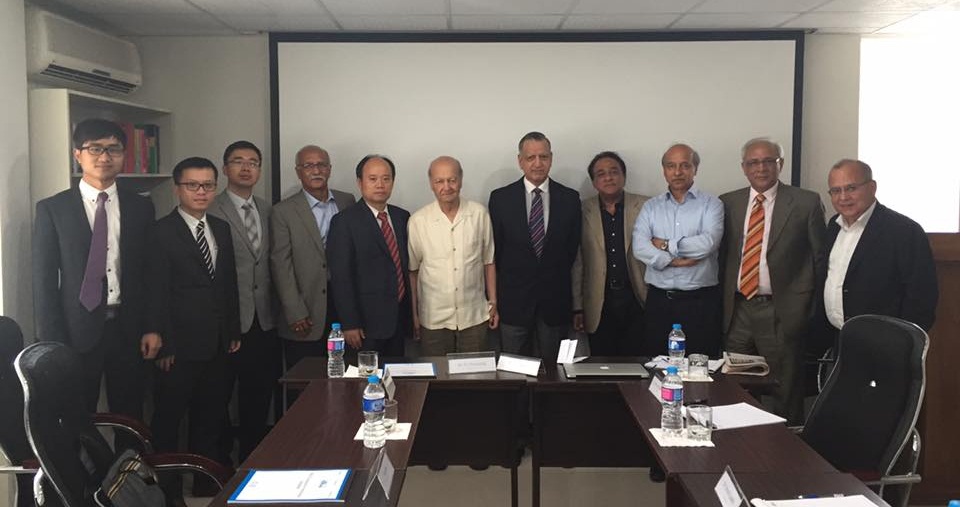
The Director of China Institute of Contemporary International Relations (CICIR) visited the Center for Research and Security Studies along with his CICIR colleagues; Mr. Yan Shuai, Mr. Chen Wenxin, and Mr. Wang Shida, on Tuesday 16 May, 2017, for a dialogue on ‘CPEC and Regional Security’ hosted by CRSS at its head office in Islamabad.
CRSS was represented by Pakistani experts; Dr. Shoaib Suddle; former IG Police, Lt. Gen (retd) Talat Masood; former Defence Secretary, Mr. Salman Bashir; former Foreign Secretary, AVM (retd) Ateeb Siddiqui; former Head and Commandant of Air Force Air war College, and Lt. Gen (retd) Masood Aslam; former Ambassador.
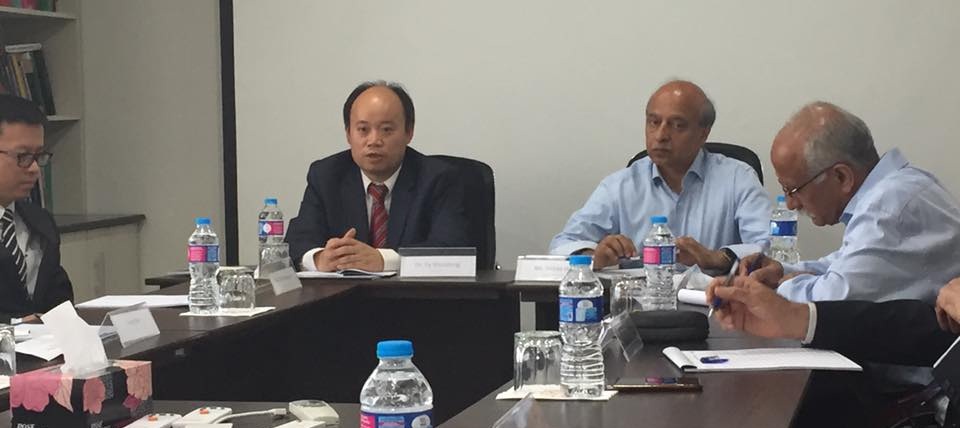
CICIR Director, Mr. Xianoqing, in his introductory remarks, noted that the relations of both countries have upgraded to a new level with the commencement of “China-Pakistan Economic Corridor” (CPEC); where earlier they were restricted to only a political and military relationship, now Pak-China relations have broadened to include economic cooperation and infrastructure development.
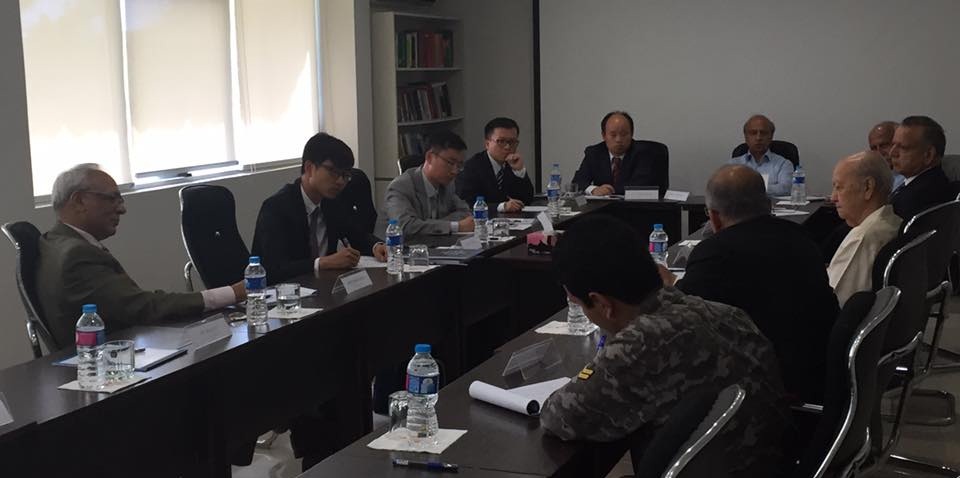
Chen Wenxin, Deputy Director CICIR expressed his concern that while the overall security situation in Pakistan has improved, Balochistan continues to face increased terrorist attacks. He also said that it is heartening to see that Pakistan has also become a member of Shanghai Cooperation Organistaion (SCO) recently and now Beijing has friends under the SCO framework. China looks forward to reaping maximum benefits by collaborating with Pakistan under this framework.
Former Foreign Secretary Salman Bashir congratulated Chinese friends on a successful ‘China Summit,’ terming it as a prodigious initiative in contemporary times. Pakistan like China also wants India to be part of the “One Belt One Road” (OBOR) initiative, but India has so far decided to stay away, he stated. He further mentioned three factors influencing Indian policy towards Pakistan, namely; a) Extremist ideological narrative of BJP which is itself lethal for Indian Union b) New dimension of Kashmir revolt for which India has no solution c) CPEC. India’s non-participation in ‘China Summit’ can be taken as indicator in this respect, he said.
Commenting on Afghanistan, Mr. Bashir opined that Afghanistan is lose-lose situation for United States, irrespective of the number of their troops. The Afghan puzzle can only be resolved through a political solution. Here, he stated, China can play a significant role as it is in the best position to engage with different groups in Afghanistan. He further stated that Iran and Afghanistan should be included in CPEC to break the regional political deadlock.
In response to a question regarding Balochistan’s security, Dr. Suddle remarked that it hinges on two factors; a) Sectarian Violence b) Nationalist and Sub-nationalist Violence. He also suggested that Afghanistan’s inclusion in CPEC will bring the security situation to a satisfactory level. As a result, the people of Balochistan, Khyber Pakhtunkhwa and FATA, the bordering regions, will be able to get maximum benefits of CPEC which will not only address their grievances but also help curb extremism and terrorism in the long run.
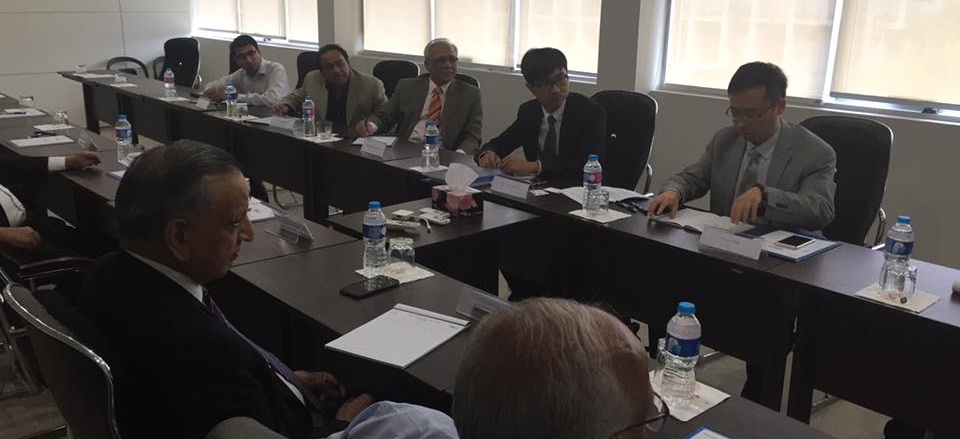
Lt. Gen (retd) Talat Masood remarked to CICIR representatives that people of Pakistan have embraced CPEC with open arms, but transparency is a must. He also said China can play a crucial role in Sino-Russian peace initiative in Afghanistan.
All participants agreed that CPEC has to be made a success first between China and Pakistan, then it may be expanded to other regional countries to reap the maximum benefits and to attain regional stability.
At the conclusion of the meeting, Mr. Imtiaz Gul, Executive Director CRSS, thanked all the guests for their valuable feedback and hoped that the discussion was constructive and may have provided food for thought.