




The peace process should continue with added transparency and in line with globally accepted fundamental values. Increasing bilateral trade and expeditious completion of Pakistani infrastructural projects in Afghanistan can be conducive to improving Af-Pak economic relations. The role of free media can be of an enormous significance in improving mutual perceptions. The fundamental human rights of Afghan – with their refugee status in Pakistan – should not be ignored while also facilitating their voluntary repatriation to their homeland. The cultural ties between Afghanistan and Pakistan should be promoted by building on existing historical linkages. Opportunities for educational collaboration must be explored and considered by both the governments. Pakistan and Afghanistan – reviewing respective educational curricula – can promote universal values of tolerance, peace and civic education. Mobilizing private sector investments needs enabling environment.
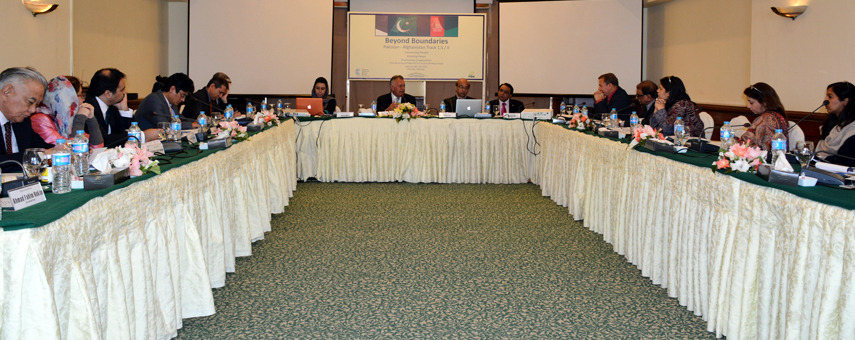
These were the notions presented by the members of Pakistani and Afghan civil society working groups during the regional civil society workshop held from February 8-9, 2016 at Bhurban. The workshop was a fifth major round in the series of meetings between civil society and regional security experts of both countries as part of “Beyond Boundaries”, a major Af-Pak track 1.5 and II initiative launched by an Islamabad based Center for Research and Security Studies (CRSS) – in partnership with its Afghan counterpart organization, DURAN Research and Analysis (DRA) and sub-national partner (Pakistan), the Foundation for Integrated Development Action (FIDA) as an effort to improve relations between Afghanistan and Pakistan, soothe bitter context, tackle trust deficit which can somehow de-escalate the heightened tensions and improve mutual perceptions.
The Afghan and Pakistani working groups welcomed the Quadrilateral dialogue and the decision taken by respective states to hold another session on Feb 23rd 2016 in the hope that the process continued with added transparency and in line with globally accepted fundamental values, that the Taliban would attend the session as interlocutors, and that women’s perspective would be taken into consideration in the forthcoming Quadrilateral discussions.
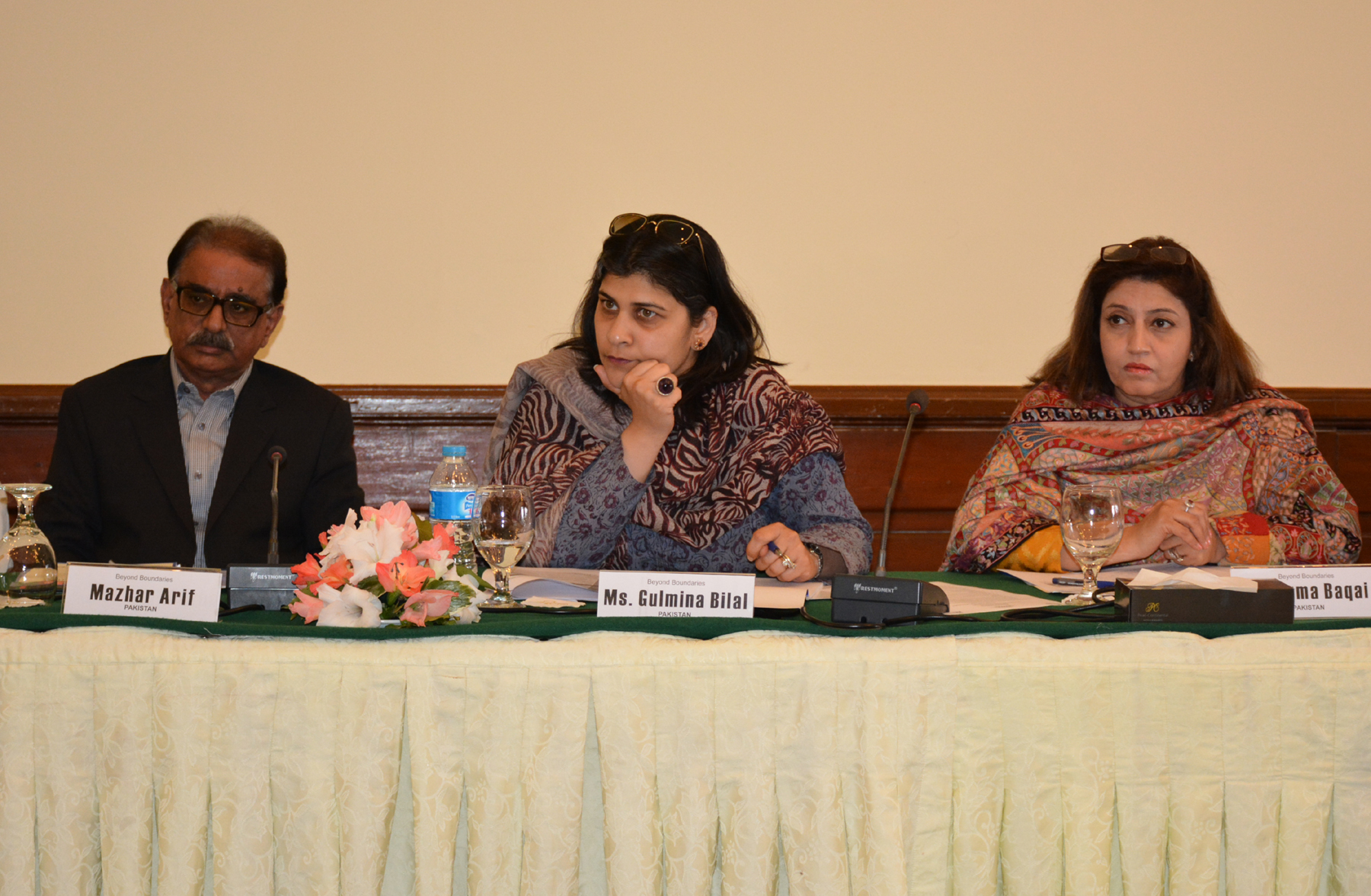
The members noted that the mutual negative perceptions could disrupt the Quadrilateral dialogue and bilateral relations and thus needed urgent attentions from those at helm of Pakistan and Afghanistan. These potentially disruptive factors mainly include Afghan perception of Pakistan support to Afghan Taliban. Conversely, Pakistan’s perception of Afghanistan’s lack of action against elements involved in subversive activities in Pakistan, interplay of ideology and money in sponsoring terrorism, the evolution of radical organizations in the region, possible escalation of violence, the anticipated spring offensive, the politicization of the refugees issue and sensationalized reporting.
The working group members unanimously endorsed taking indiscriminate action on both sides against unconstitutional non-state actors. They emphasized on the need to promote cultural ties by building on existing historical linkages organizing seminars, cultural and literary events, concerts, exchange of visits of writers, students, opinion makers, developing films and documentaries. Also expand the scope of these activities beyond Islamabad and Kabul, with the broader aim of creating a conducive ambiance for people to people relationship and strengthening impulses for peace, stability and cooperation.
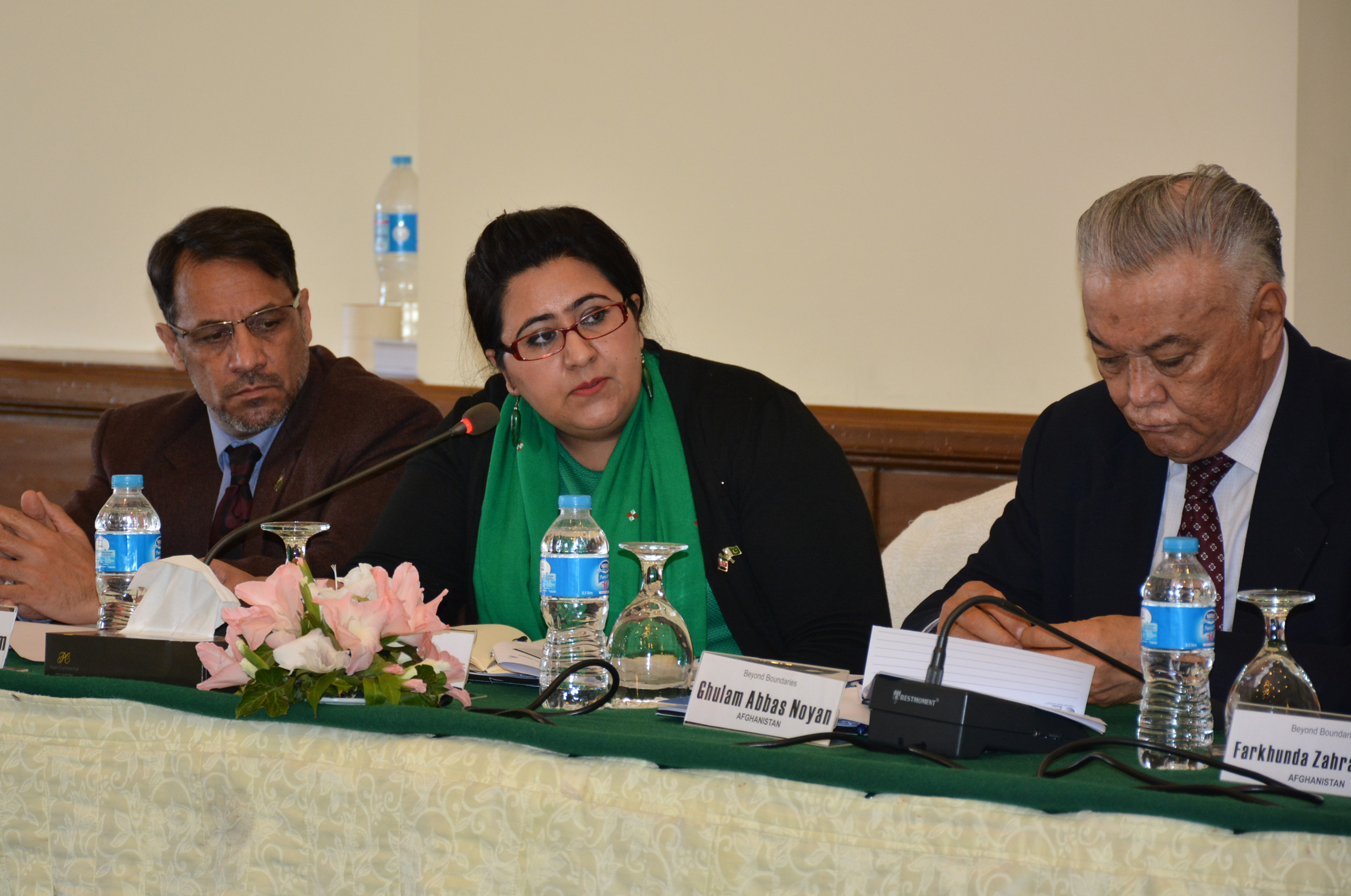
Given the significance of free media, and with the aim of orienting bilateral relations in a positive direction, the delegates emphasized upon institutions and think tanks to jointly conceive media projects and organize exchange of journalists while underscoring the need to set up a Joint Pak-Afghan Civil Society Working Group for long term cooperation.
Underscoring the need for both countries to review their educational curriculum in order promote tolerance, peace and civic education, the Beyond Boundaries delegates believed that the educational collaboration between both countries was crucially important and urged their respective governments to develop a comprehensive and transparent program for scholarly exchange between two countries. These may include, scholarships (up to PhD level), visiting scholar programs and alumni networking on both sides, through engagement of credible and reputable educational institutions.
The speakers believed that enabling environment should be ensured to facilitate private sector investment in building standard medical facilities in Afghanistan to reduce the difficulties of Afghan nationals in need of quality medical treatment. They recommended that human rights be protected of Afghan Refugees with special emphasis on facilitating their voluntary repatriation to their homeland.
Emphasizing on the need for improved economic relations, the civil society members suggested to facilitate the business visa regime, increase trade through facilitation of transit routes, and expeditious completion of all infrastructural projects to which Pakistan was committed. They also said that there was a dire need to help shape the prevailing negative narrative into a positive and mature relationship through people to people contacts and effective role of civil society towards confidence building measures. They also highlighted the need for twinning of sister cities between the two countries.