



by Zeeshan Salahuddin, Senior Research Fellow, CRSS
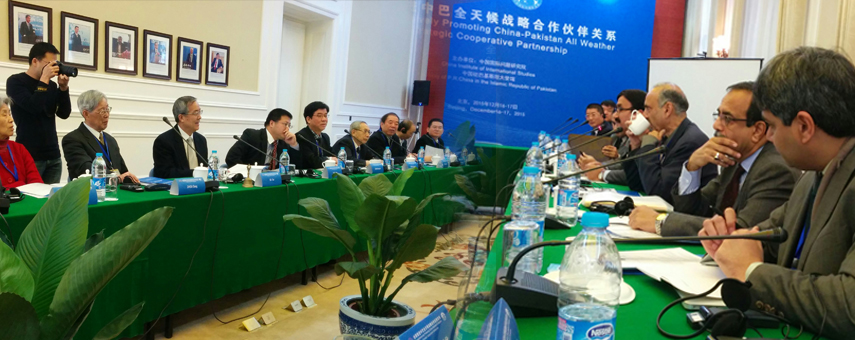
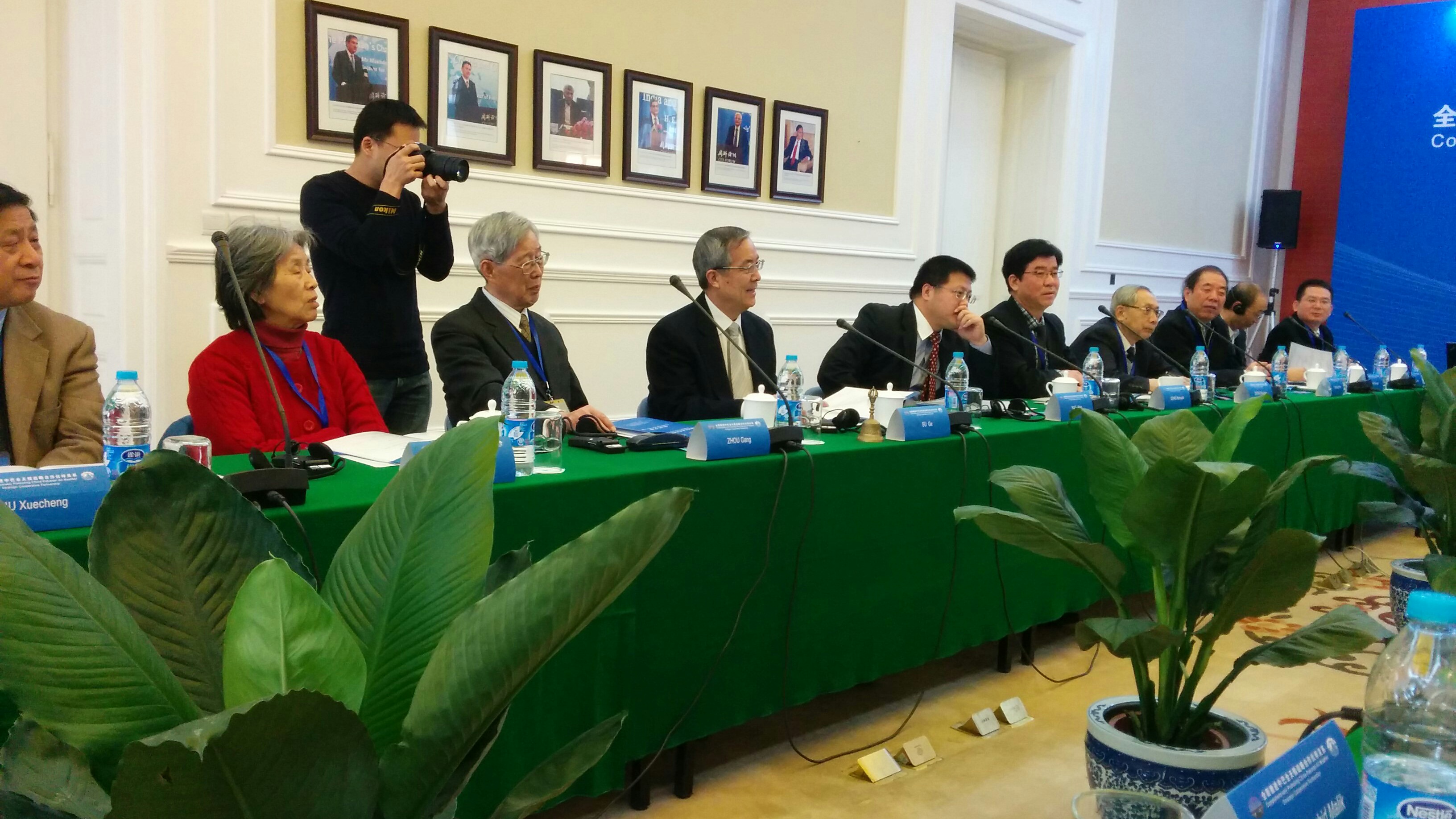
This paper was presented at the Comprehensively Promoting China-Pakistan All-Weather Strategic Cooperative Partnership Conference held at the China Institute for International Studies (CIIS), in Beijing, China, December 16-17, 2015.
Introduction
When we speak of countering terror, we devote a lot of time, effort and energy into eliminating the physical presence of the enemy. But as history has shown repeatedly, equally important is targeting the radical mindset behind such insurgencies or movements. In order to overcome the significant security threats faced by both of our great nations, we must also find ways to neutralize the ideological underpinnings of these groups and individuals, generate public consensus and support for these interventions, and strive for regional stability. It is in the mutual interest of both countries, part of our shared destiny, to counter and neutralize terror in all forms within Pakistan and China, as well as the immediate region
A Game of Numbers
In the pursuit of this, I present to you a game of numbers. We have three opportunities at present, and three corresponding threats to our combined way of existence, and the road forward, both literal in the form and PCEC and theoretical.
Opportunities
First, our three opportunities consist of the China-Pakistan Economic Corridor, as minister councilor Yao Wen mentioned, the recently rekindled relations with India after a long period of mutual vitriol, and Pakistan’s potential role in the region following the Heart of Asia conference.
The CPEC is critical because it has given Pakistan what 60 years of US foreign policy could not give us: a tangible, long-term, mutually beneficial, economic reason to bring about peace, stability and build cooperation in the region. Riding the momentum from the NAP, the CPEC has only pushed the Pakistan security establishment in the right direction, where the distinction between friend and enemy is crystallized through the clear battle lines that have been drawn. The CPEC has further made Pakistan realize that a stable Pakistan, politically and within the security paradigm, is absolutely crucial to the country’s economic development. CPEC, as a part of the larger 21st century Maritime Silk Route, requires a regional and global community of shared destiny, and the first two members of these community, are China and Pakistan.
Second is the normalization of relations with India. Despite offers to sit and discuss matters, the Modi government in India has been particularly averse to negotiations, and as we all know, there is significant historical baggage and mutual mistrust. The ice seemed to have thawed in November when Prime Minister Modi met Prime Minister Sharif, and India’s stance during the Heart of Asia conference gave much hope to the rekindling of positive relationships. It goes without saying that good relations between Pakistan and India are one of the pillars that will form the foundation of regional stability in South Asia and beyond. Just this past Monday, December 14, my organization, the Center for Research and Security Studies held a talk with the Indian High Commissioner, Dr. T. C. A. Rahgavan, which centered on the idea of shifting the focus from “Geo-Political” to “Geo-Economic” as part of the process for bringing the two parties together. However, the honorable ambassador also stated that India would only discuss that part of Kashmir that falls under Islamabad’s purview. The point is that this relationship is historically complex, and needs a lot of nuanced maneuvering.
Third, the Heart of Asia conference has provided Pakistan with a golden opportunity to step up, and play a central role in stabilizing Afghanistan, both in terms of political support, and leveraging its sway with the Afghan Taliban to create stability. Once again, CRSS has a current program underway, called Beyond Boundaries, a Track 1.5/II project which attempts to bring youth, and other civil society members and security experts from both sides together to speak about and address mutual grievances.
China and Pakistan must work together to ensure that Pakistan especially is able to capitalize on all three of these opportunities from a counter-terrorism point of view, and they all feed into each other. If we are to pursue our larger dream of sustainable peace and stability in the region, normalizing our relationships and improving trade with neighbors, and leading by example to usher in a new era of economic prosperity, this process must be spearheaded by the Iron Brothers.
Threats
The threats to these opportunities, and to our overall vision for a shared destiny, resides in three areas. The first is internal instability and politicking within Pakistan or China. The second is external or regional instability. And the third is the complacency of over-simplification.
As I mentioned before, Pakistan has made remarkable progress under the NAP. The law enforcement operations, the urban pacification operation by the Rangers in Karachi, and the attempts at reconciliation with the Baloch nationalist insurgency has all born fruit. It is one thing to blindly trust the military’s version of the operations, but independent data collected from open sources by CRSS and other think tanks, shows a significant decline in violence across the country. Most recently, a new story on The World Weekly hypothesized that Pakistan is well on its way to becoming the first country to systematically dismantle and disrupt a large scale religious insurgency on its soil. However, if this tide is ever reversed, this could have dire consequences for Pakistan. To simultaneously create regional stability and economic growth, Pakistan recognizes that the CPEC is not merely an economic deal, but a gift of sincerity from China, and an opportunity to bring Pakistan back from the brink, and move forward into a secure, sustainable, stable future. Pakistan must continue the push forward against terrorism and extremism, clarify the state stance on Afghan Taliban, and sustain the counter-insurgency campaigns.
Included in this internal instability is the occasional inability for our leaders to generate political consensus on important national issues, including several points with in the NAP, and CPEC routes through the country. Politics is always a dirty business, and in certain spheres in Pakistan, it is practically considered the national sport. Political point-scoring and detracting can seriously damage our path forward.
Second, any inter-state or intra-state instability involving our neighbors is a credible threat. Whether it is the mutual mistrust with Afghanistan and the inability for an Afghan-led, Afghan-owned reconciliation process, or continued mudslinging and instability with India, or tension with Iran over Chabahar port and it’s standing as a direct competitor to Gawadar port, regional instability poses serious risks for this idea of shared destiny. To counter these, the Iron Brotherhood must help Pakistan play a critical role in the Afghan reconciliation process, and normalize its relationship with India. The historically nebulous vision at the top is getting clearer, and with the unprecedented opportunities afforded to us by history and circumstance, we must come together to achieve these goals to foster regional peace and stability.
Finally, there is something to be said about the complacency and lethargy that sets in due to over-simplification of complex problems. Pakistan may have made giant strides in quashing insurgencies on its soil, much like our Chinese counterparts are battling the Turkestan Islamic Party terrorists, but little has been done to target the ideology that drives these groups. Counter narratives that are embedded in rule of law and the primacy of the state have a significant role to play to counter said ideology. If we get complacent based on physical victory over a conventional opposing force, and neglect to dismantle the mindset behind it, these insurgencies will continue to flourish in both Western Pakistan and Western China. All this is further exacerbated by the ever growing global threat of IS.
In the pursuit of this goal, CRSS has recently initiated the Pakistan Center for Excellence (PACE) initiative. It is a Countering Violent Extremism program, designed to trigger critical thinking through a discourse anchored in fundamental global values such as socio-political diversity, tolerance of opinions and diversity, rule of law and equal citizenry. The idea is to reconnect Pakistan with the Constitution, and promote good governance based on the UN indicators on Rule of Law. PACE will provide alternate narratives, sprouting from a focused debate on the aforementioned values instead of a direct disagreement or negation of religious extremist narratives, and this will be accomplished by inculcating these core values into the minds of opinion multipliers, such as lecturers, professors, hosts and anchors. CRSS believes that it is initiatives like these, that provide the ideological compliment to the physical security operations, and will help usher Pakistan into a stronger, stable, sustainable future, and it is in line with Beijing’s sustained policy of expanding its sphere of positive relations and development.
Counter-terrorism, and enhanced bilateral cooperation in this field is crucial to our shared destiny, the hope is that both nations will continue to expand, grow and prosper under the reinvigorated All-Weather Strategic Cooperation Partnership.