



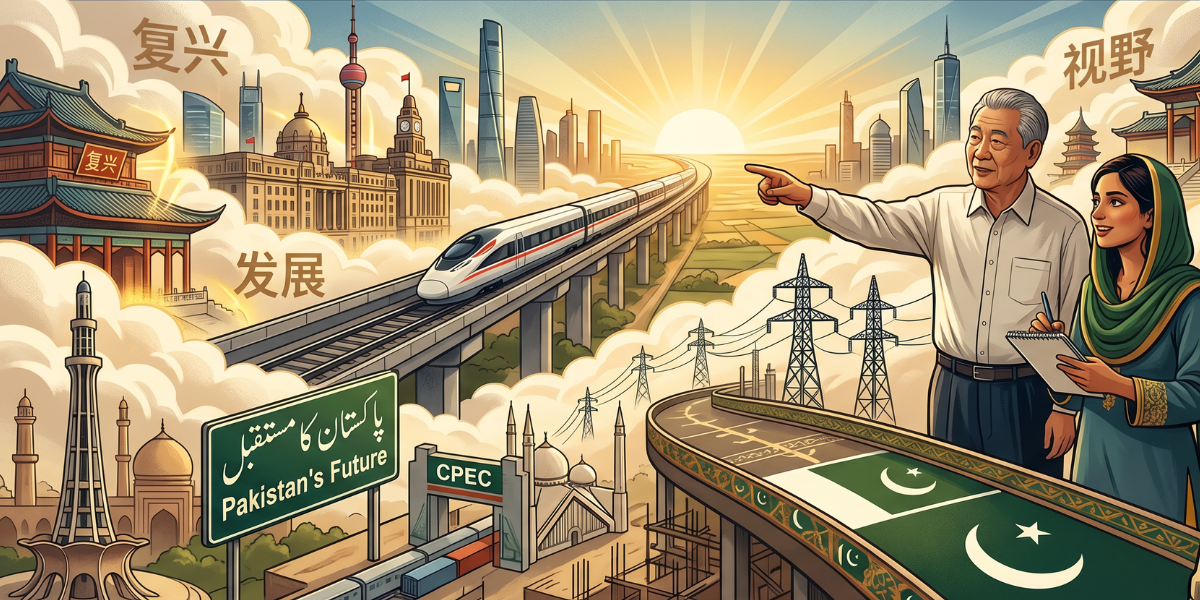
No country in recent history has achieved the scale of economic, technological and social transformation witnessed in China. Over the past four decades, China has emerged from a developing economy into a global leader in technology, innovation, education, infrastructure and human development. Today, China is not only leading the region economically but is also shaping global trends in trade, manufacturing, technology and investment.
What makes China’s development journey remarkable is not merely the scale of its achievements but the consistency of its vision. The country has demonstrated how long-term planning, policy continuity and investment in people can produce extraordinary results. Across the nation, there is a clear focus on development, modernization and improving the quality of life of ordinary citizens.
China’s rise as a technological powerhouse is particularly impressive. From artificial intelligence and smart manufacturing to electric vehicles, high-speed rail and digital payment systems, China has positioned itself at the forefront of innovation. Chinese companies are increasingly setting global standards in advanced technology and industrial production. The country’s commitment to research and development has enabled it to compete with the world’s leading economies in sectors that will define the future.
An important factor behind this remarkable transformation has been the continuity of leadership and long-term vision. Under the leadership of President Xi Jinping, China has continued to pursue modernization, technological innovation, poverty alleviation and high-quality development with determination and consistency. His emphasis on long-term planning, human capital development, innovation and shared prosperity has helped China strengthen its position as a leading economic and technological power.
During recent visits to Wuhan, Xiangyang and Beijing, the practical results of these policies were visible everywhere. Modern industrial facilities, smart agriculture projects, advanced automobile manufacturing, technology parks, world-class transportation networks and highly connected urban centres reflected a development model driven by innovation and efficiency. Whether in manufacturing plants, educational institutions, or public service facilities, there was a clear emphasis on combining technology with practical solutions to drive economic growth and social development.
Equally impressive is China’s investment in human capital. The country’s leadership understood long ago that sustainable development depends upon an educated and skilled population. Chinese universities have become centres of excellence in research, science, technology and innovation. Strong collaboration between educational institutions and industry ensures that graduates are equipped with the skills required by a rapidly changing economy.
China’s contribution to the education of Pakistani students deserves special appreciation. Thousands of Pakistani students have benefited from scholarships, academic exchanges and higher education opportunities in Chinese universities. These institutions provide access to modern laboratories, research facilities and high-quality education. Many Pakistani graduates returning from China are now contributing to Pakistan’s development in engineering, medicine, information technology, business and public administration. In many ways, they serve as an important bridge between the people of both countries.
Another important lesson from China’s experience is the relationship between economic development and social stability. China has consistently held that prosperity lies as the foundation for peace. Economic growth, employment opportunities, quality education and improved public services contribute to social harmony and reduce the conditions that often lead to instability. This development-first approach offers valuable lessons for countries seeking both economic progress and lasting peace.
China has also played a constructive role in promoting regional stability and cooperation. Its emphasis on dialogue, connectivity, trade and development reflects a belief that shared prosperity benefits all nations. By focusing on economic cooperation and regional integration, China has helped create growth opportunities that can contribute to peace and stability across the wider region.
Perhaps the most important lesson behind China’s achievements is the effectiveness of long-term governance and policy continuity. Development on such a scale cannot be achieved within a few years or through isolated projects. It requires clear national priorities, institutional capacity and the ability to pursue strategic objectives consistently over decades. China’s experience demonstrates how stable policies, efficient implementation and accountability can transform national ambitions into tangible results.
As Pakistan and China celebrate 75 years of enduring friendship, there is much Pakistan can learn from China’s development journey. The importance of investing in human capital, strengthening institutions, ensuring policy continuity, promoting merit and embracing innovation cannot be overstated. China’s progress demonstrates that national transformation is achieved not through short-term measures but through vision, discipline and sustained commitment.
China’s story is ultimately about what is possible when a nation invests in its people, plans for the future, and remains focused on development. For Pakistan, the Chinese experience offers both inspiration and practical lessons. By learning from China’s achievements in infrastructure, governance, education and human development, Pakistan can accelerate its own journey towards prosperity, stability and a brighter future for generations to come.
 By Junaid Yaqoob Khan
Junaid Yaqoob Khan is a development and policy professional with over 15 years of experience in governance, regional cooperation, peacebuilding, and economic connectivity across South and Central Asia. He currently serves as Director Programs at the Centre for Research and Security Studies (CRSS), Islamabad. He regularly contributes analysis and commentary on regional geopolitics, economic connectivity, trade corridors, and Pakistan’s relations with neighbouring countries, with a particular focus on South Asia, Central Asia, Afghanistan, and China.