



The total number of individuals displaced by conflict in 2016 has risen to 636,503, as joint teams continue to finalise assessments of those displaced last year. In 2017 so far, 2,864 individuals have been verified as displaced. Around 42 per cent are located in hard to access areas.
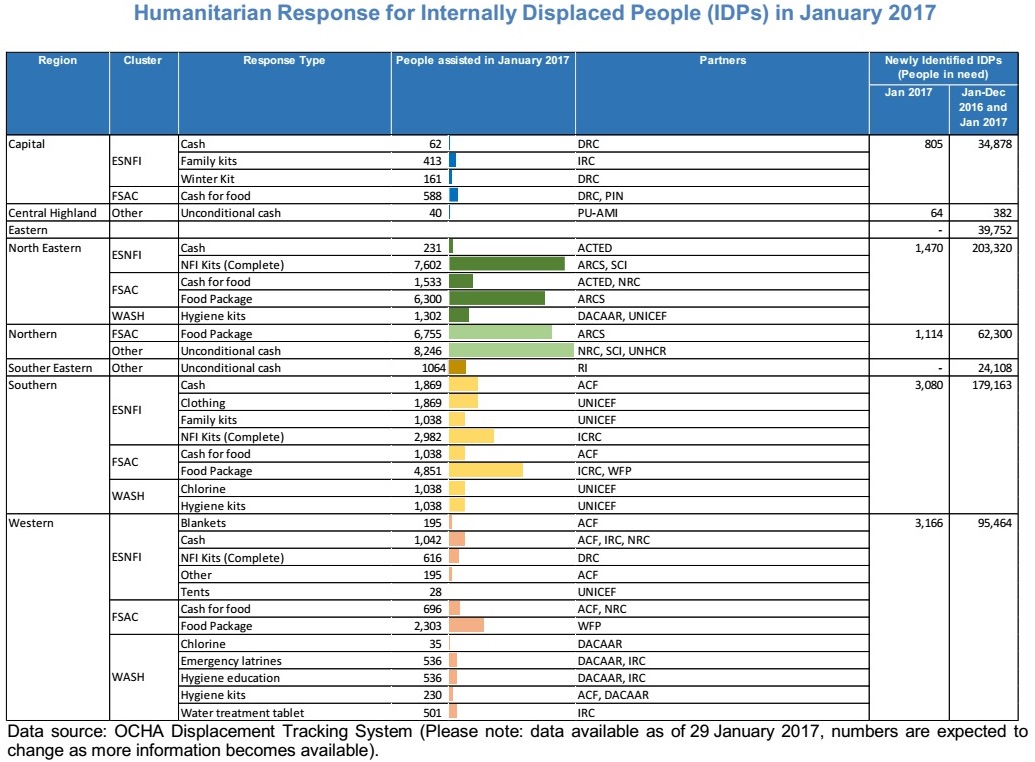
Northern/North Eastern: Military operations including airstrikes in areas surrounding Kunduz city continued for the sixth consecutive week, with 1,470 individuals displaced in 2016 (located hitherto in inaccessible areas) verified in the past week. In Faryab, 455 IDPs were verified in Maimana city. In 2017 so far, over 1,114 verified IDPs have been displaced from the Northern/North Eastern region; approximately 39 per cent of the country total.
Central: Following military operations in Kapisa, 1,288 IDPs have been verified in Tagab district, with a reported further 281 unverified IDPs in Kabul to be assessed next week. In Kabul, undocumented returnees from Pakistan continue to arrive, with 826 individuals verified in the past week.
Southern: The overall security situation remained static in Uruzgan, Hilmand and Zabul, with NSAG maintaining frontline positions. In Uruzgan, 3,206 individuals displaced in 2016 were verified in Tirin Kot. In Qalat district, Zabul, heavy rains destroyed homes, with 231 individuals affected.
Assessments for rain-affected families in Kandahar is ongoing. In 2017 so far, 1,211 verified individuals have been displaced from the south; around 42 per cent of the country total.
Eastern: Military operations including airstrikes continued in Nangarhar, Laghman, Kunar and Nuristan. While there were no new reports of displacements, local officials in Nuristan raised concerns about the deteriorating security situation.
Western: The security situation in the Western provinces remains unstable, with reports of small numbers of displacements. In Hirat city, 63 individuals were verified displaced from Jawand district in Badghis, and 35 individuals from Sangin in Hilmand.
Refugees and Returnees
The winter pause in UNHCR’s repatriation program continues, with no registered refugees repatriated from Pakistan in the past seven weeks.
From 22-28 January, IOM reported 1,100 undocumented Afghans returned or were deported from Pakistan, a reduction of around 30 per cent from the previous week. The total number of undocumented returnees for 2017 is 5,884.
Ongoing Response Activities
North and North Eastern: In Badakhshan, ACTED distributed cash to 455 IDPs in Fayzabad city.
Central: In Kabul, CARE provided NFIs and cash, and WFP provided food to 602 individuals. In Bamyan, SI provided cash winter assistance to 280 individuals. In Daykundi, PUAMI provided 42 IDPs with cash, and in Khost, UNHCR/APA provided food to 4,200 individuals in Gulan Camp and 1,050 individuals in Spera and Tani districts, with 1,260 of the most vulnerable receiving tents, winter NFIs and clothing. In Paktika, UNHCR also provided cash to 10,625 NWA refugees.
Western: In Hirat, WFP provided 98 individuals with food rations, and NRC provided hygiene and NFI kits, also for 98 individuals. At Islam Qala, IOM assisted 95 returnees, of whom 19 were unaccompanied minors.
Southern: In Kandahar, DRC provided cash to 21 disasteraffected individuals. Following completion of assessments in Lashkar Gah, Hilmand, WFP and ACF will respond to 1,893 IDPs in the coming weeks.
Eastern: For IDPs, RI provided cash to 1,001 individuals in Kunar province. For returnees, NCRO, RI, and NPO/RRA provided cash. WFP distributed food rations in Nangarhar, Laghman and Kunar; SHPOUL and ZOA with the support of DRA commenced provision of drinking water in Behsud and provided hygiene training and kits; and WHO, REMT, UNICEF, UNFPA, AADA, CWSA, UNHCR, HN-TPO and PUAMI continued delivering a range of health services, including vaccinations, health education, mobile health services, and psychological counselling in areas of high return and at the IOM-TC and UNHCR EC.
Access Constraints and Security Incidents
Northern/North Eastern: Kohistan district in Faryab remains cut off since October, due to NSAG control of roads and seasonal snowfall. Highly inflated commodity prices has been reported. In Badakhshan, humanitarian actors have been unable to access Baharak district due to insecurity, to assess reports of houses damaged by heavy snowfall.
Central: Heavy snow closed the Salang Pass for a number of days, with the road reopened for traffic on 25 January.
Southern: Demining agencies have reported that activities in Hilmand, Zabul and Uruzgan provinces are being disrupted due to insecurity and are fully operational only in the provincial capitals.
Western: In Badghis in the past week, NSAG ordered the temporary closure of ten health facilities across various districts. However, the clinics reopened after three days following negotiations facilitated by local elders. In addition, heavy snowfall in Ghor province has blocked roads including major highways, but in line with seasonal trends
This article originally appeared on www.reliefweb.int on January 28, 2017. Original link.