



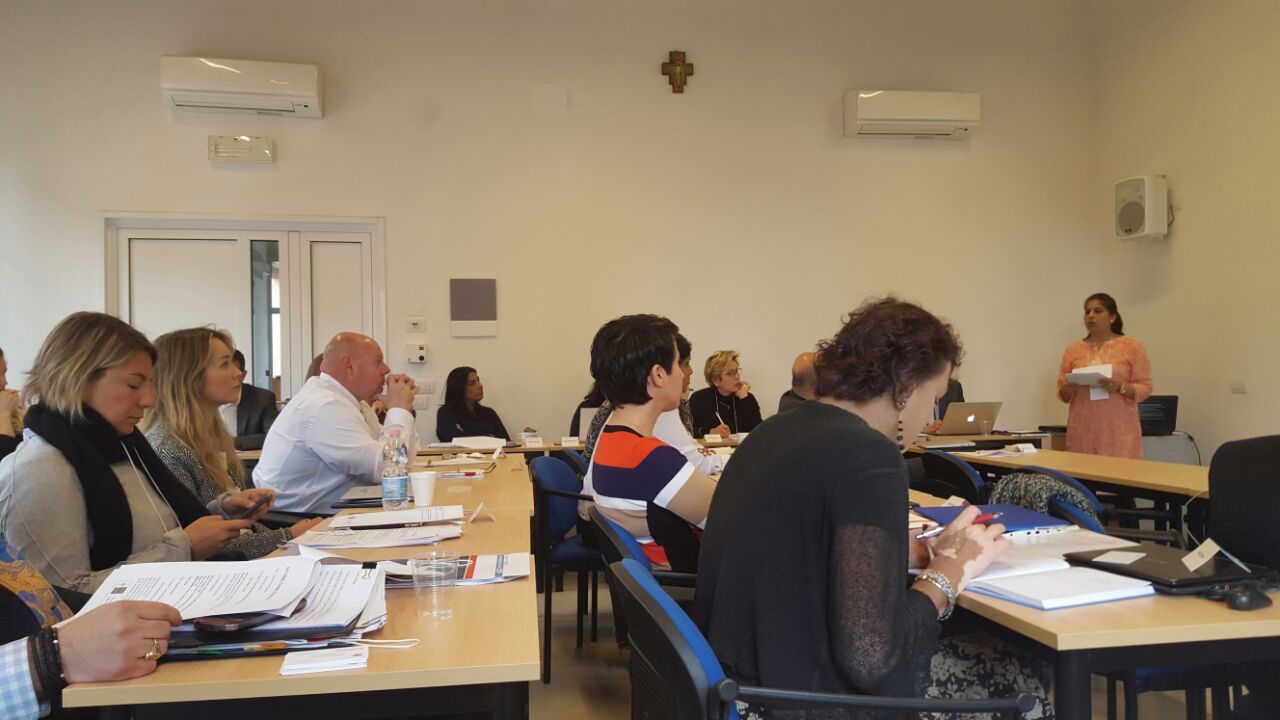
by Imtiaz Gul, Executive Director, CRSS. Read at NATO Advanced Research Workshop, Response to Female Migration to ISIS, Venice, Italy, 26-30 April, 2016.
The Emergence of Radical Groups
Let us first be clear about what led to the emergence and proliferation of religiously motivated monsters such as AQ and ISIS? It was certainly two Afghan wars initiated from Pakistani soil, followed by the invasion of Iraq, and military interventions in Libya and Syria, that left certain power vacuums for opportunists to seize varying degrees of power and control.
Geo-politics has played havoc with nations and their security by making religion an instrument of geo-political interventions. They sowed the seeds of the trans-border ideologies and narratives that are haunt our daily existence today. Pakistan’s own preoccupation with the Kashmir dispute, frictions with India and a skewed policy on Afghanistan have only exacerbated the situation that arose out of the US-led anti-Soviet jihad and the war on terror.
This provides the context for about 212 radical organizations that emerged in the last 30 years or, almost all of them are banned but their members continue operate under different names. Different shades of Taliban, Al Qaeda, ISIS-Daesh, LeT, JeM (both India-focused) also count towards those outlawed groups.
Context and Motivations
Any debate or analysis on IS or other terrorist/extremist networks needs to be rooted in the socio-cultural context of the respective environment, and the circumstances that led to their creation and rapid expansion. Additionally, the motivations and driving factors for these groups are equally important to understand. These range from social, to economic, to conflict-driven and religiously-centered.
My own aunt – the sister of my father , for instance, tasked her eldest son to avenge the murder of her younger son. I wont forgive you if you don’t, she told him. This illustrates the social context in which women in northwestern Pakistan grow.
One motivation is to perpetuate a culture that dominates women. It is of critical importance that we examine the role and life of most rural women in Pakistan. Their primary responsibility is to her husband’s house, birthing and raising his children, and serving him in any capacity he needs her to. Her existence is an extension of the male goals in the family. This patriarchal, male-dominated, male-centered environment also means they grow up with a propensity to accept commands of brothers, fathers, and other male figures in their lives, in addition to the husband.
Another motivation is adventure. Youth is enamored and captivated by the promise of adventure and action over intelligence and discourse. I have personally met several young individuals who are smitten with the likes of fictional (Robin Hood) and real (Che Guevera) individuals that exhibit a sense of adventurism with a gravitation towards shooting and violence.
Ideological motivation and brainwashing is another form of motivation. As in example, in one case from Abbottabad, Pakistan, a young man’s initial motivation of playing with a Kalashnikov transformed into an ideological mission. In another case, ideological brainwashing transformed one lone wolf Rauf into an assassin following his meetings with a radical group in Lahore. He would watch prime time television to identify his targets – all those who he thought were liberal and opposed to his interpretation of Islam. Several political murders, including those of a governor and the federal minister for minority rights, and many others on charges of blasphemy also represent this ideological motivation.
Financial incentives also serve as a form of motivation, but in my view this is limited in scope and application. The Al-Hudda Model is an example where financial motivation is irrelevant, as all female followers come from middle and upper class rich families. Within the economic debate, there lies an inherent hypocrisy, where conventional businessmen and traders will go out of their way to evade taxes, but happily donate funds to outfits and organizations on government and international watch lists. This need to fund said groups, and to allow their women to mobilize support for them, are vehicles to enforcement of sharia – their fantasy.
Finally, the nexus between crime and religious ideology is also a possible factor. Most of current IS and some AQ operatives have a direct nexus with criminal syndicates – out there to serve as proxies for external factors, and also to mobilize funds. This, however, relates mostly to men, especially when it comes to kidnappings and extortion.
Pakistan Females’ Involvement with/for IS
As of January 2016, a definite trend of female involvement with and for IS in Pakistan was discernible; three Lahore-based families, led by women, had apparently moved to Syria to support the dreaded organization. A married couple was arrested in the same city for sending people to fight in Syria. Three women were arrested in Karachi in December for spreading IS literature and fundraising for the group. Six other women were detained a week later while thirteen men were arrested for suspected involvement with the terror group. Family members confirmed that (some women) had established extended contact before moving to Syria.
These instances suggested that the IS has gradually managed to make ingress into religio-political circles in Pakistan’s major urban centers (Karachi and Lahore being the largest cities respectively), where preying on existing militant networks and their disgruntled activists or vulnerable youth has emerged as a fairly successful recruitment strategy.
It is also quite evident from these scattered examples of women’s role in IS recruitment and ideological propagation that women as mentors, teachers and force multipliers very much remain a critical link for all jihadist groups, including the IS. This is true in the case of Karachi as well. Kamran Gujjar, a suspected terrorist made the startling revelation during investigation that his wife and sister-in-law had been working in Karachi for Daesh. Both women were experts in brainwashing their potential recruits over time. They had been collecting funds for the terrorist outfit in the name of a welfare organization. Kamran Gujjar also revealed that several other women had also joined their group.
Sources of Radicalization
Ostensibly, besides the radical Sunni Salafi mosques and seminaries, institutions such as Al-Hudda Foundation, too serve as the recruitment centers and the springboards for these ideologies. Most of these religious institutions are directly or otherwise affiliated with radical outfits such as Lashkar-e-Jhangvi (LeJ), Hizbut Tahrir (HuT), al-Qaeda, Jamaat-ud-Dawa / Lashkar-e-Taiba (JuD) and even political parties like Jamaat-e-Islami (JI).
Teachings at Raiwind, the mass-preaching center on the outskirts of Lahore, where tens of thousands of Muslims keep turning up for short, mid-term and long-term religious courses, also feeds into the narrative peddled by trans-border radical groups such as Al-Qaeda and the IS. Women wings of these institutions attract as many followers as do those dedicated for men.
In a predominantly Muslim society, supply of women supporters for radical causes will most probably never dry up. We must bear in mind that women in Pakistani rural regions, particularly in the northwestern and south Punjab territories, grow up Muslims in a conservative male-dominated social milieu. Most have traditionally been supportive of religious causes or movements raised in the name of Islam. Because of ingrained religiosity, conservative social surroundings, and little exposure to modern knowledge that can help them think critically, they have often upstaged men in donating sons and material assets for the cause of jihad. For instance, immediately after the war on terror in Afghanistan began unfolding on October 7, 2001, Pakistani militants readied themselves to support Afghan Taliban. Most of the donations that came in support of the jihad were cash and gold jewelry – donated by women of the Swat region.
The proliferation of online tools without much in the way of training how to use the tool productively, has also resulted in exposure to extremist ideology that is propagated prolifically online.
As a journalist, I have myself witnessed women coming out in droves to donate to forces of Mullah Soofi Mohammad and his dreaded son-in-law Mullah Fazlullah. In those days, both clerics had instructed to encourage women into donating valuables to the mosques of their respective localities. And women at times would upend men in the zeal to donate for what they had been made to believe was a sacred cause.
As a whole, the confirmation of the involvement and direct participation of women in terrorist activities via Daesh opens up a whole new front in the war on terrorism for the Pakistani authorities. Most of those who sneaked out of Pakistan to reinforce Daesh ranks in Syria, belonged to the hardcore Wahabi/Salafi school of thought, mostly represented by JuD/LeT.
The Challenge and the Solutions
So, the challenge at hand is that even if a terrorist network like Daesh is decapitated and degraded, it will continue to represent threat to the stability of the country because of a) religious motivations, and b) external drivers of terrorism (Al-Qaeda, IS and agents of proxy wars among India, Afghanistan and Pakistan).
First, as long as institutions such as Al-Hudda Foundation or similar educational entities freely impart an essentially anti-western radical Islamist ideology, they will keep serving as nurseries and recruiting grounds even for affluent females. In the absence of any state regulation on the curricula and literally non-existent oversight of their activities or sources of funding, they are likely to attract zealots ready to offer life and material for radical causes.
Second, Pakistan and other Muslim countries should emulate Turkey’s example of keeping religion and politics separate. President Erdogan underscored this again recently.
Third and finally, it is a challenge that requires a constant watch and continuous propagation of the counter-narrative through better law enforcement and development of the soft power. Hence, these two must be prioritized above all else.
Most Americans and Europeans have confused the issue for us more than anybody; they began talking of a counter-narrative to deal with the terrorist/extremist threats. People in our country also began harping on the same string, singing repetitively what they heard from abroad.
I would say we must speak about a narrative – not even an alternative narrative – for the simple reason that in a country like Pakistan deviation from the rule of law, condoning of religiously motivated crimes/ violation of law has created the space for radical networks to propagate their narrative. They take advantage of the absence of the reference to law in the mainstream political discourse. Our responsibility lies in repeatedly referring to the rule of law and constitutionalism which eventually should evolve as the narrative.
The real fight at hand – in keeping women and men away from the radical path – is how to fight deeply entrenched socio-cultural mindset. De-incentivizing the call for jihad vulnerable people, especially youth, providing alternate avenues to focus their energies, and indiscriminant imposition of rule of law are critical factors to help accomplish this goal.