



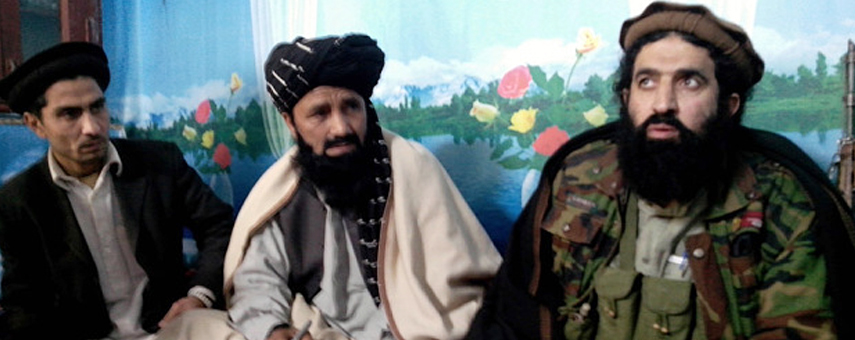
The rise of Islamic State of Iraq and Sham (ISIS), and its proclamation of Islamic Caliphate on Iraq and Syrian territories controlled by ISIS, has surprised even the jihadi organizations operating in different parts of the world. Pakistani Islamist terrorist organizations and their splinter groups are indecisive about responding to the establishment of Caliphate as achieving Caliphate is one of their primary objectives. The Islamic State has managed to achieve scores of victories against standing armies of Syria and Iraq and controls a territory almost the size of Belgium. The size of the areas under Islamic States appear to grow even further as weak states like Iraq and Syria are in no position to defend their own territories.
Tehreek-e-Taliban Pakistan (TTP) the most dangerous of all Pakistani Islamist jihadi groups have responded cautiously. The TTP has neither rejected ISIS’s claims nor approved of it. The TTP and a plethora of other Islamist terrorist groups active in Pakistan have a strong and long standing relationship with Al-Qaeda. Since ISIS was once part of Al-Qaeda[1] and used to be an Al-Qaeda franchise, therefore, joining hands with ISIS despite ISIS’s tremendous record of successes perhaps creating problems for Pakistani Islamist groups especially the TTP. Another reason which could allow at least some groups to join ISIS would be rifts and factional fighting within TTP.
Rifts among various different factions, located in both settled and tribal districts (7 tribal districts and 5 Frontier regions) of Pakistan, appear to have grown to unprecedented levels. The establishment of Jamaatal-Ahrar by renegade TTP leader Omar Khalid Khurasani in September 2014 is reflective of internal conflicts within TTP[2].
The Tehreek-e-Taliban Pakistan (TTP) was established as an agglomerate of 27 different Islamist violent non-state actors (ranging from small terrorist groups of 200-300 in number to large insurgents as big as 5000-7000 strong) in August 2007 under the aegis of Al-Qaeda[3]. Baitullah Mehsud, who then gained fame because of his operations leading to the surrender of 300 Pakistani troops including the commanding officer, was elected as Emir of the movement by the Shura of TTP[4]. Baitullah Mehsud‘s successful planning and assassination of twice-elected Prime Minister Benazir Bhutto in a suicide bombing during election campaign in December 2007, provided worldwide prominence to TTP[5].
The TTP, predating to its very inception developed close ties with Al-Qaeda Core. The on-the-run Al-Qaeda high value operatives after the US invasion of Afghanistan (Operation Enduring Freedom, began October 7, 2001) were provided with shelter and safe havens in Pakistan tribal areas by the tribesmen sympathetic to Al-Qaeda ideology. The TTP alongside Al-Qaeda Core (also based in tribal areas), foreign Islamist groups (ETIM, IMU, EK, and IJU) and Al-Qaeda-linked Punjab-based groups (aka the Punjabi Taliban such as HuJI, HuM, JeM, LeJ and LeT) created havoc in Pakistani urban areas by launching waves of suicide attacks (2007-2009). The year 2009 witnessed the worst in terms of suicide and overall terrorist attacks. Several post-2009 waves struck Pakistani cities but none of the same magnitude.
Fatalities in Terrorist Violence in Pakistan 2003-2014
| Civilians | Security Force Personnel | Terrorists/Insurgents | Total | |
| 2003 | 140 | 24 | 25 | 189 |
| 2004 | 435 | 184 | 244 | 863 |
| 2005 | 430 | 81 | 137 | 648 |
| 2006 | 608 | 325 | 538 | 1471 |
| 2007 | 1522 | 597 | 1479 | 3598 |
| 2008 | 2155 | 654 | 3906 | 6715 |
| 2009 | 2324 | 991 | 8389 | 11704 |
| 2010 | 1796 | 469 | 5170 | 7435 |
| 2011 | 2738 | 765 | 2800 | 6303 |
| 2012 | 3007 | 732 | 2472 | 6211 |
| 2013 | 3001 | 676 | 1702 | 5379 |
| 2014 | 1578 | 515 | 2864 | 4957 |
| Total* | 19734 | 6013 | 29726 | 55473 |
Source: South Asia Terrorism Portal (SATP)
2009: The Most Fatal Year
| Civilians | Security Force Personnel | Terrorists/Insurgents | Total | |
| January | 250 | 69 | 245 | 564 |
| February | 216 | 31 | 430 | 677 |
| March | 168 | 67 | 171 | 406 |
| April | 132 | 89 | 297 | 518 |
| May | 279 | 155 | 1590 | 2024 |
| June | 200 | 157 | 1397 | 1754 |
| July | 156 | 58 | 768 | 982 |
| August | 155 | 34 | 531 | 720 |
| September | 111 | 77 | 662 | 850 |
| October | 255 | 118 | 1001 | 1374 |
| November | 175 | 93 | 792 | 1060 |
| December | 227 | 43 | 505 | 775 |
| Total | 2324 | 991 | 8389 | 11704 |
Source: South Asia Terrorism Portal
The TTP has never been monolithic in terms of centralized structure. The organization had a large base of operations with many groups independently operating within it. Therefore the TTP, from the beginning was susceptible for splintering. With more involvement in negotiations and peace talks with government and military the TTP started to develop cracks. Moreover over the period of time the TTP allied groups such as TTP Mohmand faction led by Omar Khalid Khurasani (aka Abdul Wali) gained strength and resources and felt the need of more independence from Waziristan based leadership. Another reason was growing differences between settled area based TTP groups (Tehreek-e-Nifaz-e- Shariat Mohammadi led by Fazalullah in Swat) and tribal area TTP groups. The progress of TTP Swat chapter led by Fazalullah was unprecedented as his Islamist militia managed to get hold of large swaths of mainland Pakistani territories in Khyber-Pakhtunkhawa province in first quarter of 2009. Almost the whole of Malakand Division of KPK province had fallen to the forces of Fazalullah. Out of six districts of Malakand Division (Chitral, Dir, Buner, Swat, Shangla, and Malakand) of northern KPK province, five (except Chitral) had fallen to TTP-Fazalullah. Even going beyond Malakand the TTP forces had entered the neighboring Swabi district of the same province, only 100 kilometers from Islamabad Capital Territory. Two military operations then finally evicted Fazalullah from Malakand in late 2009[6].
Omar Khalid Khurasani on the other hand was also gaining strength by thwarting every single military operation against his forces in Mohmand district of tribal areas. He managed to develop direct contacts with Al-Qaeda leadership and provided them sanctuaries and safe havens[7].
Many other TTP allied groups remained under TTP umbrella to have the brand name and publicity. The groups kept fighting each other over the control of ungoverned Pakistani territories in tribal areas. The number of Islamist insurgent groups also increased meanwhile, reaching a number of 40[8].
Since the TTP is an agglomerate of 27-40 Taliban groups based in tribal areas of Pakistan (7 districts and 5 Frontier regions), the Emir is traditionally from tribal areas[9].
The TTP finally started to fragment after the death of its Emir Hakeemullah Mehsud in a drone attack in South Waziristan November 2013[10]. Supreme Shura of TTP met several times to decide about the new Emir. After no unanimous decision the Shura members reluctantly agreed upon the name of Fazalullah, the notorious head of TTP-affiliated Tehreek-e-Nizam Shariat-e-Mohammadi. Afghan Taliban Supreme leader Mullah Omar is stated to have supported Fazalullah, leading to his selection as Emir of TTP[11]. Unlike previous Emirs of TTP (namely Baitullah Mehsud and Hakeemullah Mehsud) Fazalullah belongs to Mingora district of Khyber-Pakhtunkhawa province of Pakistan.
The selection of Fazalullah turned out to be the apple of discord among other group leaders, all vying for the sought-after slot from the very beginning[12]. As mentioned earlier the TTP was founded by Mehsud tribesmen in August 2007 with Baitullah Mehsud as its first Emir. Hitherto the TTP remains Mehsud and Wazir dominated therefore it was difficult for both Mehsud and Wazir tribesmen to appoint a non-Mehsud and non-Wazir Emir who is not even from the tribal areas. It was more or less like a non-Arab commanding Al-Qaeda Central.
The splintering process further accelerated as fierce clashes erupted between militants loyal to Khalid Mehsud (alias Sajna) and Shehryar Mehsud over the control of South Waziristan district. Fazalullah, while trying to prove his command over TTP sacked Khalid Mehsud and appointed Khalid Haqqani as the new commander of South Waziristan district[13]. The TTP Shura refused to endorse Fazalullah’s decision leading to fragmentation[14]. The factional fighting among Taliban groups has provided Pakistani military a conducive environment to launch Operation Zarb-e-Azb in June 2014.
Currently the situation still favors Pakistani security and law enforcement forces to thwart terrorist operations in urban areas and launch new ones in tribal areas. The TTP leadership and rank and file are also confused over the emergence of Islamic State in Iraq and Syria.
Emergence of Islamic State of Iraq and Sham (aka the Islamic State)
The sudden rise of ISIS with the fall of Mosul, the second largest Iraqi city, to Islamist militants early 2014 has opened up a new avenue for worldwide jihadist forces. The establishment of ‘Islamic Caliphate’ over territories carved out of war-torn Syria and sectarian divided Iraq has also lured in more than 15,000 foreign jihadists to join hands with ISIS and pledge allegiance to its leader and so called Caliph Ibrahim (Abu Bakr al-Baghdadi). More than 20 Islamist terrorist organizations across the globe have so far declared their support to IS and pledged allegiance within their respective frames[15].
Establishing ‘Islamic Caliphate’ is indeed part of almost all Islamist terrorist and insurgent groups across the globe. The ISIS has successfully achieved this highly coveted feat, gaining instant popularity amongst Islamist networks. The sudden rise of ISIS and its achievements have put Al-Qaeda sympathizers and supporters in a fix. Since Al-Qaeda’s former Emir Osama Bin Laden had pledged allegiance to Taliban Supreme leader Mullah Mohammad Omar, technically making Al-Qaeda part of Islamic Emirate of Afghanistan (or simply Afghan Taliban), the Al-Qaeda sympathizers also consider Mullah Omar as their Emir ul Momineen.
Allegiance to Islamic State
The issue of pledging allegiance to Islamic State is troublesome for TTP leaders as factional fighting within is paving the way for at least some to join IS and establish contacts with the IS leadership. The most recent schism is after the death of former TTP Emir Hakeemullah Mehsud in a US drone strike in South Waziristan district in November 2013.
The IS is also presenting itself as a new franchise available for Pakistani Islamists. The success of IS in Syria and Iraq and creation of Caliphate marks the beginning of a new era of jihadist activities for many in the world. The series of successful terrorist operations, seizure of Iraqi and Syrian territories, war booty (both women and military equipment) and financial support coming from sympathizers across the world has made IS quite attractive for Pakistani jihadis. Hitherto only three TTP allied groups (Al-Qaeda linked) have pledged allegiance to Islamic State and Caliph Abu Bakr al-Baghdadi:
- Tehreek-e-Khilafat Pakistan
The very first group to pledge allegiance to ISIS just after the announcement of Islamic State was Tehreek-e-Khilfat Pakistan (TKP). Little is known about TKP. What we do know is that the TKP has a small network in Karachi and had perpetrated one terrorist incident in Karachi. It was considered part of Tehreek-e-Taliban Pakistan (TTP) a tribal area based group and an Al-Qaeda affiliate in Pakistan. The TKP spokesperson announced the affiliation in a statement,
“From today, Sheikh Abu Bakr al-Baghdadi shall consider Tehreek-e-Khilafat and Jihad mujahideen fighters of Pakistan as one of the arrows among his arrows which he has kept for his bow. We are praying from the almighty Allah to give us chance in our lives to see the expansion of Islamic State boundaries toward the SubContinent and Khurasan region in order to hoist the flag of Islamic State here.[16]”
In a way the TKP defected to ISIS as it used to be part of Al-Qaeda-linked TTP[17]. Though the TKP move does not inflict any damage to TTP or Al-Qaeda but clearly shows a new developing trend among Pakistani jihadi groups. Establishing a caliphate in Pakistan is one of the most important agendas of almost all Pakistani jihadi groups. The concept of Khurasan[18] is widely discussed issues even among Pakistani Islamist parties and carries attraction for Islamists.
- Jundullah
Jundullah was closely tied to Al-Qaeda Core (sometimes called Central) wider network based in Pakistani cities and tribal areas. Jundullah was considered part of Punjabi Taliban network associated with Al-Qaeda Core[19]. Most of the Punjabi ethnic-group dominated Islamist organizations swore allegiance to Al-Qaeda, whose leader Osama Bin Laden had pledged allegiance to Afghan Taliban supreme leader Mullah Omar. After Bin Laden’s death in May 2011, the new Al-Qaeda Emir Ayman al-Zawahiri has reaffirmed his organization’s allegiance to Mullah Omar[20].
Recently the obscure group’s spokesman Fahad Marwat claimed that the group after meeting with a delegation of Islamic State has pledged allegiance to IS’s leader Abu Bakr al-Baghdadi.
“They (Islamic State) are our brothers, whatever plan they have we will support them[21]”
The Jundullah’s decision to join IS might have been because of IS’s strong anti-Shia rhetoric and violent spree against Iraqi Shias during its conquests. In Pakistan it has been observed that the IS is going to muster most of its support base among anti-Shia and anti-minorities groups such as Lashkar-e-Jhangvi and Tehreek-e-Khilafat Pakistan, having hard line Sunni credentials.
- Shahidullah Shahid Group of TTP
The most recent new comers to join the fold of Islamist State were some leaders of TTP Fazalullah Group who defected to ISIS. The TTP-Fazalullah has supported the ISIS stances for establishing the Islamic State; on the other hands the rival Jamaat al-Ahrar (new group emerged out of TTP after factional fighting among contenders for the slot of Emir) renewed its allegiance to Mullah Omar the supreme leader of Emirate of Afghanistan (the Afghan Taliban). Jamaat al-Ahrar also issued a reconciliatory statement but not declaring allegiance to the Islamic State, the spokesperson said,
“We respect them. They are our Mujahideen brothers. If they ask us for help, we will look into it and decide[22].”
On the hand TTP-Fazalullah faction showed his tilts towards ISIS in a reconciliatory tone,
“Oh our brothers, we are proud of you in your victories. We are with you in your happiness and your sorrow. In these troubled days, we call for your patience and stability, especially now that all your enemies are united against you. Please put all your rivalries behind you… All Muslims in the world have great expectations of you … We are with you, we will provide you with Mujahideen [fighters] and with every possible support[23]”.
In a surprising development Shahidullah Shahid the spokesperson of TTP along with chief of TTP Orakzai tribal region Hafiz Sayed Khan, TTP Khyber Agency leader Gul Zaman, chief of TTP Peshawar Mufti Hasan, TTP head of Hangu Khalid Mansoor and chief of TTP Kurram agency announced pledging allegiance to Islamic State caliph Abu Bakr al-Baghdadi. In his statement Shahid said,
“I declare allegiance to the Caliph of Muslims, Amirul Momineen Abu Bakar al Baghdadi al Qarshi al Hussaini. I will listen and follow his every instruction whatever the situation may have been. This allegiance is neither from the TTP or its leader Maulvi Fazlullah. This is only from me and five leaders,….. I appeal to the Ameerul Momineen to accept my allegiance.[24]”
Confusions regarding joining of IS
The rifts have not only paving the way for TTP militants to fight for control over the territories but also about embracing Al-Qaeda or Al-Qaeda-disowned Islamic State. Initially after the sudden rise of Islamic State the situation was so volatile that the TTP leaders could not decide about the very nature of the Islamic State.
First after the creation of Jamaatal Ahrar by Omar Khalid Khurasani, the newly formed Islamist terrorist group appeared interested in becoming the local franchise of Islamic State of Iraq and Sham (ISIS). Jamaat al-Ahrar also issued a reconciliatory statement but not declaring allegiance to the Islamic State, the spokesperson said,
“We respect them. They are our Mujahideen brothers. If they ask us for help, we will look into it and decide[25].”
On the hand TTP-Fazalullah faction showed his tilts towards ISIS in a similar tone,
“Oh our brothers, we are proud of you in your victories. We are with you in your happiness and your sorrow. In these troubled days, we call for your patience and stability, especially now that all your enemies are united against you. Please put all your rivalries behind you… All Muslims in the world have great expectations of you … We are with you, we will provide you with Mujahideen [fighters] and with every possible support[26]”.
In another statement the TTP Fazalullah said,
“Some media did not publish our statement correctly, we are not supporting any specific group in Syria or Iraq; all groups there are noble and they are our brothers….Mullah Omar is our head and we are following him.”[27]
On the other hand after a reconciliatory statement in favor of the Islamic State, Jamaatal Ahrar spokesperson Ehsanullah Ehsan welcomed the establishment of Al-Qaeda in the Indian Subcontinent, Ehsan said,
“We welcome the new announcement of the subcontinent branch of Al-Qaeda. We believe that the branch will work hard for the achievement of the rights of Muslims in the subcontinent, rights of Muslims in the region could only be achieved through Islamic sharia law and the establishment of a caliphate”[28].
Reaffirming Ties with Afghan Taliban and Al-Qaeda
As former Al-Qaeda Emir Osama Bin Laden pledged allegiance to Mullah Omar before 9/11 attacks, the Bin Laden led Al-Qaeda effectively became part of Afghan Taliban led by Mullah Omar. The surfacing of Islamic State overshadowed the Mullah Omar led ‘Islamic Emirate’. It is customary for TTP Emirs and Shura council members to pledge allegiance to Mullah Omar, as they consider Afghan Taliban as their parent (though ceremonially) organization. Therefore the emergence of Islamic State became problematic for TTP leaders about the pledge. Since Islamic State was once part of Al-Qaeda and Al-Qaeda was under the wings of Afghan Taliban, the problem even became more confusing. In order to shun away all confusions and to reinvigorate Al-Qaeda, the Emir of Al-Qaeda Ayman al-Zawahiri announced the establishment of Al-Qaeda in the Indian Subcontinent (AQIS). It is believed to an endeavor to reaffirm ties with Al-Qaeda and at length with Afghan Taliban. The AQIS has attempted to launch high profile terrorist attacks. One such attack was attempted hijacking of Pakistan Navy’s frigate PNS Zulfiqar in September 2014. The AQIS is led by Asim Umar a veteran jihadist of Pakistani origin. The sudden announcement for establishing AQIS is itself a desperate move by Al-Qaeda Emir Zawahiri to show Al-Qaeda’s continuous resolve and a measure to neutralize growing ISIS influence within Pakistani Al-Qaeda linked Islamist terrorist groups.
Conclusion
There is no doubt that ISIS influence perhaps mainly because of its successes in Iraq and Syria and establishment of ‘Islamic Caliphate’ has inspired many not only in Pakistan but across the global jihadi community. The presence of more than 15,000 foreign jihadis in the ranks of Islamic State fighters is evident of the fact that Islamic State is rapidly displacing Al-Qaeda from being undisputed leader of global jihad. The surprisingly sudden challenge has emerged after Al-Qaeda disowned its very own franchise which has been fighting the invading US and allied forces in Iraq and then after the withdrawal of US forces the Iraqi army. ISIS which used to be called Tawhid wal Jihad was led by Abu Musab al-Zarqawi. The Zarqawi led Jamaat managed to kill more than 4500 US troops during the period 2002-2010.ISIS which used to be an Al-Qaeda franchise in Iraq was established by Abu Musab al Zarqawi in 2003 right after the US occupation of Iraq. The group became notorious for beheadings, ultra-radical beliefs and with sending waves of suicide bombers in Iraq against the US, Iraqi forces, and allied forces, Shia and Yazidi community. After the death of Zarqawi in 2006 the leadership was assumed by Abu Ayub al-Masri (killed in 2010) then Abu Abdullah al-Rashid al-Baghdadi (killed in 2010) and currently it is led by Abu Bakr al-Baghdadi (aka Abu Dua). Baghdadi led the ISIS into Syria after the commencement of Syrian Civil War in 2011. Nusrah Front, led by Abu Mohammad al-Joulani was already there fighting the Syrian regime. The personality clash over territorial and leadership of Al-Qaeda in Syria paved the way for serious differences between Baghdadi and Joulani. Zawahiri the Emir of Al-Qaeda opted to side with Joulani and asked Baghdadi to move back into Iraq and continue jihadi activities there and leaving an open field for Joulani in Syria. After refusing orders from Zawahiri, Baghdadi announced parting ways with Al-Qaeda Emir and continued jihadi activities against the forces of Assad and Nusrah Front. While in Syria, holding a large swath of territory, Baghdadi focused on building a large terrorist infrastructure considering the recruitment, accumulation of weapons and supplies and making plans for resurfacing in Iraq with a heavy hand. He finally led his forces to victory after routing Iraq forces in Mosul the second largest Iraqi city and then capturing Anbar, Nineveh and Mosul provinces. He later self-declared himself Caliph of ‘Islamic State’ on June 29, 2014.
The TTP and its many different factions are in a state of confusion. On one hand is their long standing relationship and association with Al-Qaeda, also their guests in areas under TTP control and on the other is one Al-Qaeda splinter faction with plenty of glory and coverage to offer. How ISIS is going to take shape in Pakistan is one of the most sought after stories in Pakistani and international media correspondents. The TTP leadership has not been able to choose between the two and the decision making appears to remain difficult in near future despite the fact that ISIS is going to stay with its Islamic Caliphate for a while. Al-Qaeda on the other side has been trying hard to reinvigorate itself in Pakistan and one concrete step is establishment of Al-Qaeda in the Indian Subcontinent amid sudden rise of Islamic State. Al-Qaeda efforts to stay in jihadi business would also determine the path of Pakistani jihadi groups currently associated with Taliban and Al-Qaeda.
Dr Farhan Zahid, an associate research fellow at CRSS.
A police officer by profession, Dr.Zahid did his Ph.D. in Counter Terrorism from University of Brussels, Belgium. Dr Zahid has authored more than 20 research papers and articles. He writes on counter-terrorism, al-Qaeda, Pakistani al- Qaeda-linked groups, and Islamist violent non-state actors in Pakistan, Jihadi Ideologies and the Afghan Taliban.
[1] It used to called Al-Qaeda in Iraq or Al-Qaeda in the Land of Two Rivers
[2] “Pakistan Taliban faction announce split, new leader”, AFP, (September 4, 2014), http://www.afp.com/en/node/2799017/
[3] Discussions with Imtiaz Gul, Director of Center for Research and Security Studies (CRSS), a renowned journalist and author of four books on terrorism and jihad in Pakistan
[4] “Tehreek-e-Taliban Pakistan”, South Asia Terrorism Portal (SATP), http://www.satp.org/satporgtp/countries/pakistan/terroristoutfits/ttp.htm
[5] Ben Brumfield, “Who are the Pakistani Taliban?”, CNN International, (October 17, 2012) http://edition.cnn.com/2012/10/17/world/asia/pakistan-taliban-profile/
[6] Reza Jan, “Paradise Regained: Swat One Year On”, AEI Critical Threats, (May 25, 2010), http://www.criticalthreats.org/pakistan/paradise-regained-swat-one-year-may-25-2010
[7] “The TTP Who is Who”, Dawn, (January 21, 2014), http://www.dawn.com/news/1081675
[8] Interview with Pakistani journalist covering tribal areas (December 5, 2014)
[9] “Tehreel-e-Taliban Pakistan (TTP)”, National Counter Terrorism Center (NCTC), http://www.nctc.gov/site/groups/ttp.html
[10] Zahir Shah Sherazi, “Pakistani Taliban chief Hakeemullah Mehsud killed in drone attack”, Dawn (November 2, 2013) http://www.dawn.com/news/1053410
[11] “Fazalullah’s appointment backed by Mullah Omar: report”, Dawn, (November 8, 2013) http://www.dawn.com/news/1054992
[12] “Pakistani Taliban elect Mullah Fazalullah as new chief”, Dawn (November 8, 2013) http://www.dawn.com/news/1054794
[13] Asad Hashim, “Pakistani Taliban splits into factions”, Al-Jazeera News (May 28, 2014) http://www.aljazeera.com/news/asia/2014/05/pakistan-taliban-splits-into-factions-201452881310231943.html
[14] Amir Mir, “Split in TTP a major blow to Mullah Fazalullah”, The News, (May 29, 2014) http://www.thenews.com.pk/Todays-News-2-252761-Split-in-TTP-a-major-blow-to-Mullah-Fazlullah
[15] Farhan Zahid, “The Expanding World of ISIS”, Center for Research and Security Studies (CRSS), November 2014, Islamabad
[16] Rob Crilly and Saleem Mehsud, “Pakistani terror group swears allegiance to Islamic State”, The Telegraph, July 9, 2014, available at: http://www.telegraph.co.uk/news/worldnews/asia/pakistan/10955563/Pakistani-terror-group-swears-allegiance-to-Islamic-State.html
[17] Sam Webb, “Pakistani terror group becomes first jihadi group to defect to ISIS outside of Middle East as leader Baghdadi influence grows”, Daily Mail, July 9, 2014, available at: http://www.dailymail.co.uk/news/article-2686009/Pakistani-terror-group-jihadi-group-defect-ISIS-outside-Middle-East-leader-al-Baghdadis-influence-grows.html
[18] Khorasan is a term used in Jihadi jargon to explain the areas Pakistan, Afghanistan, Central Asian Republics, parts of Iran and China.
[19] Punjabi Taliban is a term used to identify Taliban and Al-Qaeda-linked groups of Pakistani origin and having a non-Pashtun membership in their organizations. Most of the Punjabi Taliban are former Kashmiri jihadis previously involved in Islamist insurgency in Indian Kashmir, sectarian jihadis based in Pakistan, and former Punjabi veterans of Afghan War (1979-89). For details see, Hassan Abbas, “Defining the Punjabi Taliban Network”, CTC Sentinel, Combating Terrorism Center at West Point, (April 15, 2009), https://www.ctc.usma.edu/posts/defining-the-punjabi-taliban-network
[20] Thomas Joscelyn, “Al-Qaeda renews its oath of allegiance to Taliban leader Mullah Omar”, The Long War Journal (July 21, 2014) http://www.longwarjournal.org/archives/2014/07/al_qaeda_renews_its.php
[21] Saud Mehsud and Mubasher Bukhari, “Pakistan Taliban splinter group vows allegiance to Islamic State”, Reuters, November 18, 2014, available at: http://www.reuters.com/article/2014/11/18/us-pakistan-militants-is-idUSKCN0J20YQ20141118
[22] Amir Mir, “TTP’s support for IS disturbing for Pakistan”, The News, October 6, 2014
[23] “Pakistan Taliban pledges support to ISIS as coordinated West-hatred gains momentum”, RT News, October 5, 2014, available at: http://rt.com/news/193268-isis-islamic-taliban-pakistan/
[24] Tahir Khan, “TTP spokesperson, five other leaders declare allegiance to Islamic State”, The Express Tribune, October 14, 2014.
[25] Amir Mir, “TTP’s support for IS disturbing for Pakistan”, The News, October 6, 2014
[26] “Pakistan Taliban pledges support to ISIS as coordinated West-hatred gains momentum”, RT News, October 5, 2014, available at: http://rt.com/news/193268-isis-islamic-taliban-pakistan/
[27] “TTP says, backs all Syrian militants, not just Islamic State”, Dawn, Karachi, October 6, 2014
[28] “Pakistani Taliban faction welcomes new Al-Qaeda branch”, Channel News Asia, September 5, 2014