



By Engineer Arshad H Abbasi
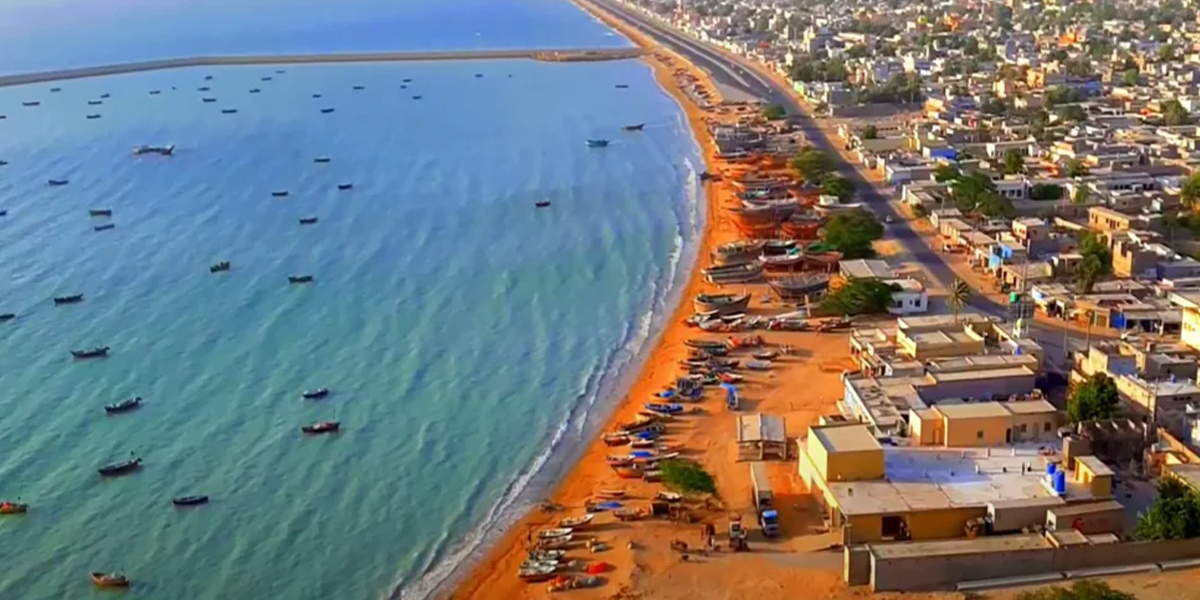
It is a bitter tragedy that last week, the Prime Minister of Pakistan was finally compelled to take serious notice of Gwadar — a port once promised to be the crown jewel of global maritime trade — still crippled by the absence of the most necessary necessities: water and electricity. Without these, even the humblest check post cannot endure.
It is now carved into the sorrowful record of our nation’s history — the Planning Commission (PC) and the Ministry of Power have, after twelve long years, utterly failed to breathe life into the dream of Gwadar Port. Not only have they abandoned the promise of its development, but they have also failed in the most basic duty — to give its people electricity and water.
On July 5th, 2013, under the blazing lights of Beijing, the China–Pakistan Economic Corridor (CPEC) was signed with great ceremony. It was hailed as the dawn of a new age for Pakistan. Our planners stood tall, declaring themselves among the finest minds in the world, assuring the nation that they would design and execute every project with unmatched skill. So from the outset, China has vested Pakistan with full authority over planning all CPEC projects. But those bold words have rotted in the air. Twelve years have passed since that day. Twelve years of grand, colourful presentations, of fine speeches in plush conference rooms and glittering five-star hotels, mostly in Islamabad. Year after year, the same phrases have been repeated — that Gwadar’s development is a “strategic priority,” that its commercial, political, socio-economic, defence, and regional connectivity benefits are beyond measure, that it must be developed “without further delay.”
The Planning Commission’s master plan, launched with pomp in Islamabad, promised motorways, expressways, national and urban railways, high-speed fibre-optic networks, and complete urban and social infrastructure linking Gwadar to Central Asia. In their dazzling visions, Gwadar would be Pakistan’s Suez Canal — the golden gateway to transform Baluchistan and the whole nation by 2025.
But the truth is a wound that will not heal. Today, under a merciless 45°C sun, hundreds of women and children stand each day on the burning asphalt of Fish Harbour Road, empty buckets and containers in hand, pleading for water. Their protests — begun in early June — have brought burning tires, blocked roads, and unflinching endurance under the brutal heat. These are not acts of rebellion, but of desperation. The land is gripped by drought. The dams have sunk to historic lows. The questions now are not about trade routes or prosperity — but about how 200,000 souls will simply survive.
Since 2012, Gwadar has endured unrelenting water shortages, not only from drought but from an unforgivable failure to plan for changing weather patterns. This is no act of nature alone — it is the collapse of governance. For over two decades, the Ankara Kaur Dam was Gwadar’s only source of water. As the population surged and massive CPEC projects — from the port itself to highways, an international airport, and new educational institutions — rose from the soil, the dam’s capacity became tragically insufficient. Poor planning allowed silt to choke its 17,000-acre-foot reservoir.
In 2016, the Sawad and Shaadi Kaur dams were completed. Later came the Sheizank and Shanzani dams. All failed to quench the city’s thirst. The fault lay not in the skies but in Islamabad’s P-Block, where compromised decisions and misplaced priorities doomed these projects before they even began.
Billions of rupees have been poured into desalination plants and water infrastructure, yet Gwadar’s taps remain dry. The crisis is not born from absolute scarcity, but from corruption, mismanagement, lack of transparency, and absence of vision. Larger, better-connected dams could store the rains and sustain the city through drought, but the political will is missing.
Corruption bleeds away Gwadar’s future. Earlier this month, the Public Accounts Committee of the Balochistan Assembly uncovered financial irregularities in the Public Health Engineering Department. This is no shock — in 2021, the National Accountability Bureau revealed $4.46 million in corruption tied to a single desalination project.
And the mourning does not end here. In the 78th year of Pakistan’s independence, Gwadar remains an unfortunate, half-built dream — a port city still not connected to the national grid. Alongside Turbat and Panjgur, it receives only 100 megawatts from Iran through two 132kV transmission lines. While Iran has proven to be a reliable supplier, broader issues cause severe interruptions at times. The greater tragedy is that two massive power plants in Hub, Balochistan, sit almost idle — yet the GOP-owned National Transmission & Despatch Company, under the Ministry of Power, has never thought to link them to Gwadar and the other two districts.
Is it not one of the greatest tragedies that our prime ministers have, time and again, stood on international platforms, lamenting with sorrow that Pakistan has become a “global begging bowl” due to over-installed power capacity, while the people of Gwadar remain in darkness? In the league of 193 nations, it is perhaps only in Pakistan that a city like Gwadar remains disconnected from its own national grid, all due to the grave incompetence of the NTDC and the Ministry of Power, which claim this helps control circular debt.
What a contrast when our arch-rival India has extended its electricity grid to all its neighbouring countries — all except China and Pakistan. Ministers should take this as an official statement comparing their capabilities to Indian planners.
From another angle, Gwadar is a smaller city than many Pakistani cities. Even those “illiterate” town developers have shown more wisdom — building roads, water systems, and electricity before housing projects. Is it not a fact? Yet the bitterest joke of all: instead of connecting Gwadar to the grid, the PC and Ministry of Power are going to build a coal-fired power plant, importing coal from overseas.
Imagine — even an untrained developer, faced with Gwadar’s needs, would have installed diesel-fired generators within six months, especially when diesel here costs only 60 rupees per litre. Is that not the truth?
Therefore, we, with the utmost sincerity, urge our “visionary” prime minister to deploy every brigade of the Planning Commission and the Ministry of Power to Gwadar — not for more conferences or ceremonial plans, but to solve its two most basic needs: water and electricity. Only then can Gwadar become the jewel of CPEC, as promised twelve years ago.