



It is hard to believe that Germany, now a peaceful and tranquil country, had been subject to such significant acts of terrorism only in the last century; first, during the Weimar Republic following the First World War and again in the 1970s and 1980s in the Cold War period. The German experience of countering terrorism has been no less bitter than any countries’ currently battling the menace of terrorism today such as Iraq, Afghanistan, Pakistan, Nigeria, Syria and India, the top six according to Global Terrorism Index 2014.
During the 1970’s and 80’s, terrorism in Federal Republic of Germany, known as West Germany until its unification in 1990, was mainly rooted in the Cold War politics between the two rival super powers, the Soviet Union and the United States, where the East and West Germanys had become staging grounds for insurgencies carried out by far-left and far-right German groups as well as foreign terrorist organizations. West German Marxist-Leninist groups were occasionally supported by the East German state (aka German Democratic Republic) and its security service Stasi while certain Palestinian groups had also found safe havens in West Germany because of its lenient asylum policies.
The Germans’ first taste of the scourge of terrorism came during the 1972 Summer Olympics Games held in Munich. On the night of September 4, 1972, eight heavily armed terrorists belonging to the Palestine Liberation Organization’s front group, called the Black September Organization, managed to enter the quarters of 11 Israeli athletes participating in the Olympics and took the Israeli Olympic team hostage. The German response was a fiasco which led to the killing of all except one Israeli athlete. The Munich massacre set the German policy makers to re-evaluate and frame new counter-terrorism policies.
Besides Palestinian terrorist groups such as Black September and Popular Front for the Liberation of Palestine (PFLP), Germany was confronted with several other terrorist organizations too. These included the Armenian Secret Army for the Liberation of Armenia (ASALA), Kurdistan Workers Party (PKK), Neo-Nazi groups and, most dangerous of all, the Red Army Faction (RAF), which was a local German Marxist group. Altogether these groups conducted 516 terrorist attacks across Germany between 1970 and 1997.
The Red Army Faction has been widely studied by scholars of terrorism mainly due to its violent, revolutionary character and, its supporters who primarily comprised of young educated men and women that saw their country as an imperial fascist state. Some members belonged to affluent families which were inspired by the Marxist-Leninist ideas of bringing revolutionary change through violent means.
The RAF was led by gangster turned Marxist revolutionary, Andreas Baader, and former journalist and Andreas’s lover, Ulrich Meinhoff. Other than the duo, several other charming leaders were part of the high command, such as Gudrun Ensslin and Horst Mahler. Despite being Marxist, the RAF had little connections with the Soviet Union. For financing their terrorist activities, the members resorted to bank robberies, kidnappings for ransom and funds from likeminded Marxist organizations. As far as the terrorists’ trainings were concerned, the RAF had a close liaison with the Palestine Liberation Organization (PLO) and many RAF members received training at PLO-run training camps in Lebanon and Syria.
German Response to Terrorism
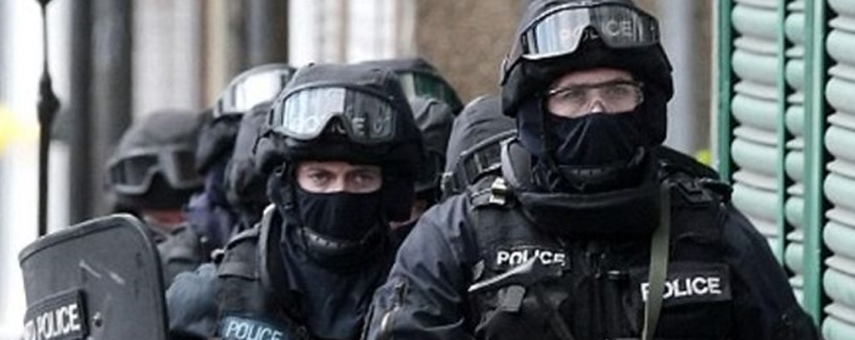
The German response to terrorism was calculated. After the Munich debacle, the German authorities were in no mood of extending any concessions to terrorist organizations. They completely dropped the negotiation option. Since training was critical for neutralizing any terrorist threat, the German Federal police soon established a highly trained special weapons and tactics unit for adequately and professionally responding to any such untoward situations in the future. Set up in 1973, the Border Protection Group 9, called Grenzschutzgruppe 9 aka GSG9 in German, held the primary aim of tackling the RAF and the Palestinian groups which were creating havoc in Germany throughout the 1970s and 80s. The ever ready GSG9 unit later played a pivotal role in several hostage situations and hijackings where a quick response was required.
In addition to creating a counter-terrorism and special operations unit, the Germans also strengthened their criminal justice system and modernized it with a set of new anti-terrorism laws over the following years. The Reichstag passed the Anti-terrorist Act and Anti Extremist Act which empowered Germany’s law enforcement institutions. The soft asylum policy, which had easily been abused before, was overhauled and measures were taken to scrutinize asylum applications.
The primary focus of Germany’s counter-terrorism policy measures though remained narrowed on the RAF. A sound media awareness campaign resulted in the arrests of Andreas Baader and Ulrich Meinhoff soon. In 1976, the two committed a collective suicide in the Stemmhiem prison, which marked the death of the RAF’s first generation of leadership.. The new generation of RAF was led by ultra-extremist members such as Horst Mahler who were able to intensify their attacks for a short period of time during 1988-93.
Germany’s problems did not end with the dissolution of the Soviet Union, the end of the Cold War, and the unification of Germany in 1990. Instead, the unification of the East and West Germany resulted in harbingering an era of neo-Nazi tendencies. The emergence of a plethora of neo-Nazi groups dramatically increased an unprecedented level of anti-Semitism and violence against immigrants in eastern parts of Germany. There are around 26,000 right wing extremists and 6000 Neo-Nazis in Germany according to one domestic intelligence report published in 2012 (Verfassungsschutzbericht, 2012).
Another emerging phenomenon in Germany is the growth of Islamist extremism, which is viewed by some as a precursor to the revival of terrorism. According to German security officials, the biggest domestic threat to the security of Germany is from the Islamist homegrown terrorists. Germany is wary now due to the embarrassment it faced for failing to detect terrorist groups operating right on its soil in the Hamburg Cell for planning and executing the 9/11 attack in collusion with Al Qaeda.Terrorists not only took advantage of Germany’s soft asylum laws, strong privacy protections, and rights of religious expression but also managed to get admissions in American flying institutes to be trained as commercial pilots, using the soil of Germany.
Today, more than 320 Islamist radicals have travelled to Syria to fight alongside Islamic State of Iraq and Sham (ISIS) or with Jahbatul Nusrah, the Al-Qaeda’s Syrian chapter.
However, despite this, Germany has not since the 1980s experienced any major terrorist attack. One reason is a sound German counter-terrorism (CT) strategy already in place. Its main objectives include:
- Identifying terrorists and their supporters, bringing them to justice.
- Breaking up their infrastructure at home and abroad.
- Assisting countries facing the danger of becoming failed states.
- Addressing the social, economic, and cultural roots of terrorism.
- Halting the proliferation of weapons of mass destruction.
- Seeking multilateral legitimization for any military action through the United Nations.
Lessons for Pakistan
Sensing the need for vigilant CT measures, the German lawmakers, immediately following the 9/11 attacks, revoked the immunity of religious groups and charities from investigation or surveillance. Another amendment included prosecuting the terrorists in Germany even if they belonged to foreign terrorist organizations, even if they were planning and abetting abroad. Another harsh measure taken was to curtail the ability of terrorists to enter and reside in Germany by strengthening the German border and the air traffic security.
Pakistan and other developing countries currently ravaged by terrorism such as Iraq, Tunisia, Afghanistan, Nigeria, and India may take a leaf out of Germany’s counter-terrorism policies especially with regard to its training methods and tactics. Germans have dealt with a variety of terrorist groups and could guide the Pakistani policy makers in adjusting Pakistan’s counter-terrorism strategy according to its needs. The Pakistani legislators can take guidance from the German experience to amend and create counter-terrorism laws that are in line with the National Action Plan of Pakistan, and are particularly geared towards revoking the immunity that the religious groups have enjoyed so far, track down the sources of their funding, and through effective investigation and surveillance, dismantle the nexus that exists between certain religious/political groups and their syndicated terrorist networks.
Article is written by Dr. Farhan Zahid
Dr. Farhan Zahid earned his Ph.D. in Counter Terrorism Studies from the University of Brussels, Belgium. Dr. Zahid has authored more than 20 research papers and articles. He writes on counter-terrorism, al-Qaeda, Pakistani al- Qaeda-linked groups, Islamist violent non-state actors in Pakistan, jihadi ideologies and the Afghan Taliban.