



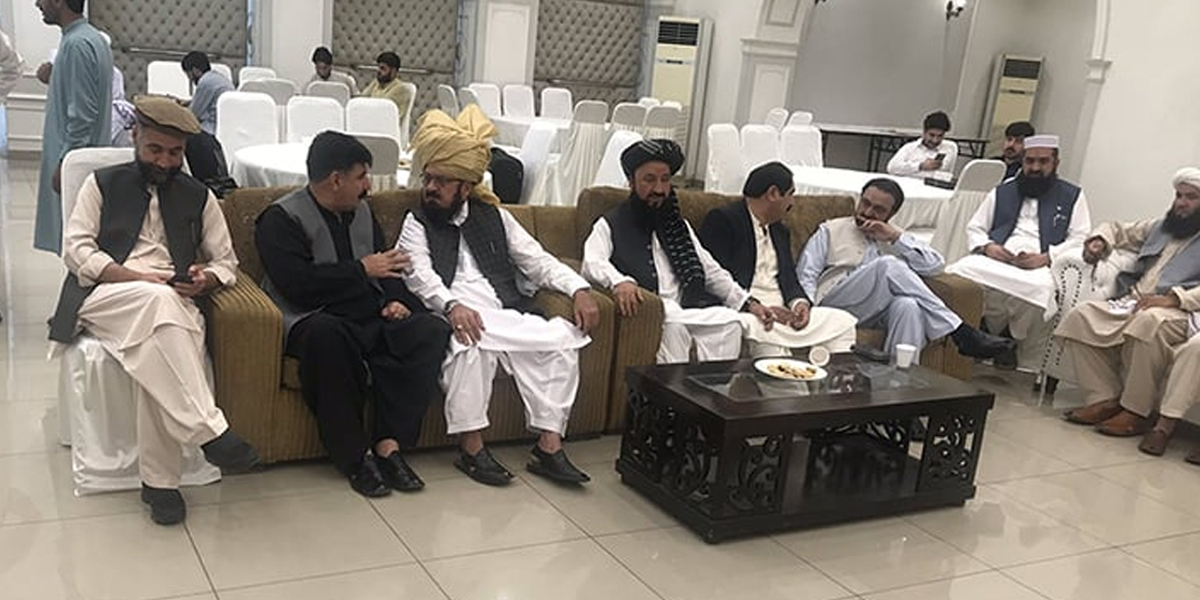
Since the resurgence of Taliban-linked militancy in Pakistan after 2021, particularly in Khyber Pakhtunkhwa (KP) and parts of Balochistan, the country’s counter-terrorism landscape has entered a familiar but more complex phase. Districts in the former Federally Administered Tribal Areas (FATA)—including North Waziristan, South Waziristan, Khyber (notably the Tirah Valley), Bajaur, Mohmand, and Kurram—have once again become frontline spaces where regional geopolitics, militancy, governance failures, and local livelihoods intersect. In response to rising violence attributed mainly to the Tehreek-i-Taliban Pakistan (TTP), the Pakistani state has leaned heavily on kinetic military operations, stricter border management with Afghanistan, and diplomatic pressure on the Afghan Taliban. While these measures have produced episodic security gains, they have also generated deep humanitarian stress and exposed structural governance weaknesses in the merged districts. Within this constrained policy environment, the re-emergence of the Tribal Jirga as an informal but socially legitimate channel of engagement reflects an attempt to reconnect security policy with local realities rather than relying exclusively on coercion.
The Tribal Jirga is an indigenous conflict-resolution institution deeply embedded in Pashtun society across Pakistan and Afghanistan. Traditionally composed of respected elders and influential community figures, jirgas resolve disputes through mediation, consensus-building, and moral authority rather than formal legal enforcement. Their legitimacy is derived from social trust and cultural acceptance, allowing them to function in spaces where state institutions are weak, distrusted, or absent. In earlier decades, jirgas addressed land disputes, blood feuds, and inter-tribal conflicts; in the contemporary security context, however, they have increasingly been drawn into the realm of informal diplomacy. As violence escalated after the Taliban’s return to power in Kabul, jirgas began to serve as bridging mechanisms—linking the state, local communities, and militant interlocutors—particularly where formal negotiations lacked credibility or access.
This dynamic became most visible in 2022, when the Pakistani government facilitated the participation of a major tribal jirga delegation in talks held in Kabul with TTP representatives, with the Afghan Taliban acting as intermediaries. The decision to involve tribal elders was not accidental: it reflected an understanding that purely military pressure had failed to eliminate militancy and that jirga members possessed cultural authority and communication channels unavailable to formal diplomats. According to Dawn report, these engagements contributed to an informal and time-bound ceasefire, often described as an “indefinite truce,” which temporarily reduced the frequency and intensity of attacks in parts of KP during mid-2022. Although the talks did not result in a comprehensive peace agreement and core TTP demands—such as reversing the FATA–KP merger—remained unresolved, the episode marked a rare moment in which jirga-led dialogue was operationalized as an unofficial security instrument rather than a symbolic gesture.
The fragility of this approach, however, was exposed by the trajectory of violence before and after the ceasefire. Prior to the 2022 truce, TTP attacks had risen sharply across KP, particularly in North Waziristan, Lakki Marwat, and Bajaur, targeting security forces, police, and local officials. The temporary pause that followed the jirga-facilitated talks demonstrated that dialogue could suppress violence in the short term, but the absence of a political settlement and credible follow-up mechanisms allowed militancy to gradually resurface. As attacks resumed, the state reverted to intelligence-based and kinetic military operations aimed at dismantling TTP networks along the border belt, reinforcing a familiar cycle in which tactical containment displaced, rather than resolved, the underlying drivers of insecurity.
The humanitarian consequences of this cycle have been most acutely felt in the merged districts. Areas such as the Tirah Valley in Khyber district and parts of North and South Waziristan experienced repeated waves of displacement as military operations intensified. Entire communities were forced to migrate following negotiations involving tribal elders, civil administration, and security forces, often with limited preparation and insufficient protection. Reports from these areas highlighted serious governance failures during displacement, as emergency response mechanisms—including the Provincial Disaster Management Authority PDMA—struggled to provide adequate shelter, healthcare, and winterized relief. Families endured harsh climatic conditions, including heavy snowfall, while living in tents under precarious humanitarian conditions, deepening mistrust between tribal populations and state institutions already strained by decades of conflict.
These humanitarian outcomes are inseparable from broader governance deficits in the merged districts. The FATA–KP merger was envisioned as a transformative reform, extending constitutional rights, judicial access, and development resources to historically marginalized regions. Yet tribal stakeholders continue to point to the absence of a dedicated and empowered administrative structure, weak accountability mechanisms, and limited transparency in the utilization of development funds. These gaps have constrained meaningful integration and reinforced perceptions of neglect. In parallel, strained civil–military relations have further alienated local populations, with frequent complaints regarding the conduct of Frontier Corps personnel at checkpoints. In some localities, stakeholders allege that TTP influence has grown to such an extent that even security personnel face movement restrictions outside fortified positions, underscoring how governance failure and insecurity mutually reinforce one another.
Border management policies have added another layer to this complex security environment. Pakistan’s strategy of closing border crossings with Afghanistan and deporting undocumented Afghan nationals was framed as a necessary step to disrupt militant mobility and logistical networks. However, in former FATA districts where livelihoods depend heavily on cross-border trade, seasonal labor, and kinship ties, prolonged border closures produced severe economic shock. Reduced legal movement incentivized informal and illegal crossings, particularly where border fencing remained damaged or ineffective, thereby weakening the intended security rationale. Deportation practices also raised serious humanitarian concerns, with accounts of vulnerable individuals—including pregnant women—being transported in overcrowded vehicles without medical support, reinforcing narratives of collective punishment rather than targeted counterterrorism.
Available security data suggests that border closures produced short-term tactical effects but limited strategic dividends. Reporting by Dawn indicates that following the complete shutdown of major border crossings on October 11, 2025, Pakistan experienced a decline in cross-border terrorist incidents, with attacks decreasing by approximately 9 percent in November and nearly 17 percent in December. During the same period, violence-related fatalities declined, including reductions in civilian deaths and fatalities among security personnel. ² While these figures point to temporary suppression of violence, tribal stakeholders and security analysts caution against interpreting them as evidence of sustainable success, particularly given the parallel rise in economic distress, displacement, and social alienation in border communities.
The economic costs of prolonged border shutdowns further complicate their strategic utility. According to the Arab News, Pakistani exporters have been losing an estimated Rs50 billion (approximately $177 million) per month due to the continued closure of key crossings with Afghanistan. Prior to these restrictions, bilateral trade between the two countries was valued at roughly $2 billion annually, making Afghanistan one of Pakistan’s significant regional trading partners. Pakistan has also incurred substantial losses in transit trade with Central Asian states, as Afghanistan serves as a critical corridor for regional commerce. These figures raise serious questions about whether border closures function as effective leverage against the Afghan Taliban or instead erode Pakistan’s own economic resilience while deepening grievances in peripheral regions.
Against this backdrop, religious tribal Stakeholders, facilitated by Center for Research and Security Studies (CRSS), consistently emphasize jirga-led dialogue as a necessary complement to coercive security policy. Participants argue that jirgas possess cultural legitimacy, local trust, and communication access that formal diplomatic channels lack, particularly when engaging actors embedded within tribal societies. Many questions whether border closures can realistically coerce the Afghan Taliban into restraining the TTP, or whether such measures primarily harm Pakistan’s own border populations. Policy options emerging from these discussions include regulated, National ID-based cross-border movement to protect livelihoods, stronger Pashtun representation in diplomatic engagement with Afghanistan, and the involvement of regional actors—particularly China—as facilitators rather than enforcers of dialogue.
Pakistan’s experience underscores a central policy dilemma: tactical containment through military operations and border controls may reduce violence temporarily, but sustainable peace requires political engagement, governance reform, and social consent. Reviving and cautiously institutionalizing Tribal Jirga mechanisms as unofficial channels of security dialogue does not promise immediate resolution, yet it offers a pathway to rebuild trust, strengthen social cohesion, and reduce the appeal of militant narratives. Without addressing governance failures in North and South Waziristan, Khyber, Bajaur, and other merged districts, external pressure on Afghanistan will remain insufficient and internally destabilizing.
Pakistan has paid a heavy human and economic price in its struggle against terrorism. The evidence suggests that coercive measures can buy time but cannot substitute for inclusive governance and dialogue-based conflict resolution. Re-centering tribal voices through jirga mechanisms, investing in credible governance reforms in the merged districts, and pursuing calibrated regional diplomacy may offer a more durable path forward. Ultimately, peace—not perpetual containment—remains the most viable foundation for stability in Pakistan’s borderlands and for the wider region.

Atif Ali is a freelance journalist and scholar at QAU. He can be reached at:
matifali1997@gmail.com