



Following a ten-hour marathon meeting of the civilian and military leadership on Wednesday, Dec 24, 2014, Pakistan’s Prime Minister Nawaz Sharif told the nation in a midnight televised address that the battle lines were drawn between terrorists and those opposed to it. He termed it a “defining moment” for the country in the fight against terrorism.
“A line has been drawn. On one side are coward terrorists and on the side stands the whole nation,” Sharif said, while unveiling the 20-point National Action Plan (NAP) that envisages establishment of special courts for speedy trial of terror suspects and a crackdown on al-Qaeda-linked jihadi and sectarian outfits.
“The Peshawar atrocity has changed Pakistan. We need to eradicate the mindset of terrorism to defeat extremism and sectarianism,” he said. “This horrendous attack has shaken the nation as the terrorists attacked the future of this country.”
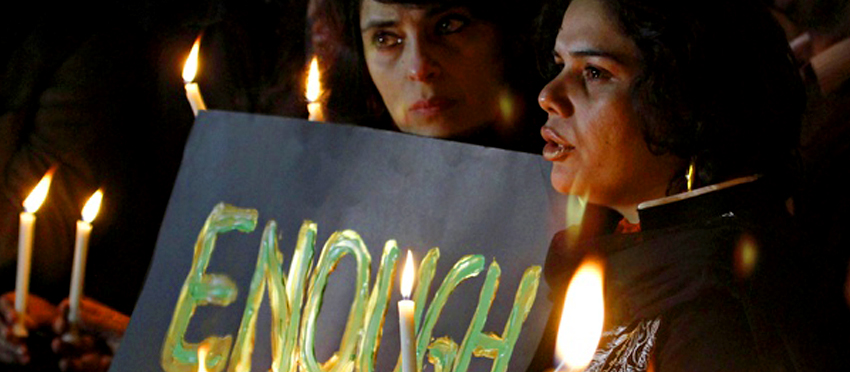
The meeting had been convened to the context of the December 16 Peshawar Army Public School attack by radical TTP militants, which left 141 students and teachers dead. The incident, called by many as Pakistan’s 9/11, triggered a massive response by the political leadership and the entire military establishment culminating in the NAP.
The tragic event at Peshawar also forced Imran Khan, the head of the rival political party Pakistan Tehreek-e-Insaf (PTI), to end his 126-day sit-in protest against Sharif’s ruling party the Pakistan Muslim League-N (PML-N).
PTI and other parties reluctantly agreed to the establishment of special military-led courts for a limited period of two years, underlining the need for a sustained, comprehensive long-term counter-terrorism strategy. They also consented to a drive to formally register some 20,000 religious seminaries being run by various religious groups and rightwing political parties.
In his address Prime Minister Sharif reiterated that the execution of convicted terrorists will continue. A day after the Peshawar tragedy, which evoked worldwide sympathy for the victims, Sharif had revoked a six-year moratorium on the death penalty in terrorism-related cases. Six convicted terrorists have already been hanged since the lifting of the ban and dozens others await executions in the coming days.
Human rights watchdogs such as Amnesty International and Human Rights Watch as well as the Human Rights Commission of Pakistan had expressed reservations on the lifting of the moratorium and demanded it should be reinstated. But the unprecedented public outrage against the TTP terror-campaign across the country not only galvanized the ruling elites into a consensus on the NAP but also prompted the government to execute those already awarded death penalty.
The following is summary of the short-term National Action Plan against terrorism announced by Prime Minister Nawaz Sharif in a televised address to the nation late Wednesday night:
- Execution of convicted terrorists will continue
- Establishment of special trial courts for two years for speedy trial of terror suspects
- A commitment to ensure that no armed militias are allowed to function in the country
- Strengthening and activation of NACTA
- Countering hate speech and extremist material
- Choking financing for terrorists and terrorist organisations
- Ensuring against re-emergence of proscribed organisations
- Establishing and deploying a dedicated counter-terrorism force
- Taking effective steps against religious persecution
- Registration and regulation of madrassas
- Ban on glorification of terrorism and terrorist organisations through print and electronic media
- Administrative and development reforms in Fata with immediate focus on return of IDPs
- Dismantling communication networks of terrorist organisations
- Tangible measures against abuse of internet and social media for terrorism
- Zero tolerance for militancy in Punjab
- Taking the ongoing operation in Karachi to its logical conclusion
- Empowering Balochistan government for political reconciliation with complete ownership by all stakeholders
- Dealing firmly with sectarian terrorists
- Formulation of a comprehensive policy to deal with the issue of Afghan refugees, beginning with registration of all unregistered illegal refugees
- Revamping and reforming the criminal justice system, to strengthen counter-terrorism departments including granting of powers to the provincial CIDs to intercept terrorist communications
Primary Sources: