



The Federally Administered Tribal Areas (FATA) has been in the throes of insurgency and disorder for the last fifteen years. Reforms for the semi-autonomous region have been at the top of the agenda for the national counterterrorism strategy, dubbed the National Action Plan (NAP). On November 8, 2015, FATA Reforms Committee was formed. It is headed by the Advisor to the Prime Minister on Foreign Affairs Sartaj Aziz as it chairman and governor Khyber Pukhtunkhwa (KP), federal minister for state and frontier regions, federal minister for law and justice and the national security advisor as its members was formulated. The committee works on consultations and recommendations for reforms in FATA on the basis of the following four themes:
- Maintain the status quo but introduce judicial/administrative reforms and increase focus on development activities;
- create FATA Council on the pattern of Gilgit-Baltistan (GB);
- FATA to become a separate province and
- Integrate FATA with KP
The committee has visited all the seven agencies and held 16 meetings with all the stake-holders including, notables and politicians of FATA, media persons, students, business community, lawyers and political parties.[1] In August 2016, it came up with a report which overwhelmingly recommended that FATA should be integrated with KP which will require a transition period of 5 years. Other recommendations for reform include: rehabilitation and reconstruction; socio-economic development of FATA; elected local bodies for FATA; legal reforms; capacity building of law enforcement agencies (LEAs) and land settlement in FATA.
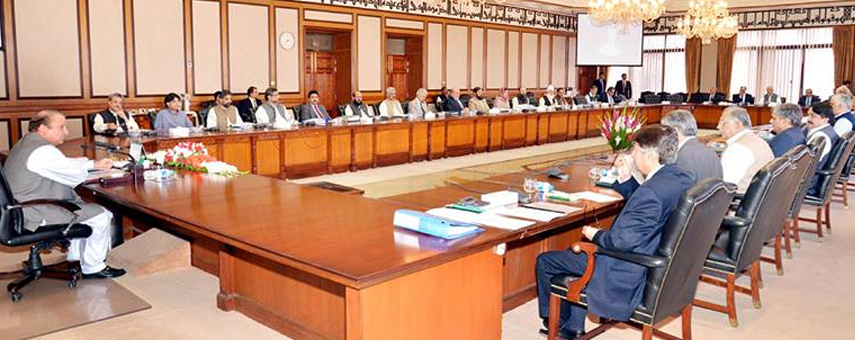
On Thursday, the Prime Minister headed a cabinet meeting to discuss the FATA Reforms Committee’s report in detail.[2] The government decided to hold further consultations on the reforms to evolve political consensus. Two political parties, Jamiat Ulema-e-Islam-Fazal (JUI-F) and Pakhtunkhwa Milli Awami Party (PkMAP) had expressed reservations about the FATA’s merger with KP. The PM vowed to take both the parties on board regarding the FATA reforms.
Bringing reforms and writ of the government to the backwaters of FATA has always been a challenge for state. Such reforms in FATA are not only encouraging but long overdue especially given the draconian and archaic nature of the primary law in the land, the Frontier Crimes Regulation (FCR).
This report is compiled and written by Abdur Rehman Shah, Research Associate at the Center for Research and Security Studies (CRSS), and edited by Zeeshan Salahuddin, Senior Research Fellow at CRSS, Islamabad.
[1] APP. (2016, December 15, 2016). Cabinet discusses FATA Reforms Committee Report. Retrieved on December 16, 2016, from https://www.app.com.pk/cabinet-discusses-fata-reforms-committee-report/
[2] Zaafir, Muhammad Saleh. (2016, December 16). Cabinet decides to postpone FATA reforms process. Retrieved on December 16, 2016, from https://www.thenews.com.pk/print/172270-Cabinet-decides-to-postpone-Fata-reforms-process