



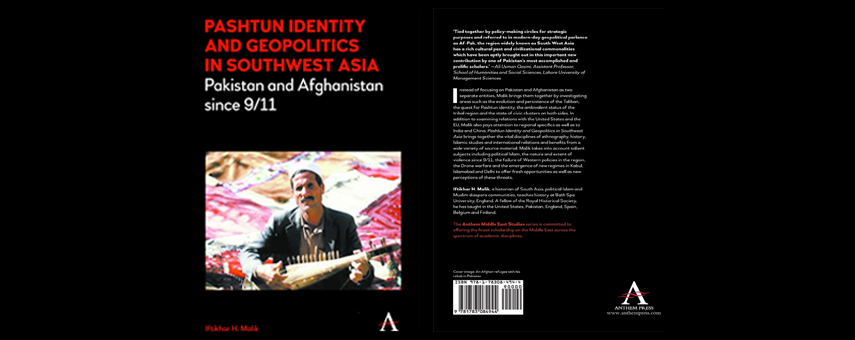
Based on archival research at the British Library, Bodleian and in South and Central Asia besides interviews in Britain, United States, Brussels, and the Sub-continent, this volume reviews the various hypotheses about Pashtuns (Pathans) varying from their Semitic origins to Aryan roots. It investigates the form of political Islam espoused by the Taliban on both sides of the Durand Line along with studying NATO’s longest ever warfare in a Muslim region. The book reviews the fourth British military involvement in the country since the First Anglo-Afghan War of 1838-42 and how it has cost so many lives along with incurring trillions of dollars to 35+ nations engaged in the Hindu-Kush region. Other than studying civil societies, the volume locates gender-related issues, EU’s socio-economic engagement in Pakistan and Afghanistan besides looking at the regional imperatives of post-9/11 developments.
Contents:
Introduction;
- Gandhara Lands: Wrestling with Pashtun Identity and History;
- Imperial Hubris: The Afghan Taliban in Ascendance;
- Masculinities in Conflict: Western Pedagogy and the Return of the Afghan Taliban;
- Understanding Pakistan: Geopolitical Legacies and Perspectives on Violence;
- Locating Civic Sentiments and Movements in Pakistan: Stalemated Cycle, or a Way Forward?
- The United States and Pakistan: Friends or Foes!;
- The European Union and Southwest Asia: Perceptions, Policies and Permutations;
- Conclusion: Pashtun Troubled Lands, Uncertain Southwest Asia, or a New Beginning!
Book review source
Disclaimer: Views expressed in the article are not necessarily supported by CRSS.