



Analysis:
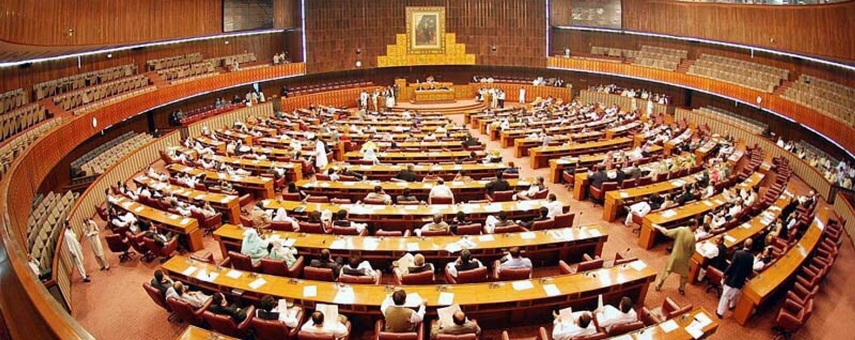
Pakistan’s embattled government finally overcame big opposition on July 2, when it managed to push through the national legislature –lower house of Parliament – the controversial anti-terrorism legislation titled the “Protection of Pakistan Bill (PPB).”
The Bill is supposed to support the armed forces and law-enforcement agencies in their fight against militants and anti-social elements across the country for maintenance of peace.[1] The PPB had earlier sailed through the Senate – the upper house – on June 30, 2014, following a grand political consensus among all parties present in the house. Now after the expected assent by the President of Pakistan, the PPB will become an Act of Parliament and would be called Protection of Pakistan Act (PPA).
The National Assembly[2], had initially passed the bill in its original form which kicked a big controversy among opposition political parties as well as rights’ groups , who termed it as a “carte blanche” to the security forces. But the proposed legislation got stuck in the Upper House, where the ruling coalition is in a minority. The entire opposition opposed the draft terming it harsh.[3] Left with no choice but to incorporate the amendments proposed by the Opposition parties, the government then tabled a fresh Bill in the Senate where it was passed unanimously. Several Senators still expressed serious reservations but eventually consented to support it in what they said “in view of the serious security challenges” the country faces at the moment.
While religio-political party Jamiat Ulema-e-Islam-F (JUI-F) Senator Talha Mehmood, who is also chairman of the Standing Committee on Interior, had told the Senate that the committee approved the Bill “keeping in mind that it should be used on merit and not against religious seminaries.” Mehmoood, accompanied by his party’s Senator Hamdullah, walked out of the Upper House of the Parliament when the Bill was being passed to underscore his party’s reservations.
Pakistan People’s Party (PPP) Senator Raza Rabbani said: “The PPP would not approve of this law under normal circumstances. The country is at war and it is the need of the hour and we have managed to insert judicial oversight as much as possible.” [4]
Viewed as a harsh law, the PPA gives more teeth to the law enforcement agencies at a time when a full-fledge military operation Zarb-e-Azb[5] [6] is already underway against militants in the mountainous North Waziristan Agency (NWA) bordering Afghanistan. The armed forces and the law-enforcement agencies have long been asking for a tough law to deal with the extra-ordinary law and order situation in the country and also to deal with the issue of missing persons as thousands of suspect militants/terrorists had been detained and kept in internment centers for a long time without any legal cover.
Amendments: The PPA will remain in force for a period of two years all over Pakistan. While in its earlier version, it had stated that it would be applied in the event of ‘waging of war against Pakistan’, now it will be applicable in the event of ‘waging of war or insurrection against Pakistan’.
The term ‘enemy alien’ describes a person whose identity as a Pakistani is unascertainable. The use of force by armed forces has been limited to officers of Grade-15 or above and an internal inquiry by the head of the relevant law enforcement agency will be held in the event of death through the use of force.
If required, all such cases will be subject to a judicial inquiry. The remand period for an accused has now been fixed at 60 days and, on reasonable ground, the government has the right to hold a detainee for 90 days at a designated internment camp.
The Joint Investigation Team (JIT) will have the right to withhold a detainee’s information except from a High Court or Supreme Court. The government may not disclose a detainee’s information for security reasons and on reasonable grounds the burden of proof lies upon an ‘enemy alien’ or militant.
Similarly, cybercrimes and offences related to information technology as well as the crossing of national boundaries illegally have also been included in the list of scheduled offences. The PPB provides up to 20 years punishments under these offences.
The PPB also provides for establishment of special courts in consultation with the Chief Justices of the High Courts and appeals against the special courts’ decisions can be filed with the High Courts.
Controversy: The law had generated a controversy for its being too harsh. The political (opposition) parties, civil society and human rights organizations had opposed it tooth and nail and it came under fire on all public fora. They had warned that, once approved, this law would be misused. They also argued that it would violate the Supreme Court judgment which had struck down the provision of “shoot-at-sight” powers given to the police under the Anti-Terrorism Act 1997.[7]
The statement of objects and reasons of the PPA says that it provides for protection against waging of war against Pakistan, prevention of acts threatening the security of Pakistan and for speedy trial of offences committed under this law.
Expert Opinion: The legal and constitutional experts have expressed their reservations over this law as in their opinion it would not make any difference.
Former Judge and Senior Advocate of the Supreme Court Justice (retd) Tariq Mahmood considers the PPA as a rigorous law but at the same time he says that it was an extra-ordinary situation that warrants extra-ordinary measures. “The laws like the Anti-Terrorism Act are there but they are lacunae-ridden … there is no choice to deal with the situation except such a law,” Justice (retd) Tariq said. However, he cautioned that the law must be applied judiciously. “There were serious problems. There was a pressure from the armed forces and the law-enforcement agencies that the militants went scot-free because of the flaws in the existing laws,” he argued but emphatically said that it was now the responsibility of the executors to ensure that this law was not misused.[8]
Senior Advocate of the Supreme Court Anis Jillani believes that the PPA would not work in isolation. “It (the PPA) won’t help until the Criminal Procedures Code (CrPC) is also amended,” Jillani said.[9]Thereupon depends the long-term success against terrorists and criminals, he pointed out.
Another jurist, and a former Senior Vice President of Supreme Court Bar Association, Ikram Chaudhry also considers the PPA as yet another law that would not deliver.
“I don’t think that it (the PPA) will make any difference. We already have stringent laws but the problem is that of their implementation and enforcement. I agree that the security situation is alarming but giving unlimited powers to the security forces would not only create problems for the citizens in general but there are also chances that the fundamental rights of the citizens might be violated,” Ikram Chaudhry said.[10]
Human Rights activist and a Senior Advocate of the Supreme Court Asma Jehangir says that no law can make any difference until the entire criminal justice system is reviewed. “More laws means more impunity and greater possibility of more abuse of authority. Without correcting the criminal justice system, you cannot fight terrorists and criminals,” Ms Jehangir said.[11]
A big question, however, hangs over the perceived impact of the PPA; will it make Pakistan safer and accelerate the case disposal at various courts? A massive pendency of more than 2.5 million in lower and higher courts across Pakistan, including several thousand cases with the 55 Anti-Terrorist Courts, hardly evokes a positive response; the law may empower the law-enforcers with a licence to kill (as part of the counter-terror struggle) but it is certainly not likely to change the fundamentals of the justice system because of a crippling judicial paralysis. It stems from a partially dysfunctional judicial system which is overstretched, corrupt, outdated, and practically unable to prosecute even those with incriminating evidence against them.
In view of increasing crime and terrorist incidents Karachi – in the country’s largest city and commercial nerve centre – the government had launched an operation against criminals in September 2013 as extortion and kidnapping for ransom cases continued unabated. Between September 2013 – June 22, 2014, the Rangers – a para-military force – and the police claim to have arrested over 12,420 suspects for involvement in heinous crimes such as murders, extortions and kidnapping for ransom, a few of them were also killed in encounters.[12] Most of those arrested in Karachi operation are alleged terrorists and criminals and they are supposed to be tried by four ATC courts (meant for Karachi). This represents a logistic capacity challenge.
As of May 2014, magisterial and sessions courts in the province of the Punjab alone, for instance, reeled from over 400,000 pendency. Similarly, as of December 2013 the pendency at 36 district courts in the Punjab had stood at a staggering 545,438.
Impossible: This leads us to the simple conclusion that burden outweighs capacity to investigate and prosecute. This invariably results in a judicial paralysis. Battles won in the field are lost in the courts simply because of an antiquated criminal justice system i.e. Criminal Procedures Code (CrPC). The CrPC rests on the First Information Report (FIR) which can take one to the gallows or land one in jail for years, regardless of the veracity of such a report in a society where financial temptations of police officials outweigh the imperative for a just recording of the report.
“Why should we treat the FIR as a sacrosanct document in a society where most of the people are lying all the time,” asks Dr. Shoaib Suddle, one of the most respectable former IGs of Police, underlining that the FIRs are often faulty and motivated by financial or political considerations.[13]
It requires changes to fit new pressing circumstances. Most legal experts[14] demand procedural changes in the CrPC, beginning with the FIR registration to the prosecution department, which must be vested with investigation that can lead to an arrest.
Experts also quote the example of Turkey, where the initial report is considered an FIR as a foundation for investigation. But the FIR is then investigated by trained prosecutors.
In Germany, too, prosecution leads the investigation before recommending arrests in a particular case. Similarly, arrest must be made conditional to the completion of investigation as well as permission by the prosecutor’s office. This would also make the usual compulsion of bail-before-arrest redundant.
The CrPC also needs comprehensive revision to make space for forensics such as DNA and physical evidence as the primary element of evidence.
They say issues such as crime scene preservation, treating physical evidence as the core component of the investigation and appointment of legal experts as investigation officers instead of poorly-trained, corrupt and law-illiterate police officers require immediate attention.
Police officials often willfully load even a complaint (by a purported aggrieved person) with all possible CrPC clauses and legal terminology to make it difficult for the defendant. They also, say state prosecutors, include several names in the FIR to stagger the charge.
“They do it the way businessmen stagger their investments to ensure profits and avoid risks,” said a prosecutor in a direct reference to the way police then manipulate the entire process by exploiting every individual named in the FIR.[15]
Knowledge acquired through field research and interaction with key stakeholders suggests that without a comprehensive revamp of the CrPC the criminal justice system will remain hostage to a corrupt police and a tardy judicial system. Most experts and civil society stakeholders demand immediate changes to the CrPC. They also demand uniformed laws governing police in the country; unless the police is freed of political interference and until it can function as a merit-based independent institution, the public will remain skeptical and wary of a police which is corrupt, whimsical and abuser of its authority. Pakistan needs effective enforcement of laws through an independent, efficient police and qualified prosecution service. Mere laws won’t help fight terrorists and criminal mafias, legal experts such as Ms Jehangir and Justice Mehmood argue.
Tags: Pakistan Anti-Terror Legislation, Pakistan Protection Ordinance, Pakistan Protection Act, Pakistan-Terrorism, Senate of Pakistan, Karachi and Terrorism, Anti-Terror laws ,Pakistan criminal justice system, Asma Jehangir- Anti-Terror laws, IkramChaudhry, North Waziristan, Karachi, Pendency in Pakistani courts, Pakistan Criminal Procedure Code, Raza Rabbani, National Assembly of Pakistan, Pakistani parliament and anti-terror legislation, PPO, PPA, PPB,
[1] http://tribune.com.pk/story/730060/protection-of-pakistan-bill-2014-expected-to-be-approved-in-na/
[2] http://tribune.com.pk/story/692609/na-passes-pakistan-protection-bill-amid-ruckus-opposition-walkout/
[4] http://tribune.com.pk/story/729493/protection-of-pakistan-bill-diluted-version-of-anti-terror-law-sails-through-senate/
[8] CRSS interview.
[9] CRSS interview.
[10] CRSS interview.
[11] CRSS interview.
[12] Information obtained from the Karachi Police
[13] CRSS interview.
[14] CRSS interviews.
[15] CRSS interview.