



An Overview
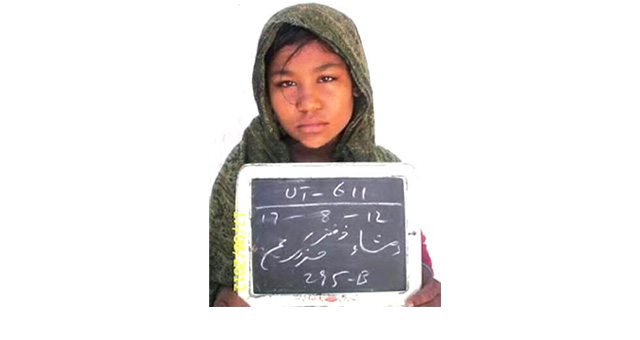
Religion has been one of the most sensitive issues for the communities living in the Indian sub-continent. During the British colonial rule, too, India experienced several religious riots which necessitated the enactment of ¿Blasphemy Laws.– It was in fact the absence of an appropriate law to handle blasphemy offenses committed in the written format that led the British India Government to introduce the Blasphemy Law 295-A in 1927.Following the partition of the sub-continent into India and Pakistan in 1947, the latter inherited and retained these laws. The lethal blend of politics and religious extremism was also evident in most of the communal riots and sacrilegious acts (directed at one or the other religion or its followers) that took place before and after the creation of Pakistan. The cause was a few sacrilegious offences committed by one religious community that offended the other community ´ triggering a chain of events that resulted in targeted murders or communal riots.
Despite the presence of a legal framework, violence rooted in or flowing from faith continued unabated in Pakistan, whereby conservative religio-political parties faced no systemic hurdle in perpetuating hate-speech and sowing seeds of communal and sectarian hatred. In 1974, the then government led by Zulfiqar Ali Bhutto caved in to pressures by religio-political and declared the minority Ahmadis sect as non-Muslim. Real religiousization of state and its legal framework, however, began under former military dictator General Zia-ul-Haq who enforced controversial regulations he called ‘Islamic.’ This laid foundations for religious radicalization within the society, precipitated by the US-led anti-Soviet jihad in Afghanistan in the 1980s. Gen Zia also added radical Ahmadi-specific clauses into the blasphemy laws which have often been exploited by religious extremists or even individuals to settle personal feuds, and thus condemning the accused to years of imprisonment and tedious litigation.
Despite the existence of nine different Blasphemy laws, Pakistan has seen a gradual surge in blasphemy-related cases in the last decade or so. The laws made and enacted presumably to prevent mob violence and deter abuse, has instead resulted in more conflict and acts of violence against both Muslims and non-Muslims. A CRSS report provides an overview of the developments surrounding the issue of Blasphemy with a view to create greater awareness on this subject.
For Details Please go to REPORTS
Pakistan's Blasphemy Laws
TOP STORIES
TESTIMONIALS
“Fiscal empowerment, robust trade, and economic connectivity can act as buffer against radicalisation and extremism.”