



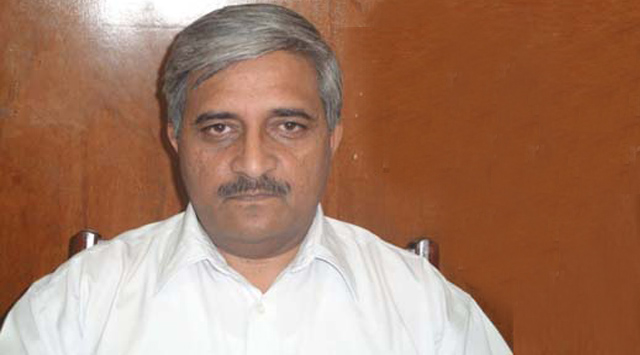

Pakistan Blasphemy Laws are once again under the national and international spotlight following the gruesome murder of Advocate Rashid Rehman, a lawyer and a human rights activist who was shot dead on May 7, 2014 in his office for defending a teacher of Bahauddin Zakaria University, in Multan, central Pakistan. The teacher was accused of having committed blasphemy. Following on the the heel of this murderous act, as many as 68 lawyers also faced the same charge under Section 295A of the constitution of Pakistan by the Kotwali Police in Jhang, another town in central Pakistan which is the hotbed of the country simmering sectarian wars. The infamous radical sunni Lashkar-i- Jhangvi and its precursor Sipahe Sahaba Pakistan also originated in Jhang.
It is no surprise therefore that the Jhang police wasted no time in instituting the case against the lawyers who were protesting Rehman murder. The case followed a death threat made by religious groups, who warned lawyers of dire consequences if they stood for blasphemy offenders. Ignoring the threat, a group of lawyers did organize a protest against the wilful murder of Rashid Rehman who was only performing his duty as a defender of law and justice.
In retaliation to the widespread condemnation by the lawyers and the civil society organization, on the murder of Mr Rehman, the perpetrators planned another deadly act of attacking the Central Jail Multan and killing all the accused in blasphemy case including lecturer Junaid Hafeez, who was accused of defaming the Holy Prophet on social media. [1] Preempting the attack, Multan police on a tip-off, arrested five alleged terrorists on May 11.
Just a week before the murder of Mr Rehman, a mosque in the Capital Islamabad was named after Mumtaz Qadri, the guard who had murdered former Governor of Punjab Mr Salman Taseer [2] in Islamabad on January 4, 2011. Qadri gunned down Taseer because the former governor advocated changes to the Blasphemy Law and had also met with Asiya Bibi in the jail. MsAsiya Bibi, is also accused of having committed blasphemy. A court eventually convicted Mumtaz Qadri to death on two accounts [3], yet he still awaits execution firstly for Pakistan moratorium on death penalty and secondly for fear of a backlash by his supporters.
Such acts have encouraged the religious right as well as hard-core rightist lawyers many of whom had greeted and hailed Mumtaz Qadri for murdering Salman Taseer. Some had also threatened Rashid Rehman for defending the teacher and that too in the presence of the judge, but he refused to be cowed down and was eventually shot dead.
Background
On May 13, the Kotwali Police in Jhang registered a First Information Report (FIR) under Blasphemy Law against eight (8) known and 60 unknown members of the District Bar Association.
According to the BBC it is the biggest case ever of its kind in the country. The case was initiated by the Kotwali police against the lawyers because they had lodged a criminal case against the Kotwali House Station Officer (SHO). The lawyers were calling for the arrest of five policemen who had detained and manhandled a lawyer in Jhang city a week earlier but the police bit back with what appeared to be a dangerous reprisal; the complainant took the plea that lawyers were shouting slogans against the police officer who shares the name with one of the caliphs of Islam. It is in fact a common occurrence in most of the blasphemy cases instituted against innocent Muslim and other minority groups.
The Pakistan Penal Code prohibits blasphemy against any recognized religion, providing penalties ranging from a fine to death. An accusation of blasphemy commonly subjects the accused, to harassment, threats, and attacks. An accusation is sometimes the prelude to vigilantism and rioting. Any calls for change in the blasphemy laws have been strongly resisted by Islamic parties thus far.
Several sections of Pakistan’s Criminal Code comprise its blasphemy laws – Article 295 ´ which forbids damaging or defiling a place of worship or a sacred object. 295-A forbids outraging religious feelings. 295-B forbids defiling the Quran. 295-C forbids defaming the Prophet Muhammad. Except for 295-C, the provisions of 295 require that an offence be a consequence of the accused’s intent. Defiling the Quran merits imprisonment for life. Defaming the Prophet merits death with or without a fine. If a charge is laid under 295-C, the trial must take place in a Court of Session with a Muslim judge presiding.
These laws seem to protect the embodiments of faith of only one community the sunni Muslims, in a multi faith society. On the contrary these laws provide no protection to members of other religions. and hence they are discriminatory. They are used against the members of other religious communities including Christians, Ahmadis, and Hindus and even against Muslims who have some differences with main sects. It is even being interpreted by extremists as ¿blasphemous– to claim that it is not necessary for a man to grow his facial hair long in Islam! It is widely believed that the draconian Blasphemy Law is used for the miscarriage of justice; it is exploited ruthlessly by fanatics to settle scores with rivals and by religio-political parties to gain political leverage over administrative apparatuses.[i]
Alarming Intolerance and Abuse of Law
The latest string of events involving Blashphemy underline growing intolerance against those Muslims and non-muslims who right wing radicals consider as too liberal.
Since 1953 to April 2014, as many as 46 people have been murdered extra-judicially after being accused of blasphemy, 11 lynched and four killed in the prison either by the inmates or the police. In 41 cases the accused were acquitted and five were dismissed on false charges.
Surprisingly, during the given period, maximum blasphemy cases have been reported from the most populous Punjab province (269 ) followed by Sindh (46), Islamabad (12), KP (11), and Balochistan (7 cases). There have been more cases reported from Islamabad than the northwestern Khyber Pakhtunkhwa province, generally associated with religious extremism and social conservatism. Among the people accused of blasphemy 36 belong to the religious community of different sects and religions, 24 mentally challenged, and two from lawyers– community; one of them being judge Arif Iqbal Hussain Bhatti, who was killed in his Lahore office for acquitting two persons accused of blasphemy.
Names of some of the religious persons accused of blasphemy are Maulvi Arif (Imam of Ganj Mandi mosque, Rawalpindi), Maulvi Sanaullah from Kasur, Mohammad Yousuf Ali from Lahore (Muslim cleric and a former member of Zia Majlis-i-Shura), Qari Abdur Rashid (Lahore), Dr. Sajjad Farooq from Gujranwala (Hafiz-e-Quran), and Maulana Zia Farooqi (Gujranwala). All the religious personalities belonged to the Punjab.
A majority of victims of such accusations belong to Lahore, (78), followed by Muzaffargarh (38), Faisalabad (24), Karachi (22), Gujranwala (15), Kasur (14), Toba Tek Singh (12), Rawalpindi (12) and some from other areas of the country. Most of these districts are economically developed with a sound literacy rate. (Note: In New Delhi, India there are 65 Pakistani refugees who were accused of blasphemy are followers of Pir Gohar Shahi).
An interesting point to note is that over 60% of the accused are Muslims (253) followed by Christian (113), Ahmadi (58) and others. The figures raise question about how much of the Blasphemy Law is used to punish the real culprits and how far it is abused to settle scores. Sawan Masih, a Christian, for instance, had been accused of insulting the Holy Prophet, during a drunken conversation with a Muslim friend in the Joseph Colony area of Lahore on March 8, 2013.
Similarly, a teenager Ms Rimsha Masih endured a similar harrowing experience after the prayers leader of a mosque in Islamabad led a mob to her house, charging her with blasphemy. A court later acquitted the terrified young girl, who suffered from a down syndrome.
The acquittals of 41 persons accused of blasphemy and dismissal of 4 cases proves that in most cases the Law has been misused. Lawyers are duty bound to give justice to the people whose rights have been violated, but the Blasphemy Act is the only law that has encouraged people even lawyers to go after those accused of blasphemy, resulting in several extra-judicial deaths.
The timely action against the five alleged terrorists in Multan has for the time being averted a bigger tragedy. But one wonders whether one act of arrest would at all deter militants and radical Islamists from taking the law in their hands in the name of Islam?
Another question arising out of it is whether the government plans to deal with violators of law with an iron hand to prevent the misude of the blasphemy laws. Will the Pakistani parliament also rise to the occasion and go for a review of the law in order to create safety valves against mis-, or abuse?
Will the mainstream political parties keep ducking under expedience and allow extra judicial killings at the cost of rule of law. Why and how can a state permit individuals to act as judge, jury and executioner in the name of religion?
Unless the government comes down with a heavy hand against the accusers and killers of people accused of blasphemy, extra-judicial killings of this kind will not stop. How can even the mere suggestion of revisiting the law is considered blasphemy and ends with serious and deadly consequences.
(Contributed by Mr Mohammad Nafees, CRSS Senior Research Associate and Imtiaz Gul, CRSS Senior Research Fellow)
[i] http://www.pakistanblasphemylaw.com/?page_id=15