



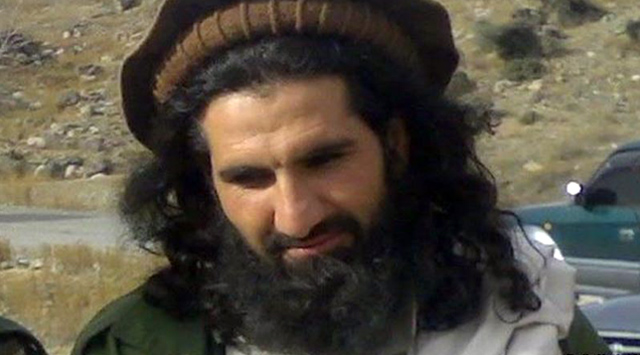
In an abrupt, though unsurprising move, a major Mehsud faction of the vicious militant group Tehreek-e-Taliban Pakistan (TTP) announced its Tehreek-e-Taliban Pakistan (TTP) separation from the TTP umbrella group, stating severe policy differences with the core. This not only exposed divisions within the group but also delivered a severe blow to its organizational capacity as an outfit that has spearheaded hundreds of suicide bombings since its creation some seven years ago, and claimed responsibility for killings of civilians and for thousands of deadly ambushes of military convoys. The split also practically terminates the hyped up talks that the government had pursued since early this year.
Announcement
Azam Tariq, who was also a part of the Taliban shura,made the announcement during a press conference he gave Wednesday morning at an undisclosed location. A former spokesperson of the group, Tariq said that the Mehsud group ´ under the leadership of Ameer Khalid Mehsud ´ had decided to break away from the TTP. [1]
Unhappy with the central leadership of TTP, Tariq claimed that the decision to split was taken after careful consideration.
Tariq claimed that TTP have fallen in the hands of conspirators and been involved in burglaries and extortion, in an indirect reference to the Shahryar Mehsud, successor to former TTP chief Hakimullah Mehsud killed in a US drone strike in November last year.[2]
‘We tried our best to stay united but failed,’ he said, adding that the central leadership was being controlled by hidden forces.
Vowing to stop oppressors from doing wrong, Tariq said his group will call a meeting and decide their future course of action.
Analysis
What led to the split? This can be attributed to several factos.
Firstly,the split within TTP has been in the making ever since Maulana Fazlullah ´ a non-Mehsud militant – succeeded Hakimullah Mehsud as the TTP chief soon after Mehsud elimination in a drone attack in November 2013. This power struggle also meant elevation of Shehryar Mehsud, a trusted aid to Hakimullah, as the TTP supreme commander for the Waziristan region.[3]
Secondly, Khalid Mehsud (alias Sajna), who now heads his own faction of the TTP, had been at odds with the Hakimullah group for quite some time and these differences became sharply visible when the Pakistani government offered talks to the banned terrorist outfit in January this year. Khalid Mehsud was among those so-called ‘reconcilable’ Taliban who favoured dialogue and had urged others to avoid attacking interests of Pakistan.
Fazlullah, Shahryar, and Omar Khalid Khorassani (from the Mohmand tribal region) stood out as the vocal opponents of talks, particularly averse to any compromise on their broad-brush demand that Islamic Sharia be imposed across Pakistan, military be withdrawn from the 27,200 sq km tribal regions, and TTP prisoners be released henceforth.
As expected, neither the government nor the mighty military establishment gave in to these demands because they had made clear from the day one that the federal constitution would be the guiding document for any compromise.
The trio thus stands out as the ‘irreconcilables’ because they placed demands which no functional state would ever concede.
Thirdly, following the deadlock in talks in April, which also underscored civil-military disagreement over the strategy in how to handle TTP, the military went ahead with the bombing of targets identified as terrorist hideouts ´ places where terrorists of all hues ´ TTP, Afghans, Arabs, Uzbeks and Uighurs ´ have been sheltering. At least 80 local and foreign fighters have been killed in the latest offensive over mountainous parts of North Waziristan since mid May. TTP factions called it a betrayal and thus practically dissociated themselves from the process.
Fourth, tribal pressure might also have deepened TTP divisions; some pro-talks members of the TTP such as Khalid Mehsud Sajna, for instance, appeared to take cognizance of the massive displacements that uncertainty and the tug-of-war between the military and the militants had caused.
Sajna and Hafiz Gul Bahadur, another warlord who controls substantial border regions in North Wazirsitan, were recently quoted as saying that ‘as many as two million IDPs from the North and South Waziristan are living like refugees in their own country.’ This is partly our fault and we must address this, Sajna and Bahadur told their commanders.
Fifth, the government-TTP talks possibly also created conditions which encouraged a few dozen commanders to leave Waziristan and join Al-Qaeda comrades in their fight against the Syrian regime.
Locals speak of at least 50 leading TTP commanders who may have been lured by the prospects of funds and settlement in the Gulf to give up militancy.[4]
Early this year, Pakistan received a mysterious US $ 1.5 billion donation from the Royal Kingdom of Saudi Arabia, triggering speculation that part of the funds may have been meant to recruit fighters for the Saudi-led insurgency against President Bashar al-Asad.
Lastly, the TTP split may also revive a joint trilateral Shura that Gul Bahadur, Maulvi Nazir Wazir (South Waziristan) and Baitullah Mehsud, founder of TTP, had agreed to establish in 2008. The shura was supposed to serve as a joint platform for promoting common causes such as the support for Afghan Taliban.
But possibly because of conflicting objectives, Baitullah Mehsud never really aligned himself with the move. With Khalid Mehsud now becoming the head of his own faction of TTP, officials and journalists in Dera Ismail Khan and Peshawar opined, the shura may now become a reality and that could give the Pakistani authorities greater leverage because of their relatively friendly relations with Hafiz Gul Bahadur and the Ahmedzai Wazirs.
Background
South Waziristan is home to two major tribes i.e. the Mehsud and the Ahmedzai Waziris. Mehsud tribesmen make up some 70% of the local population in South Waziristan but most no longer call the place their home but a safe haven for Taliban militants. The TTP too originated here in December 2007, led by Baitullah Mehsud who was killed in a US drone strike on August 5, 2009. Hakimullah Mehsud succeeded Baitullah, until November 1, 2013, when he too fell to a CIA-led predator strike.
Over two-thirds of South Waziristan residents have been living as internally displaced persons (IDPs) either in IDP camps or with friends and relatives in other towns and villages around Waziristan as a consequence of the military operation that had begun in October 2009 to flush out foreigners from the Mehsud tribal regions.
Wana, the administrative headquarter of South Waziristan, had seen a similar anti-Uzbek operation in March 2007 as well. Then, the army had embedded its sharp-shooters in the militia of Maulvi Nazir Ahmed and forced IMU militants out into the Mehsud regions, where Baituallah and other Mehsud commanders took them under their shelter.
According to some estimates, over 1.5 million of the three million population of South Waziristan , of which three-fourths are Mehsud tribesmen, who had left their homes in the face of the October 2009 military offensive, which had aimed at regaining territories from the TTP as well as evicting its foreign guests including militants of the Islamic Movement of Uzbekistan (IMU)and Uighur Chinese dissidents associated with the East Turkestan Islamic Movement (ETIM). Most of these militants also avowed allegiance to Al-Qaeda.
Tags: Tehreek-e-Taliban Pakistan (TTP), Mehsud, TTP, ETIM, Uighur Chinese, IMU, Pakistan, Pakistan Terror Group Splits, Uzbeks in Pakistan, Pakistan internally displaced persons, IDPs in Pakistan, Al-Qaeda, Military Offensive in October 2009, Maulana Fazlullah, Shehryar, and Omar Khalid Khorassani, Mohmand, Pakistani tribal regions.
(compiled, edited by Imtiaz Gul, senior research fellow CRSS)
[1] http://tribune.com.pk/story/714264/mehsud-group-announces-separation-from-ttp/
[2] http://tribune.com.pk/story/714264/mehsud-group-announces-separation-from-ttp/
[3] Based on CRSS Interviews with Experts / Journalists based in Peshawar, Dera Ismail Khan and Waziristan
[4] CRSS interview with Mehsud and Wazir journalists and sources in Peshawar