



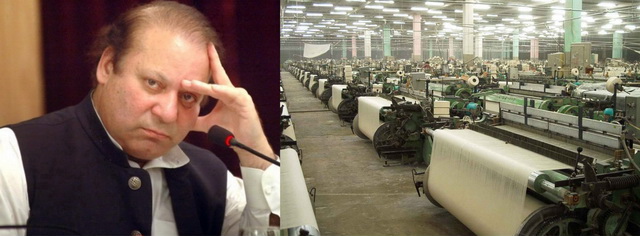
 The May 11 general elections in Pakistan brought to an end weeks of speculation as to whether this will happen at all. This exercises culminated in a massive victory for ex-premier Nawaz Sharif ¿s Pakistan Muslim League (Nawaz), PML-N , – a center right party both at the centre ( 186 seats) and his stronghold the most populist Punjab province (with two-thirds majority). The Pakistan Peoples’ Party (PPP) – a center left party, suffered serious setbacks and managed only about 39 seats in the 342-strong lower house – the National Assembly- , followed by Pakistan Tehrik e Insaf (PTI) – a relatively new centrist Party lead by Imran Khan. Its 35 seats in the National Assembly and the simple majority in Khyber Pakhtunkhwa marked a big shift in Pakistan political landscape and underscored the craving for change in the status quo.
With this mandate, one trend seemed obvious that the people of Pakistan, with the exception of Mutthadia Qaumi Movement- MQM (a party representing the immigrants, or the Mohajirs, in Karachi, who came from India after partition in 1947), rejected all other parties on grounds of their five year performance.
One of the major concerns after the elections was the situation and result in conflict riddled province of Balochistan. With less than ten percent voter turnout, the polls were nothing less than a disappointment in the region. The only hope for the province came with the participation of the Balochistan National Party, lead by Sardar Akhtar Mengal – a Baloch nationalist leader. Yet after the elections, Mengal was not happy with the results as he accused the security establishment for using all resources to manipulate results against him and his party. But largely, most parties agreed on the outcome and are desperately trying to form the government in the country area-wise largest province.
Now, as Nawaz Sharif is set to take charge at the centre for a third time, and Khan party has already formed the government in the northwestern province, daunting challenges await them; crippling energy crisis, spiraling religious and ethnic insurgencies in northwestern and southwestern Pakistan, and severe economic crisis are some of the grave issues staring the new governments. Both PML N and PTI, political analysts say, are parties with a conservative outlook and approach. The reason being both parties’ support dialogue with Taliban militants, who have killed more than 40,000 Pakistanis indiscriminately since the war on terror in Afghanistan began unfolding. Also, PTI’s strong stance against drone attacks represents another big challenge for the party.
But with the May 29 Drone attack, that killed Taliban’s second in command, Wali ur Rehman[i], the Taliban have withdrawn their offer of negotiations, jeopardizing peace overtures by Sharif and Imran Khan.
Even if the talks go ahead, what makes the situation tricky is the presence of various militant outfits in the country. From Hakeemullah Mehsud, to Maulvi Fazlullah to renegade leaders of Lashkare Jhangvi and Lashkare Taiba, Pakistan is home to various brands of militants, some of them supported by sources in Saudi Arabia. This situation makes the dialogue argument of PML N and PTI weak as any dialogue with one group would not assure that other groups would also be bound to any sort of agreement reached with a certain group.
In terms of sectarianism, the PML N chairman is also alleged of having a soft corner towards a sectarian militant outfit in Southern Punjab ´ Lashkae Jhangvi and Sipahe Sahaba Pakistan – is a source of anxiety among the Shia Muslims of Pakistan, who fear a rise in sectarian violence against them in the country under Nawaz rule. This omni-present fear also came true in form a sectarian attack in Peshawar, on May 29, killing two people in an Imam Bargah (Place of worship for Shia Muslims).[ii]
Overall, with the foreign exchange reserves on an all time low, a stagnating economy due to crushing power outages, and ambiguity on issues such as drone strikes and relations with India, it seems the new government has not the luxury of the ‘honey-moon’ time that most governments usually have. The situation requires remedies and mitigating mechanisms on a war-footing, particularly the PTI has raised expectations as well as set in motion an agenda of change. It has forced other parties also to try breaking out of the plutocratic style of governance.
Farooq Yousaf
Research Analyst / Assistant Editor
CRSS Fellow
[i]http://dawn.com/2013/05/30/waliur-rehman-buried-say-intelligence-officials/
[ii]http://tribune.com.pk/story/555882/sectarian-attack-bomb-targeting-imambargah-kills-two-in-peshawar/