



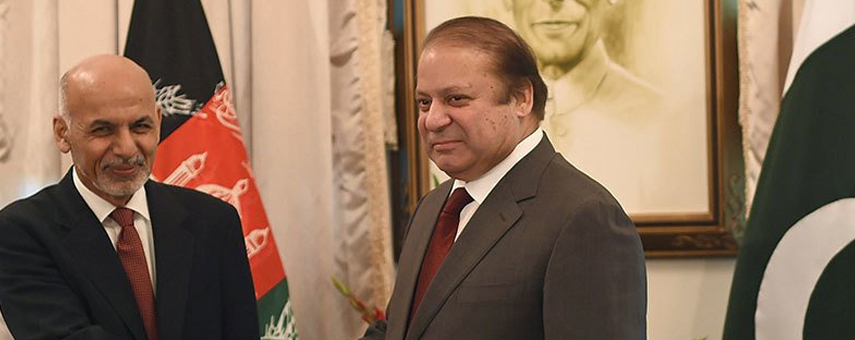
An interesting peace initiative for Afghanistan is in the making. If it clicks the new American administration could be more than happy to hand over this open ended conflict back to Russians or to the SCO and wash its hands off it. Taliban and Al-qaeda received much less attention from the president-elect during his campaign, even though he pledged to fight Daesh with all ‘Trumpish’ ferocity. Russia, China and Pakistan are contemplating a trilateral on Afghanistan in December. This will be another addition, but with a difference, to an already existing multitude of bilateral, trilateral, quadrilateral and multilateral clusters ostensibly looking for peace in Afghanistan while ensuring, through their cross-purposed actions, that peace does not return to Afghanistan.
The common fixture in existing arrangements is an over bearing American presence in all such entities. Anything that bears an American signature-tune doesn’t sell well amongst the leadership and the rank and file of Taliban—the real holders of politico-military power in Afghanistan. Although there have been indications that Trump is not in favour of peace talks with the Taliban, there is little other public information about Trump’s Afghanistan policy. Trump’s ignorance of the Taliban could feed the “deep state” in Afghanistan—the illicit parallel economy and security architecture run by warlords, drug-lords, and the Taliban.
America’s leadership role in general, or its abdication of this role in particular, remains pivotal to mitigate, if not end, violent Afghan conflict. America is embroiled in plentiful foreign crises and Afghanistan is certainly not a high priority item. Trump’s America-first approach promised to withdraw the United States into Fortress America, build walls around it, both conceptual and real. This indicates a mindset of American policy for, at least, next four years. And if so, this fits well into the concept and opportunity of American disengagement from Afghanistan. Already, the Taliban have asked Trump to withdraw American forces from Afghanistan; and with his neo-isolationist tendencies, he may be tempted to do.
Security situation in Afghanistan is deteriorating fast. This assessment is endorsed by a number of evaluator like the US Special Inspector General for Afghanistan Reconstruction (SIGAR) and the United Nations Office on Drugs and Crime (UNDOC). Internal political and security complications are effectively hindering any meaningful human development project. Most of these failures are attributable to the outcomes of slipshod American policies, some intended, and others un-intended.
SIGAR has all along been reporting lack of efficacy in US fund distributions in Afghanistan leading to evolution of systemic corruption syndrome, which is now well entrenched. This has undermined the prospects of economic growth and broader confidence in the Afghan government. The change in US administration provides an opportunity to retool the aid utilisation strategy in Afghanistan.
Efforts in the form of troop surges, troop reductions, negotiations, and consultations have all failed to set a direction for the resolution of the Afghan conflict. October was the deadliest month in the past two years with at least 500 security forces and 700 civilians killed or injured. In November too, major attacks were carried out by the Taliban on Bagram Air Base and the German Consulate in Mazar-e-Sharif. The Taliban have persistently continued to gain ground, and now control more than one-third of the country. Their capability to carry out attacks in the areas which have traditionally been non-Taliban zones is expanding at a phenomenal pace.
Even then, Afghan Taliban had been involved in ‘intense discussions’ on crafting a way forward for the possible resumption of peace negotiations. While following a consensus approach, field commanders have also been taken into confidence. “We are now exploring the options for talks with foreign stakeholders, as well as with the Afghan side,” A Taliban leader in Qatar stated. “It will be a national level decision. The consultation process was strong”, he added. He rejected the impression that Taliban wanted a military solution to the Afghan problem. “We want a non-military solution,” he added. He condemned President Ashraf Ghani’s recent move to seek UN sanctions on Taliban chief Maulvi Haibatullah and said any such act could undermine the on-going efforts for talks. This Taliban leader welcomed the growing Russian role in the Afghan peace process and said the Taliban view Moscow’s efforts as “positive.” Responding to a question, he said the Taliban could accept the guarantee of Russia, China and other countries.
Pakistani leadership has clearly told the Taliban negotiators to join the peace process and bring to an end the longest war in Afghanistan. The delegation comprising Maulvi Shahabuddin Dilawar, Maulvi Salam Hanafi and Jan Muhammad were in Pakistan for two weeks; they have held multi-dimensional discussions focused on prospects for the peace process.
Trump’s proposed ban on Muslims could possibly worsen anti-American sentiment in Afghanistan, which could increase the number of extremist recruits. Abu Omar Khurasani, the IS commander in Afghanistan, recently stated, “…utter hate towards Muslims will make our job much easier because we can recruit thousands.”
Trump has expressed reluctance to continue spending in Afghanistan, which could negatively impact the crucial influx of funding from outside donors. For example, during the Wales Conference, NATO allies pledged almost $1 billion per year until 2020 for the Afghan National Security Forces (ANSF) while the United States has budgeted $3.45 billion annually for the ANSF. If Trump calls for large spending cuts in Afghanistan, it could undermine allied spending as well. This would have severe consequences with regard to the ANSF and the security apparatus of Afghanistan. At the Munich Security Conference in 2015, Afghan President Ghani had said, “Afghanistan is the meeting ground of th[e] global ecology [of terrorism].”
Trump’s public skepticism about NATO, specifically his opinion that the United States should be reimbursed for providing protection to NATO allies, could inhibit much needed cooperation. For example, financial disagreements could hamper NATO deployments at major bases in Herat and Mazar-e-Sharif, which are controlled by Italian and German troops, respectively. NATO countries have played a crucial role in Afghanistan by providing collective security, and isolating these allies would be detrimental to US efforts and interests.
Russia will host first-ever trilateral talks involving Pakistan and China next month in an effort to tackle the Afghan conundrum. “This is a watershed moment,” said a senior Pakistani official, who believes the development is part of the realignment taking place in this part of the world. Two of former Presidents, General Pervez Musharraf and Asif Ali Zardari visited Moscow for rapprochement. Putin twice announced a visit to Pakistan; which were unluckily cancelled at the last minute.
But that did not dim the desire for building ties afresh on either side. Prime Minister Nawaz Sharif also visited Russia and had a meeting with President Putin on the sidelines of SCO summit. Russia has been engaged in a $2 billion Gas Pipeline projects and wishes to come to energy sector and road building. Last month, Pakistan and Russia held their first-ever joint military exercise, which is a landmark development showing gradual improvement in their ties. The three-way talks will discuss how to bring an end to the long running conflict in Afghanistan and prevent groups such as Daesh, from gaining a foothold in the war-torn country.
The deteriorating security situation in Afghanistan has raised concerns about the spillover effect due to the presence of non-state actors and other elements. Islamabad, Moscow and Beijing now have ‘convergence’ on many regional issues, including Afghanistan. Dialogue is only way out of war in Afghanistan and Pakistan will keep supporting the dialogue process for the peace of Afghanistan.
United States could benefit from working more with Russia. If Trump’s positive personal relationship with Russian President Vladimir Putin could evolve to policy level, there could be more robust cooperation between the United States and Russia in Afghanistan.
This article originally appeared in The Nation, 29 November, 2016. Original link.
Disclaimer: Views expressed in the article are not necessarily supported by CRSS.