



Engineer Arshad H Abbasi
Why should a labourer on a motorbike pay the same fuel price as the owner of a Toyota Land Cruiser 300? This piece exposes the hidden injustice in Pakistan’s fuel pricing system and makes the case for technology-led reform that protects the poor while holding luxury consumption accountable.
Injustice often hides in ordinary policies. It rarely announces itself with loud slogans or dramatic speeches. Instead, it quietly settles into systems that people accept as normal. Pakistan’s fuel pricing structure is one such example. The same price per liter of petrol or diesel applies whether a citizen rides a small motorbike worth Rs 20,000 or drives a luxury vehicle such as the Toyota Land Cruiser 300 worth nearly Rs 9.40 crore. On paper, this flat-rate pricing appears simple. In reality, it creates a system that treats necessity and luxury as if they were identical.
Fuel is not merely another commodity for most Pakistanis. It is a basic economic input that keeps daily life moving. Farmers rely on tractors to cultivate crops. Rickshaws and small transport vehicles provide affordable mobility in crowded cities. Buses carry thousands of workers who cannot afford private cars. Motorbikes allow students, shopkeepers, and laborers to travel long distances to work. When these essential vehicles pay the same fuel price as luxury automobiles such as the BMW X5, the BMW iX1, or high-end cars produced by Mercedes-Benz, the policy stops being neutral. It quietly transfers economic pressure onto those with the least capacity to absorb it.
My understanding of this problem grew through years of personal interaction with Pakistan’s fuel regulator, the Oil and Gas Regulatory Authority. What began as a technical curiosity gradually became a sobering lesson about how institutional resistance can prevent necessary reform.
My journey began in 1996 when I owned a vehicle manufacturing company. I spent much of my time experimenting with engines and mechanical systems. Mechanics consistently advised me to run engines on “pure petrol.” The suggestion sounded straightforward, yet it raised a question that no one seemed able to answer: where exactly could pure petrol be found in Pakistan?
That simple inquiry led me into the regulatory framework governing fuel quality. I started visiting OGRA frequently to understand how petrol and diesel were monitored and regulated. On paper, the authority’s mandate is admirable. It is supposed to safeguard public interest, enforce technical standards, and ensure that fuel quality aligns with international benchmarks under the Pakistan Oil Rules. Such responsibilities should naturally encourage innovation and transparency.
My experience suggested otherwise. Instead of an institution eager to modernize the sector, OGRA appeared defensive and resistant to new ideas. Conversations about reform were often treated as disruptions rather than opportunities. I reminded officials of their own vision statement, which speaks about building a progressive and competitive energy industry through innovative solutions. Yet the response remained largely unchanged. Suggestions were politely acknowledged and then quietly dismissed.
In an effort to contribute constructively, I developed a proposal based on information technology. The idea was straightforward. It aimed to track fuel quality and quantity from refineries to petrol stations through a digital monitoring system. Such a platform could detect adulteration, verify supply chains, and ensure that customers actually received the amount of fuel they paid for. The proposal aligned directly with the regulator’s stated mission.
Unfortunately, it was rejected without meaningful discussion. The rejection itself was disappointing, but what followed was more troubling. Instead of engaging with the technical details, I received subtle warnings not to pursue the proposal further. Those moments revealed a deeper reality within Pakistan’s energy sector: oil marketing companies often exercise significant influence, while regulatory bodies hesitate to challenge established interests.
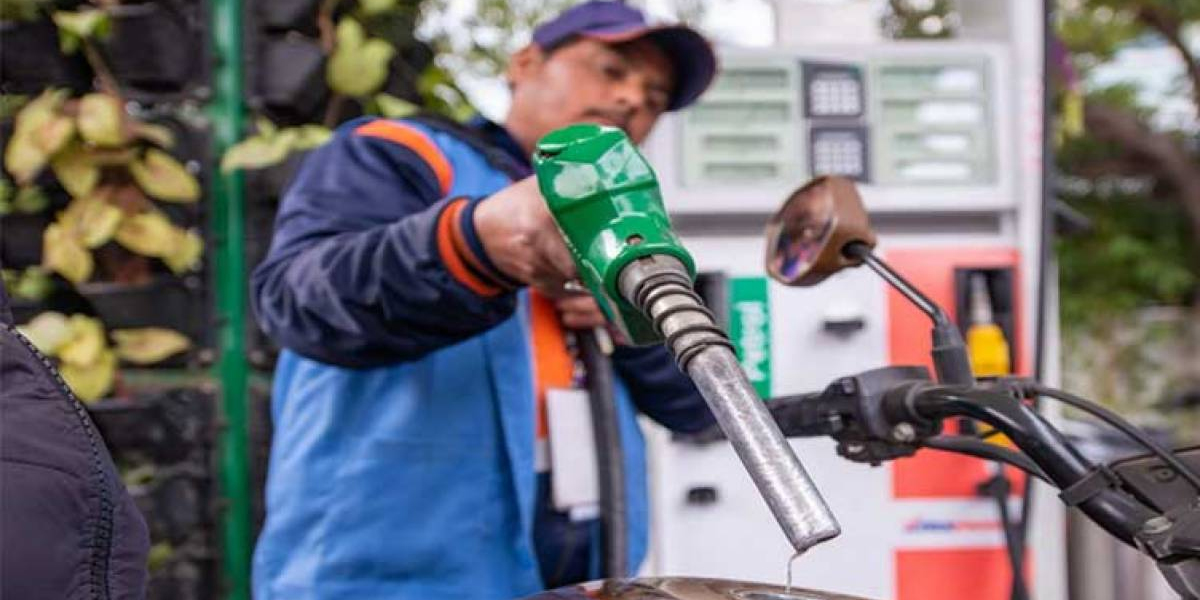
Over time, another issue became increasingly visible at petrol stations across the country. Pakistan had largely transitioned to digital fuel dispensing systems equipped with electronic flow meters. These nozzles were designed to provide accurate measurements of petrol, diesel, or kerosene delivered into vehicle tanks. The digital display on the pump theoretically ensured transparency for consumers. Yet technology can be manipulated when oversight is weak.
Evidence from numerous consumer complaints suggests that digital nozzles are sometimes altered to inflate meter readings. A dispenser might display forty liters while only thirty liters actually reach the vehicle’s tank. Because the reading appears electronically, customers rarely question the measurement. The discrepancy remains invisible, quietly transferring additional cost to unsuspecting consumers.
What is particularly troubling is the absence of robust regulatory monitoring to detect such manipulation. Modern tools, especially Artificial Intelligence systems, are capable of analyzing transaction data and identifying irregular patterns in real time. These technologies are widely used in finance, logistics, and manufacturing to prevent fraud and maintain accountability.
One conversation with an OGRA chairman remains vivid in my memory. During a meeting, he confidently remarked, “I am the king in the modification of digital petrol pump nozzles.” The statement sounded less like regulatory vigilance and more like misplaced pride in technical manipulation.
My reply carried a touch of irony. I told him it was interesting to meet the “King of Nozzles,” especially when a thirty-litre fuel purchase could mysteriously appear as forty litres on a digital meter. Beneath the humour lies a serious point: manipulation of fuel dispensing systems is not an unsolvable technical challenge.
With modern technology, such practices can be detected and prevented. That realization led me to develop another proposal—this time centered on Artificial Intelligence. I called the concept Digitel-Eye. The system relied on AI-powered cameras capable of recognizing vehicles approaching a fuel station with extremely high accuracy. Using deep learning algorithms, the system could identify a vehicle’s license plate, model, color, and category within seconds.
Once identified, the vehicle’s data would automatically connect to the fuel dispenser’s automation system. Each transaction would be digitally recorded, creating a transparent trail that regulators could audit easily.
Digitel-Eye also offered a powerful opportunity to reform Pakistan’s fuel pricing structure. By identifying vehicles automatically, the system could enable targeted pricing or subsidies. Essential vehicles such as motorbikes, rickshaws, tractors, buses, and goods carriers could receive lower fuel prices. Luxury vehicles, whose owners possess greater financial capacity, could be charged higher rates.
Such differentiation is not unprecedented. Several countries—including Malaysia, the Philippines, Sri Lanka, and Uruguay—already implement targeted fuel subsidies designed to protect low-income users. Most rely on manual identification systems that require administrative paperwork. Pakistan could adopt a more advanced approach by automating the process with AI.
The technology exists. The cost is manageable. The potential benefits are enormous.
Yet Digitel-Eye was rejected as well. The proposal was dismissed without detailed technical review, reinforcing the impression that institutional reluctance—not technological limitations—remains the greatest barrier to reform.
Today, in March 2026, the consequences of this reluctance are visible across Pakistan. Fuel prices have climbed beyond PKR 320 per liter. Transportation costs have risen sharply. Food prices continue to increase because goods must travel through fuel-dependent supply chains. Farmers face higher expenses for operating machinery, while small businesses struggle to manage escalating logistics costs.
For many citizens, the burden is severe. A worker riding a small motorbike to his job now spends a growing share of his income on petrol. The same price applies to owners of luxury vehicles whose fuel consumption often exceeds that of several motorbikes combined.
Consider the contrast. A motorbike worth Rs 20,000 may represent the only transport available to a labourer. A tractor is indispensable for farmers who produce food for the nation. Buses and trucks sustain the movement of people and goods across the country. Yet all these vehicles pay the same fuel price as a luxury SUV such as the Toyota Land Cruiser 300.
A pricing system that ignores such differences cannot be described as fair.
Technology now makes a more balanced approach entirely possible. AI-powered vehicle recognition systems installed at petrol stations could automatically identify vehicles as they arrive. The fuel automation system could then apply the appropriate pricing category instantly.
Motorbikes, rickshaws, tractors, buses, and trucks would receive lower fuel rates, reducing economic pressure on essential sectors. Luxury vehicles would pay higher prices reflecting their owners’ ability to afford them. The process would be automatic, transparent, and resistant to corruption. The obstacle is not technical capability. It is institutional inertia.
Regulatory bodies such as OGRA—and even authorities like the National Electric Power Regulatory Authority—have increasingly been criticized for what many observers describe as “weaponised incompetence.” Leadership structures often appear designed to preserve the existing system rather than challenge it. Innovation becomes inconvenient, and accountability fades into bureaucratic silence. That environment discourages reform even when solutions are readily available.
I write this op-ed with genuine disappointment. Over the years, I have presented ideas intended to strengthen transparency, protect consumers, and modernize Pakistan’s fuel regulation system. Instead of constructive dialogue, those proposals were dismissed quickly and sometimes ruthlessly.
Still, the core principle remains simple. Fuel is the lifeblood of the economy. When its pricing structure ignores economic realities, inequality deepens, and the cost of living rises for millions of ordinary citizens.
It is time to confront that injustice honestly. Pakistan cannot continue treating luxury consumption and basic necessities as if they were the same. A farmer’s tractor, a bus carrying workers, or a labourer’s motorbike should not shoulder the same financial burden as a high-end SUV. The moment has arrived for a clear policy shift.
The elite of Pakistan—those who drive vehicles like the Toyota Land Cruiser 300, the BMW X5, or luxury models from Mercedes-Benz—must begin paying more for fuel than the ordinary citizen who relies on a motorbike to earn a living. That change would not be punishment. It would simply be fairness. Justice at the petrol pump demands nothing less.
Furthermore, we must prepare for the looming global energy crisis. If the international oil price climbs over $150 per barrel due to ongoing geopolitical instability, the economic shock to Pakistan’s foreign exchange reserves would be catastrophic. In such a scenario, the Digitel-Eye system transitions from an innovative idea to a national economic survival tool. By charging luxury vehicles a premium rate, the government can generate the fiscal space necessary to save the common people of Pakistan from the crushing weight of a global fuel hike. This tiered pricing would act as a social safety net, ensuring that while the world faces market volatility, the laborer’s journey to work and the farmer’s harvest remain protected through targeted cross-subsidization.
____________________________________________________________________________________________________________
Disclaimer: The views expressed in this article are those of the author and do not necessarily reflect the official position of the Centre for Research and Security Studies (CRSS).