



By Engineer Arshad H Abbasi, International Water & Energy Expert
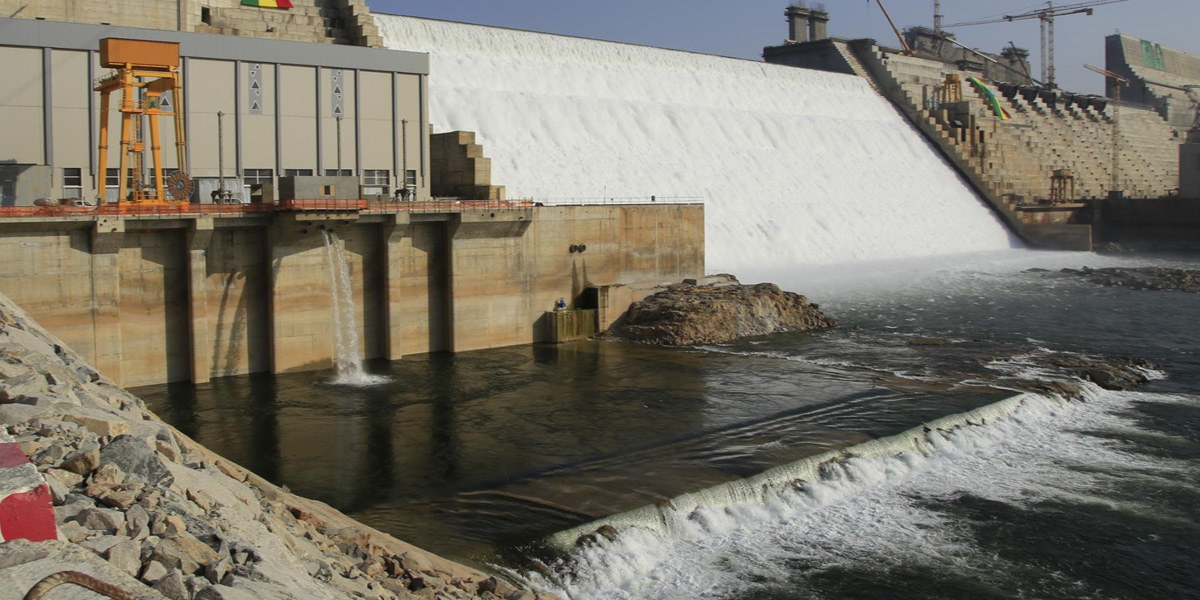
As an independent expert in water and energy issues, with long-standing professional experience on transboundary rivers, I have followed with close attention the recent inauguration of the Grand Ethiopian Renaissance Dam (GERD) on the Blue Nile. At a cost of $5 billion, the GERD is Africa’s largest hydroelectric project and a symbol of Ethiopia’s ambition to electrify its economy and reduce energy poverty. For Ethiopia, it represents not only energy security but also national pride, as the project was built without foreign aid and funded largely by the sacrifices of its own citizens. But for its downstream neighbors, Sudan and especially Egypt, the dam raises profound anxieties about water security and survival.
The concerns of Egypt are not difficult to understand. More than 95 percent of Egypt’s water supply comes from the Nile. Few nations in the world are as dependent on a single river as Egypt, which obtains 93 to 97 percent of its freshwater from the Nile. This level of reliance transforms the river from a resource into an existential necessity. Historical use of the Nile has sustained Egypt’s civilization for millennia, providing fertile soil, drinking water, and the irrigation on which agriculture has depended since the age of the pharaohs. Today, the Nile continues to be the backbone of Egypt’s food, water, and energy systems. In international water governance, historical use and dependence are not abstract arguments. They constitute real, legally relevant grounds for priority of use, especially when more than 100 million people live in a nation where the river is virtually the sole water source.
The construction and operation of the GERD must also be viewed through the framework of international transboundary water law. The 1997 UN Convention on the Law of Non-Navigational Uses of International Watercourses enshrines two guiding principles: the principle of equitable and reasonable utilization and the principle of the obligation not to cause significant harm. These principles require that upstream states like Ethiopia ensure that downstream riparians such as Egypt and Sudan do not suffer disproportionate damage from unilateral developments. Furthermore, international practice requires that projects of this magnitude be subject to transparent Environmental and Transboundary Impact Assessments (TEIA), followed by consultations and agreements with all affected parties. Proceeding without such frameworks risks undermining these global norms and increasing the likelihood of conflict rather than cooperation.
In my honest professional opinion, Egypt holds the first right of water use in the Nile Basin. This is not because Egypt “owns” the river, but because of the overwhelming weight of its historical dependence and uninterrupted use over thousands of years. Ethiopia has every right to pursue development and improve living standards for its citizens. But the responsibility that comes with building massive infrastructure on a shared river requires ensuring that downstream impacts are neither ignored nor dismissed. Only through recognition of this interdependence and through cooperative governance mechanisms can the Nile remain a river of cooperation rather than a trigger for conflict.
Yet beyond questions of law and history lies another dimension that Ethiopia’s leadership must consider: the economics and technology of energy generation in the 21st century. The Ethiopian government has consistently argued that GERD and other planned dams are primarily for electricity generation, not agriculture. The goal is clear—to expand access in a country where energy poverty is widespread and where 76.3 percent of the population remains rural as of 2024. Prime Minister Abiy Ahmed has hailed GERD as a “shared opportunity” for the region, one that could generate more than 5,000 megawatts of power and enable electricity exports to neighboring countries. The project has been presented as a cornerstone of Ethiopia’s modernization, a self-financed monument to resilience and progress.
But the economics of energy have shifted dramatically. The projected tariff of GERD electricity is over $0.04 per kilowatt-hour. While competitive by historical standards, these figures must be compared with the rapidly declining costs of renewable alternatives. According to the International Renewable Energy Agency (IRENA), global costs for utility-scale solar in 2024 is less than this cost per unit with continued downward trends. Ethiopia, endowed with some of the best solar irradiance and wind conditions on the continent, could generate far cheaper electricity through decentralized renewable systems than through massive hydroelectric dams that require costly transmission infrastructure.
Ethiopia’s solar potential is extraordinary, with an estimated capacity of 1,350 gigawatts and an average irradiance of 5.2 kWh per square meter per day. Despite this, as of 2021, its installed solar capacity was just 20 megawatts. The government’s Growth and Transformation Plan includes a target of 2 gigawatts of solar, with 500 megawatts in the initial stage and an additional 1.5 gigawatts to follow. Meanwhile, Ethiopia’s wind potential is similarly promising, estimated at over 1.3 gigawatts with projects such as Adama I, Adama II, and Ashegoda already feeding power to the grid. Ambitions for 5,200 megawatts from independent producers reflect recognition of this untapped resource. Together, these resources could meet 100 percent of Ethiopia’s electricity demand by 2025, while also allowing for surplus exports.
The rural challenge makes this case even clearer. With three-quarters of the population in rural areas, the most cost-effective and equitable path is rooftop solar systems combined with net metering and micro-grids. These systems bypass the need for long transmission lines from centralized hydro plants and provide reliable, localized electricity. Countries such as India and Kenya are already demonstrating how solar electrification can transform rural communities. Ethiopia has the natural conditions to replicate these successes—if it shifts its focus away from mega-dams and toward decentralized renewables.
Beyond cost and access, there is also the matter of climate risk. Climate change is reshaping rainfall patterns across East Africa, making water flows increasingly unpredictable. Droughts have already crippled hydropower generation in Kenya and Zambia, leading to blackouts and economic stress. Large dams are inherently vulnerable to hydrological variability, whereas solar and wind provide stable generation regardless of rainfall cycles. By doubling down on hydropower, Ethiopia risks tethering its energy future to a resource that climate change is steadily destabilizing.
The geopolitical stakes are no less serious. Egypt, which derives over 90 percent of its water from the Nile according to the Center for Strategic and International Studies, views GERD as an existential threat. Negotiations between Egypt, Sudan, and Ethiopia have repeatedly stalled, with Egypt warning of severe consequences if its access to the river is jeopardized. While hydropower generation does not “consume” water, reservoir filling and evaporation do reduce flows. Estimates suggest that GERD could reduce downstream flow by 3 billion cubic meters annually under some conditions, equivalent to about 5 percent of Egypt’s current allocation under the 1959 Nile Waters Agreement. For a country already struggling with water scarcity, this margin could tip the balance into crisis.
The Nile must not become a river of conflict. It is a shared heritage of 11 riparian nations, and its governance must reflect cooperation, equity, and sustainability. Ethiopia’s development aspirations are legitimate. Egypt’s reliance on the river is undeniable. Sudan’s stability is equally essential. These realities do not cancel one another out; they require a cooperative framework where all parties respect historical rights, embrace international law, and adapt to technological realities.
My advice, offered in neutrality and professional independence, is straightforward. Ethiopia’s leadership should recognize that the era of large dams has ended. The technologies of the future—solar and wind, cheap, clean, and scalable—are already available within its borders in abundance. Pursuing them would allow Ethiopia to electrify its villages, power its industries, and export clean energy, all while avoiding unnecessary conflict with its neighbors and unnecessary risk from climate change.
The GERD, already built, cannot be undone. But Ethiopia’s broader energy strategy is still unfolding. The question is whether the country will continue down the dam path or pivot to renewables that better serve its people and its region. The answer will not only define Ethiopia’s future but shape the stability of Northeast Africa for decades to come.
The Nile has been a river of life for thousands of years. It must not be allowed to become a source of division. The choice is Ethiopia’s, and the world is watching.
The author can be contacted at ahabasi@gmail.com for any clarification