



CRSS Comment
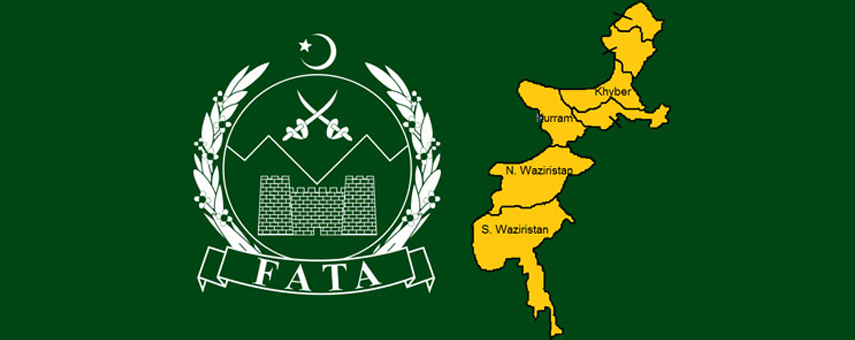
Following years of political neglect and with no de facto legal status, Pakistan’s semi-autonomous border regions bordering Afghanistan – also known as Federally Administered Tribal Areas (FATA) – may eventually be on the brink of becoming formal part of the country, fully covered by the constitution of Pakistan.
A FATA Reforms Committee has proposed a set of “parallel and concurrent” political, administrative, judicial and security reforms, as well as a massive reconstruction and rehabilitation programme, to prepare the Federally Administered Tribal Areas for a ‘five-year transition period’ for merger into Khyber Pakhtunkhwa, daily Dawn reported on June 13.[1]
“The general drift (of the recommendations) is towards a merger,” a knowledgeable source told Dawn. “This seems to be the only workable and viable option,” the paper said quoting a committee member.
Sartaj Aziz, Adviser to the Prime Minister on Foreign Affairs, heads the committee that Sharif constituted on Nov 8 last year. It includes National Security Adviser retired Lt Gen Nasser Janjua, Minister for Law and Justice Zahid Hamid and Minister for States and Frontier Regions, retired Lt Gen Abdul Qadir Baloch.
FATA comprises seven districts – each known as an Agency. All seven agencies are administered by the Federal government. The president of Pakistan is the super in-charge of FATA, while the governor of the northwestern Khyber Pakhtunkhwa province is the local in-charge of the region. A political agent – equivalent of a deputy commissioner – looks after each agency.
FATA regions have for long remained a hotbed of Islamist militancy and terrorist outfits such as Daesh, the Tehreeke Taliban Pakistan (TTP) and Afghan Taliban such as the Haqqani Network.
FATA was the springboard for the CIA-ISI-led anti-Soviet jihad in the 1980s as well as the anti-terror war in Afghanistan in 2001. It also became a haven for Al-Qaeda and the Afghan Taliban after the US-led Afghan opposition ousted the Taliban regime in December 2001, with North and South Waziristan being the most notorious hideouts for all shades of militants.[2]
Years of advocacy on and demands for the integration of FATA have fed into the recommendations that the FRC has compiled.
The Centre for Research and Security Studies (CRSS), too, made a massive contribution towards the end through a national electronic and print media campaign in 2014 and 2015 as well as a string of public seminars and consultations.
It included 20 TV shows with some 100 stakeholders, and about 90 radio shows through the national network involving parliamentarians, lawyers, rights activist and government officials.
FRC members visited all the tribal regions and held discussions with tribal elders, their political representatives and government officials to ascertain opinions on the future status of FATA.
The military, a key stakeholder in the ongoing deliberations concerning the future of FATA and earlier seen as opposed to reforms, also provided its unconditional input. “There is no disagreement here,” he said. “We all agree that FATA has to settle now and it has to be streamlined,” the paper said quoting security official said.
The recommendations echo sentiment within the civil-military establishment that after decades of turmoil, FATA is now poised for a change. “Due to new ground realities and regional security imperatives, marginal or short-term measures would not serve the purpose,” the committee noted.
Implementation of the proposed reforms, however, is subject to the prime minister’s approval before the tedious task of pushing them through the parliament begins.
Transitional Mechanism
Dawn also reported that a proposal is also “actively’ under discussion to put FATA under a separate administrative control with full administrative, legal and financial powers to push and oversee the transition period towards merger. “One thing is obvious: the current scheme of things with regard to FATA is not working,” an official told the paper.. “Call him the CEO, call him the deputy governor, but he has to be a person with undivided attention and who is effective and can push things through.”
Rehabilitation and Reconstruction[3]
The committee set the end of 2016 as the target date for the return of temporarily displaced persons and the completion of reconstruction before the end of 2017. “This gigantic task will require much larger financial resources and coordination,” the committee pointed out
Socio-economic Development
While noting that high incidence of poverty and unemployment make FATA the poorest region in the country, the recommendation seeks the setting up of a high-level special committee comprising experts and officials under the KP governor to prepare before the end of 2016, a ten-year development plan for FATA.
Proposing major infrastructure, irrigation, mineral development and integrated health, education, vocational training and industrial zones with special incentives, the committee said that the major aim of the development plan would be to bring FATA at par with the rest of Pakistan on the basis of all major economic and social indicators.
It said that 20 per cent of the allocation under the development plan should be channeled through local bodies. For this purpose, it said, the National Finance Commission should be asked to allocate 2pc (approximately Rs60 billion in 2016-17) of the divisible pool for the implementation of the 10-year plan.
Local Bodies
It has proposed holding of party-based local bodies’ elections in FATA after the completion of rehabilitation phase and promulgation of the FATA Local Government Regulations within three months and completion of all formalities, including finalization of electoral rolls, constituencies, rules and regulations, before the end of the year.
This, it said, would restore trust between the state and the people of FATA, create a sense of ownership amongst them, extend the writ of the state and prepare the region for further political, legal, constitutional and administrative reforms.
Legal Reforms
The committee has proposed renaming of the Frontier Crimes Regulation as FATA Regulation Act, 2016, omitting all sections relating to collective responsibility, retaining the Jirga system for both civil and criminal matters, whereby the court will appoint a council of elders to adjudicate matters in accordance with the ‘riwaj’ and prevailing law in force.
At the moment FATA regions are governed a British colonial era set of some 50 laws called the Frontier Crimes Regulations 1901.
The Committee also proposes extending the jurisdiction of the Supreme Court and the high court to FATA by amending Article 247[4], thus granting full fundamental and citizens’ rights to the people of FATA.
Capacity Building of Law Enforcement Agencies
The committee has called for the reorganization and revamping of Levies to perform police function, introduction of police uniform and basic training, sanction and induction of additional 10,000 men, improved border management between Pakistan and Afghanistan and abolition of rahdari and permit system to end corruption and cross border movement.
Land Settlement
While noting that property settlement is partly available in Kurram and North Waziristan, the committee has proposed introduction of proper land settlement property record in FATA on a priority basis for administration of civil laws and as a prerequisite for banking operation and investment.
TAGS: FATA, Pakistan, Terrorism in FATA, Al-Qaeda in FATA, Waziristan, Khyber Pakhtunkhwa, FATA Reforms, Mainstreaming Pakistan’s semi-autonomous regions, Tehreeke Taliban Pakistan (TTP).
Compiled by CRSS Team
[1] http://www.dawn.com/news/1264492/reforms-proposed-for-fatas-merger-into-kp.
[2] CRSS Notes
[3] The entire section hereafter has been taken from the same Dawn report quoted above.
[4] The Article 247 of Pakistan’s constitution vests all legal, judicial and administrative powers of FATA in the President of the country.