



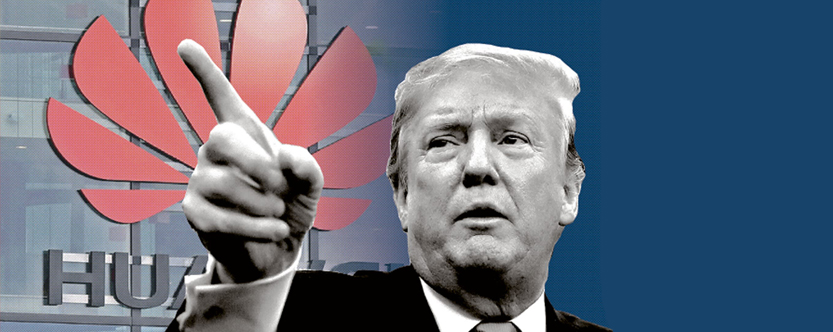
Ever since President Trump banned Huawei on May 15, 2019, accusing it of collecting sensitive US information and supplying it to the Chinese military, something which Huawei denies. The ban has created deep anxiety among the mobile markets globally, as the company is the second largest mobile phone manufacturer in the world. The blacklisting of Huawei also prompted Google to suspend Huawei’s access to Android software.
More than that, it has been labelled as a Mutually Assured Destruction by Indian tech consultants. Prasanto K. Roy, a tech writer and policy consultant writes in India Today:
“The Google-Huawei trade war by proxy has wide ranging consequences. India better be cautious.”
Huawei has about 3.4% estimated share in India’s growing smartphone market. The company recently launched its P30 Pro flagship with the latest features, such as Leica quad camera and macro lenses, which have thrilled the consumers. Though, Huawei is coming up with its own software, yet it would still affect Indian smartphone market, as it is dominated by Android software and Huawei has announced a three-year investment plan worth 100 million dollars as well.
The Indian Telecom Regulatory Authority has announced not to invite Huawei for 5G trials, but Huawei refutes any such claim. According to the Authority, India imports 90% of its telecom network equipment i.e. routers, antennas or multiplexers mainly from Huawei. In the wake of US sanctions, India may resist US pressure along with Germany and UK, as the Indian Telecom authority has urged to make such equipment strategically important.
Prasanto in his India Today op-ed, published on June 10, 2019, clearly warns New Delhi to be cautious in this fight, as India has been testing its own protectionist policies and hopes that Trump doesn’t retaliate on its 137 billion software and services exports.
The author Shayan Tariq is a Research Intern at Center for Research and Security Studies (CRSS), Islamabad and an IR graduate from Bahria University.