



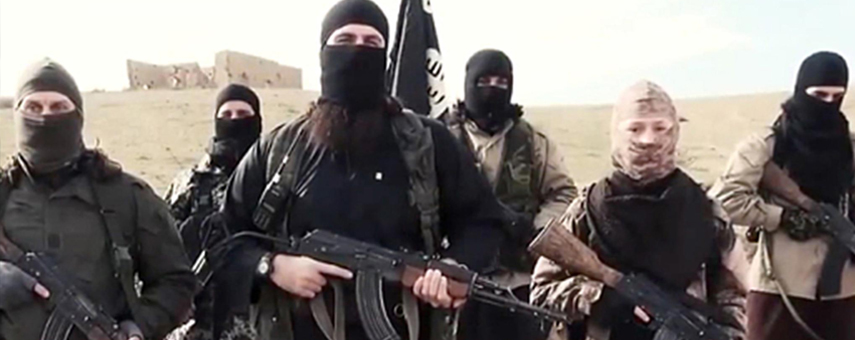
More than 40,000 fighters from 120 countries are believed to have travelled to Syria and Iraq since 2011 (Institute for Economics and Peace 2016 Institute for Economics and Peace 2016, Global Terrorism Index 2016: Measuring and Understanding the Impact of Terrorism, Sydney: IEP. [Google Scholar]). While the notion of foreign fighters joining extremist groups is problematic, it is not new. However, the sheer volume of foreign terrorist fighters (FTFs) provides reason to be concerned.
Actual and perceived lack of inclusion in Western communities and other pull and push factors have led to a tremendous growth of the FTF phenomenon today. These factors have been the subject of many studies as well as approaches designed to address the problem. Overwhelmingly, the response under the counter-terrorism banner has favoured punishing and ostracizing the offenders, rather than addressing the causes of their alienation and ultimately their exodus. Faced with this bleak prospect, those FTFs wishing to return may succumb to the temptations willingly or through coercion to create havoc elsewhere, thus further perpetuating and expanding violent extremism. Effective strategies responding to returnees can only be devised with a clear understanding of the multiple dynamics at play.
In the 1980s and 1990s, foreign fighters from Arab countries, the US, and European nations flocked to ongoing conflicts in Bosnia and Afghanistan. The Afghan Taliban attracted close to 20,000 FTFs over a period of 12 years (1980–1992). The Islamic State (IS) has been known to command more than that number and relies heavily on its promotion of the foreign fighter, both as a security threat and as a recruiting ploy.
While a range of extremist organisations attract foreign fighters, for the purpose of this paper the group under examination is solely IS and all references to foreign fighters and returnees are reflective of that. Furthermore, the term ‘foreign fighters’ denotes a state-centric definition and one that demands greater debate, which is outside the scope of this paper. For consistency, the term foreign fighter, though contentious, will be used.
Read full story at this link: http://www.tandfonline.com/eprint/DAfYVymSN3FZkpgY9Y7S/full
The author Arsla Jawaid consults for various policy think tanks on issues of youth radicalisation and violent extremism in the MENA, South Asia and Asia Pacific regions. She has previously worked with the International Peace Institute (IPI) on Preventing Violent Extremism (PVE). Her work has appeared in Foreign Policy, The Guardian, Al-Jazeera, The Diplomat, and the World Policy Journal, amongst others. She holds a MA in International Affairs from Columbia University.
This article originally appeared on www.tandfonline.com, August 04, 2017. Original link.