



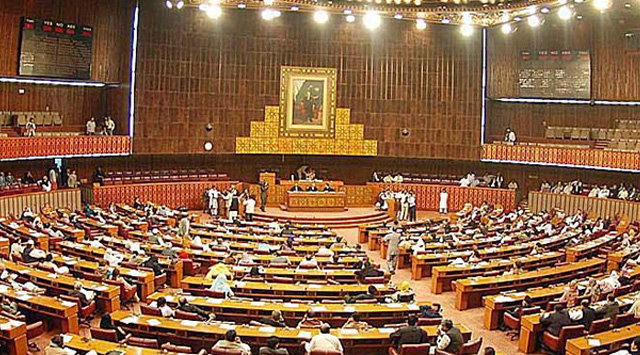
June 5, 2013 was a great day in Pakistan’s democratic transition.Forthe first time in the country’s existence since 1947,Pakistanis witnessed an elected government replace another one as a result of the general elections held onMay 11. There was another historical record attached to this day: the newly elected representatives had just gonethrough the bloodiest election campaign in the history of Pakistan.
Nearly 26 National Assembly constituencies and 35 provincial Assembly constituencies were witness to target killings, injuries, destruction and kidnappings that were mostly carried out by militant organisations resulting in the death of 244 persons, including seven candidates for the National and provincial Assemblies: Fakhrul Islam (MQM) NA-221, PS-47, Malik Adnan Khan Wazir (ANP) PK-72, Sadiq Zaman Khattak (ANP) NA-254, Adnan Qualeti (PPP) PS-95, Muhammad Zahir Shah Khan (PPP) PK-96, Abdul Fateh Magsi (independent) PB-32, and Shakeel Ahmed (MQM-H) NA-241 and PS-95.
If some of the targeted candidates were lucky enough to escape the deadly attacks, their loved ones, like sons, brothers, and cousins were not. Most of these unfortunate people were sent to their graves by some unknown and unidentifiable creatures using guns, bombs, hand grenades and suicide bombers.
Those who claimed responsibility remained beyond the reach of the law-enforcing authorities and were ignored by the people and their leaders too. The number of injured persons was three times higher than the dead ones and all those parliamentarians that now occupy the new National and provincial Assembly seats owe their success to the sacrifices of these people. The security threats that loomed large in the country during the election campaign were very lucidly described by the army chief General Ashfaq Kayani in these words: ‘The nation withstood the threat of terrorism and defied the unfounded dictates of an insignificant and misguided minority by actively participating in the general elections.’
Alas, for the people representatives, it was totally a different case. After going through the bloodiest phase of the election campaign, when the day came for the elected representatives to form the new government, a conspicuous silence prevailed in parliament on the sacrifices of their loved ones and comrades when they all joined to elect the leader of the house.
Neither the PM nor any member of parliament said a word of sympathy or condolence to the bereaved families of those who had died or been injured during their election campaigns. Sitting in parliament were the members of the PTI who had lost their MPA Farid Khan in Hangu only two days ago. Sardar Sanaullah Zehri, a tribal chief from the restive southwestern Balochistan province, was also present. Zehri had lost his son Sikander Zehri, his brother Mir Mehar and nephew Mir Zaid in an ambush on April 16, 2013. Maulana Fazlur Rehman of JUI-F was also present, whose party election campaign had suffered two major terrorist attacks in Orakzai and Hangu, resulting in the deaths of 35 persons and injuries to 105.
The former ruling party, the PPP, also had all of its elected members sitting in parliament flanked by their coalition partners, MQM and ANP, but they were also remained mum and indifferent, though they had more victims of terrorism than all other parties. Only one day before the election a leading PPP candidate, Haider Raza Gilani, the son of former prime minister Yousaf Raza Gillani, was kidnapped from Multan, who remains untraced to date.
Over 900 human lives, some silenced forever, some crippled or scarred for their whole life to remind them what price they had to pay for exercising their legal right of freedom to express their views and support a candidate of their choice. Among them were men, women, children and even old people hailing from different sections of society. They were either taking part in a political rally or attending a corner meeting or simply sitting at an election office of their political party when they became the target of violence.
They are the real martyrs, martyrs for democracy indeed but nobody is willing to accord them this title. While rejoicing their electoral victory and eventually landing in the parliament, most political representatives appeared to be more concerned about the victims of drone attacks than those who had stood by them when death threats were hanging on their heads.
When the parliamentarians were celebrating their day of success, the bereaved families of their unfortunate comrades had nothing to celebrate. The silence of the parliamentarians conveyed one and only message to these unfortunate departed souls: ‘Rest in peace wherever you are and let us, the representatives of the people, take care of the drone attack victims.’ No monument, no condolence, and no time to offer fateha (prayer) or observance of one-minute silence in honour of the unfortunate Pakistani citizens who had laid down their lives for the cause of democracy. Let bygones be bygones.
CRSS senior research fellow Muhammad Nafeeswrote this moving commentary on circumstances before and after theMay 11general elections originally for Pakistan national newspaper, the Daily Times. Following is a relatively abridged version of this commentary.