



The volatile political crisis in Pakistan has brought public life in Islamabad, the capital city, to a halt – the Pakistan Tehreek-e-Insaf (PTI), a major opposition party, continues its protest over alleged rigging in 2013 general elections over two weeks. The PTI alleges that the elections were rigged and the people’s mandate stolen. Initially, it demanded verification of the votes polled in four constituencies. The government rejected this demand and the PTI launched aazadi (freedom) march from Lahore to Islamabad on August 14, 2014. The Imran Khan-led marchers reached Islamabad. The participants crossed all barriers, entered the Red Zone and camped in front of Parliament. The sit-in continues and a head-on situation has developed. Both the sides are not budging from their respective positions with the PTI now demanding Prime Minister Nawaz Sharif’s resignation to ensure transparency of the verification process.
The electoral system and procedure are critical to establish legitimacy of the entire election process and build the people’s confidence. The conduct of free, fair and transparent elections is a pre-requisite for democracy. But this is not the case in Pakistan. There are lacunae and loopholes in the electoral process in Pakistan. The results, therefore, can be influenced and manipulated. To plug these loopholes, there is a need and demand for comprehensive electoral reforms. The PTI has taken a position that in the presence of the current system the electoral process cannot be transparent. Accepting one of the PTI’s demands, the government has already formed a parliamentary committee to prepare a package of reforms without which real democracy cannot be established in Pakistan.
Among all democracies in the world, Australia is a good example in this regard. Australia is a constitutional monarchy but uses a parliamentary system of government. Parliamentary elections are conducted through electronic voting system and thought to be one of the most efficient and transparent forms of voting for elections. For the first time, electronic voting was used in October 2001, for an Australian parliamentary election. In that election, 8.3% of all votes were cast electronically at polling stations in four places.
In addition, India is the largest democracy of the world and it conducts its elections very systematically. For a country like India, carrying out fair and transparent voting throughout the country holds immense importance for their democratic system. India has also introduced the electronic voting machines for a more secretive and reliable voting for the public. The votes are recorded and counted by the machine itself, no man labor is required to count the votes like they do in Pakistan.
There are dozens of countries in the world that use electronic voting systems, either internet voting or polling place electronic voting. Germany, Australia, India, France, Finland, Ireland, Estonia, Norway, Belgium, Italy and others use electronic voting system. The EVMs (Electronic Voting Machines) being used worldwide may vary in terms of technological aspects but the general use of these machines is still there in most countries around the world. However, the reliability of this system has been argued upon by various countries such as Germany and Estonia, reason being, the software of the machines was easily hacked over the internet voting system in Estonia during the 2013 elections, resulting in the possibility of fake votes. Germany also faced a similar situation in October 2005 when a Dutch citizen group hacked the voting system online. Because of this, additional security measures; reading and comparing the software with the source and sealing the machines afterwards; were taken in the municipality elections on 22 October 2006 in Cottbus city of Germany.
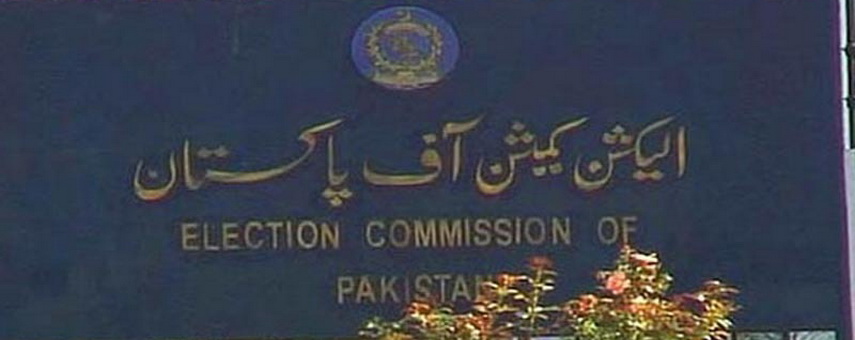
Despite the risks involved in exercising electronic voting systems for the parliamentary elections, many countries still stick to the use of this system. Enhancing security measures can help eliminate the risk of unfair voting. Pakistan in this regard must learn from such countries and adopt and implement a new system for voting in elections. This will not only ease the process for the Election Commission of Pakistan but it will also help conducting of free, fair and transparent elections. Besides this, Pakistan also needs to reform the ‘democratic system’.
The members of political parties must be well educated and people of integrity. Professionals must come forward and be part of these political parties and run the affairs of the country with a transparent and stringent mechanism of accountability in place.
Way Forward:
- Election Commission of Pakistan must be fully independent. It is the responsibility of ECP to conduct transparent and fair elections without any outside influence and interference.
- The people must be encouraged to participate in electoral process.
- The political parties’ manifestos and the bio data of their members must be publicly shared.
- Modern electronic systems must be used for polling and voting. Security measures must be enhanced to reduce and eliminate the risk of fake or unverified votes.
Written by CRSS Research Fellow Shiza Tariq.