


Introduction
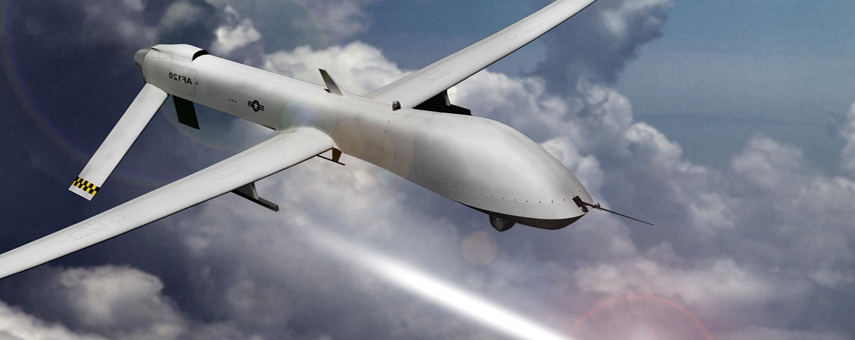
The Drone strikes in the Federally Administered Tribal Areas (FATA) of Pakistan remain one of the major obstacles when it comes to Pak US relations. These strikes, carried primarily by the CIA, are targeted towards militant factions operating from FATA and target the coalition forces in Afghanistan (Zenko, 2013). According to the New America Foundation’s national security database on drones, since 2004, there have been a total of 373 Drone strikes in total killing between 2100 to 3400 people with civilian causalities accounting for 258 to 307 people1. FATA, the tribal frontier also called as the most dangerous place on earth, is a semi-autonomous region that harbors a number of militant factions operating both inside and outside Pakistan (Nawaz, 2009). FATA’s semi-autonomous status leads to a complex administrative mechanism when it comes to delegating administrative authority for governing the region (Khan, 2010). Therefore, the region, divided in 7 Tribal Agencies and six Frontier Regions, is run by Political Agents, appointed by the Governor of Khyber Pakhtunkhwa, who are facilitated by the Frontier Constabulary (FC). For that reason, this complexity of governance resulted in FATA being used as springboard for training Jihadi fighters in the 80’s Afghan war against the Soviets, and eventually became a terror hotbed after the September 11 attacks on the World Trade Center (Gul, 2010). Furthermore, the same drone strikes have also targeted Taliban groups that are only operating against Pakistan such as the Tehrik e Taliban Pakistan (TTP) (Williams, 2010). Although armed drone strikes started in Yemen in 2002, the technology and method came into the global headlines because of FATA, Pakistan (Williams, 2010). The frequency of these strikes started to rise from 2007 peaking in 2010, where reduced drastically from 2012 onwards (Williams, 2013). There were no strikes in 2014 until a predator drone struck Uzbek militants in June soon after a deadly attack on the Karachi airport on June 8, 2014 (Zahra-Malik & Mujtaba, 2014). During the Bush Administration, the war against militants was termed as the Global War on Terrorism, and thus only limited to Afghanistan, whereas, with the passage of time and with Obama coming to power, this war has now been transformed into global war against the Al Qaeda (Sterio, 2012). With this transformation, the United States expanded its Global war form Afghanistan into Iraq, Pakistan and the Arabian Peninsula. Becauseof CIA’s control over the U.S. drone programme in FATA, unlike the others run by the US military and department of defense (DOD), these strikes have always remained in global legal debates whether such strikes
are illegal, or carried out by host state’s consent (Zenko, 2014). Moreover, the transformation of drone programme from surveillance to combat has also moved international legal experts and bodies to question the legality of this method (Williams, 2013). Drones also tend to carry a number of advantages such as costing less than a normal fighter jet, flying more time than a normal jet and operated without pilots (Hazelton, 2013). Furthermore, their advanced precision technology and use of satellite imaging makes them more effective than normal combat jets and weapons (Hazelton, 2013). The US has used the leverage of domestic and international laws to carry of CIA operated drone strikes in non-combat air spaces such as Yemen and Somalia, citing these laws as the basis for conducting such strikes (Ackerman, 2014). Furthermore, not only the legal, but socio political aspects have also impacted the drone issue on the whole. With lines blurred between legal premises of Drone strikes, the social aspects also play a vital role in shaping the public narrative in Pakistan when it comes to drone strikes (Yousaf, 2014). There are two sides of legal arguments when it comes to debating the legality of drone strikes. The United States government has, time and again, used the imperative of self-defense and its domestic Authorization of Use of Military Force (AUMF) legislation, passed during the George W. Bush era, law as a justification for carrying out Drone strikes (Ackerman, 2014). The U.S. administration also uses the UN Charter’s article 51 to put forward its case for drones (Masters, 2013). On the other hand, anti-drone activists and the government of Pakistan put forward the violation of sovereignty and human rights as the primary foundation for their opposition on drones (Woods, 2012). But there remains a grey area, even in the eyes of international legal experts, when it comes to legality of the US drone strikes in FATA. Furthermore, the special status of FATA, its administration as a semi-autonomous area, and the application of FCR as the common governing law also play a vital role in debate on legality of drone strikes in FATA (Williams, 2013). Below is an insight to both sides of the argument, which would then be used to claim whether the drone strikes are legal or not? But before dwelling upon the legal arguments, we would look into the conditions that may define a conflict zone and thus could be used as a justification to carry surgical strikes or interventions.
Conditions for Establishing an Area of Armed Conflict
It is important to first analyze whether the US Drone strikes fall within the legal framework of armed Conflict or not. Where it is easy to identify the inter-state armed conflict, it is rather
difficult to establish intra-state armed conflict or violence. Even Geneva conventions in the past have fallen short of giving a comprehensive definition of situations of armed conflict within a state (Barnidge, 2012). It was the Tadic vs Prosector case during which a proper definition of armed conflict was put forward by the International Criminal Tribunal for the Former Yugoslavia (ICTY). According to the ICTY, armed conflict exists “whenever there is a resort to armed force between States or protracted armed violence between governmental authorities and organized armed groups or between such groups within a State” (Barnidge, 2012). The Rome statute of the international criminal court also provides another broader which states that armed conflict exists when a government is in conflict with an organized group (Breau, Aronsson, & Joyce, 2011). In terms of duration of armed conflict, the conflict should be of such nature that the government is forced to deploy the armed forces and not merely the police (Joyce et al, 2011). With these definitions although Pakistan maybe considered having an armed conflict in its territory, the United States could not claim to be in an armed conflict as the groups it is operating against are not based on its soil. Barnidge (2013) believes that loss of lives and damage to civilian properties, although has moral implications but, could not be used to establish or analyze the drone strikes in a legal framework (Barnidge, 2012). According to Barnidge (2013), the legal analysis of use of forces, leading to moral dilemmas, and the legal analysis under International Humanitarian Law (IHL) shall be taken separately and thus the use of drones shall be analyzed under the latter (Barnidge, 2012). Joyce et al. (2011) believe that as the United States drone strikes in FATA are operating outside the boundaries of its non-international armed conflict in Afghanistan, laws of Armed conflict are not applicable rather they should be governed by the law enforcement model. Even with the limitations of the law enforcement model, Joyce et al. (2013) believe that even for the United States to carry out drone strikes in FATA region, it should not only justify its own domestic homicide laws but also the International Humanitarian Law which would imply that a threat would only be killed or targeted if all means to arrest him or her have been exhausted. But even when legal definitions fall short of justifying the US claim of being in an armed conflict with the Al Qaeda in FATA, and thus using this as a justification for drone strikes, the US should also be aware of fulfilling the criteria of use of force as a last resort. This legal criterion involves respecting the principles of proportionality, necessity, distinction and legality (Paust, 2013). Considering this criterion, Barnidge (2013) believes that even with aforementioned arguments, the US drone strikes could be considered legal under International Humanitarian law as not only FATA is an area of armed conflict and presents a threat to
US, Europe and US interests in Europe, but the supposed consent by Pakistan also justifies these attacks (Barnidge, 2012). But as a counter argument, experts, such as Professor Kenneth Anderson, believe that due to latest decentralization of militant groups and abuse of the repeated justification through International Humanitarian Law, the arguments of the US being in a state of war or armed conflict may not hold true for long (Anderson, 2009).
Arguments for Drone Legality
The United States, along with the advocates of Drones, puts forward two major rationales for justification of drone strikes. First, the Al Qaeda in FATA poses a threat to US national security, and second, the drone strikes comply with the domestic and international legal frameworks (BBC, 2013). The Authorization of Use of Military Force (AUMF) is a US domestic law, passed in 2001 after the September 11 attacks, which gives the United States the authorization to use military force abroad and against any potential threat to the US national security (Blum, 2009). It was the same AUMF which was used in a US Justice Department memo to justify the killing of Al Qaeda’s Yemen leader and US citizen Anwar al Awalki (Press, 2014). Major US officials, such as John Brennan, the CIA head, have also defended the drone strikes in a legal framework. Brennan, in one of his speeches at the US Congress, justified the US drone strikes stating:
“The Authorization for Use of Military Force ² the AUMF ² passed by Congress after the Sept. 11 attacks authorizes the President “to use all necessary and appropriate force” against those nations, organizations and individuals responsible for 9/11. There is nothing in the AUMF that restricts the use of military force against al-Qaeda to Afghanistan” (Crowley, 2012)
President Obama also went on record in 2013 calling Drones legal (BBC, 2013). Further, Obama also argued that Drones could be used in countries or territories where threat to US security exists and that the countries harboring the terrorist are not acting against such terrorists (BBC, 2013). Justifying the drone strikes further, David Barron, ex US Assistant Attorney General, said that the AUMF gave the US public authority to conduct drone strikes abroad as part of the war waged against the United States (Iannacci, 2014). Harlod Koh, the US State Department’s legal adviser, one of the strongest advocates of Drones and
their conformity to international law, said in one of his speeches in 2010 that as the US was in armed conflict with Al Qaeda, it had the authority to act against it wherever deemed necessary (Zagger, 2010). Furthermore, the United States has also based the legal arguments of its drone strikes on the fact that Pakistani authorities have had consent to Drone strikes in FATA (Haider, 2013). A UN Committee report on Drones also found strong evidence that between 2004 and 2008, there were indications of Pakistan government’s consent to the UN drone strikes (Haider, 2013). Further, Paust (2013) argues that in order for those involved in armed activities or activities of violence to enjoy the right to live, and not to be killed unlawfully, is when they are under full control of the state (Paust, 2013). This suggests that the militants in the FATA region, who are mostly out of the state’s control, both the host as well as targeting state, may not be in a position to enjoy this right of life. Pasut (2013) also implies that avoiding killing of civilians in the target zone does not mean to ignore those have a direct part in ongoing armed attacks (DPAA).
Arguments against Drones
The first primary critique on drones is its unaccountable use which leads to loss of civilian lives. Benjamin (2013), an anti-Drone activist, writes in her book: “American presidents now assert the right to be judge, juror and executioner, a de facto license to kill free from the irksome interference of checks and balances” (Benjamin, 2012). Philip Alston, a UN rapporteur on extra judicial killings raised this issue in one of his reports in for the UN, where he asserted that,
“America’s strongly asserted, but ill-defined license to kill without accountability is not an entitlement which the United States or other states can have without doing grave damage to the rules designed to protect the right to life and prevent extra-judicial executions {. .} Because operators are based thousands of miles away from the battlefield, and undertake operations entirely through computer screens and remote audio-feed,there is a risk of developing a ‘PlayStation’ mentality to killing” (Williams, 2013).
Alston, who is also a law professor himself, called these strikes and the killings as extra judicial, which also suggests that in terms of international law these strikes may not be justified. The other important aspects in the US drone campaign in FATA is its operation by
the CIA, the Central Intelligence Agency. Zenko (2014) argues that the scope and legality of US Drone strikes could never be acknowledged considering the division of their authority between the Department of Defense and the CIA (Zenko, 2014). This use by the CIA also called on the US congressmen to call for transfer of the US drone technology back to the Department of Defense (Zenko, 2014). Many civil rights promoters and advocates such as Hina Shamsi, director of the American Civil Liberties Union’s National Security Project, also raised questions on CIA’s involvement in the drone programme. She said;
“A lethal force apparatus in which the CIA and regular military collaborate, as they are reportedly doing, risks upending the checks and balances that restrict where and when lethal force is used, and thwart democratic accountability, which cannot take place in secrecy” (Woods, 2014)
According to Zenko (2014), USA cannot acknowledge any covert actions undertaken by the CIA according to the constitution, and thus is forced to maintain the secrecy of the US drone programme. Zenko (2014) states that Drone strikes by the CIA are classified as Title 50 covert actions, defined as “activities of the United States Government . . . where it is intended that the role . . . will not be apparent or acknowledged publicly, but does not include traditional military activities”(Zenko, 2014). This secrecy leads to further criticism, as the death toll, both civilian and militant, goes unaccounted for and thus the exact figures of casualties could never be known. The Human Rights Watch, in a letter to President Obama, also asked the US government to transfer the Drone technology from the CIA to DoD as it will clarify the legal rationale of these strikes (HRW, 2012). Secondly, Amnesty International, in one of its reports, went as far as quoting Drones to be tools of extra judicial killings (Boone, 2013). In terms of international laws, UN Charter’s article 2(4) prohibits a member to use force against other members (O’Connell, 2010). This article negates the US use of force through its drone technology, as Pakistan, officially, is not in a state of war against the United States. Though this article also bears two exceptions which include the sanction of use of force for the Security or the right to self-defense under article 51 in case of an armed conflict (O’Connell, 2010). The US constitution also protects the government and the authorities from revealing CIA activities, which was also declared by a US judge in 2011 against a lawsuit filed by the ACLU (American Civil liberties Union) stating that the ACLU did not have the right to access information related to CIA’s activities (Williams, 2013). Pakistan government, at least officially, denies any consent or agreement to the
Drone strikes from the United States which also creates a legal limbo for international law experts. Pakistan’s Ambassador to the U nited Nations, Masood Khan, in 2013, argued that Pakistan never gave an implicit or explicit consent to drones (APP, Pakistan urges end to drone strikes in UN General Assembly, 2013). Masood further stated that Drones violated Pakistan’s territorial integrit y and sovereignty (APP, 2013). This statement goes against the statement given by ex-President General Musharraf, who had admitted to a partial consent to US drone strikes during his tenure (Boone & Beaumont, 2013). O’Connell (2010) argues that the AUMF does not justify the use of drones even under the international law as according to her, targeted killing would not be murders, if they are carried out in settings where not only armed conflict is present but the International Humanitarian Laws do not apply (O’Connell, 2010). Heller (2014) arguing against the US Justice Memo that defended the Awalki killing in a Drone strike, states that even using the AUMF in armed conflict abroad would require the use of proper armed force and not the CIA (Heller, 2014). As per Heller (2014), if the CIA engages in an armed conflict abroad, it would lead to extrajudicial killings which would be termed as murder. O’Connell (2010) further argues that in terms of justifying an act of war or offense as an act of self-defense, the state under attack by the victim shall be legally responsible for the attack on the victim state. This argument goes against the legal US justification as none of the 9/11 attackers were sent from Pakistan, or were of Pakistani origin. Finally, summarizing O’Connell’s arguments, the article 51 of the UN charter for self-defense does not allow the aggressor state to attack a sovereign state that may not be responsible for an attack on the victim state (O’Connell, 2010). Finally, the argument by the United States using the AUMF as a justification is also withering down, even according to strong drone advocates like Professor Kenneth Anderson. Anderson (2013) believes that the US may soon have to repeal the AUMF as it may no longer support the Drone strikes and operations, and thus may have to come up with another justification for the Drone strikes in FATA and other parts of the world (Anderson, 2013). Joyce et al. (2013) believe that as Drones are a spillover effect of the war in Afghanistan, the strikes in FATA, part of a sovereign state, raise a number of important questions such as violation of state sovereignty and unlawful killings (Joyce et al., 2011). Finally, when it comes to the major distinction principle among the militants and civilians, the US falls short of creating such a distinction as a number of civilians have also been killed in these strikes (Joyce et al., 2011).
Conclusion
Keeping in perspective the above arguments, one cannot make a clear opinion between the legal and illegal arguments for Drone Strikes. As drones kill innocent people, one could argue that these strikes have little moral justification. But on the other hand, experts, such as Philip Alston, are unable to give a clear judgment as they feel that secrecy of these strikes, because of their operation by the CIA, makes it difficult to make a legal judgment on the issue. The United States needs to establish proper mechanisms in order to ensure transparency of the drone strikes, so that their legality could be analysed in terms of international legal frameworks. One of the latest drone strikes on 12th June against Uzbek fighter, after a hiatus of more than 5 months, also suggested that the strike was a coordinated one, and thus Pakistan may have a joint operational drone mechanism with the United States, something which would not help the cause and this debate (Zahra-Malik & Mujtaba, 2014). Furthermore, if the United States has a tacit agreement with Pakistan, such an agreement shall be made public so that Pakistan’s official position also becomes clear. Additionally, Pakistani government and the military have the responsibility to protect the state sovereignty as well as the citizens. If no such tacit agreement had been made with the United States, Pakistan has the legal obligation as well as the right, to take legal actions against the US’s violation of Pakistani sovereignty, and if Pakistan fails to do so, it would lead to general perceptions that Pakistan has indeed an implicit agreement and consent to US Drone strikes in FATA. Furthermore, even if the United States succeeds in proving the Pakistani consent, it may fall short to provide justification on use of AUMF and the UN Charter 51 for its attacks on the Pakistani soil and both these justifications are withering down with the passage of time, especially the Article 51, which abstains the United States from acting against a state that may be responsible for an attack on its soil. Moreover, international legal experts, rather than taking sides, should work towards a common framework that could help define whether the drones are a legal or illegal tool of counter terrorism. The dilemma on International Law and drones has been beautifully summarize by Barnidge (2012) who thinks that even though in present times Rule of Law seems to appear as viable and attractive option, it becomes confusing as what Law actually is and how it should be applied when the past practices of a certain state coincide with the dilemmas of the present (Barnidge, 2012). The same goes for Drone strikes in FATA. Additionally, even when one could argue that Pakistan may have consented to Drone Strikes, its official condemnation of such strikes is creating legitimacy issues for both
the US and Pakistan in their counter militancy campaigns and operations. Finally, the US should initiate the process of transfer of drone operations from the CIA to US military as CIA’s clandestine status makes it more prone to violating IHL and thus escaping without coming under due procedure of law.
Author: Farooq Yousaf
The Paper is originally published in Spotlight South Asia, a publication of The Foundation for Applied Political Science of South Asia (APSA)
The author is also a Research Analyst and Programme Consultant at CRSS
CRSS is posting this paper as part of its anti-drone campaign
References
1 Drone Wars: Analysis – http://securitydata.newamerica.net/drones/pakistan/analysis
Ackerman, S. (2014, June 23). US cited controversial law in decision to kill American citizen by drone. Retrieved from The Guardian: http://www.theguardian.com/world/2014/jun/23/us-justification-drone-killingamerican-citizen-awlaki
Anderson, K. (2009, May 11). Targeted Killing in U.S. Counterterrorism Strategy and Law Retrieved from Brookings: http://www.brookings.edu/research/papers/2009/05/11-counterterrorism-anderson#_edn3
Anderson, K. (2013, June 1). The Case for Drones. Retrieved from SSRN: http://papers.ssrn .com/sol3/papers.cfm?abstract_id=2047537
APP. (2013, November 27). Pakistan urges end to drone strikes in UN General Assembly. Retrieved from Dawn: http ://www.dawn .com/news/1058935
BBC. (2013, May 24). Barack Obama defends ‘just war’ using drones. Retrieved from BBC News:http://www.bbc.co.uk/news/world-us-canada-22638533
Benjamin, M. (2012). Drone Warfare: Killing by Remote Control. New York and London: OR Books.
Blum, S. C. (2009, May 4). What Really is at Stake with the FISA Amendments Act of 2008 and Ideas for Future Surveillance Reform. Retrieved from SSRN:
http://papers.ssrn .com/sol3/papers.cfm?abstract_id= 1398831
Boone, J. (2013, October 22). US drone strikes could be classed as war crimes, says Amnesty International. Retrieved from The Guardian: http://www.theguardian.com/world/2013/oct/22/am nesty-us-officials-war-cri mesdrones
Boone, J., & Beaumont, P. (2013, April 12). Pervez Musharraf admits permitting ‘a few’ US drone strikes in Pakistan. Retrieved from The Guardian: http://www.theguardian.com/world/2013/apr/12/musharraf-admits-permitting-dronestrikes
Breau, P. S., Aronsson, M., & Joyce, R. (2011, June). DISCUSSION PAPER 2: DRONE ATTACKS, INTERNATIONAL LAW, AND THE RECORDING OF CIVILIAN CASUALTIES OF ARMED CONFLICT. Retrieved from Oxford Research Group:
http://www.oxfordresearchgroup.org. uk/sites/default/files/ORG%20Drone%20Attack s%20and%20International%20Law%20Report. pdf
Crowley, M. (2012, June 12). Revisiting a Key Legal Basis for Obama’s Anti-Terrorism Drone Strikes. Retrieved from Time:
http://swampland.time.com/2012/06/1 2/revisiting-a-key-legal-basis-for-obamas-antiterror-d rone-stri kes/
Gul, I. (2010). The Most Dangerous Place. New York: Penguin Publishers.
Haider, S. (2013, October 19). http://www.dawn.com/news/1050387/strong-evidencepakistan-military-approved-us-drone-strikes-un-report. Retrieved from Dawn: http://www.dawn.com/news/1050387/strong-evidence-pakistan-military-approvedus-drone-strikes-u n-report
Hazelton, J. L. (2013). Drones: What Are They Good For? Retrieved from Strategic Studies Institute:
http://www.strategicstudiesinstitute.army. mil/pubs/parameters/Issues/WinterSpring_ 201 3/4_Article_Hazelton . pdf
Heller, K. J. (2014, June 23). Let’s Call Killing al-Awlaki What It Still Is — Murder. Retrieved from Opinio Juris: http://opiniojuris.org/201 4/06/23/lets-call-killing-al-awlaki-stillmu rder/
HRW. (2012, April 20). US: Transfer CIA Drone Strikes to Military. Retrieved from Human Rights Watch: http://www.hrw.org/news/20 12/04/20/us-transfer-cia-drone-strikesmilitary
Iannacci, N. (2014, June 30). Justice Department memo explains justification for drone strikes abroad. Retrieved from Constitution Daily:
http://blog.constitutioncenter.org/20 14/06/justice-department-memo-explainsjustification-fo r-d rone-stri kes-abroad/
Khan, S. (2010). Special Status of Tribal Areas (FATA): An Artificial Imperial Construct Bleeding Asia. Eurasia Border Review Vol:1, Spring, pp:63-74.
Masters, J. (2013, May 23). Targetted Killings. Retrieved from CFR: http://www.cfr.org/counterte rrorism/targeted-ki lli ngs/p9627
Nawaz, S. (2009). FATA – A Most Dangerous Place. Washington D.C.: Centre for Strategic and International Studies.
O’Connell, M. E. (201 0, October 8). Drones under International Law. Retrieved from Washington University Law:
http://law.wustl.edu/harris/documents/OConnellFullRemarksNov23. pdf
Paust, J. (2013, October 23). Drone Attacks Can Be Justified Under International Law. Retrieved from Jurist – Forum: http://jurist.org/forum/201 3/10/jordan-paust-dronesjustification. php
Press, A. (2014, May 20). White House to disclose secret memo that defends using drones to kill U.S. citizens. Retrieved from Daily News:
http://www. nydailynews.com/news/pol itics/wh ite-house-d isclose-secret-memodefends-drones-kill-u-s-citizens-article-1.1799671
Robert P. Barnidge, J. (2012). A Qualified Defense Of American Drone Attacks In Northwest Pakistan Under International Humanitarian Law. B.U. INT’L L.J. 409 , 409-447.
Sterio, M. (2012). The United States’ Use of Drones in the War on Terror: The (Il)legality of Targeted Killings Under International Law. Case Western Reserve Journal of International Law, Volume 45, Issues 1 and 2, 197-214.
Williams, B. G. (2010). The CIA’s Covert Predator Drone War in Pakistan, 2004-2010: The History of an Assassination Campaign. Studies in Conflict and Terrorism 33: 10, 871- 892.
Williams, B. G. (2013). Predators : the CIA’s drone war on al Qaeda. Virginia: Potomac Books.
Woods, C. (2012, August 3). CIA drone strikes violate Pakistan’s sovereignty, says senior diplomat. Retrieved from The Guardian: http://www.theguardian.com/world/2012/aug/03/cia-drone-strikes-violate-pakistan
Woods, C. (2014, April 14). CIA’s Pakistan drone strikes carried out by regular US air force personnel. Retrieved from The Guardian: http://www.theguardian.com/world/2014/apr/14/cia-drones-pakistan-us-air-forcedocumentary
Yousaf, F. (2014, June 10). The Drone Strike Narrative in Pakistan. Retrieved from The Diplomat: http://thediplomat.com/20 14/06/the-drone-strike-narrative-in-pakistan/
Zagger, Z. (2010, March 26). State Department legal adviser defends unmanned drone strikes. Retrieved from Jurist: http ://ju rist.org/paperchase/20 10/03/state-departmentlegal-adviser-defends.php
Zahra-Malik, M., & Mujtaba, H. (2014, June 12). Pakistan-U.S.’ raid, say officials. Retrieved from Reuters: http://www.reuters.com/article/20 14/06/12/us-pakistan-dronesidUSKBN0EN0TP20140612
Zenko, M. (2013, April 10). An Inconvenient Truth. Retrieved from Foreign Policy: http://www.foreignpolicy.com/articles/201 3/04/10/an_inconvenient_truth_drones
Zenko, M. (2014, January 21). Transferring CIA Drone Strikes to the Pentagon. Retrieved from CFR: http://www.cfr.org/drones/transferri ng-cia-d rone-stri kes-pentagon/p3043