



Authors: Zeeshan Salahuddin and David Vestenskov
Introduction:
The US-Taliban deal is due to be signed on February 29, 2020i, which seemed all but impossible with US President Donald Trump pulling out in September 2019ii. The deal is preceded by a seven-day period of reduction in violenceiii, signalling willingness from the Taliban side to end hostilities and thereby achieve a ceasefire. There are fears of whether the deal is sustainable, and concerns over the long-term consequences, lending to an air of cautious optimism and wary cynicism, especially considering that the next step – an intra-Afghan deal – will be the tougher nut to crack.
The question then becomes, what can be done immediately following the deal by relevant stakeholders to ensure future stability, and impetus towards peace in Afghanistan? Relevant stakeholders include 1) the intra-Afghan stakeholders (Afghan Government/political power brokers in opposition to the government/Taliban), 2) immediate external stakeholders, such as
Pakistan, China and Iran, and 3) other powers with regional influence, such as the US, Russia, Turkey, and India. Within this broader framework, three sub-questions are postulated:
1. What are some of the new approaches to sustained peace?
2. What is the role of external partners in ensuring an intra-Afghan peace process?
3. What is the role of infrastructure and connectivity in Afghan stabilization?
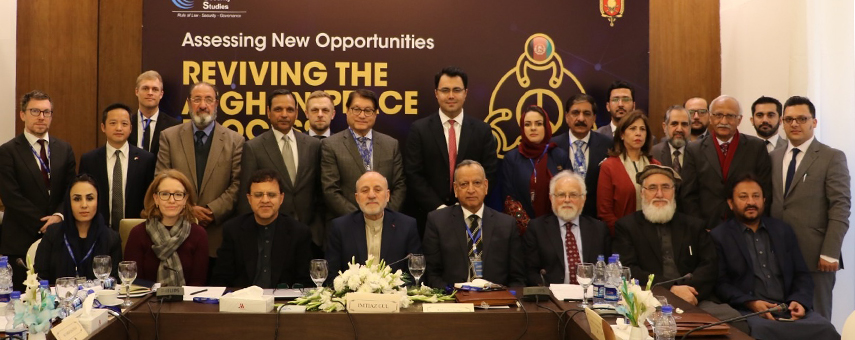
The overall recommendations will loosely follow these three categories, and provide practical interventions that can be applied in the struggle for stability, peace, and cohesion in Afghanistan. In order to arrive at these recommendations the Royal Danish Defence College (RDDC), and the Center for Research and Security Studies (CRSS), conducted a two-day multilateral policy dialogue with subject matter experts from Pakistan, Afghanistan, Denmark, the US, and the UK. The participants included former government/military officials and technocrats, civil society organization members, academics and scholars from both Pakistan and Afghanistan. The dialogue also saw participation from the Afghan, Pakistani, and Chinese governments, as well as subject matter experts from the US, and the UK. The discussions of the seminar are distilled in this document as policy recommendations. It should be noted, that obvious recommendations, such as the ever-present need for peace, the need to set aside differences to pursue the common goals of security and prosperity, will not becovered. These are considered the baseline; a common vision already shared, and are always recommended in any policy endeavour on Afghanistan.
Click here to download the policy memo in PDF format.