



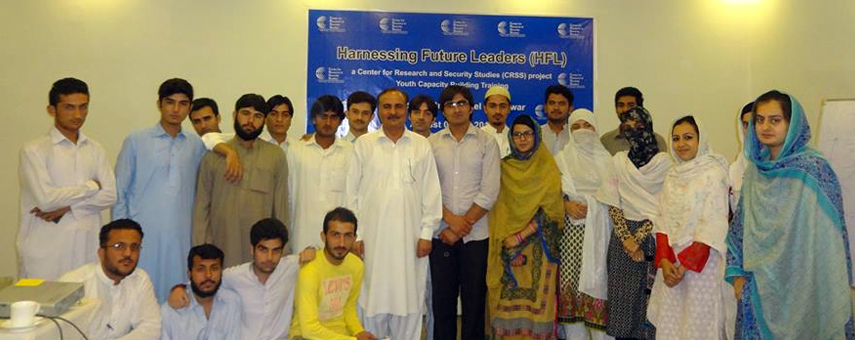
Between August 7 and 9, The Center for Research and Security Studies (CRSS) completed its second round of training for youth in the Khyber Pukhtunkhwa under the “Harnessing Future Leaders” (HFL) initiative. The first three-day training concluded on June 14, 2015, and focused on the topics of “Leadership and Motivation”, “Democracy, Governance and Accountability”, and “Civic Engagement”. This second round that was conducted in Peshawar focused on “Rule of Law, “Respect for Diversity”, and “Conflict Resolution and Mitigation”, while delving into greater detail on how youth, in their individual capacity can help bring about social harmony and cohesion in the country
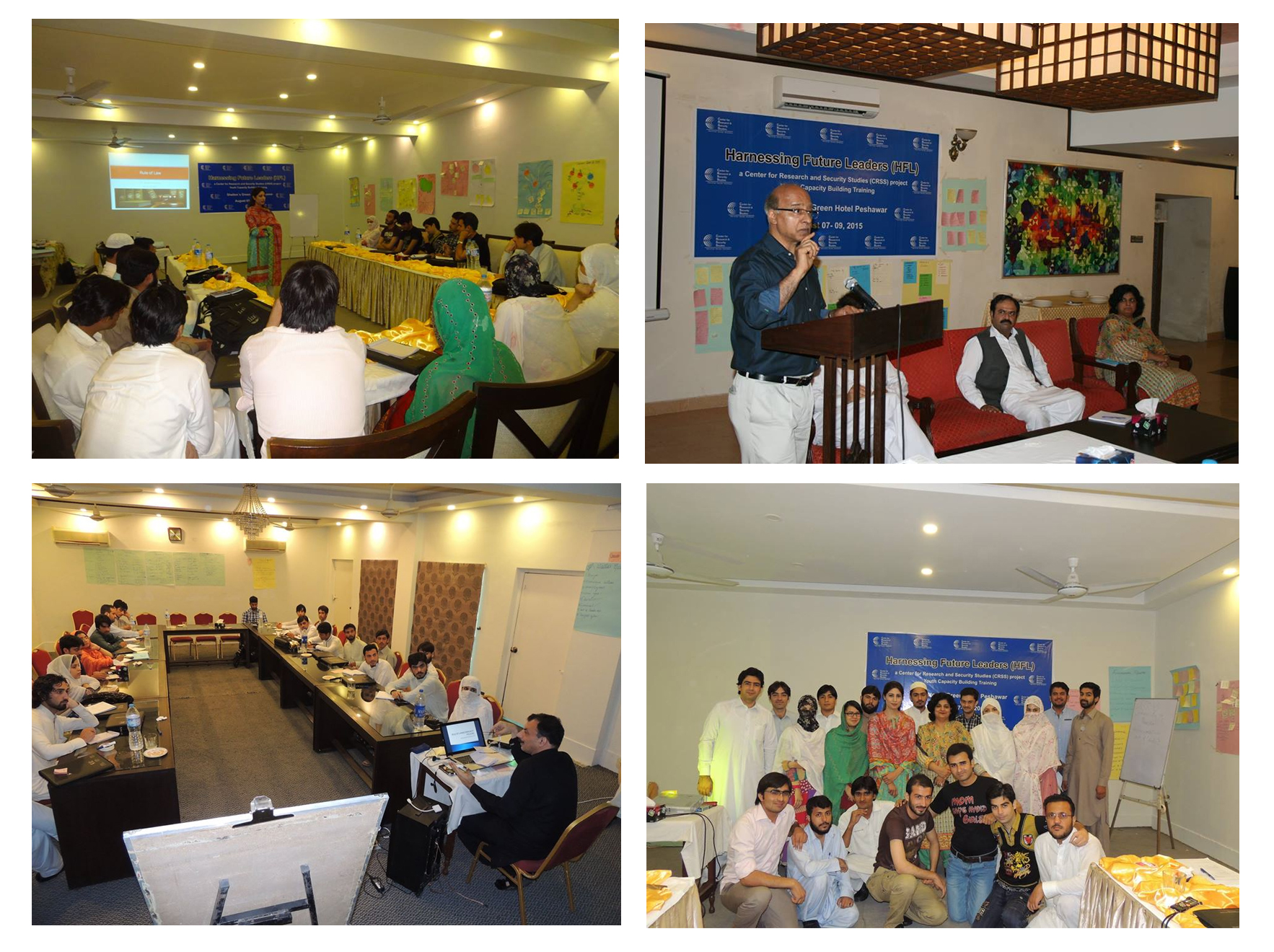
The 60 plus students were once again trained by some of the most inspiring names in the training industry, who hailed from various walks of life. Examples include Dr. Khadim Hussain, Managing Director, Bacha Khan Trust Educational Foundation, and Safiullah Gul, Bureau Chief for a private television channel in Peshawar. The training included theoretical underpinning for each topic, practical examples and case studies to highlight the concepts, and group activities to drive the point home.
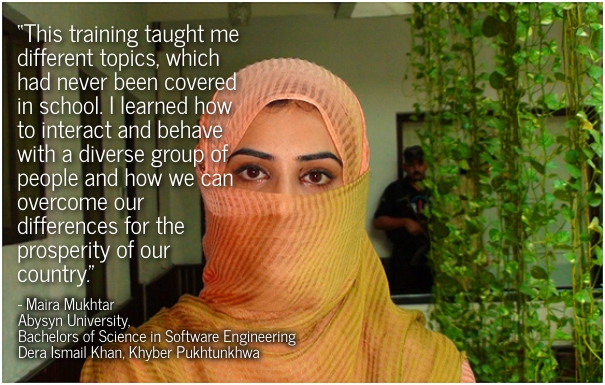
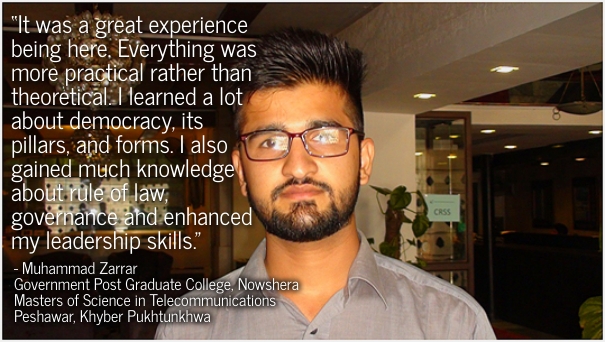
CRSS hopes that by training these youth in critical life skills, which are normally not taught at their respective educations institutions and are considered outside the ambit of academic discourse, we can create momentum for tolerant, peaceful resolutions of indigenous conflict, inculcate respect for diversity and rule of law, and sensitize youth to respect the opinions different from their own. This initiative subscribes to the larger philosophy of mitigating and eliminating conflict in the region through peaceful mechanisms.
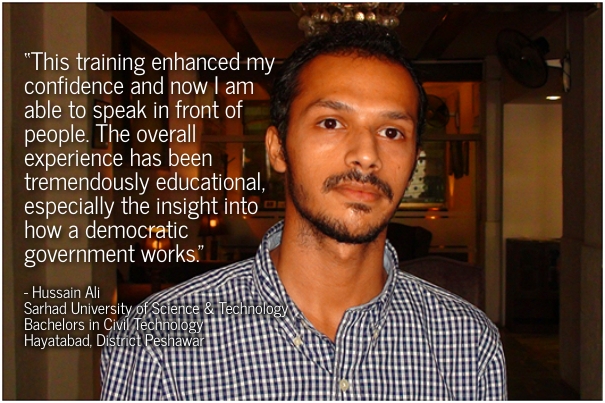
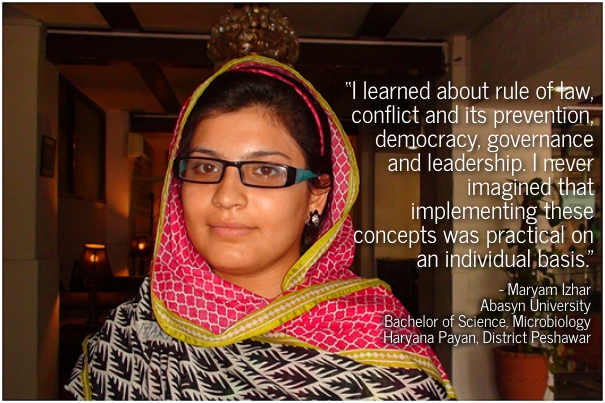
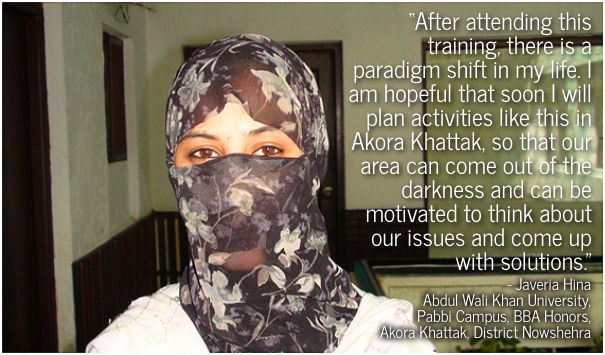
Khyber Pukhtunkhwa Provincial Assembly Member Sikandar Hayat Khan Sherpao also addressed the youth during the closing ceremony of the training. He said that youth in Pakistan faced a myriad of challenges across a wide variety of issues, and that training programs like HFL can play a vital role in their capacity development and enhancing their leadership skills. Trained students can in the future play a major role in the politics and governance system of the country,therefore, it is necessary to have such workshops which can guide them and enhance their leadership skills, he added. While noting that Rule of law is an important ingredient for the development of the country, unfortunately, in our country we do have laws, but most of us are not aware of respecting the rule of law. Recognition of this and perpetuation of this message is of paramount importance.
The final round of trainings will be held in the winter, and will focus on helping students create social action plans to counter intolerance, ignorance and conflict in their respective communities.
About Harnessing Future Leaders
Harnessing Future Leaders is a yearlong CRSS led youth leadership and development program, focusing in the Khyber Pukhtunkhwa province, in collaboration with the United States Institute of Peace (USIP). The CRSS has partnered with nine universities in the districts of Peshawar, Charsadda and Nowshera. Selected from these universities the CRSS is working with a group of 60 young individuals including both male and female students that demonstrate a proclivity for leadership.
The CRSS will conduct extensive training exercises focusing on fundamental human rights, secular governance, respect for diversity, equal citizenry, and the significance of rule of law in daily life. These participants will then conduct practicum exercises with their host institutions and act as information multipliers. The initial project will be completed in nine months including training of the students and exercises in the respective universities, and then last three months will be allocated and aimed at the students formulating and designing the Social Action Plans on the basis of the project focal issues of importance in their communal daily lives. The Social Action Plans will then be implemented in their host communities.