



by Engineer Arshad H. Abbasi
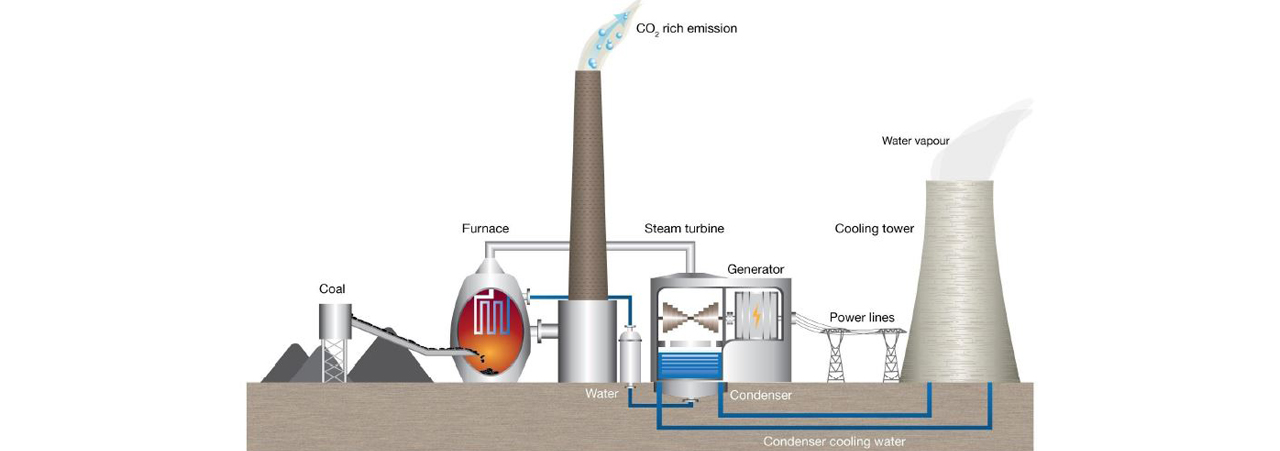
CRSS Note: Pakistan plans to install about a dozen coal-fired power plants in the next three years or so. Their cumulative generation would be close to 10,000 Megawatts. This is likely to help overcome acute power shortages that the country currently faces. But it comes with huge environmental concerns. What consequences will the coal energy entail for the already precarious environment? Is the technology being commissioned efficient enough to prevent carbon emissions into the air? Is it the technology that has already resulted in a blanket of smog over major Chinese cities such as Guangzhou, Chengdou, Beijing? Massive emissions from coal-fired power plants, factories, and tens of millions of vehicles in major Chinese cities are already touching alarming levels not only in China but in countries like India, Philippines, Vietnam. Concerned energy and environment experts wonder as to whether coal-based power plants – which have already caused huge ecological damage – will ever be efficient enough to preclude further damage to the environment.
With these concerns in view, CRSS is pleased to share this incisive paper with readers for a greater understanding of the issue. This paper is a comparative analysis of the old and new technologies, their efficiency and impact on the ecology. We are thankful to Engineer Arshad Abbasi for allowing us to publish this paper. And the views expressed and conclusions drawn in the paper are entirely his own.
Executive Summary
In coal-fired power generation, the global trend is towards improving the efficiency of thermal power plants by generating more electricity while using the minimum quantity of fuel (Natural Gas, Coal and Residual Fuel Oil) as well as lowering emissions. In fact, High Efficiency and Low Emissions is the collective mantra of the 21st century with coal-fired power plants in operation having reached a thermal efficiency of 45%.
Higher efficiency translates into less consumption of coal to generate a single unit of electricity while reducing carbon dioxide emissions, mercury and local air pollutants, releasing less local air pollutants, consuming less water, and leaving a smaller environmental footprint. Above all, it means lower tariffs for consumers. The table below shows a negative correlation between efficiency and Carbon Dioxide emissions with plants at higher efficiency leading to low emissions:

In looking towards low-cost fuel for power generation in pursuit of of energy security and reliable as well as economical energy supply, the Government of Pakistan (GoP) is exploring coal as a power source. However, the National Electric Power Regulatory Authority (NEPRA) has failed to address high efficiency for low-cost power generation on coal. Therefore, this paper analyzes the current status of coal-fired power generation in Pakistan and provides policy recommendations on the way forward. 1
Under efficiency-linked improvements in coal-power technology, supercritical and ultra-supercritical coal power generation technologies operate at higher temperatures and pressures than conventional pulverized coal combustion (PCC) plants2, thereby achieving high efficiencies. The table below gives an overview of some efficient coal power plants the world over, such as RWE power in Germany, which operates at an efficiency of 43.2% at a cost of USD 1.175/MW.
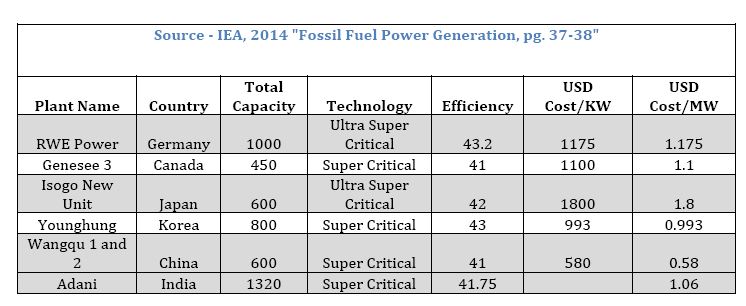
The Wangqu 1& 2 plants in China operate at an efficiency of 41%, with costs as low as 0.58 million per MW. Other examples of highly efficient coal power plants include the Zhejiang Jiaxang Ultra-supercritical power generation plant in China and the Adani power plant in India. South Asia too, as a region, is moving towards ultra-super critical coal power generation, but this trend is being neglected in Pakistan. For example, the Bangladesh Power Development Board (BPDB) signed three IPP contracts for coal fired power generation with Orion Group for 1,200 MW in June 2012. The average tariff for the power plant has been agreed at 5.4214 US cents (Tk 3.795).
In April 2014, the Bangladesh Power Development Board (BPDB), on behalf of the Ministry of Power, Energy & Mineral Resources, floated an open tender for ultra-super critical coal power plants with a capacity 2×600-700 MW Coal Fired Ultra at Moheshkhali, under a transparent process to promote clean coal technology and above all low tariff for end consumers. Such initiatives throw into stark relief the negligence of the GoP in failing to pay heed to the changing regional energy dynamics and incorporating them in the system for the betterment of the people.
Similarly, India’s Mundra Ultra Mega Power Project3 with a net power generation capacity of 4,000 MW is exemplary in its efficiency. With an average thermal efficiency (gross) of 43.5%, and an annual net power generation of 29,928 GWh, the tariff has been calculated at only Indian Rupees 2.264 per kWh/ unit.
In Pakistan, the challenge is to meet the energy demand and to keep tariffs low, while ensuring low risk to environment-vulnerability. In fact, a dig into the environmental impact assessment of these projects shows the increased vulnerability of the country to Climate Change. Coal consumption would not only increase carbon emissions, water requirement but also the tariff for more than 24.5 million electricity consumers. Moreover, efficiency is indirectly linked to the monster of circular debt that exacerbates the existing energy crisis by incurring a massive subsidy of 1.7 trillion rupees. An economic analysis of the projects of 6000 MW coal-fired power plants each at Port Qasim and Punjab shows that at an average annual generation of 8 GWh per MW, at the projected high tariff of 9 cents will incur a loss to the national exchequer to the tune of a hefty sum of USD 4.8 billion per year!

Yet, at present, the regulation of the efficiency of existing gas and oil-fired thermal power plants is being neglected by NEPRA. NEPRA documents5 show that it relaxed key parameters of efficiency, project cost as well as O&M (Operation & Maintenance) costs for the upcoming coal-fired power projects. In fact, the Ministry of Water and Power (MOWP’s) claimed US$ 3.24 million/MW cost for advanced coal technologies (as per documents published in 20136).
In the quest for investment on coal projects, the larger interest of efficiency in coal-power generation has been seriously neglected, pushing upfront tariffs higher resulting in unsustainable “dirty” energy. The tariffs proposed for 220 MW, 660 MW and 1000 MW are US Cent 9.7, 9.5 and 9.12 respectively, and these can best be termed as an example of egregious misjudgment and gross professional negligence by the National Power Regulator. NEPRA, in the process of jacking up the tariff, has fixed an upfront tariff of 8 to 9.67 cent per unit for coal power plant of 200MW, whereas levying of 8 to 9.54cent/unit for a power plant of 600MW, and 8 to 9.11 cent/unit for coal power plant of 1,100MW has been formalized.
This serious negligence on the part of NEPRA has resulted in a failure to provide a commercially viable tariff to the consumers. It is also a serious breach of NEPRA’s mandate whereby it is advised to act as an “independent and objective regulatory entity7. By ignoring the international best practices in coal power generation, Pakistan is left vulnerable to the impediments of climate change.
In light of the above findings and analysis, some of the policy recommendations that this paper makes are:
- Regulation of coal-fired power generation to operate under the principles of High Efficiency, Low Emissions (HELE)
- Revision of the stated efficiencies of thermal units according to the international standards of ultra-super critical power plants
- Establishment of a transparent investment process on coal-fired power plants, stressing on the best coal-power generation technology possible, i.e. replicate the model of 2,000MW Coal Fired Zhejiang Jiaxing Ultra-supercritical Power Generation Project etc.
- Reformation of energy regulations. Institutional reform of NEPRA, with advice from independent and professional engineers and economists. There is also a pressing need for a Board of Governors for NEPRA including representatives from the Industry, Academia and other credible experts for vital decisions such as tariff determination in the larger interest of the nation.
- Exploration of low-cost power generation, keeping in mind the parity that has been achieved in coal and wind tariffs in India. Exploitation of Pakistan’s renewable energy potential in hydropower and wind energy. A renewed focus on regional cooperation in South Asia on renewable energy.
- Reestablishment of the link between energy security and sustainable development in Pakistan. It is strongly recommended to deploy energy efficient and clean energy technologies to meet the joint challenges of energy security and climate change.
1.1 INTRODUCTION
Since 2007, Pakistan has been facing a grave energy crisis, which has disrupted daily life and affected each segment of the society. This endemic energy crisis can be attributed to a lack of low cost fuel availability and excessive dependence on furnace oil (FO). Such excessive dependence on oil imports coupled with mismanagement of Natural Gas at all levels has further aggravated the situation in the form of soaring circular debt and subsidies. The statistics below show that the power generation based on fuel oil constitutes 36.84% of the current energy mix and 79% of the total energy cost with a heavy reliance on imported oil instead of indigenous sources. This increased reliance has created the vicious cycle of circular debt with the current figure of debt hovering around Rs 300 billion. However, in comparison to current situation, the hydro-thermal mix in 1990 was 70:30, which has now been reversed entirely with more than 65% of the electricity being generated through thermal resources. This reliance on hydrocarbon based energy resources is attributed to the inclusion of FO based IPPs in 1994 and the deliberate decision (2002-03) in favour of converting transport system and Furnace Oil (FO) based electricity generation to gas in view of the country’s ample Natural Gas resources. The results of this immature decision depicted itself in the form of gas curtailment for power generation in 2007, and we again had to shift towards oil. Hence, the energy sector in Pakistan has been continuously suffering due to such poor strategic decisions the repercussions of which are still manifest in the persistent energy shortfall being experienced by the country.
The energy crisis in Pakistan is not attributable to the installed capacity as recent calculations (June 2013) show that the country has an installed capacity of 23,663 MW8 but that it cannot generate greater than 16,000MW due to lack of fuel availability and inability to meet the peak summer demand of 21,000MW, thus creating a shortfall of 5000MW9 in peak summer season. This persistent energy shortfall has led to an annual reduction of 2-3% of GDP with export losses of over US$ 1 billion.
In 2013, the Government of Pakistan (GOP) attempted to address Pakistan’s power crisis through the launching of a national power policy, but it was a collection of mere PowerPoint slides reflecting a weak understanding of even the basic dynamics of the energy sector. An example of the deplorable nature of this document can be seen in a lack of understanding of basic principles, such as efficiency which is defined as “merit order, transparency/automation, and accountability 10,” in this ‘PowerPoint’ policy. In the energy sector and particularly in the power sector, efficiency in broader terms is a measure of the quantity of fuel consumption (natural gas, coal, oil etc.) to generate a single unit of electricity. Moreover, the main drive of this document was to prioritize coal-based power projects that can be brought online within 2-3 years. The prime focus in the document has been on ensuring the generation of inexpensive and affordable electricity by adding coal-powered projects. While doing so, the architects of this ill-conceived strategy entirely ignored technical and environmental aspects, which will be discussed in detail in this policy paper.
This paper intends to make an assessment of coal-fired electricity generation in Pakistan. It aims to highlight the issues related to electricity produced by coal and to provide policy recommendations on the way forward for sustainable economic growth without compromising on environment. Moreover, the economic and environmental impact of utilizing coal for power generation are thoroughly discussed with emphases on electricity generation efficiency as the umbrella concept under which energy policy must operate. The crucial questions in terms of project costs, expected tariff at an affordable rate as well as the overall environmental impact of coal are also addressed. The paper attempts to explore the long-term energy policy implications, making it central in the security paradigm.
1.2 Moving towards Low Cost Option
In the pursuit of low-cost electricity generation, the Ministry of Water & Power announced the establishment of ten power plants, with a total capacity of 6600 MW in Gadani Coal Power Park, and six other power projects in Punjab at Sahiwal, Shekihupura, Jhang, Kasur, Rahim Yar Khan and Muzaffargarh 11.
The National Electric Power Regulatory Authority (NEPRA), in a bid to promote coal-based power generation in the country, approved an attractive up-front tariff for coal-based power plants in 201112(See Table below).
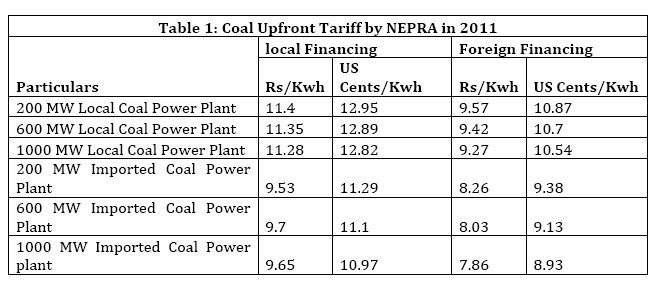
However, in June 2013, NEPRA revised the upfront tariff for coal-based power plants and unveiled the new revised tariff for imported and local coal.13
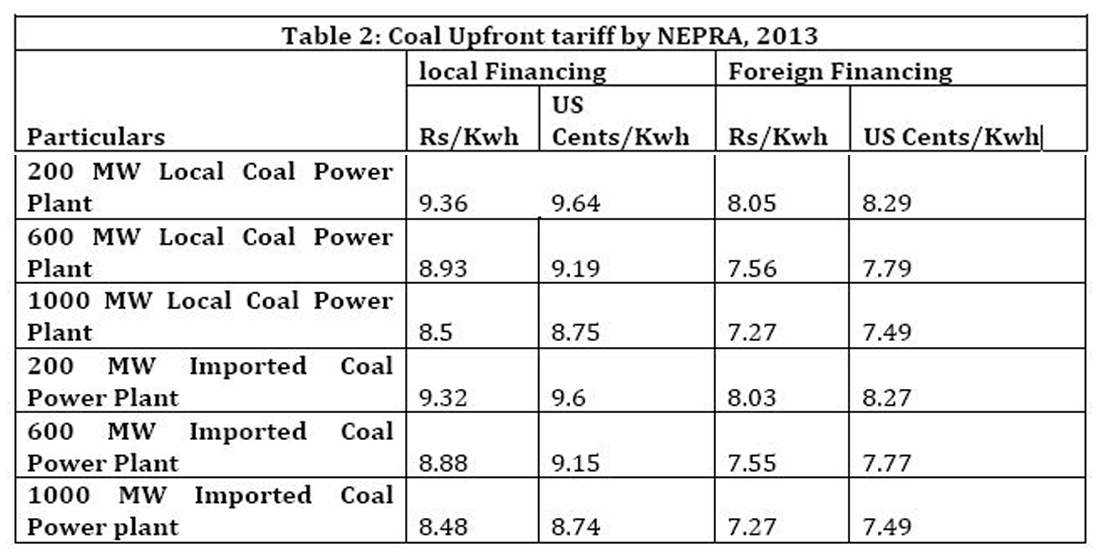
The Ministry of Water & Power (MoWP) endorsed this tariff approved by NEPRA on September 201314 and directed the enclosure of the notification in original for immediate publication in the Official gazette of Pakistan extra ordinary part-II within 24-48 hours as a delay would cause a loss to the exchequer. In addition to endorsing the upfront tariff announced by NEPRA, the MoWP authorized the following capital costs and LHV reference efficiencies for calculating the reference fuel cost component 15.

However, after taking two months for endorsing the capital costs, efficiencies and tariff approved by NEPRA, MoWP requested the reconsideration of the motion for review under section 31(4) of the NEPRA act 1997 read with rule 16 (12) of NEPRA (Tariff Standards & Procedures) rules 1998 and regulations 3 (2) of NEPRA (Review Procedure) Regulations 2009 of the upfront tariffs determined by NEPRA on 6th June 2013 for coal based power generation16. It has been discussed in this document that capital cost, operation and maintenance cost assumed by NEPRA are low and efficiency assumed by NEPRA under various scenarios is high irrespective of endorsing the capital costs and efficiencies in September 2013 (documented above). It is argued that this feedback has been obtained from the potential investors for coal-based power generation projects in Pakistan. In this regard, MoWP quoted the prices of technologies against their efficiencies reported in documents by EIA in 2013 and some other documents of 2008 & 201017. While quoting these prices, the MoWP entirely ignored the super critical power plants, their costs and efficiencies operating in India, which will be discussed in detail later in this paper.
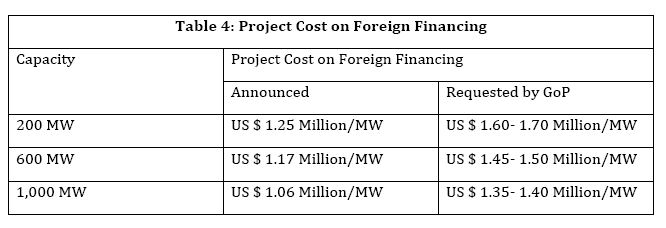
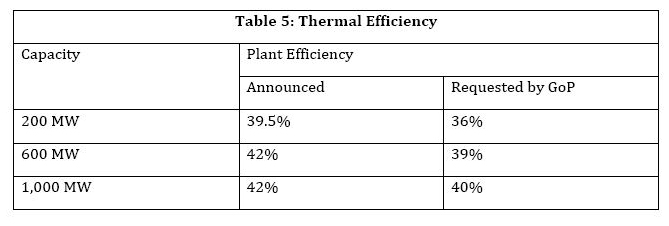
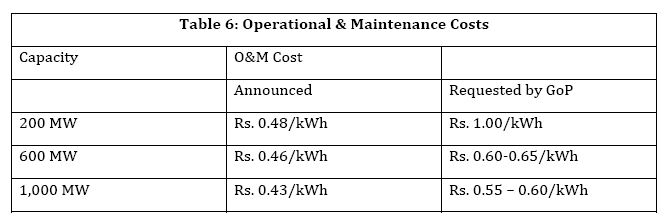
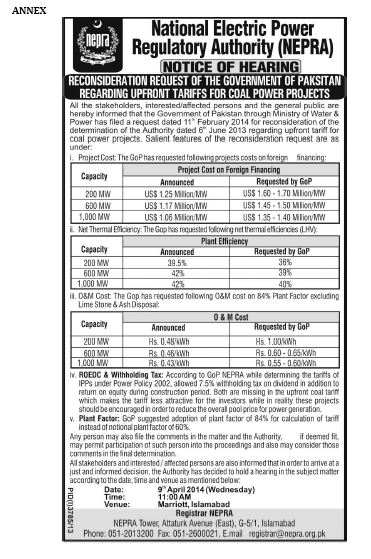
In pursuit of this review request, NEPRA announced project costs, efficiency, and O&M costs and held a hearing on April 9th, 201418 (copy attached in annex) to revise the numbers. The capital cost and O&M costs for the project were higher than those previously announced, while efficiency was lower, as seen in the tables below 19:
The higher operation and maintenance (O&M) costs suggest that the plants might not be operational at their full capacity and may need repairs. Moreover, the lower efficiency also points to older models of plants that may not have the specifications necessary for clean coal. Although as the national power regulator, NEPRA is mandated to move towards the most environment-friendly power generation, the efficiency announced was considerably lower than regional trends.
- Project Cost : The GoP has requested following projects costs on foreign financing:
II. Net Thermal Efficiency: The GoP has requested following net thermal efficiencies (LHV):
III. O&M Cost: The GoP has requested following O&M cost on 84% Plant Factor excluding Lime Stone & Ash Disposal:
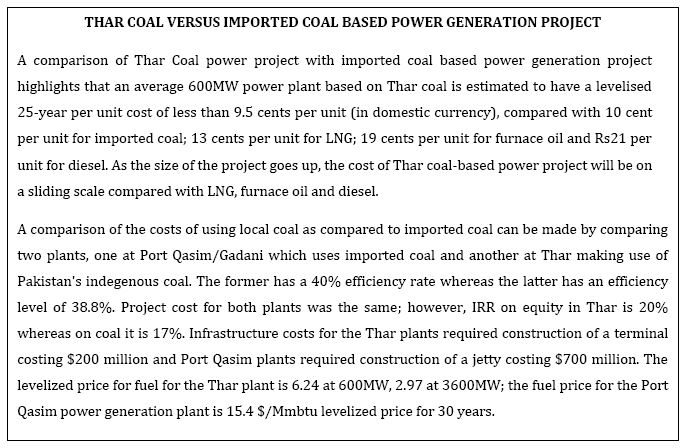
Henceforth, the basic emphasis of the paper is on assessing the viability of power generation via coal with thermal efficiency. This will be coupled with the concerns of capital and O & M costs, which are directly related to the efficiency of thermal power plant.
1.3 Efficiency & Clean Coal Technology
Efficiency is one of the primary parameters that the GoP needs to consider in its quest for coal power generation. Efficiency is a measure of fuel converted into electricity, at a heat rate, or “the amount of energy used by an electrical generator or power plant to generate one kilowatthour (kWh) of electricity20.” The global trend is towards increasing the efficiency of thermal power plants through simple conversion and retrofitting, thereby increasing electrical output without additional fuel consumption resulting in increased efficiency for the whole plant. In emerging economies, the drivers for energy efficiency investment are more closely related to economic development, energy security and reliability of supply.
Towards this goal, Clean Coal technology is being developed to mitigate the environmental impact of energy generation through coal. As seen in the graph below, the type of plant determines the efficiency of the plant, with a range from subcritical to ultra super-critical/IGCC technologies.
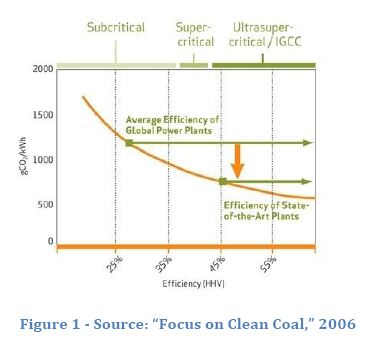
Higher efficiency translates into less consumption of coal for generating a single unit of electricity, reducing carbon dioxide emissions, mercury and local air pollutants, releasing less local air pollutants, mercury, consuming less water, and leaving a smaller environmental footprint, but above all offering less tariff for consumers.
| Efficiency21 | 30% | 38% | 45% | 50% |
| Carbon Dioxide Emission Grams
/KWh |
1116 | 881 | 743 | 669 |
| Coal consumption Grams/Kwh | 480 | 379 | 320 | 288 |
Supercritical and ultra-supercritical technologies achieve higher efficiencies because they operate at higher temperatures and pressures than conventional pulverized coal combustion (PCC) plants22. High Efficiency, Low Emissions (HELE) is the mantra of the 21st century, and some plants in operation reach a thermal efficiency of 45%. The table below
gives an overview of some efficient coal power plants the world over, such as Germany’s RWE power which operates at an efficiency of 43.2% at a cost of USD 1.175/MW.
Table 7: Source – IEA, 2014 “Fossil Fuel Power Generation, pg. 37-38”
| Plant Name | Country | TotalCapacity | Technology | Efficiency | USD Cost/KW | USDCost/MW |
| RWE Power | Germa
ny |
1000 | Ultra
Super Critical |
43.2 | 1175 | 1.175 |
| Genesee 3 | Canada | 450 | Super
Critical |
41 | 1100 | 1.1 |
| Isogo New Unit | Japan | 600 | Ultra
Super Critical |
42 | 1800 | 1.8 |
| You nghung
Thermal Power Plant |
Korea | 800 | Super
Critical |
43 | 993 | 0.993 |
| Wangqu 1 and 2 | China | 600 | Super
Critical |
41 | 580 | 0.58 |
| Jhajjar | India | 1320 | Super
Critical |
42 | 37.89 INR
Million/MW in 2009 |
|
| Adani | India | 1320 | Super
Critical |
41.75 | 1.06 |
The Wangqu 1 and 2 plants in China operate at an efficiency of 41%, with a cost as low as 0.58 million per MW, which stands in stark contrast to the Ministry of Water and Power (MoWP’s) claim in documents published in 201323.that a cost of US$ 3.24 million/MW would be incurred for advanced coal technologies
Other examples in highly efficient coal power plants include the Zhejiang Jiaxang Ultra-supercritical power generation plant in China and the Adani power plant in India.
The Zhejiang Jiaxang Ultra-supercritical power generation plant has two sets of 1000 MW, ultra super-critical units with a total installed capacity of 2000MW, and the annual output delivered to the grid to which the Project connects is estimated to be 9,470 GWh, which will be sold to Zhejiang Grid, a sub-grid of an independent regional grid – East China Grid (ECG). The objective of the Project is to satisfy increasing local power needs and to improve the ability of power generation of the local power grid. This specifications of this efficient plant can be seen below.
Similarly, the Adani power plant in India operates at an efficiency of 41.75%, with a cost of USD 1.06 million/MW. US$ 3.24 million/MW cost for advanced coal technologies. This is much higher than the sub-critical coal fired plants that are operating in India having an average efficiency of 3 1.80%.
| Table 8: Capital Cost & Efficiency of Indian Super Critical Coal Power Plant | |||||
| Total Capacity(MW) | Cost INR Million | INR-USD | USD Million | USD million Cost/MW | Efficiency% |
| 1320 | 65600 | 46.45 | 1412.271259 | 1.069902469 | 41.75 |
The plans for the construction of a super-critical coal fired power generation plant in India, which will have an installed capacity of 1320 MW (2 × 660 MW) at Tirora, District Gondia-Maharashtra are under way. The project is expected to result in reduced consumption of fossil fuel and associated greenhouse gas (GHG) emissions for thermal power generation. The project will be financed by the Adani Group, a diversified conglomerate with interests in various activities including commodity trading, edible oil refining and infrastructure projects and services. Adani Power Maharashtra Limited (APML) is a subsidiary company of Adani Power Limited. The project will export generated electricity to the local/regional/national grid. Thus, the greater the fuel efficiency, the lesser will be CO2 emissions or global warming. Moreover, the enhanced fuel efficiency would also help to optimize electricity tariffs thus relieving the masses.
However, this global trend in energy to improve efficiency of thermal power plants for generating more electricity using a minimum quantity of fuel (Natural Gas and Residual Fuel Oil) and lower emissions has not been considered in Pakistan. The challenge is to meet Pakistan’s energy shortage and high tariffs, while ensuring low risk to environment-vulnerability. The National Electric Power Regulatory Authority (NEPRA) has a poor past record in regulating the efficiency of power plants of independent power producers (IPPs). It is important the stated efficiencies do not just remain confined to paper but are duly implemented. Low Efficiency and subsequent high fuel consumption would certainly overburden electricity consumers.
NEPRA reviewed the petition and accorded approval for a high tariff, approving Rs. 1.50/unit increase in upfront power tariff for establishing coal power plants in the country. NEPRA, while jacking up the tariff, has fixed an upfront tariff of 8 to 9.67cent per unit for a coal power plant of 200MW, simultaneously nominating 8 to 9.54cent/unit for a power plant of 60 0MW, and 8 to 9.11 cent/unit for coal power plant of 1,100MW.
However, the trend in South Asia has also been towards the establishment of ultra-super critical plants. For example, the Bangladesh Power Development Board (BPDB) signed three IPP contracts for coal-fired power generation with the Orion Group for 1,200 MW in June 2012. The average tariff agreed is 5.4214 US cents (Tk 3.795). In April 2014, Bangladesh Power Development Board (BPDB), on behalf of the Ministry of Power, Energy & Mineral Resources, floated an open tender for ultra-super critical coal power plants, with a capacity 2×600-700 MW Coal Fired Ultra at Moheshkhali, under a transparent process to promote clean coal technology and above all low tariff for end consumers.
Similarly, India’s Mundra Ultra Mega Power Project with a net power generation capacity of 767 MW/unit for 5 units is exemplary in its efficiency, with an average thermal efficiency (gross) of 43.5%, and an annual net power generation of 29,928 GWh:
| Mundra Ultra Super Critical Mega Power Project, India24 | |
| Annual Average plant load factor | 85% |
| Average Thermal Heat Efficiency
(Gross) |
43.50% |
| Net Heat Rate | 2,129 kcal/kwh |
| Net Power Generation Capacity | 767 MW/unit |
| Annual Net Power Generation | 29,928 GWh |
| Plant Design Concept | |
| Technology | Super-critical, pulverized coal-fired steam
plant |
| No. of boilers and steam turbines | 5 units |
| No. of stacks | 2 stacks, one with 3 flues and another with 2
flues; each flue has 7.5 m inside diameter, and each stack is 275 m high. |
| Gross heat rate | 1970 kcal/kwh |
| Types of fuels | Pulverized coal, with fuel oil for start-up |
| Main fuel | Imported high quality, sub-bituminous coal,
average calorific value 5,350 kcal/kg, 11-13 million MTPA. |
| Start up and stabilization fuel | Fuel oil, (8,465 m³ of light fuel oil and 21,025
m³ of heavy fuel oil) during the entire construction period and 50,000 kl per year |
| Cooling system | |
| Type | Once-through system using seawater |
| Seawater volume intake | 14.99 million m³/day |
| Freshwater system | |
| Source | Desalination plant (reverse osmosis) |
| Volume required (output) | 25,710 m³/day |
| Seawater volume intake | 0.12 78 million m³/day |
| Ash Volume | |
| Fly Ash | 120,000 metric tons per month |
| Bottom Ash | 30,000 metric tons per month |
| Power Transmission | |
| No. of Transmission Lines | Three 400 kV double-circuit line |
To meet all these challenges, the best technology to adopt is that of ultra-super critical coal power plants. There has been a resounding failure to check the efficiency of existing gas and oil fired thermal power plants by NEPRA, which is also the reason that the Ministry of Water & Power (MoWP) made a concerted effort in favor of coal-fired power plants. Thereafter, NEPRA was asked to relax key parameters such as efficiency, project cost, O&M (Operation & Maintenance) expenses to lure investment, mostly from China, while ignoring current international regulations. An undesirable effect of this would be an increase in the vulnerability of the country on the Climate Change Index. Coal consumption would increase carbon emissions, water requirement and tariff for more than 24.5 million electricity consumers.
1.4 TARIFF
This coal-fired electricity tariff is more than the average tariff levied in most South Asian Countries. According to a recent World Bank (WB) report, the average electricity tariff in Bangladesh is US cents 7.70 per unit (one kilowatt-hour), US cents 7.03 in India, US cents 7.63 in Nepal and US cents 3.21 in Bhutan and in Afghanistan US cents 9.18 per unit:
| Levelized Tariff on Coal Technology based on Local Financing | ||
| Particulars | Rs/Kwh | US Cents/Kwh |
| 200 MW Local Coal Power Plant | 11.4 | 12.95 |
| 600 MW Local Coal Power Plant | 11.35 | 12.89 |
| 1000 MW Local Coal Power Plant | 11.28 | 12.82 |
| 200 MW Imported Coal Power Plant | 9.53 | 11.29 |
| 600 MW Imported Coal Power Plant | 9.7 | 11.1 |
| 1000 MW Imported Coal Power Plant | 9.65 | 10.97 |
| Levelized Tariff on Coal Technology based on Foreign Financing | ||
| Particulars | Rs/Kwh | US Cents/Kwh |
| 200 MW Local Coal Power Plant | 9.57 | 10.87 |
| 600 MW Local Coal Power Plant | 9.42 | 10.7 |
| 1000 MW Local Coal Power Plant | 9.27 | 10.54 |
| 200 MW Imported Coal Power Plant | 8.26 | 9.38 |
| 600 MW Imported Coal Power Plant | 8.03 | 9.13 |
| 1000 MW Imported Coal Power plant | 7.86 | 8.93 |
Besides granting high upfront tariff without valid reasons, NEPRA has failed to formulate regulations illustrating the most important parameter of coal-fired thermal power plant, particularly the heat-rate, measuring the efficiency of power plants to convert a fuel (coal) into heat, and into electricity. Higher efficiency of the thermal power generation has become increasingly vital from both environmental and economic perspectives.
The Ministry and NEPRA, have failed to learn lessons from the past. Using imported RFO as fuel for thermal power plants with low efficiency of thermal power has plunged the country into this unprecedented power crisis. Dependence on imported coal would again make the country subject to international market prices for coal as has been the case with fuel oil and the GoP would have no control on coal pricing. For instance, the fuel cost component in case of 1200 MW AES-Coal power project was approved in 2009, with tariff having fuel component Rs 2.16/Kwh. The project has so far failed to break the ground but as in 2013, the revised tariff was approved with Rs 5.93 as fuel component thus making 44% of the total tariff, which is 42% higher than the tariff approved in 2009 (see Table), itself still open and subject to rates in the international market. Table 9: Comparison of AES Tariff Components in 2009 & 2013
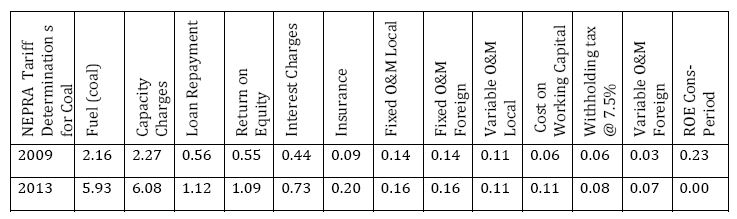
In contrast to this, the tariff for gas-based thermal power plants has not indicated any significant increase due to the use of indigenous gas resources.
1.5 An Environmental Assessment of Coal in Pakistan
Coal is a chemically complex fuel; whenever it is burned, gases are given off. The sulfur, nitrogen and carbon in coal combine with oxygen to form carbon dioxide, sulfur dioxide and nitrogen oxide. All of these gases can be a major source of air pollution if emitted in large quantities. These gases affect the environment and generate multiple problems including smog, acid rain and many other issues.
In South Asia, the total coal consumption in the year 2012 remained around 685 Million tons in total out of which 98% was used in India, with the highest share consumed in the power sector. The share of electricity generated by coal in India is 71.0%, the highest in the region. The coal based thermal power plants are the single biggest source of air pollutants, causing trans boundary fog in winter, change of weather pattern, including monsoon rainfall, but more seriously the devastating impact of coal-based thermal electricity generation has a direct impact on glacial melting. Direct human interference in Siachen and Gangotri Glacier has exacerbated the environmental impact, whereas the natural phenomenon in other Karakoram Glaciers in north of Pakistan shows glacial growth and stability25
An analysis of the Environmental Performance Index 2014 shows that Pakistan is in the mid-range with its EPI. As the world moves towards cleaner fuels, it is important that the major challenges presented by coal are analyzed.
| Table 10: Environmental Performance Index 2014 | |
| Afghanistan | 21.57 |
| Bangladesh | 25.61 |
| India | 31.23 |
| Pakistan | 34.58 |
| Nepal | 37 |
| Bhutan | 46.86 |
| Sri-Lanka | 53.88 |
Presently, there are high levels of pollution in Pakistan’s major cities, with Lahore, Peshawar and Quetta among the world’s most polluted cities. The country faces serious environmental challenges in the form of Siachen melting and its possible effects on water security. Similarly, fog in parts of Punjab is one of the aftereffects of coal power plants in India. However, inspite of these vulnerabilities to climate, the GoP has failed to strategize clean coal, and seems unable to take in to account these realities while taking this coal initiative.
Moreover, Pakistan, as a signatory to the Minimata Convention on Mercury needs to ensure that any policy does not adversely impact human life. Article 8 of the convention specifically mentions controlling and reducing emissions of mercury and mercury compounds from point sources including coal-fired power plants. Coal-fired power plants are the largest contributors to mercury emissions worldwide, UN data shows that the mercury concentrations in India and China are due to anthropogenic reasons such as coal-fired power generation26. Therefore Pakistan cannot take any initiative going against any convention, which has been signed and ratified by the GoP.
On the health sector front, the Harvard Medical School Center for Health and Global Environment’s study on “Full Cost Accounting for Life Cycle of Coal” looked at the different facets of the health and environmental impacts of coal, from mining to transport, and said that a typical coal-fired plant generates about 3.5 million tons of CO2 in a year. In fact, traditional coal plants are one of the biggest contributors to pollution. The waste stream of coal is hundred percent toxic, with major contaminants including Arsenic, Lead, Mercury,
Cadmium, Boron, Selenium & Bromide. Moreover, the economic externalities of coal plants include the following:\
Additional Cost due to the environmental impacts
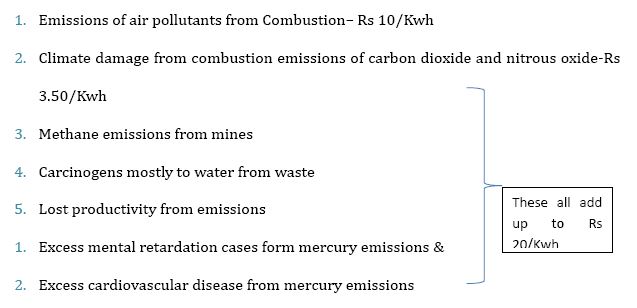
All these components add Rs 30/Kwh as costs of externalities to the upfront tariff announced by NEPRA coupled with compromised efficiency, which would again be a burden on the national exchequer instead of bringing any relief to the current endemic crisis.
The Economic costs of Coal-based electricity were evaluated in Europe over the period of 1995 to 200527. The study found that the cost of producing electricity from coal would double over its present value, if costs of damage to the environment and to human health, from the airborne particulate matter, nitrogen oxides, chromium VI and arsenic emissions produced by coal were taken into account.
In addition to these externalities posed due to negative environmental impacts, the process of power generation from coal-fired power plants consumes copious amounts of water and cooling steam or controlling the effects of pollution are affected by water quality. Coal-fired power plants require cooling and this takes place in three different ways: once-through, wet-recirculating and dry-cooling28. Conventional coal withdraws 20,000 gallons per MWh, consuming 100-317 gallons per MW. The withdrawal process in Recirculating requires 500-1200 MWh thereby consuming 480-1100 Gallons per MWh29. Dry cooling requires water for maintenance, cleaning and blow-down. The efficiencies of most coal-fired plants are affected by the cooling methods deployed. However, the consumption of water has a direct relation with the efficiency of technology employed for power generation via coal as the Integrated Gasification Combined-Cycle (IGCC) is the most efficient, and decreases water consumption by 3 5-60 percent. Details of different coal technologies having different water consumption are given in Table below:
Table 11: Water withdrawal factors for fuel-based electricity generating
technologies (gal MW-1h-1)30
| FuelType | Cooling | Technology | Median | Min | Max | n |
| Coal | Tower | Generic | 1005 | 500 | 1200 | 4 |
| Sub-critical | 587 | 463 | 714 | 8 | ||
| Super-critical | 634 | 582 | 670 | 9 | ||
| IGCC | 393 | 358 | 605 | 12 |
| Sub-critical with
CCS |
1329 | 1224 | 1449 | 3 | ||
| Super-critical
with CCS |
1147 | 1098 | 1157 | 4 | ||
| IGCC with CCS | 649 | 479 | 742 | 7 | ||
| Once‑
through |
Sub-critical | 36,350 | 20,000 | 50,000 | 4 | |
| Super-critical | 27,088 | 22,046 | 27,113 | 3 | ||
| IGCC | 22,590 | 22,551 | 22,611 | 3 | ||
| Pond | Sub-critical | 12,225 | 300 | 24,000 | 2 | |
| Super-critical | 17,914 | 17,859 | 17,927 | 3 | ||
| IGCC | 15,046 | 14,996 | 15,057 | 3 |
1.6 ALTERNATIVES
1.6.1 ECONOMICALLY HYDROPOWER DEVELOPMENT POTENTIAL NEED TO EXPOLOTED FIRST
While rigorously pursuing coal for low cost electricity genaration, the Ministry of Water & Power has overlooked Pakistan’s huge potential of hydropower. This is not less than 120,000 MW but has only been utilized up to 6825 MW in installed capacity, which makes up hardly 6% of total. In the past, multipurpose hydropower projects played a vital role in socio-economic development in Pakistan.
There is a close nexus between water, energy and food security. In Pakistan, the best examples quoted globally are Tarbela and Mangla Dams, which had a payback of 20 times more than investment made during the construction phase.
One unaccounted advantage of these multipurpose projects is protection against the menace of floods. Pakistan has been faced frequently with devastating floods in the past 60 years. In the year 2010, floods swept across Pakistan causing an estimated $9.7 billion in
damage to infrastructure, farms, homes, as well as other direct and indirect losses31. The
| Table 12 : Hydropower in Private Sector Vs Coal | ||||||
| Capacity MW | Annual GenerationGWh | Capital Cost$million/MW | O& MCost Rs./kwh | Gestation Period(Months) | Levelized TariffRs./kwh | |
| Coal (Imported Coal) | 200 | N/A | 1.7 | 1 | 36 | 9.64 |
PowerPoint policy on energy ignores the 840 Megawatt Munda multipurpose projects, which have been ready for construction for a couple of years. The completed project would have prevented a damage of $9.7 billion in 2010 and damage in the subsequent years would also have been averted.
| Coal (Imported Coal) | 600 | N/A | 1.5 | 0.65 | 48 | 9.64 |
| Coal (Imported Coal) | 100032 | N/A | 1.4 | 0.6 | 48 | 9.64 |
| Hydro Karot HEP (IPP) | 72033 | 3415.15 | 1.98 | 0.44 | 48 | 5.20 |
| Suki Kinari HEP (IPP) | 84034 | 2958 | 1.61 | 0.396 | 48 | 5.06 |
Before considering coal power projects, with given gestation time, and capital cost, it is much appropriate if the Ministry could consider hydropower projects first. In a comparison between Hydropower and Coal, hydropower emerges to be more competitive, especially because it has less negative externalities than coal and is a renewable form of energy. The table below gives an economic comparison:
- It is clear from the figures below that although the gestation time (construction period) is the same, hydropower projects in the private sector offered tariff that was 46% less than that of coal power generation.
- Capital cost is more or less the same in $ million/MW, but in the case of hydropower, more than 80% of the cost is based on local machinery and materials. During hydropower development, more than 44 Local industries were mobilized, yet in contrast, coal thermal power generation is almost 90% based on foreign machinery and equipment.
- From a look at the operation and maintenance (O&M) costs of coal and hydropower, it is evident that the O&M costs for hydropower are considerably lower (Rs.0.396/kwh, Rs. 0.44/kwh) in comparison to coal, which was in the range of Rs. 0.6-1/kwh
- In fact, public hydropower tariffs are at the levelized tariff of Rs. 3/kwh, as seen in the table below, in a comparison of Pakistan’s hydropower projects:
| Table 13: Hydropower in Public Sector Vs coal | ||||||
| Projects | Capacity
MW |
GWh | USD
Billion |
Gestation
Time (construction Time) Years |
Capital
Cost $/MW |
Levelized
Tariff |
| Dasu35 | 4320 | 21300 | 7.81 | 5 | 1.81 | 3 |
| Bunji | 7100 | 24088 | 5.20 | 6 | 0.73 | 3 |
| Kohala | 1100 | 4800 | 1.60 | 5 | 1.45 | 3 |
| Pattan | 2800 | 14095 | 4.60 | 5 | 1.64 | 3 |
| Thakot | 2800 | 15230 | 4.60 | 5 | 1.64 | 3 |
| Munda-FATA36 | 840.00 | 2407 | 1401.00 | 4 | 1.67 | 3 |
| Tarbela 4th Ext37 | 1410.00 | 3,478 | 928.90 | 3 | 0.66 | 3 |
Hydropower projects can be completed in swiftly as feasibility studies and detailed design of most of these projects can be completed in record time. Many examples are available across the world where hydropower projects were completed in very quickly.
History serves as an example. During the Second World War, the United States of America (USA) was facing a serious energy crisis. U.S. President, Franklin D. Roosevelt ordered the construction of the Douglas Dam in Tennessee on high priority to generate electricity for national defense purposes. Construction began in February 1942, and the project was completed within 12 months and 17 days leading to the generation of 166 MW of hydroelectricity.
Similarly, American engineers set another record by completing the Cabinet Gorge Dam on Clark Fork River in half the stipulated time to generate 231 MW of hydroelectricity, with a storage capacity of 106000 Acre Feet of water.
Given that the generation of hydroelectricity incurs no fuel cost, has minimal operating cost and that hydropower plants are durable, Indian policymakers are also working towards adding 50000 MW of clean and renewable hydropower to their energy mix and have set some records in this regard.
The multipurpose 520 MW Omkareshwar Project on the Narmada River in Madhya Pradesh was completed in four and a half years instead of the projected six years; the 20 MW Kabini Hydropower Project was completed in just 20 months on the Kabini river, despite geological and climatic challenges. Meanwhile, the 13 MW Hydropower Project on the Tawa River was completed in a record time of 22 months.
However, at the top of the list of excellent hydropower project management is the 86 MW Malana hydroelectric power project in Himachal Pradesh. It is unique because it was constructed within 30 months, against its five-year schedule, at almost 50 percent less cost than the approved budget and that too at a high altitude in a difficult mountainous terrain.
The project team faced unprecedented geological and climatic challenges but their creative project-scheduling, with real-time monitoring made the Malana project a model in hydropower history. It proved that hydropower projects, particularly run-of-river projects, can be completed in minimum time and within the stipulated budget.
This nation has every right to have access to clean and renewable energy at affordable cost. Now, when cheap hydropower has also been recognized as a very effective tool for poverty-eradication, Pakistan needs to set up a national mission on hydropower.
This can be done if the Prime Minister pays special heed to the issue, first by clearing the Ministry of Water and Power (MOWP) of deadwood and incompetence, and then by hiring a truly professional and distinguished team. We must accept that the solution to Pakistan’s energy crisis lies in cheap hydroelectricity.
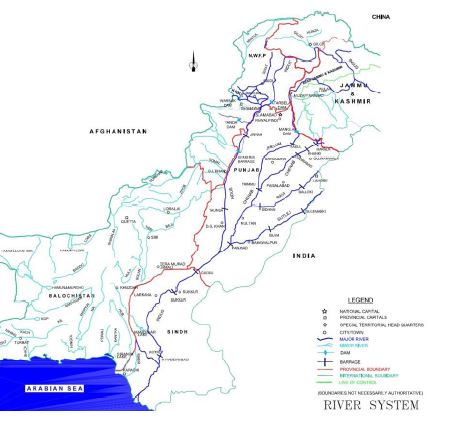
In fact, one challenge, which is underestimated by decisionmakers is the effect of hydropower on transboundary water rights on Pakistan. Transboundary hydropower development at a faster rate than Pakistan’s pace of development presents a huge challenge to Pakistan’s water and energy security. Pakistan must act quickly as on the eastern side (see map), Pakistan signed the Indus Water Treaty, and the water of three major rivers, Indus, Chenab, and Jhelum is allowed for non-consumption use. India has the right to use water for hydropower development and the country which develops hydropower projects first will be entitled to water rights. Pakistan has already lost the case of Kishanganga in the International Court of Arbitration because it failed to initiate the Neelam-Jhelum Hydroelectric Power project. Moreover, Afghanistan has also proposed more hydropower projects on the River Kabul, another point that Pakistan must take into account in its water and energy strategy.
Coal Availability and Cost Comparison with Hydropower
The total coal reserves in the country are Lignitic and sub-bituminous, so most of the coal has to be imported. Transporting this coal to other far-flung parts of the country, other than Gaddani will require substantial energy consumption (rail, road, etc.), incurring a major cost in transportation thereby increasing the overall fuel costs for the power plant.
- Plant Load Factor (PLF) is higher for Coal Plant at 85% as compared to Hydroelectric Power Plant, which is 45%.
- Auxiliary consumption is 9% for a Coal Power plant, whereas it is only 0.5% for the HEP plant
For a Coal Power Plant, the overall efficiency is approximately 40% (due to greater number of conversion stages) as compared to the HEP plant where the efficiency level is approximately 80% – 90% due to fewer conversion stages.
Fuel required (coal) for Coal Power plant has been calculated assuming a specific coal consumption of 0.85 Kg/kWh.
Interest During Construction (IDC) is calculated at Rs. 1017 Cr. in HEP Plant and Rs. 669 Cr. For COAL POWER PLANT plant. Return on Equity (RoE) has been assumed at 16% for both the cases, as per CERC guidelines.
- As a result of the above assumptions and calculations, the levelized cost of generation comes out to be Rs. 1.84/unit from HEP plant and Rs.2.86/unit for the COAL POWER PLANT plant.
Clearly, HEP plant has a lower per unit cost of generation as compared to the COAL POWER PLANT plant. This is due to high fuel cost of coal, higher auxiliary consumption, higher level of O&M costs.\
1.6.2 WIND POWER Vs Coal Power Generation
A recent study by HSBC38 indicated that wind energy in India is now cost competitive with new coal build capacity. The growing cost competitiveness of renewable energy with new coal build and the influx of wind parity in view of the upper wind Feed in Tariff (FiT) range estimated as being around 15% lower than the upper tariff range for new coal capacity (See figure below) is driving increased investment in renewable energy.
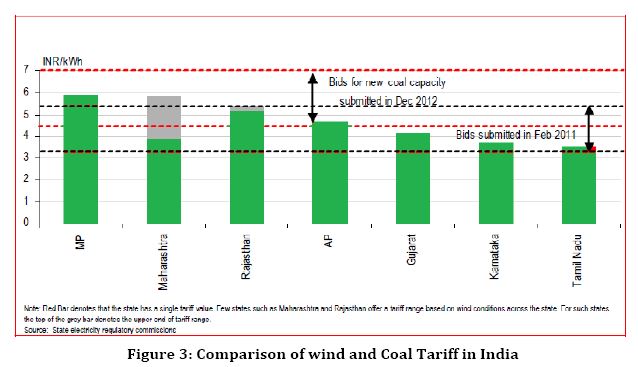
Comparison of Wind FiTs with new coal Bids
A recent study identifies that Feed in Tariffs of wind in key seven states39 in India range from INR 3.51-5.92/Kwh (US cents 6-11/Kwh). The tariff in some key wind states in India (see figure 3( is as low as INR 4.5/Kwh(US cents 8/kwh), which is the lower end of bid received for new coal capacity in 2012, making wind cost competitive with new coal based generation capacity (See chart below).
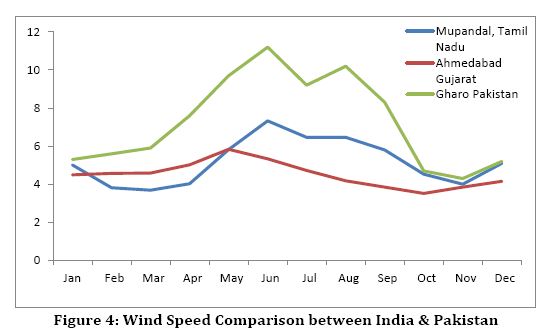
The wind speed in India poses large variability, leading to fluctuations in power generation (see Figure below). However, in the case of Pakistan, wind variability is far less that present in India and wind speed is 30% greater than average speed available in India.
This remarkable wind speed and untapped wind energy potential presents a significant investment opportunity for India and especially for Sri Lanka, as the latter country is exhausting its hydropower and now has very limited economically viable renewable sources. Hence, the lower wind tariffs are leading to increased investment in wind energy. Thus, India with an ambition to invest in wind energy and cooperate with Pakistan by promoting trade in energy can invest in Pakistan to develop this unexplored wind potential. This kind of investment would create win-win situation for both countries by leaving 30% of the wind energy in Pakistan and taking 70% with them to India. This cooperation between the two countries would not only provide an opportunity to reduce their dependence on thermal energy resources and provide them cheap and clean energy but would also act as key to the development of peace, progress and prosperity across the region.
Unexplored wind energy in Pakistan also presents significant opportunity for energy trade between Sri Lanka and Pakistan. Both countries with the help of the international community can articulate a model of joint cooperation for exploring this wind energy potential in Pakistan.
Wind Energy has a high potential in Pakistan, and exporting 70% of wind energy via India to Sri Lanka and leaving rest of the energy in Pakistan would set a unique model of cooperation and would strengthen peace and harmony across the region. Investing in this clean energy would not only provide cheap and clean source of energy for both Sri Lanka and Pakistan but also allow climate change mitigation benefits to arise from reduced operation of thermal energy fired power plants.
1.7 Policy-Recommendations
This paper covers policy recommendations on coal to meet the aims of energy security in Pakistan. The foundation stone of coal policy should be efficient coal-fired power plant to generate maximum electricity per unit, burning less fuel (coal), emitting less carbon dioxide, releasing less local air pollutants, consuming less water and leaving a smaller environmental footprint and above all offering lower tariffs for consumers. However, the Government should first consider hydropower development offering same capital cost with gestation time but having multifarious advantages.
The world at large is moving towards high efficiency and low emissions, as exemplified by some of the most efficient power plants such as the 858 MW Coal Power Belchatow in Poland with an efficiency of 42%. Similarly, the 220 MW plant in Karlsruhe, Germany has an efficiency of 46% and the 750 MW plant in Trianel Kohlkraftwerk Lünen, Germany has an electrical efficiency of 45.95%. Likewise, the 2,000MW Coal Fired Zhejiang Jiaxing Ultra-supercritical Power Generation Project in China40, has submitted documents to earn carbon Credits, operating at an efficiency of 43.5 %. This is yet another lesson for Pakistan. China must be convinced to build coal power plants with the same efficiency parameters in Pakistan, instead of lowering the efficiency of proposed thermal power plants. In fact, the best model of power plant that ought to be replicated in Pakistan is the Avedøre Power Station Denmark, which is one of the world’s most efficient with a 49% efficiency rate.
Pakistan should endorse a green power policy in line with Norwegian and other countries with a share of hydroelectricity amounting to more than 70%. If necessary then the Government should encourage Independent Power Producers (IPPs) to set up Power Plants having efficiency more than 45% with zero Mercury emissions, using less than 320 gram of coal to generate one unit of electricity. All such coal-based power plants must qualify and should be admissible under the joint implementation and Clean Development Mechanism (CDM) rules to earn Carbon Credits.
The component of fuel efficiency in fossil fuel based power generation has been singularly ignored in Pakistan, which will have serious repercussions on the country’s economy. It is estimated that the High Efficiency and Low Emissions Technologies (HELE) have been increasingly deployed across the world bringing significant reduction in carbon emissions at the cost of efficient fuel burning and maximizing the electrical output of the plant. It is strongly suggested that Pakistan following the global foot print should deploy HELE in terms of all fossil fuel power generation especially coal. The Integrated Gasification Combined Cycle (IGCC) operating at thermal efficiency of 45% significantly reduces the carbon and mercury emissions, which in view of the largest concerns in case of power generation via coal, is considered the most suitable option for coal-based power generation in Pakistan
To catch up with the global trend of investing in economically coherent power generation portfolios, it is imperative for Pakistan to avail the most energy efficient coal-fired power plants to earn carbon credits under the scheme of Clean Development Mechanism (CDM), accounting frameworks under the Kyoto Protocol. The development of near-zero emission technologies for coal is centered in developed countries having sources and the political will to conduct Research & Development (R&D).
After deregulation of power sector in 1996, successive governments have failed to set up an independent Regulator in Power Sector. The ceremonial presence of NEPRA is another fundamental cause of energy crisis in Pakistan. By its complete failure to set up a fair regulatory regime, NEPRA has failed to demonstrate a commitment to the provision of reliable and consistent electricity at affordable rates to 24 million consumers. Corruption and nepotism are rampant in the department as the policies formulated lack expertise. The National Power Point Policy is the most recent example of this dilemma which has failed entirely due to a lack of strategic approach towards addressing the energy crisis. There is dire need of formulating comprehensive and research based practical power policies, by involving research think tanks, genuine economists, eminent energy experts and engineering universities to delineate a comprehensive framework to meet the growing energy demands in a more sustainable manner. A special advisory board to Chairman NEPRA comprising eminent and genuine experts from NED, UET Lahore, UET Peshawar and NUST should be constituted for providing an engineering-oriented approach to make the organization work efficiently.
There is a huge Shale Oil & Gas Potential in Pakistan, which is yet another avenue that has not been taken into account by the Ministry of Water & Power and NEPRA. The country can unlock its shale gas potential within three years to generate cleaner energy, at 60% efficiency in a combined cycle gas-fired thermal power plant, with a tariff of around Rs. 4 per unit.
The current energy crisis in Pakistan is not the matter of installed capacity; rather, the lack of fuel availability leading to excessive dependence on RFO is the fundamental reason behind this unprecedented energy crisis. The country’s installed generation capacity is around 23,500MW; however it cannot generate more than 16,000MW due to lack of fuel availability. This dearth of gas supply for electricity generation has forced a move towards RFO based power generation. The RFO base generation in 2013 accounted for 36% of total electricity generation and poses 79% of share in total cost of generation. Hence, this expensive fuel component is engendering the ills of circular debt, subsidy and mounting import bills, thus draining the national exchequer. Therefore, the need for developing unexplored hydro power potential has become inevitable for Pakistan. It is estimated that medium size Run Off River (ROR) projects can be completed in three years, as was evident by projects such as the Malana Hydropower Project in Himachal Pradesh.
Pakistan has not yet fully exploited its low-cost environmental friendly fuel options such as hydropower. Estimates suggest that run-of-the-river projects can be completed in three years, as seen in the section on hydropower above. The Engineering Procurement Cost (EPC), an essential component of the Tariff should be evaluated by an independent committee appointed by involving UN, ADB & World Bank for an autonomous and merit-based decision.
Pakistan like other developing countries has been facing the joint challenge of climate change and energy security. This daunting predicament of meeting the energy demands while mitigating the impacts of climate change can be addressed by focusing on clean energy technologies. Ranking an alarming third on the Global Climate Risk Index, 2014, Pakistan cannot rely on a technology with compromised environmental standards. Indeed, the environmental impacts of coal have been driving an increased investment in environment friendly technologies, and in this regard, the tariff for wind power generation is now competitive with coal. Pakistan though a new entrant to field of wind energy is advantaged by remarkable natural features for the installation of wind turbines. The monthly generation from two wind power projects is given in table below:
Table 14: Wind Power Generation
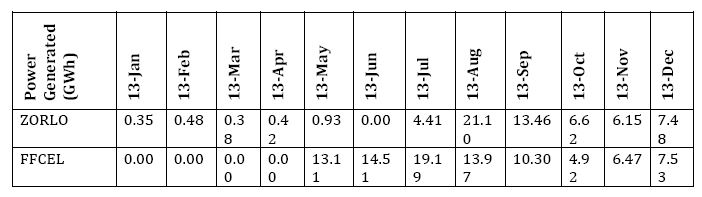
The table identifies that wind power plants in Pakistan pose significant plant factor in view of the fact that the wind speed in Pakistan is 30% greater than India. Moreover, the gestation time period for win power projects is also estimated around 6 months comparatively less than coal power plant. The consideration of coal as viable option by Ministry of Water and Power (MOWP) and NEPRA comes as a surprise when the country holds such potential in renewable and clean energy options, which can easily satisfy the growing energy demands in a sustainable manner. Therefore, it is strongly recommended that energy efficient and clean energy technologies should be deployed to meet the joint challenge of energy security and climate change in a sustainable manner. Therefore, the overarching global principles of sustainable development and energy security should be emphasized in South Asia, especially as Pakistan ranks third on the Global Climate Risk Index 201441 and is particularly vulnerable to climate change.
______________________________________________________________