



The week of June 13-19 was dominated by security related matters, both in terms of ensuring the safety of the CPEC route, and regional relations and frictions.
Security
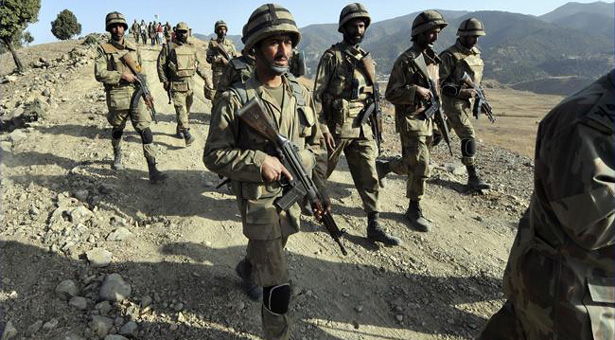
The Sindh government has announced that it will recruit 2,000 ex-servicemen for the security of China-Pakistan Economic Corridor (CPEC) project. Presenting a budget proposal for the fiscal year 2016-17, provincial finance minister Murad Ali Shah said that the Sindh government has kept law and order as one of its topmost priorities.[1]
While addressing a joint meeting of senate’s standing committees on foreign affairs and defense, Foreign Secretary Aizaz Ahmed said that the CPEC project was irksome for the United States.[2] CPEC is just the start of a much larger Chinese pivot to dramatically increase its footprint in Eurasia, a fact that is of much concern to the global superpower status of the US. This trepidation with the rise of China as the new superpower will have consistent and far-reaching repercussion on both inter and intra-national relations for Pakistan.
Since the inception of CPEC, the project was opposed by national and international forces, reported Chinese media this past week.[3] This also marks the growing Chinese ire with the various contextual local challenges to the project from the Pakistani side. From the nationalist movement in Balochistan, to the unrest in FATA, and from the crime syndicates in Karachi to the sectarian violence in Gilgit Baltistan, China is wary of the various security challenges in Pakistan, and expects Pakistan to do its utmost to mitigate these. However, incidents such as these cast a shadow of doubt over Pakistan’s ability to capably protect the route and the Chinese working on it.
With reference to the CPEC security, the government notified the senate that 22 additional wings of civil armed forces (CAFs) would be raised for this matter.[4] 17,000 security personnel will protect the route, of which 3,000 have already been hired. Six CAF wings will form the CPEC Special Security Division. These remarks were made by Minister of State for Interior Baleeghur Rehman. Pakistan remains committed foolproof security of the route, and it is encouraging to see unimpeded progress on this front.
Oil Pipeline
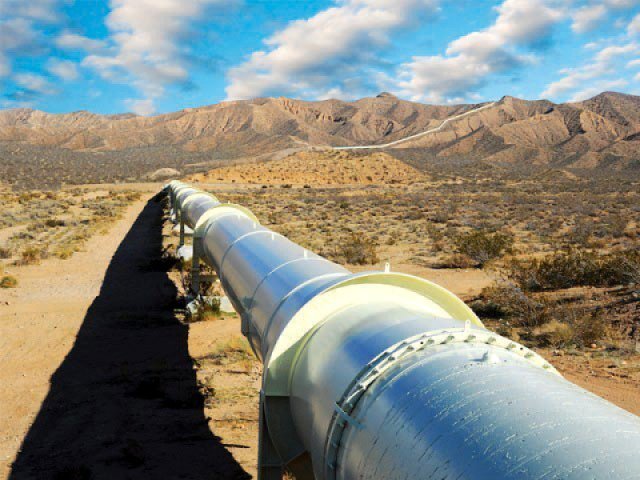
In order to fulfill its energy requirements, china aims to build Gwadar-Kashgar pipeline that would transfer a total one million barrel of oil per day from Middle East to china. Work on the pipeline would be started in 2017.[5] While CPEC is a small part of the much larger Chinese One Belt One Road (OBOR) vision, it is important to realize that the CPEC is particularly beneficial to China, as it drastically cuts both the time and distance needed for China to import most of its oil. Further, transporting this oil through the CPEC also ensures that China is no longer subject to the power dynamics and sovereignty claims of international waters, through which most of its oil is currently transported.
In related news, China and Pakistan have adopted a joint stance on peace and stability of the region and while dealing with the issue of South China Sea.[6] Pakistan with ASEAN countries insisted political cooperation and stressed upon the timely completion of the code of conduct of South China Sea.
Power Generation
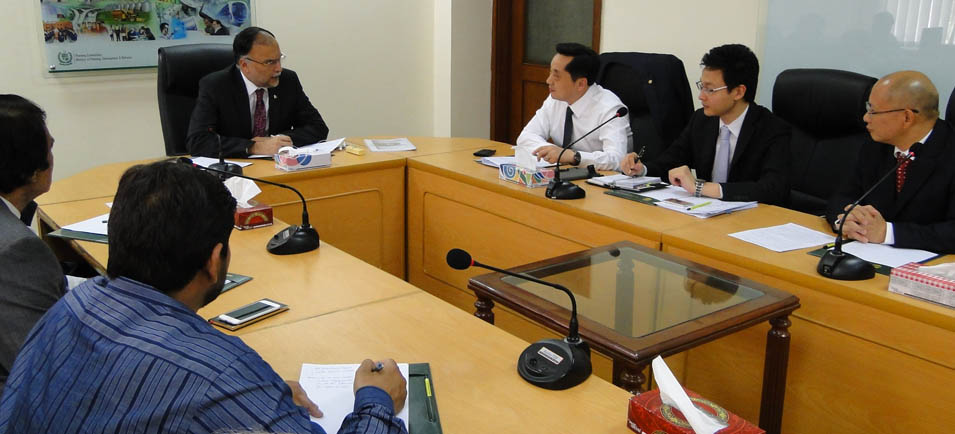
A meeting between Planning Minister Ahsan Iqbal and President Power China Du Chungou held in Islamabad. The meeting reviewed progress on 1320 MW power plant at Port Qasim and expressed satisfaction over the pace of work on the project.
The Shanghai Cooperation Organization (SCO) is scheduled to hold a summit on June 23 and 24 in Tashkent, Uzbekistan that will pave way for opening new avenues for Pakistan to secure funds for energy and other infrastructure projects.[7]
General
Opposition criticism[8] continued[9] unabated[10] this past week as well. Federal Minister for Planning Ahsan Iqbal rejected claims that this was a “Punjab-China Economic Corridor”, and underlined the government’s stance that CPEC is a national priority, one that can propel Pakistan into a new age of economic prosperity.
by Zeeshan Salahuddin, a journalist and researcher, who serves as a Senior Research Fellow at the Center for Research and Security Studies, Islamabad, and holds a bachelor and master degree in strategic communications from Ithaca College, NY. He can be reached via zeeshan[dot]salahuddin[at]gmail.com and tweets @zeesalahuddin.