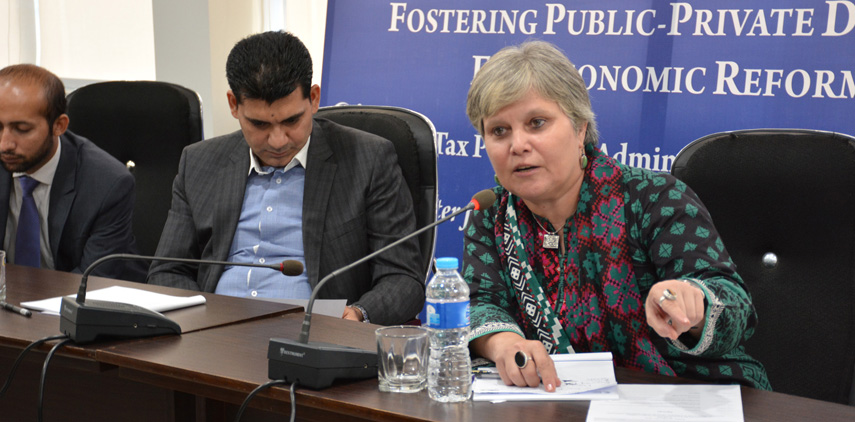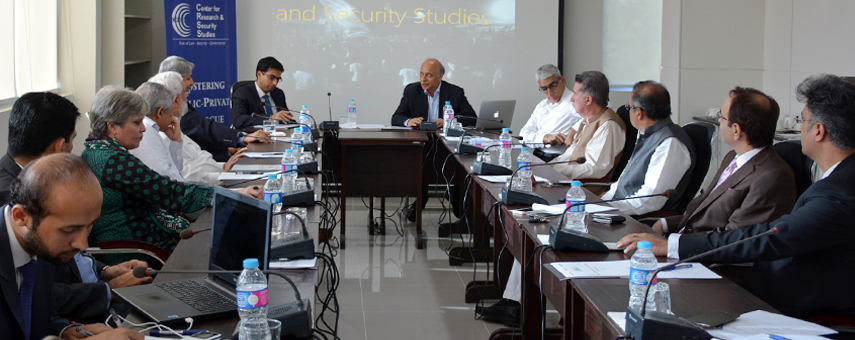
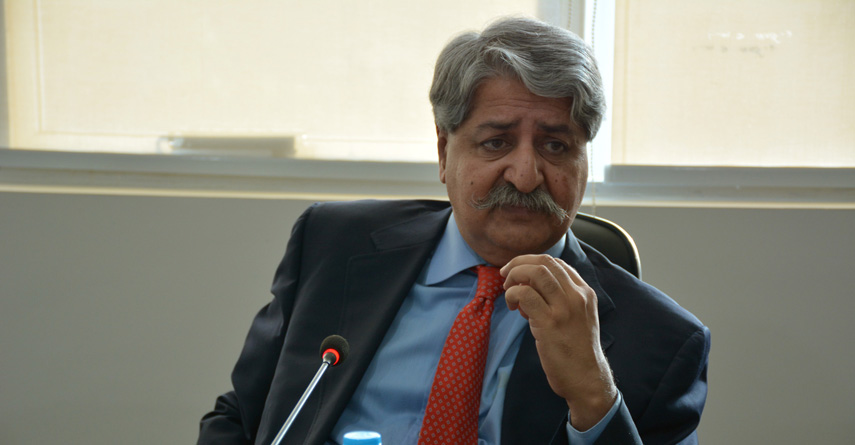
Provinces should proactively and vigorously collect taxes and the burden should shift from the captive tax-payers like the salaried class, Mr. Naveed Qamar, parliamentary leader of Pakistan Peoples Party (PPP) in the National Assembly, spoke at the maiden public-private dialogue organized by the Center for Research and Security Studies (CRSS) as part of its endeavor – in partnership with Center for International Private Enterprise – to foster dialogue for economic reforms by convening high level policy discussions between the business community and political leadership. The series of dialogue fora aims to provide platform to the private sector to discuss with political representatives the economic issues and challenges hampering the economic growth, and solutions and framework for economic reforms. The discourse is hoped to generate critical feedback for the economic manifestos of participating political parties.
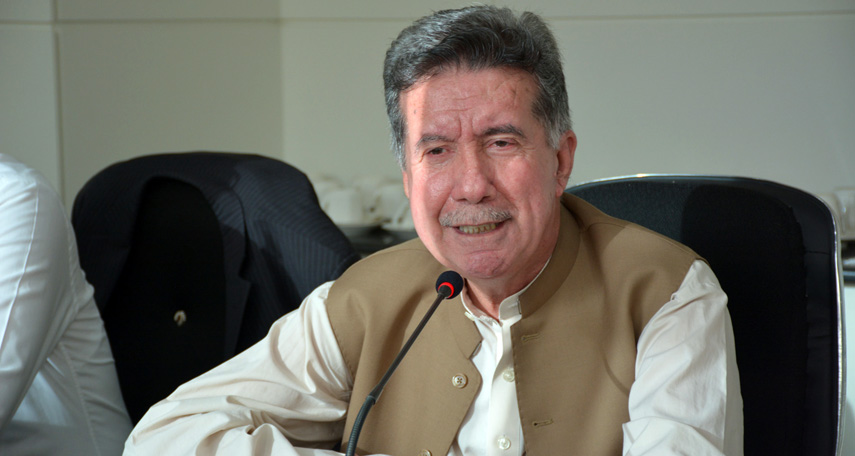
Mr. Naveed Qamar while speaking on the occasion underlined a forward looking thought and not an “accountant-thought” for improving the tax collection in the country. He said the myth that agriculture is not taxed needs to be debated because this is the fault of provincial governments to collect taxes.
Dr. Vaqar Ahmed Deputy Executive Director at Sustainable Development Policy Institute (SDPI), while giving presentation on the Tax Reforms in Pakistan, said that due to the vast number of exemptions, concessions and preferential treatment allowed to select sub-sectors under agriculture, industry and services, it was difficult to collect taxes. “After the 18th constitutional amendment, GST on services (GSTS) is now a provincial subject. The necessary measures required to collect the due GSTS will now depend on the political will and administrative capacity of each of the provinces. And then there is weak audit and enforcement capacity”, he quoted the other difficulties in tax collection. “Taxes should not merely be seen as means to run the government machinery. The estimates of tax gap should also be updated. It is critical to rationalize the number and size of concessions” He noted some basic rules to take into consideration in order to improve the Tax Policy.
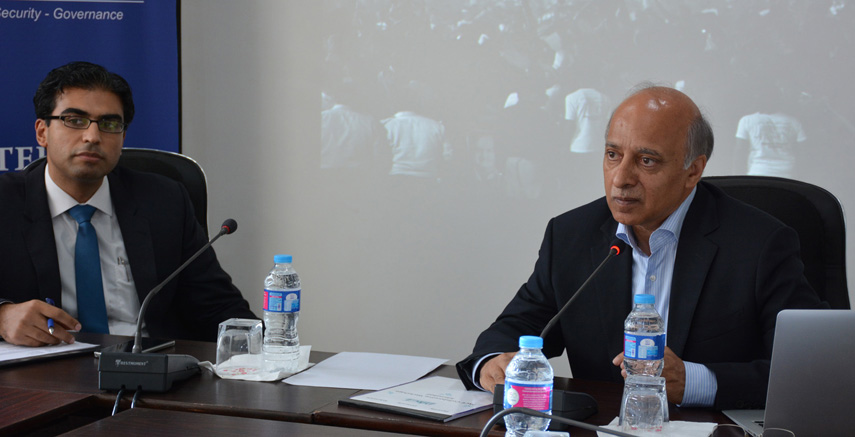
Senator Afrasiab Khattak and Ms. Bushra Gohar from ANP also spoke on the occasion; assuring their cooperation in considering the feedback from private sector representatives and incorporating in their parties’ economic agenda.
Most of the participants from the private sector concurred that the current taxation regime was obstructive and extremely regressive. They demanded a total remodeling and diversification of the taxation regime with the advice of the private sector. They also stressed that the FBR needs autonomy and transparency. “Strangely, policies are made for the private sector but it is never taken on board”, they said while identifying the missing political will as the major obstruction in the way of equitable, poor-friendly taxation regime. They said heavy taxation simply raises the cost of doing business in Pakistan and instead of creating employment opportunities, such taxes are forcing businesses out of Pakistan.
They urged the politicians to try to fuse benefit (tax payers) with the obligations of the state.
It is also worth mentioning that with the dialogue series, CRSS is pioneering the public-private dialogue as there are no other examples of the direct interactions between the politicians and private sector representatives through a discourse that is aimed to generate feedback for the economic manifestos of participating political parties. Also the engagement is not just a one-off but a sustained long-term intervention for dialogue on the critical areas of economic reforms in Pakistan.