



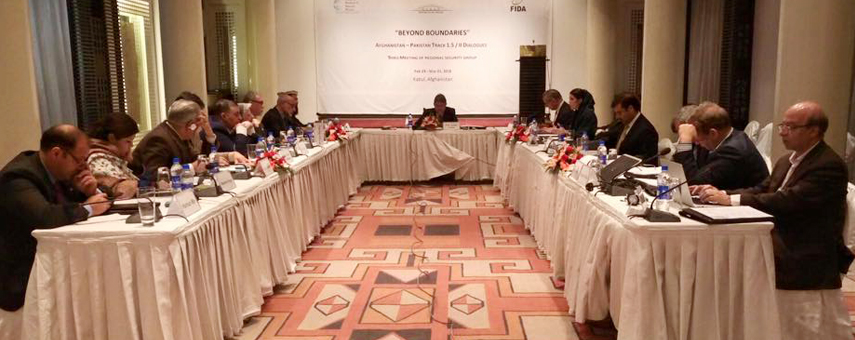
Experts Call for Greater Counter-Terror Cooperation.
Participants of a Pakistan-Afghanistan Track 11 dialogue Tuesday urged both governments to continue their efforts for peace and increase counter-terror and security cooperation. Joint efforts are needed to crush terrorism which is a common enemy of Afghanistan and Pakistan. The delegates also extended their support to the Quadrilateral Coordination Group which is pushing for the intra-Afghan reconciliation. The ice-breaking engagement between Afghanistan and Pakistan at both official and private level must continue to help remove the bilateral trust. Mutually agreeable confidence building measures could help in achieving these objectives. Statements hurting the sentiments must be avoided by both sides. The civil society should put pressure on stakeholders to pursue mutual peace & prosperity. Media on both sides could play a crucial role in correcting the narrative on each other, the delegates concurred and called on both governments to help facilitate Afghan and Pakistani media’s reporting from their respective regions.
These views were presented by Pakistani and Afghan regional security experts during their third regional security workshop held from February 29 to March 01, 2016 at Kabul, Afghanistan. The workshop was the sixth major round in the series of meetings between civil society and regional security experts of both countries as part of “Beyond Boundaries”, a major Af-Pak track 1.5 and II initiative launched by an Islamabad based Center for Research and Security Studies (CRSS) – in partnership with its Afghan counterpart organization, DURAN Research and Analysis (DRA) and sub-national partner (Pakistan), the Foundation for Integrated Development Action (FIDA) as an effort to improve relations between Afghanistan and Pakistan, soothe bitter context, tackle trust deficit which can somehow de-escalate the heightened tensions and improve mutual perceptions.
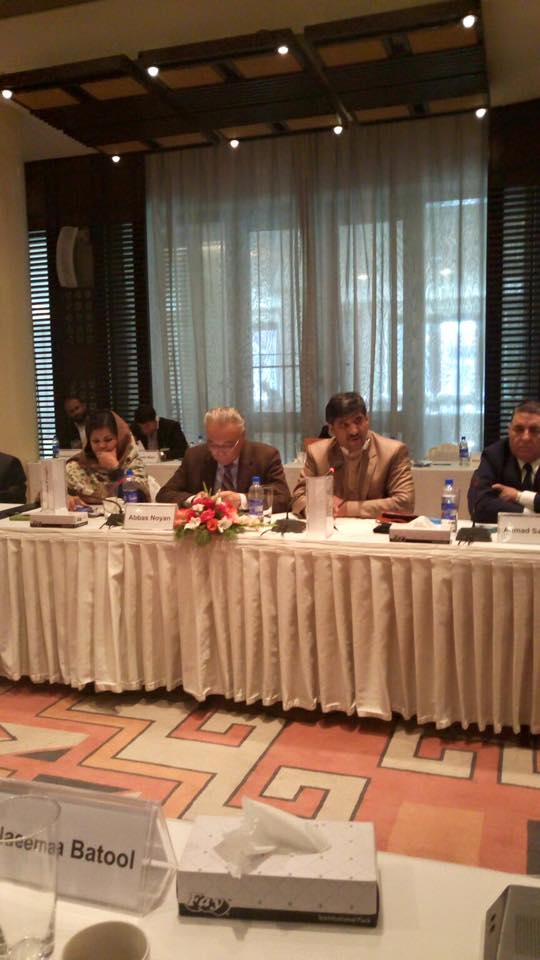
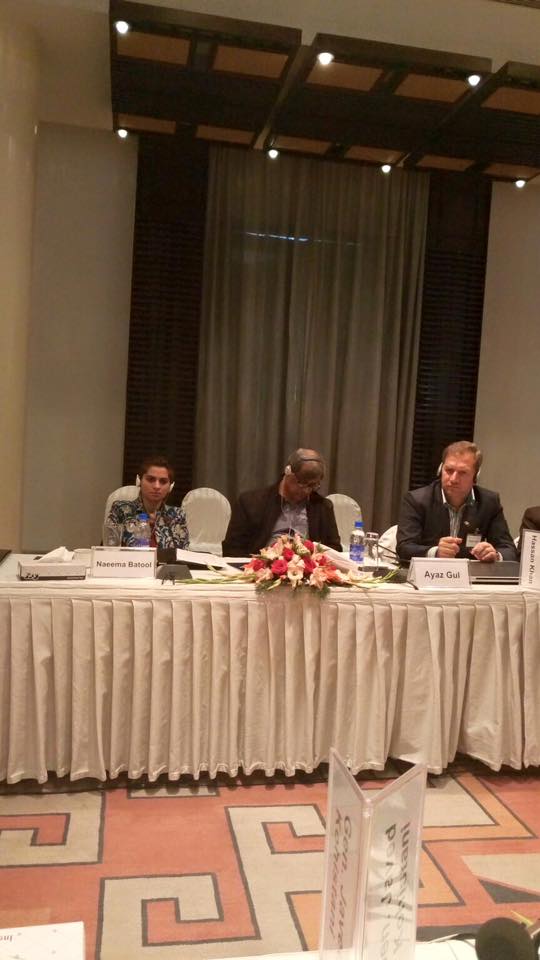
The sessions, chaired by Professor Anatol Lieven of School of Foreign Service in Qatar, Georgetown University discussed Afghanistan Pakistan security paradigm, with focus on the ongoing bilateral initiatives, its implications and way forward, the impediments and opportunities for trade and economic cooperation and steps to improve relations between Afghanistan and Pakistan and emphasized on the need for media engagement and coverage in both countries.
At the end of the meetings, the Delegates finalized the following Joint Declaration:
“The Regional Security Working Groups, reaffirming their previous joint recommendations, have drawn up the following recommendations:
Peace and Security
- We support the Quadrilateral Group’s efforts to promote peace in Afghanistan and urge the governments of Afghanistan and Pakistan to continue their efforts for sustainable peace.
- We reaffirm that terrorism is the common enemy of both countries.
- We declare that any shelter for armed militants should be disallowed by both sides.
- We call for an enhancement of co-operation against terrorism between the militaries of Pakistan and Afghanistan and better control of the movement of terrorists back and forth between the two countries.
- We call for intensive joint efforts to combat the rise of the Islamic State (Daesh) in the region.
- We call for increased co-operation against narcotics between Pakistan and Afghanistan.
- We call on both governments to expedite decisions on the status of Afghan refugees (Afghan representatives specifically requested that Pakistan extend Proof of Registration (POR) for Afghan refugees until 2017.
Trade and Economics:
- We call for a new agreement on trade and transit between Afghanistan and Pakistan, and for efforts on both sides to facilitate trade between the two countries.
- We call for joint efforts to expedite the development of the CASA-1000 and TAPI projects.
- We call on both governments to expedite the completion of Pakistani aid projects within Afghanistan.
- We call for both governments to promote business fairs and exhibitions intended to promote trade and investment between Afghanistan and Pakistan.
- We call for early completion of negotiations on a new agreement on trade and transit between Afghanistan and Pakistan and efforts?
Education, Media and Culture
- We urge both governments to facilitate reporting by the Afghan media from Pakistan and the Pakistani media from Afghanistan, including presentations on each other’s culture.
- We agree to do our best to help improve narratives on both sides concerning the other country.
- We call for changes in the school curricula in both countries to combat violent extremism and diminish hostility between Afghanistan and Pakistan.
- We call for the promotion of cultural exchanges between Pakistan and Afghanistan.
- We call for enhanced opportunities for Afghan students to study in Pakistan and vice versa.”
The Pakistani delegation, led by Mr. Muhammad Shoaib Suddle was comprised of Ms. Ayesha Gulalai Wazir, Ms. Shazia Marri, Mr. Muhammad Tahir, Mr. Syed Anwaar-ul-Hassan, Ms. Naeema Batool Rajput, Mr. Ayaz Gul and Mr. Hassan Khan. The Afghan delegation comprised Mr. Qutbudin Helal, Mr. Muhammad Nateqi, Gen. Sher Muhammad Karimi, Ms. Suraya Parlika, Mr. Ahmad Saeedi, Gen Jawed Kohistani, Mr. Abbas Noyan, Ms. Wazhma Frogh and Mr. Haroun Mir.
These talks are taking place at a time of increased hope for mutual cooperation, particularly in the economic arena, especially after the Heart of Asia Conference hosted by Pakistan in early December and the signing of the TAPI Pipeline in Turkmenistan. The political scenario is dominated by the ongoing Quadrilateral Talks of which four meetings have taken place and it is expected that by the fifth meeting in the first week of March 2016, Taliban representatives will join the talks.