



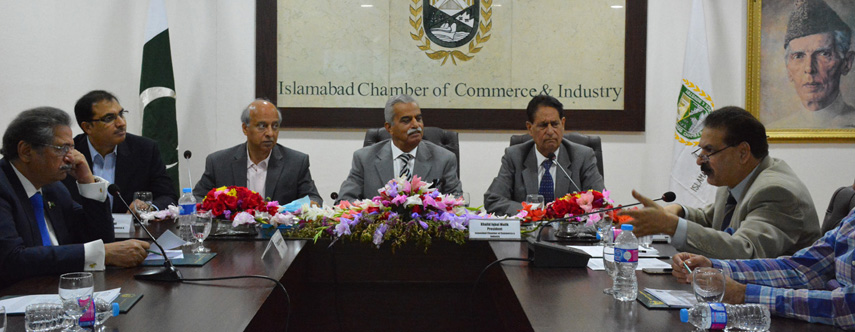
Interactions between the parliamentarians, civil society, and business community members should be increased for inclusive policy making. There is a dire need to tackle the public-private trust deficit as it can help improving the tax base and tax-to-GDP ratio. The structural issues in the system of governance manifest lack of capacity to respond to the socio-economic needs which ultimately affects the relevant policy making. The structural changes are critical for sustainable development, hence the political parties should make efforts to ameliorate the crisis of governance.
These were the remarks made by Mr. Shafqat Mahmood, PTI lawmaker during the public-private dialogue organized by the Center for Research and Security Studies (CRSS) at Islamabad Chamber of Commerce and Industry (ICCI). The event was a part of Center’s endeavor – in partnership with Center for International Private Enterprise – to foster dialogue for economic reforms by convening high level policy discussions between the business community and political leadership. The series of dialogue fora aims to provide platform to the private sector to discuss with political representatives the economic issues and challenges hampering the economic growth, and solutions and framework for economic reforms. The discourse is hoped to generate critical feedback for the economic manifestos of participating political parties.
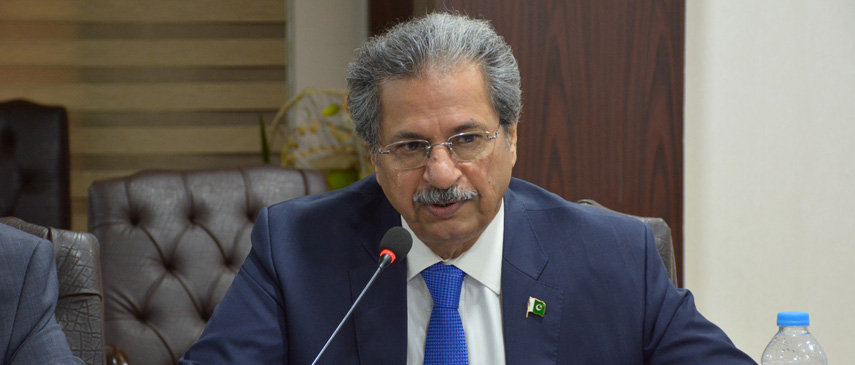
Mr. Shafqat Mahmood said that PTI was constituting subject committees in the run up of 2018 elections. The dynamics of politics are such that they restrict continued thought-process on policy issues, resultantly, the sustained policy making processes suffer. The mechanisms in-place within the political parties for preparing their economic manifestoes should be inclusive and include the feedback of all the stakeholders. PTI – realizing the need for inclusive policy making – tries to engage and involve the stakeholders in such processes. While the CPEC augurs well for the future of Pakistan, we should also consider the concerns of private sector and the business community. He assured that PTI would try to measure upto the expectations of business community members.
Dr. Vaqar Ahmed, Deputy Executive Director, SDPI, during his opening presentation shared measures to promote exports, investment, agriculture and food security, rural economies & jobs, women entrepreneurship, Social Enterprises (SEs), and for Energy Sector and Tax Reforms. Suggesting measures to promote exports, he said that the Cabinet Committee on Exports should be restructured. There is need for inter-provincial working group on taxation. The government should encourage export diversification through the promotion of intra-industry competition. The Budgetary measures for promoting services trade.

For provincial tax reforms, he suggested harmonization of sales tax regime. The tax registration and monthly filing of returns with multiple revenue authorities has also increased the cost of doing business. This has prompted micro businesses not to register and continue operations in the informal sector. To encourage formalization and reduce compliance costs of existing businesses it is recommended that: a) tax rates and bases on which rates are applicable may be decided by the provinces themselves, b) single tax return should be filed once all revenue authorities are virtually integrated, and c) collection of tax should be sole task of a single collection company or delegated institution.
Suggesting measures to promote investment, he said that one window operations at SECP and FBR need more effective functioning. With relevant changes in Finance Act, a certain share for SMEs may be protected in all public procurements at federal and provincial levels. There should be improved coordination for investment diplomacy across various economic ministries.
The participating members of business community said that CPEC should not be at the cost of Pakistan’s local industry. They suggested that addressing the issue of multiple taxation system in Pakistan can also improve the tax to GDP ratio in Pakistan, as more the layers of taxation, more the windows of opportunities for corruption. The members called for immediate actions to root out corruption in FBR and simplification of taxation system. We should come towards value added industry given Pakistan’s continuously declining exports.