



Introduction:
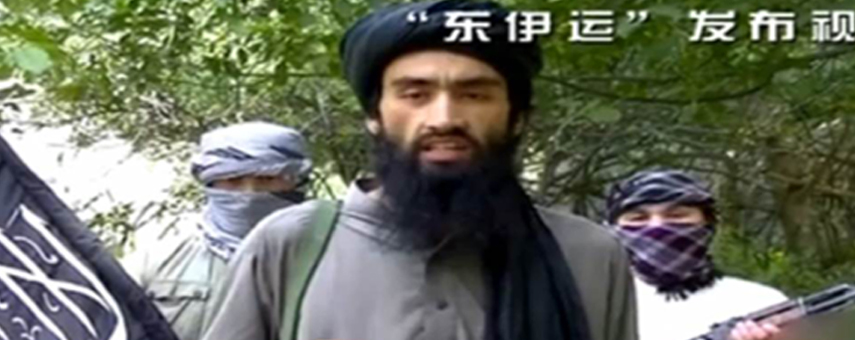
The economic giant China currently faces mounting threat from the Islamist East Turkistan Islamic Movement (ETIM) militant group in its north-western Xinjiang province, the Uyghur Muslim majority autonomous region. Following a crackdown by Chinese authorities in the 90s the leaders of the group fled to Afghanistan where Taliban regime provided them shelter. After the ouster of Taliban regime in December 2001 in the wake of the US-led invasion the ETIM fighters retreated into Pakistan’s semi-autonomous Federally Administered Tribal Areas (FATA) bordering Afghanistan. Ever since ETIM increasingly became influenced by al-Qaeda’s philosophy of global Jihad. The first issue of ‘Resurgence’, a new magazine launched by Al-Qaida in Subcontinent (AQIS) also reflects this close nexus between ETIM and al-Qaida. The organization spells out ten reasons to support its ‘war’ against China.
Uyghur Militancy: Background
Before explaining the ten points a brief background on the evolution of ETIM may not be out of place.
ETIM was founded in 90s by Hasan Mahsum, who was killed by Pakistani troops in 2003 in FATAs Waziristan region. ETIM seeks an independent state called East Turkestan that would cover an area including parts of Turkey, Kazakhstan, Kyrgyzstan, Uzbekistan, Pakistan, Afghanistan, and the Xinjiang Uyghur Autonomous Region (XUAR).
Mahsum’s successor Abdul Haq was also a member of Al-Qaida’s Shura Council in 2005[1], who too was killed in a US drone strike in North Waziristan in 2010. Abdul Shakoor al-Turkistani succeeded Haq and led the organization until a US drone strike took him out in 2012. Abdullah Mansoor has been since leading the organization, occasionally issuing statements on the objectives of his organization.
In an interview with Reuters news agency quoted in the magazine The Diplomat, Abdullah Mansoor called China “the enemy of all Muslims” and said that the “fight against China is our Islamic responsibility.”[2]
Interactions between Uyghur militants and globally entrenched radical groups like al-Qaida are gradually leading to a synergy in strategy and technique. Roughly 1,000 Chinese jihadists are being trained at a base in Pakistan and thousands more have joined the fighting in Syria. These fighters abroad will pose “certain risks” when they return to China.[3] Already, the increase in Uyghur-led attacks targeting civilians – such as strikes at Tiananmen Square (October 2013 Kunming railway station (March 2013) and a few other attacks in Urumqi in April and May – reflect a clear shift in ETIM’s strategy. Previous attacks had largely targeted police or other security forces in the Xinjiang region but now they are increasingly targeting public places and civilians. This change in strategy has not only sent shockwaves across China but also caused unusual alarm within the Chinese security apparatus.
The group and its ties to Muslim fundamentalist organizations have compounded Chinese concerns about the rising threat of terrorism within the country as its restive western regions faced a spate of terrorist attacks in 2014.
Al-Qaida’s Desires:
The ETIM has been carrying out its activities under the banner of al-Qaeda for more than a decade, yet it has now openly turned its focus on the Uyghur autonomous region, explicitly explained in ‘Resurgence’, the first issue of AQIS’s latest publication. In an article titled “Did you know? 10 Facts about East Turkistan, the group underlines its shift in strategy to include China in its future operations as well apart from US and its allies.
“Historically East Turkistan has never been part of China. It is one of the territories colonized by the Han Chinese. It lies beyond the Great Wall, which was built to defend China from invasions, and west of the Jade Gate, which is described by most historical sources as marking the western limits of China. Naming the region Xinjiang/Sinkiang (New Dominion) does not change this historical reality”.[4]
The al-Qaida’s propaganda arm further elaborated the cause by maintaining;
“In the last two millennia, East Turkistan has remained independent of China for more than 1800 years. In the last 1000 years of its Islamic history, it has remained independent for 763 years, while 237 years have been spent under Chinese occupation at various intervals. In 1949, 93 percent of the population of East Turkistan was Uyghur (Turk Muslims), while 7 percent was Chinese. Today, as a result of six decades of forced displacement of the native population and the settlement of Han Chinese in their place, almost 45 percent of the population of East Turkistan is Chinese”.[5]
Furthermore, ETIM accuses China of polluting the environment of Xinjiang region by “conducting nuclear tests in the region” and “not allowing Muslims to perform their religious duties” and maintaining “a million strong security force in the region for committing brutalities against the Muslim populace.” Though al-Qaida did not declare open war on China, yet the articles in ‘Resurgence’ point to a strategic shift in ETIM’s view on China, which it says is perpetrating atrocities against Muslims in Xinjiang.
Pakistan’s Role:
ETIM is also a potential though officially undeclared source of friction between China and Pakistan. Pakistani and Chinese leaders often talk about this friendship being “higher than Himalayas and sweeter than honey”, yet Pakistan’s mountainous tribal regions are serving as a shelter for the ETIM. Privately, Chinese officials have often conveyed their concerns on the presence of ETIM in the border regions to Pakistani officials who meanwhile have publically talked off zero tolerance for all shades of militants including those of ETIM.
Chinese authorities had sent messages separately to the prime minister and army chief asking Pakistan to take action against ETIM militants hiding in North Waziristan. In a late May 2014 meeting in Shanghai, Pakistani president Mamnoon Hussain and Chinese president Xi Jinping agreed to “strengthen cooperation in counter-terrorism efforts”. Hussain acknowledged China’s concerns in particular about ETIM and called the group a “common enemy” of both China and Pakistan.
In a recent interview Mushahid Hussain Syed, head of the Defense Committee of the Pakistani Senate and chair of the Pakistan China Institute said that pressure from China played a role in the ongoing military operation in North Waziristan. Meanwhile, the government of Pakistan is determined in its resolve to fight terrorism and secure both China-Pakistan interests in the region.
Pakistan Army is conducting military operation ‘Zarb-e-Azb’ (smash of Prophet’s sword), launched on 15th June, to flush out the terrorist from FATA, but the porous border between Afghanistan and Pakistan, fragile security conditions in Afghanistan and rising religious radicalism in Pakistan are some of the factors that facilitate the cross border movement of local and foreign militants, thus making it difficult for the security forces to root-out the terrorist infrastructure completely.
We are not putting a time frame to this operation because of its importance to the interests of Pakistan as well those of our friendly countries like Afghanistan and China, Pakistan Army spokesperson Major General Asim Bajwa told CRSS recently.
ETIM is currently believed to be operating alongside Tehreek-e-Taliban Pakistan (TTP) an al-Qaida affiliate, participating in planning and execution of terrorist plots against China’s vital interests within and out of Pakistan. Abdullah Mansoor the group’s current leader issued a statement from an undisclosed location in Pakistan after the October, 2013 Beijing’s Tiananmen Square attack;
“O Chinese unbelievers, know that you have been fooling East Turkistan for the last sixty years, but now they have awakened,”[6]
Threat Perception:
A strategic perspective is required to ascertain the nature of threats from ETIM and al-Qaeda in future. Rather than focusing on conventional terror plots, al-Qaeda seems to be shifting its strategy as envisioned by its leaders in ‘Resurgence’ to use the trade routes in seas to hit at the economic front of its enemies. As far as China is concerned its trade can be greatly affected if its interests are attacked in Strait of Malacca or the future planned economic corridor passing through Pakistan, linking Gwadar port in Balochistan province to China.
In terms of the sheer volume of trade however, the Strait of Malacca stands out as one of the most significant sea lanes in the world. Situated between the Malay Peninsula and Indonesia, the Strait is the shortest route Between the Indian Ocean and the Pacific. It links the economies of the Persian Gulf region and India with China, Japan, Indonesia and the Pacific Rim. Every year, some 50,000 vessels carrying one quarter of the world’s traded goods pass through this 805 km long water way. More than 15 million barrels of oil/day passed through the Strait during 2011.[7]
According to the International Maritime Bureau, the Malacca Strait is the world’s most pirate struck region. For insurance purposes, it is considered a high risk area. After this brief overview of the world’s most critical sea lanes, one cannot fail to appreciate the strategic opportunity that geography presents for the Mujahideen.[8]
“Even if a single super tanker were to be attacked in one of the chokepoints or hijacked and scuttled in one of these narrow sea lanes, the consequences would be phenomenal. A coordinated effort to disrupt enemy shipping in the future in all of these regions would not only hurt the enemy economically, but also stretch their resources further in this global war. It is worth noting that the damage caused to the global economy due to piracy (loss of ships, cargo and insurance payments) amounts to some 16 billion dollars annually”.[9]
Conclusion:
AQIS described by many analysts is formed to broaden its scope to East Asia. To counter the threat from ETIM and AQIS both China and Pakistan have to cooperate in intelligence sharing, China’s support to people of Pakistan in energy sector and in building infrastructure like ways and means can play a crucial role for cementing the relations with already friendly population of Pakistan. Moreover, China would have to shun practices like banning fasting in the holy month of Ramadan, ban on offering Friday prayers and other religious rituals in Xinjiang province; as such activities hurt the sentiments of Muslims and can cause adverse effects in the fight against terrorism.
Abbas Ahmad, CRSS Research Fellow
[1] QE.E.88.02. Eastern Turkistan Islamic Movement, “Security Council Committee pursuant to resolutions
1267 (1999) and 1989 (2011) concerning Al-Qaida and associated individuals and entities, April 7, 2011 http://www.un.org/sc/committees/1267/NSQE08802E.shtml (accessed October 23, 2014)
[2] Shannon Tiezzi, “Chinese Involvement in Global Jihad, The Diplomat, June 25, 2014 http://thediplomat.com/2014/06/chinese-involvement-in-global-jihad/ (accessed October 23, 2014)
[3] Teizi, The Diplomat
[4] Did you know? 10 facts about East Turkistan, Resurgence, issue 01, Fall 2014
[5] Ibid
[6] Jonathan Kaiman, “Islamist group claims responsibility for attack on China’s Tiananmen Square, The Guardian, November 25, 2013 http://www.theguardian.com/world/2013/nov/25/islamist-china-tiananmen-beijing-attack (accessed N0vember 6, 2014)
[7] Hamza Khalid, “On Targeting the Achilles Heels of Western Economies, Resurgence, Issue 01, Fall 2014
[8] Ibid
[9] Ibid