



Many say that the two most important elements that contribute to a country’s economy are social and economic security.
Unfortunately for Pakistan, the past decade has seen dire circumstances in both these areas. Where terrorism and extremism has claimed countless lives, the fragile economy has cost countless jobs and investment prospects.
Pakistan’s economic progress has been hampered by a severe energy crisis and shortfall, which results in hours of power outages throughout the country. The energy crisis has literally crippled the overall economy, directly affecting businesses and industries.
In some instances, the militant outfits – benefiting from this crisis – have multiplied the woes for the government by attacking main power lines. In one such instance, a power line in Balochistan was blown up by militants in January, leaving 80 percent of the country without power for hours.
It is because of this crisis that Pakistan’s textile industry, one of the major contributors to the country’s exports, recently reported a 16 percent fall in revenues, prompting the government to take serious notice.
Pakistan’s current energy shortfall sometimes results in daily power outages of 18 and 12 hours in rural and urban areas, respectively.
One of the major shortcomings of Pakistan’s energy sector is the use of thermal energy for power generation, carried out mostly by independent power producers (IPPs).
Because of fluctuating international oil prices, import barriers and other complications, along with delayed payments by major public and private institutions, the phenomenon of circular debt keeps on prevailing in the system.
It is due to circular debt that governments, both in the past and present, have had to interfere time and again in order to bail out various state institutions and IPPs in order to keep the power generation machinery going.
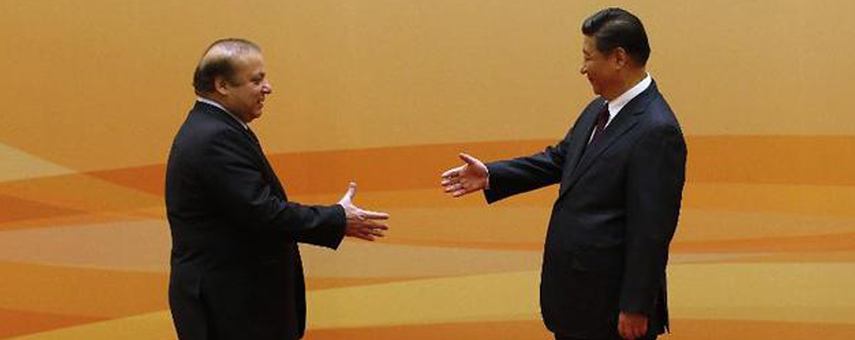
It came as a relief for Prime Minister Nawaz Sharif when Chinese President Xi Jinping on his recent state visit signed and announced various energy projects worth billions to help Pakistan overcome its energy crisis. These investments range from hydropower to clean-energy projects.
Moody’s Investors Service also recently claimed that Chinese investments in the China-Pakistan Economic Corridor would not only stimulate investment in Pakistan, but also help ease its energy crisis.
One of the most fascinating prospects of Chinese investment, from the Pakistani perspective, is the establishment of special economic zones in the economic corridor, along with development of energy projects ranging from wind and coal to hydropower plants.
These projects could help inject a mammoth 10,000 megawatts into Pakistan’s energy system, which would be more than the current national shortfall.
If everything goes to plan, these projects could start generating power by the end of 2017, which, in the current circumstances, seems a reasonable time period.
Apart from future investments, Pakistan is also importing 70 megawatts of electricity from Iran, mainly for the all-important Gwadar region, along with plans to increase these imports to 1,000 megawatts.
But even with the foreseeable positives of Chinese investment and the current arrangement with Iran, Pakistan needs to consider several factors in the short run if it is to get over its energy woes.
First and foremost, as Pakistan generates most of its electricity from hydropower plants, it is of utmost significance that all major dams go through overhauls and repairs to ensure optimum production. Tarbela and Mangla, two major dams in the country, are not working at their optimal efficiency because of outdated machinery.
Second, Pakistan’s focus for the long run, like many developing countries, should be clean energy, despite the costs involved. One of the positives in this regard was the inauguration of a major solar plant by Sharif that has started contributing 100 megawatts of electricity to the system.
Third, the government should be willing to use a heavy hand against electricity theft and line losses. According to one estimate, a total of 40 percent of Pakistan’s energy production is wasted in line losses and electricity theft.
This number was merely 17 percent in 2011 according to the World Bank, indicating there has been a serious spike since then.
Finally, the government needs to launch active advocacy campaigns to create awareness among the masses that not only has the energy crisis rolled over from previous governments, but necessary measures are being carried out to overcome the ongoing crisis. This could help alleviate the increasing number of riots and protests in various parts of the country.
Economic and social stability are critical, but there must be driven by internal political will by Farooq Yousaf, a research analyst at CRSS pursuing his PhD studies in Australia. Articles published in Global Times, May 17, 2015.