



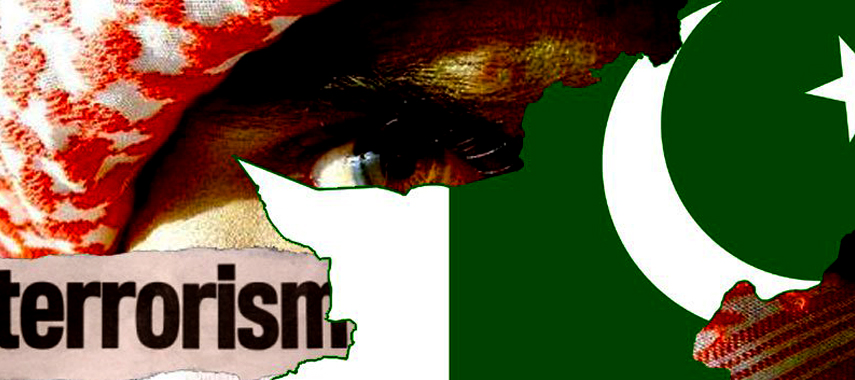
9/11 has forever distorted the perspective of the West towards Muslims worldwide. Robert Fisk’s article in The Independent from March 8, 2015 is proof, and this is the rebuttal.
Have pen, will write – whenever a western or Indian journalist finds himself short of material or ideas there is always Pakistan. ‘Being Coy Doesn’t Change the Reality of Modern Pakistan — a Corrupt, Politically Savage, and Physically Broken Society’, by Robert Fisk in The Independent of 8th March is a case in point. It matters little how much they may know, let aside understand about the country. The picture they paint is almost invariably dark and depressing. Facts and figures are mostly cherry-picked and misquoted to serve their purpose.
To quote Dr. Paul Joseph Goebbels, Hitler’s Minister of Propaganda, ‘If you tell a lie big enough and keep repeating it people will eventually come to believe it.’ Sadly, there is much truth in the statement and this is exactly what is being done to Pakistan. The reasons for it are not difficult to imagine, given the prevailing geo-political environment.
To understand a country, apart from everything else, one has to really know the ethos of its people. This is not always easy for someone who is not a part of the culture. The inability to understand often leads to poor judgement and miscalculation even where the intentions are not dubious.
It is not unusual to fall victim to one’s own propaganda. A joint US National Intelligence Council and CIA report released in 2000 predicted: “by year 2015 Pakistan would be a failed state, ripe with civil war, bloodshed, inter-provincial rivalries and a struggle for control of its nuclear weapons and complete Talibanisation” (The Times of India, 13th February, 2005). Well, 2015 is here but the dire prediction is still nowhere on the horizon.
Nonetheless the misconceptions about Pakistan created through misinformation have become deeply embedded in the public mind. There is conceptual and practical confusion that some people think has been fostered deliberately. Human beings tend to sub-consciously erect a defensive wall of cognitive dissonance in such situations that is not easily overcome.
Not Intolerant
Take for instance the widespread belief that people in Pakistan are bigoted and intolerant. In reality they happen to be anything but that.
According to a survey published in The Washington Post on 15th May 2013, Pakistanis are more tolerant than people in almost all the countries in Europe, including France, Germany and Holland. Only Norway, Sweden and Britain have a higher rating. About 6.5% of Pakistanis said they would not like to have a neighbour from a different race. In India, on the other hand, more than 40 % of the people would apparently not like it.
Not Violent
Pakistanis are also not violent. The rate of deaths due to violence per 100,000 people in Pakistan is still less than that in the US (5.0 as against 6.5). It is only a fraction of what it is in almost all of Africa, Latin America (including Mexico) and also Russia. It is about the same as for India and Israel but less than in most of Eastern Europe.
The incidents of rape in Pakistan are among the lowest in the world – less than one thousand a year for a population of 180 million. France on the other hand, with one-third the population of Pakistan, averages more than 10,000 cases a year. President Carter, in his recent book ‘A Call to Action: Women, Religion, Power and Politics’ claims some 12,000 women in the US military alone were raped in 2012. Yet, ironically, human rights organizations in the West chose a rape victim from Pakistan and paraded her around the world to symbolize the plight of women in general.
Karachi is often labeled in the western media as the ‘most dangerous city in the world’ (The Financial Times, 28th June, 2014). If you were to do a Google search of the top fifty most dangerous cities in the world you will not find Karachi’s name on the list. The rate of violent crime in Detroit, Michigan is seven times greater than that in Lahore, Pakistan’s second largest city.
Terrorism
Much is also made of religious extremism and incidents of terrorism in the country. These are not peculiar to Pakistan or the Muslims. Yet, the word ‘terrorism’ has been made more or less synonymous with Muslims which has no basis in fact. According to the list compiled by the FBI for the twenty-five-year period between 1980 and 2005, Muslims were involved in only six per cent of all the terrorist acts committed in the US as against the Jews in seven per cent and Latinos in forty-two per cent.
The European Union’s Terrorism Situation and Trend Report for 2010 indicates that out of a total of 294 ‘failed, foiled or successfully executed’ terrorist attacks in Europe in 2009 only one was by Muslim extremists. As against two by the group opposed to the importation of wines from North Africa (article by Dan Gardener in The Ottawa Citizen, January 5, 2011).
Extremists are found in any religion be it Christianity, Judaism or Hinduism. The same is true for acts of terrorism but the two, that is, religious extremism and terrorism are not synonymous (The Battle for God, by Karen Armstrong). IRA in Northern Ireland, ETA in Spain, Shining Path Guerillas in South America, Naxallites, Nagas, ULFA, NDFB, the Khalistan Army to name a few in India, Tamil Tigers in Sri Lanka, FLQ in Canada – are not Muslims. (Dying to Win, by Robert Pape, University of Chicago).
The threat posed to the West by Muslim extremists may well have been exaggerated and even misplaced according to Sir Richard Dearlove who had been head of Britain’s MI6. He thinks the 9/11 attacks put a ‘distortion’ towards Islamic extremism in the public consciousness which has remained ever since. According to him the West should be concentrating on Russia and China instead.
There was no terrorism in Pakistan to speak of until General Musharraf, under pressure from the US, broke longstanding agreements with the tribesmen and sent troops into Waziristan to hunt down Taliban escaping from Afghanistan. The force used was excessive, inappropriate and unlawful. It is the basic cause of terrorism in Pakistan today (The Thistle and the Drone, by Akbar S. Ahmed).
Taking advantage of the situation, some other actors have jumped into the fray using Afghanistan as their base. India, for instance, has about one million people of Indian origin living in the United Kingdom and she needs only two consulates to look after their needs. On the other hand in Afghanistan, where there are only 3,600 or so Indian nationals, she now maintains seven consulates, most of these in towns along Pakistan’s border. They are widely believed to be involved in supporting terrorism inside Pakistan.
Similarly, CIA memos reveal that in 2007 and 2008 Israeli agents posed as American spies and recruited men to work for the terrorist outfit Jundallah in Pakistan to carry out false flag operations against Iran (‘False Flag’, by Mark Perry, foreignpolicy.com, January 13, 2012).
There are always problems no matter which country we look at. In Pakistan’s case, as with all the rest of the developing world, these relate to indifferent administration and management. The future of Pakistan is not as gloomy as it may appear to some outsiders. The people are highly resilient and respond to challenges in resourceful and positive ways. They have been through much more difficult situations before and survived time and again. The present is no different no matter what Pakistan’s distracters and doomsayers may write or wish.
The writer, K. Hussan Zia, is author of ‘Muslims and the West: A Muslim Perspective’ and ‘Pakistan: Roots, Perspective and Genesis’.