


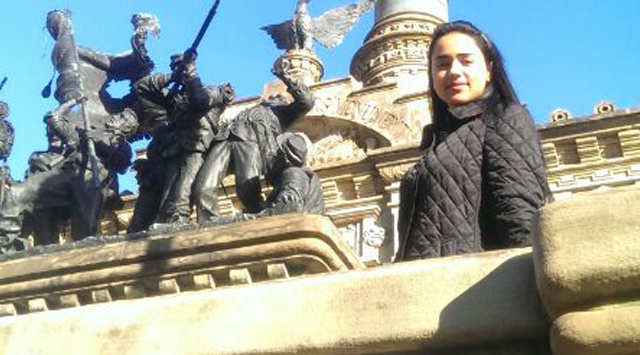

It was such a hope reviving experience to meet people who had gone through or going through many hardships and yet, have not given up on themselves and their communities. And despite the jet lag, I could not wait to share this great feeling and much more that I had learned and experienced during the past three weeks of my life in the US.
I got the opportunity to visit United States of America (US) under the International Visitors Leadership program (IVLP) by the U.S State Department. The theme of the program was ‘NGOs and Civic Activism’. The idea behind the program was to introduce us, all working for different nonprofit organizations in different cities of Pakistan, to the best practices of NGO management and to show how the trinity of Government, NGOs and civil society interfaces successfully to bring about social change. Therefore, meetings were scheduled with different nonprofit, fundraising and relevant government organizations, working for different causes (including women rights, domestic violence, child abuse, labor rights, underprivileged children, social entrepreneurism, surviving through poetry, philanthropy, economic self-sufficiency and food banks) in different cities of different states including the capital Washington DC, Michigan, Ohio, California and Georgia.
The program provided an exciting exposure to diverse aspects of life in U.S. all the way from North to South. It uncovered to me a society of tolerance and respect for individual rights, regardless of ethnic, race, religion, color of the skin or financial background, attained after a long history of hardship and consistency. I was pleased to meet diverse segments of the American society (from top to low) and was amazed to learn on how differently and willingly the citizens are contributing towards the society. I was able to learn and share my experiences on a wide range of techniques including individual giving, e-giving, endowments, events and social enterprises. In addition, the program gave me an opportunity to examine the impact of traditional and new methods of fundraising, grassroots mobilization and strategic collaboration through community service and volunteerism. I learnt so much more from seven other participants of the program, of Pakistani origins, living in different parts of Pakistan, on how and what social causes they are working for. Agreeing and disagreeing on different matters was, for sure, a healthy and interesting part. In this regard, the program was not only a magnificent platform for international but national exposure too.
There are about 1.5million registered NGOs in US and they provide employment to 10 percent of the US workforce. Furthermore, these organizations try to work harmoniously with the civil society by both educating it and also drawing its resources for its mission. These organizations fully realize the significance of a healthy relationship with the government in their struggle for providing solutions to the problems faced by the society and to play their due roles of watchdogs.
The program started from the capital, which was founded on July 16, 1760 and established by the Constitution of the United States to serve as the nation capital. The capital building, the White House, famous memorials and monuments spread out all around the city giving a distinctive character to the Capital as both a national and local city. While I would walk to different sites, I grasped on how diverse the city is in terms of its population. Few locals shared on how the locals had less employment opportunities because of more competent people wanting to move and work in the Capital.
Our briefings in Washington DC gave us an insight on federalism and how actively federal government promotes volunteerism and civic engagement among the U.S. citizens especially youth. They provided an understanding on how US has been able to create a truly Federal Democracy and also the philosophy behind it. Further, it was interesting to learn on how people could engage in volunteerism for different reasons and motivations. For instance, State of Utah is on the top of list for volunteer states in US because of the minority, ¿Mormons–, and how their faith asks them to give and offer services.
While visiting a few museums, I found the National Air and Space Museum the most fascinating for its separate display sections for kids, providing them with colorful and experimenting environment by enabling them to use, play and experiment different relevant scientific stuff. Museum of the same sort in Pakistan could help educate children on history and science in ways that would enable an active participation of children with their surroundings.
In Kalamazoo, most organizations I was exposed to are enthusiastically engaged in civic engagement through philanthropic giving. It was motivating to visit organizations and individuals who are contributing actively to improve the community by fostering effective volunteerism and strengthen organizations working for similar cause. One of the amazing learning was the introduction of interfaith strategy for advocacy and action in the community. This strategy, I believe, if applied to Pakistani society, where segregation on the basis of faith and believes is becoming a worrisome reality, could change a lot and help bring harmony.
A meeting with an interfaith committee in San Diego, working for worker justice was impressive too. This sets a brilliant illustration on working for individual rights and developing a more tolerant society. The Committee constituted representatives and scholars from 11 different religions, all working for the common cause ¿harmony–. Yet again I would say, similar pattern if implemented in Pakistan would greatly contribute towards improved social structure of Pakistani society which at the moment is torn apart between various sects of the same religion and faith and belief have taken deadly consequences. Gaining support and engaging religious representatives, from majority and minority groups, would be an excellent idea and prove a strong base for building a tolerant society in order to prioritize shared beliefs and opinions and ignoring the differences.
Travelling throughout the program, from Washington DC to Kalamazoo, Michigan to Cleveland, Ohio to San Diego, California to Atlanta, Georgia, the thing that amazed me was the super active sense of engagement and volunteerism among people. To my understanding, it is the willingness and engaging to improve circumstances that make a society a better and safe place. I was also impressed by the sense of ownership the citizens of US have for their communities and country in general which motivates them to contribute and serve for the social causes regardless of their educational and economic backgrounds, which I have to admit, is not an easy task.
I consider myself privileged to be a part of such a gathering of people in a nation which surely understands what human potential is all about and how institutions need to be organized to make the best of time and resources. The program not only enhanced my knowledge but surely my skills too and I am very hopeful about using this rich experience in better performing my duties in professional as well as personal life. I hope to continue to play my part and I hope we all do the same, in order to achieve our common goal, that is, a prosperous and peaceful world.
Written by Shumaila Ishfaq, Research Fellow at CRSS.
She can be reached at Shumaila@crss.pk