



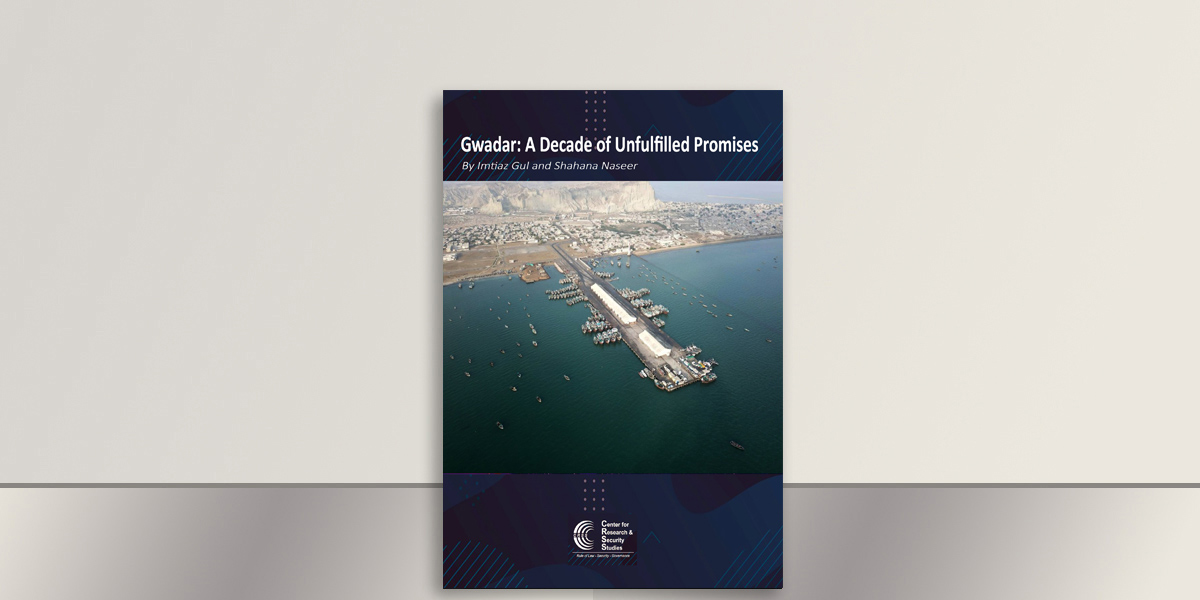
By Imtiaz Gul and Shahana Naseer
Introduction: Vision, Investment, and the Question of Credibility
Gwadar occupies a strategically significant geographic position at the intersection of South Asia, Central Asia, the Middle East, and western China. Its deep-sea port and associated infrastructure projects form a central component of Pakistan’s long-term economic vision, particularly within the framework of the China–Pakistan Economic Corridor (CPEC)[1]. Gwadar is often described as the “jewel in CPEC’s crown.”
Over the past decade, Gwadar has hosted numerous high-profile conferences, investment forums, and development exhibitions designed to showcase its potential as a regional trade and logistics hub. One such event was the investment expo titled “Pathways to a Modern Coastal City,[2]” organized by provincial authorities in January 2026.
While such events aim to attract investors and tourists, they raise two critical policy questions:
What tangible outcomes have these high-profile gatherings produced for local stakeholders?
To what extent do conference narratives align with Gwadar’s socioeconomic realities?
These questions are not merely academic. They lie at the heart of investor confidence, social stability, and the long-term credibility of development policy. In strategically sensitive and economically fragile regions, development cannot be sustained through rhetoric alone. It must be grounded in functional infrastructure, institutional credibility, local participation, and operational security.
This paper examines Gwadar through several interconnected dimensions: the effectiveness of investment conferences, local grievances—particularly within the fisheries sector—socioeconomic conditions, perspectives of Chinese investors, official representations of Gwadar’s investment climate, and the structural feasibility of attracting sustained investment.
Do High-Profile Events Produce Tangible Outcomes?
Investment forums and development expos serve an important signaling function. They demonstrate political commitment, create networking opportunities, and help align stakeholders around shared development goals. However, their effectiveness ultimately depends on whether they generate measurable outcomes such as investment flows, industrial development, employment creation, and infrastructure improvements.
In Gwadar, evidence of such outcomes remains limited. Despite repeated announcements over more than a decade, industrial activity is minimal, port utilization remains low, and employment generated by port-related infrastructure is modest.
The January 2026 expo[3] again highlighted Gwadar’s long-term strategic potential and projected development trajectories extending to 2040. While forward-looking planning is important, such narratives cannot substitute for addressing immediate structural constraints such as water shortages, electricity instability, regulatory uncertainty, and administrative inefficiencies.
For local communities, the primary concern is not Gwadar’s strategic future but its present realities. Many residents see little direct benefit from repeated conferences and announcements. Development initiatives are judged not by symbolic value but by their impact on livelihoods, employment opportunities, and access to essential services.
Despite Gwadar’s prominence in national discourse, citizens continue to struggle with basic services including healthcare, education, clean drinking water, reliable electricity, and employment opportunities. The contrast between visible development along major corridors and conditions in residential neighborhoods has reinforced perceptions of uneven and exclusionary development.
Another source of dissatisfaction is the limited participation of local stakeholders in conferences discussing Gwadar’s future. When such forums are dominated by civil and military elites from Islamabad and Rawalpindi while local voices remain absent, they risk becoming echo chambers of official optimism. The absence of meaningful discussion on local grievances weakens the credibility of these gatherings among the communities most directly affected.
The policy lesson is clear: conferences alone cannot generate development. They must be integrated into a broader framework of implementation, accountability, and measurable progress.
Local Perspectives and Livelihood Concerns
Many residents believe that major development initiatives have not adequately incorporated local interests. Projects such as the Gwadar East Bay Expressway, the Pak-China Technical and Vocational Training Institute, the port breakwater, and the New Gwadar International Airport are frequently cited as examples.
While these projects represent significant investments, their benefits have not always reached local communities. For instance, construction of the East Bay Expressway [4]required the relocation of several residents, disrupting traditional livelihoods. At the same time, local workers fear that job opportunities may be captured by skilled labor from outside the region before local training initiatives can produce sufficient qualified workers.
These perceptions highlight a critical issue in development policy: projects implemented without visible local benefit can generate resentment even when designed for broader economic gains.
Fisheries: The Backbone of the Local Economy
Fishing remains the backbone of Gwadar’s local economy. It supports fishermen as well as traders, transport operators, retailers, and other ancillary services. Seasonal fishing cycles influence household income and overall economic stability in the city.
However, the sector faces several structural challenges.
One major concern is the presence of large, often unlicensed trawlers operating in local waters. These vessels frequently encroach on traditional fishing grounds and harvest species such as tuna and mushka [5]in large quantities. According to local fishermen and fisheries officials, such practices have contributed to declining fish stocks and reduced local catch volumes.
Infrastructure development has also altered access to fishing areas. Port expansion and coastal construction projects have sometimes required fishermen to travel longer distances or adjust traditional operating patterns.
Beyond economic pressures, many fishermen feel excluded from decision-making processes affecting their livelihoods. Development projects are more likely to succeed when local populations perceive themselves as active stakeholders rather than passive observers.
Debates Over Offshore Fish Trade
Some commentators have claimed that large quantities of fish—valued at between USD 300–400 million annually[6]—are sold offshore to foreign buyers before vessels return to Gwadar.
Local fishermen and fisheries officials strongly reject this claim. According to the Fisheries Department, registered vessels return to local jetties where catches are sold through documented channels to domestic markets and processing facilities. Officials also note that while limited cross-border trade with Iranian buyers occurs, it remains relatively small.
Local stakeholders argue that the real challenge facing the fisheries sector is illegal trawling, not offshore sales.
From a policy perspective, integrating fisheries development into Gwadar’s broader economic strategy is essential. Establishing fish processing facilities, cold storage infrastructure, and export logistics could enhance value addition while strengthening local participation in the economy.
Socioeconomic Conditions
Despite its strategic significance, Gwadar’s economy remains narrow and fragile. Economic activity is largely concentrated in fisheries, small retail businesses, and limited cross-border trade. Industrial development—originally expected to drive economic transformation—remains minimal.
Several structural factors explain this outcome.
Infrastructure Constraints
Reliable electricity remains a major challenge. Power fluctuations[7] disrupt industrial operations and damage equipment. Water shortages[8] further constrain both urban expansion and industrial activity.
Transport connectivity has improved in recent years, yet logistical integration remains incomplete. Limited cargo throughput and the absence of rail connectivity restrict Gwadar’s ability to function as a major trade hub.
Institutional and Governance Challenges
Investors require clear regulatory frameworks, transparent land allocation systems, and predictable administrative procedures. Uncertainty in these areas increases perceived risk and undermines investor confidence.
Institutional credibility plays a decisive role in investment decisions. Even when infrastructure exists, unclear governance structures can discourage long-term commitments.
Cost of Living and Economic Imbalances
Gwadar’s cost of living remains relatively high compared to local income levels. Many basic goods are transported from outside the district, raising household expenses and limiting purchasing power.
Security restrictions also influence economic activity. Some residents argue that extensive checkpoints and movement restrictions create an environment that discourages trade and investment. Investors typically prefer locations where operational mobility and commercial activity face fewer constraints.
Perspectives of Chinese Investors
Chinese companies involved in CPEC projects acknowledge Gwadar’s long-term strategic importance but frequently express concerns about operational conditions.
Unreliable electricity supply is a major complaint. Power fluctuations—particularly involving the regional utility QESCO[9]—have damaged industrial machinery and disrupted production.
Chinese firms also highlight bureaucratic delays, regulatory uncertainty, and administrative inefficiencies as obstacles to investment.
The proposed 300-megawatt coal-based power project[10] illustrates some of these tensions. Although land was allocated and preparatory work initiated, concerns about employment exclusion of local workers and the project’s financial structure generated local controversy.
Representatives of Chinese companies operating in Gwadar’s Free Zone argue that development has been constrained less by investment shortages than by policy and administrative restrictions. Many believe that greater operational autonomy and regulatory clarity would accelerate progress significantly.
Official Narratives vs Investor Perceptions
Government officials consistently promote Gwadar as a long-term strategic investment destination. Such messaging is important for attracting domestic and international investors.
However, private discussions often acknowledge existing constraints. Infrastructure gaps, security concerns, regulatory uncertainty, and limited local participation continue to shape investor perceptions.
Effective communication therefore requires balancing strategic optimism with realistic assessments. Overstating readiness may generate short-term enthusiasm but risks undermining long-term credibility if expectations remain unmet.
Structural Conditions for Investment
Global experience suggests that sustainable investment typically requires four fundamental conditions:
- Reliable infrastructure
- Predictable regulatory frameworks
- Operational security
- Local economic integration
Gwadar possesses significant strategic advantages, particularly its geographic location and port infrastructure. However, weaknesses in infrastructure reliability, regulatory clarity, and local integration continue to limit its investment potential.
Development conferences and promotional events can signal intent, but investment ultimately follows operational feasibility rather than symbolic messaging.
Policy Recommendations
Gwadar’s strategic potential remains considerable. However, translating potential into reality requires recalibrating development priorities.
Key policy steps include:
- Ensuring meaningful participation of local communities in planning and implementation
• Strengthening joint Pakistan–China security arrangements while addressing root causes of instability
• Introducing transparent industrial land allocation systems
• Encouraging local entrepreneurship and participation in industrial development
• Appointing qualified and professional administrators with clear authority and accountability
• Prioritizing fisheries-based industries such as fish processing, cold storage, and marine exports.
Conclusion
Gwadar remains one of Pakistan’s most strategically important development initiatives. Its geographic location offers significant long-term advantages.
However, development cannot be sustained through vision and conferences alone. The central questions raised by recent investment events remain critical: what tangible benefits are reaching local communities, and how closely do official narratives reflect ground realities?
Gwadar’s future will depend not on the scale of its conferences but on the effectiveness of its implementation. If infrastructure reliability improves, governance strengthens, and local communities are meaningfully integrated into development processes, Gwadar can fulfill its promise as a major regional economic hub.
If these structural challenges remain unresolved, however, Gwadar risks remaining a symbol of unrealized potential rather than a truly prosperous coastal city.
_____________________________________________________________________________________________
[1] http://multimedia.scmp.com/news/china/article/One-Belt-One-Road/pakistan.html
[2] https://balochistanpulse.com/gwadar-modern-coastal-city-expo-free-zone/
[3] https://balochistanpulse.com/gwadar-modern-coastal-city-expo-free-zone/
[4] https://afpak.boell.org/en/2023/11/20/opportunities-and-concerns-gwadars-development
[5] https://file.pide.org.pk/pdf/thesis/mphil-environmental-economics-2015-abdul-wadood–assessing-the-impact-of-industrial-activities-on-the-local-fishing-community-in-gwadar.pdf
[6] These figures are based on data acquired by the field experts.
[7] https://www.dawn.com/news/1943621
[8] https://www.dawn.com/news/1947787
[9] https://tribune.com.pk/story/2533776/gwadar-still-has-no-water-and-power
[10] https://www.brecorder.com/news/40341118/gwadar-coal-fired-power-project-in-limbo-over-tariff-dispute