



Introduction
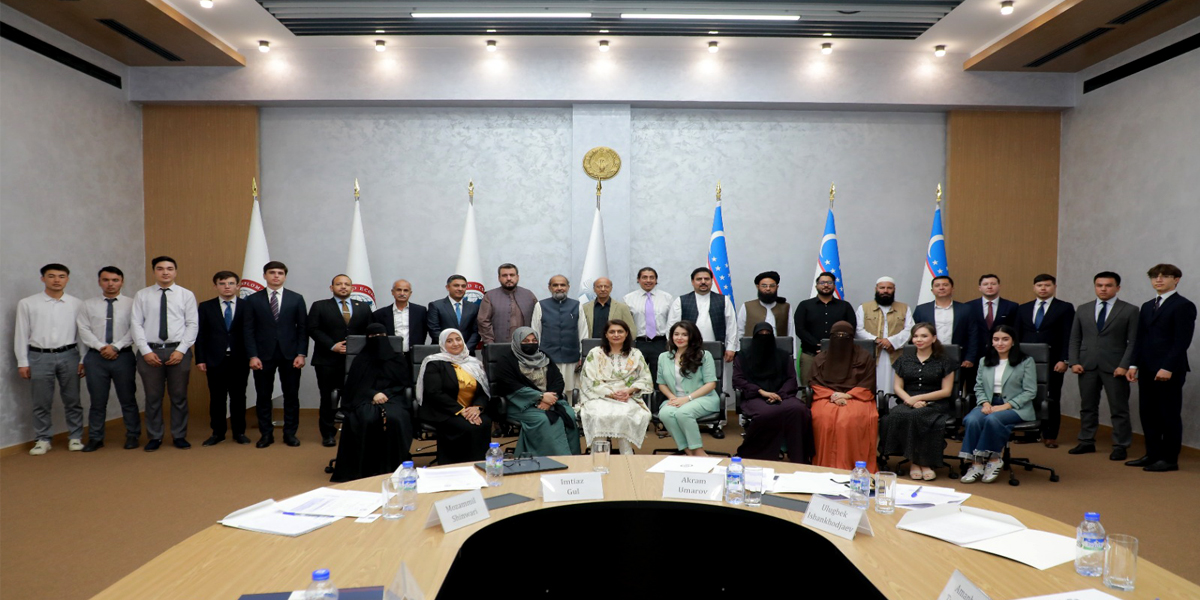
The Center for Research and Security Studies (CRSS), in collaboration with the Organization for Economic Studies and Peace (OESP), Central Asian Progress and Integration Forum (CAPIF) and the Institute for Advanced International Studies (IAIS) at the University of World Economy and Diplomacy, convened an international roundtable titled “Building Bridges: Regional Dialogue for Peace and Development” on July 23–24 in Tashkent. The event brought together prominent academicians, analysts, policymakers, and civil society leaders from Pakistan, Afghanistan, Uzbekistan, and Egypt to explore pathways for regional cooperation, inclusive development, and cultural exchange across Central and South Asia, with Afghanistan’s stability and prosperity at the heart of the dialogue.
Against the backdrop of growing quadrilateral engagement among Pakistan, Afghanistan, Uzbekistan, and Egypt, the forum provided a platform for action-oriented discussion on coordinated approaches to shared challenges such as refugee flows, drug trafficking, terrorism, and educational exclusion, while highlighting the critical role of women’s empowerment, trade, and academic cooperation in building a peaceful future.
Participants of the roundtable put forward several actionable recommendations that, if implemented, could create significant opportunities for advancing regional prosperity and connectivity. The key suggestions from the dialogue are as follows:
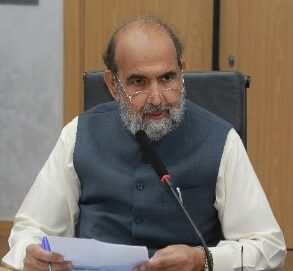
DR. QIBLA AYAZ
Dr. Qibla Ayaz initiated the discussion by reflecting on the transformative role of education, remarking that universities must be understood as more than academic institutions: they are vital bridges that connect nations, scholars, and cultures. He stressed that education is central not only to personal growth but also to building peaceful societies, and therefore, women’s education must be treated as a fundamental right. He cautioned, however, that scholars often face risks for speaking truth to power, as their views may provoke hostility from those who oppose change. Despite these dangers, he argued that scholars bear the responsibility to balance tradition with modernity and create intellectual spaces that challenge regressive narratives. He reminded participants that denying women education undermines social and economic development, and he called for collective advocacy to ensure women in Afghanistan are not left behind.
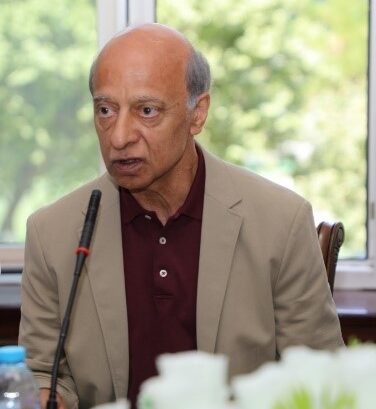
MR. IMTIAZ GUL
Mr. Imtiaz Gul, Executive Director of the Center for Research and Security Studies (CRSS), highlighted the unique role of scholars in shaping narratives and rebuilding trust across borders. He called for faith-based diplomacy that leverages shared Islamic values while remaining firm on universal rights, especially for women. He emphasized the importance of academic, scholarly, and civil society exchanges as ways to strengthen grassroots peacebuilding. He noted that countering extremist narratives requires credibility and consistency, which can only come from scholar-led initiatives grounded in justice and inclusion.
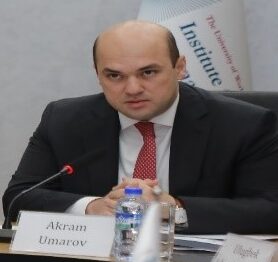
DR. AKRAM UMAROV
Dr. Akram Umarov, Director of IAIS, requested collective regional responsibility toward Afghanistan. He expressed regret that Central Asia is too often viewed as a region of conflict and poverty, and he argued that a unified approach can alter this perception. He stated that peace and economic recovery in Afghanistan are not acts of charity but strategic necessities for every neighbor. He reminded participants that instability in Afghanistan inevitably spills across borders, while stability can generate opportunities for the entire region.
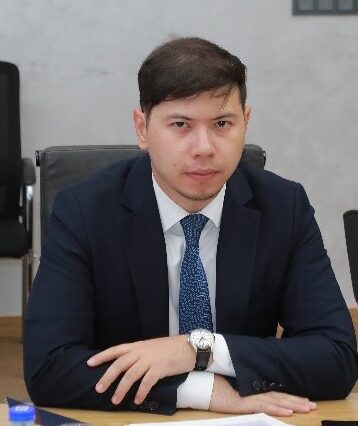
DR. ISLOMKHAN GAFAROV
Dr. Islomkhon Gafarov, Head of the Center for Afghanistan and South Asian Studies at the Institute for Advanced International Studies (IAIS), stressed that Uzbekistan has always viewed Afghanistan as part of Central Asia, with Uzbek leaders consistently including it in international discussions. He underlined Afghanistan’s importance as a land bridge to Pakistan’s Gwadar and Karachi ports, calling it a vital route for regional connectivity. At the same time, he acknowledged that most ordinary Uzbeks know little about Afghanistan or Pakistan because of weak people-to-people ties and limited media or academic exchanges. To bridge this gap, he proposed establishing joint resource centers, strengthening think tank partnerships, and promoting university exchange programs.
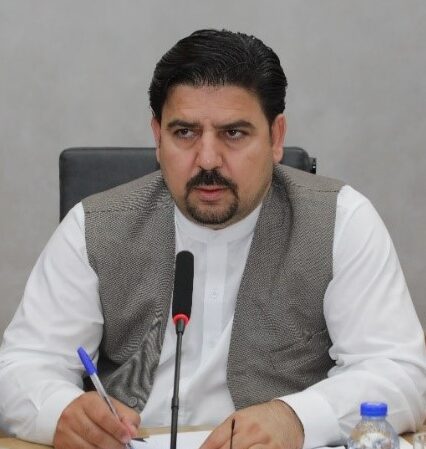
Mr. Muzammil Shinwari
Mr. Muzammil Shinwari, former Deputy Minister for Trade and Commerce, Afghanistan, and Executive Director of Organization for Economic Studies and Peace (OESP), emphasized that trade and connectivity are key drivers of peace. He highlighted regional projects like CASA-1000 and TAPI, stating that they could turn Afghanistan into a vital land bridge between Central and South Asia. He reminded participants that economic integration can create stability where politics often fails and called for practical cooperation among neighboring countries. For him, connectivity is not just about economics—it is also a peacebuilding tool that gives Afghans a real stake in regional growth.
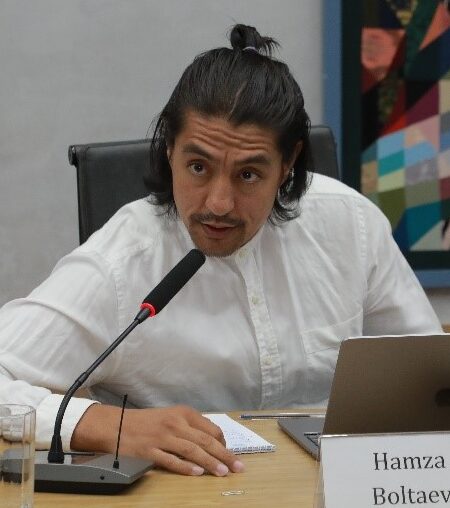
MR. HAMZA BOLTAEV
Mr. Hamza Boltaev, Senior Researcher at the Centre for Afghanistan and South Asian Studies at IAIS, highlighted the practical role trade can play in building peace. He pointed to visa-free economic zones like Termez as good examples, noting that they not only boost trade but also strengthen people-to-people ties and trust across borders. He encouraged other Central Asian countries, especially Turkmenistan and Tajikistan, to follow Uzbekistan’s example and offer similar opportunities to Afghans. At the same time, he warned that political hesitation or issues of international recognition could hold back such efforts, but stressed that the priority should be inclusive engagement. He underlined that trade corridors and open markets can serve as lifelines for Afghan communities, helping them escape isolation and poverty.
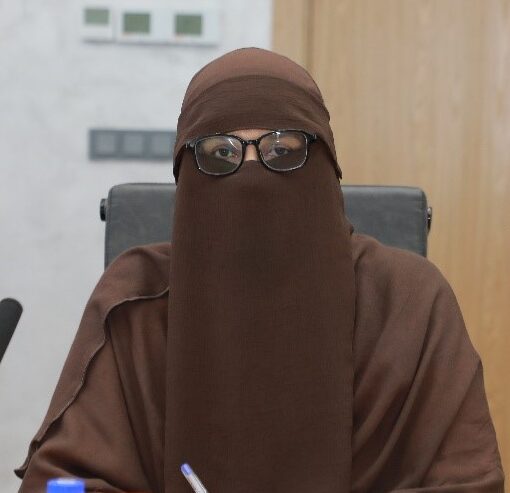
DR. FARHANA QAZI
Sharing the perspective of religious scholarship, Dr. Farhana Qazi, an Associate Professor at the University of Peshawar and religious scholar, spoke about the role of soft diplomacy grounded in shared religious and cultural values. She emphasized that the Qur’an itself offers the strongest basis for promoting unity, justice, and equality—especially for women. She called for gradual madrasa reforms to introduce more inclusive interpretations of Islam and encouraged cross-border educational exchanges that could support Afghan youth, particularly young women. While acknowledging that mistrust of the Afghan regime and its lack of recognition create obstacles, she argued that this should not stop regional actors from pushing for change. She framed women’s rights not just as a human rights issue but as a core Islamic responsibility tied to the region’s prosperity.
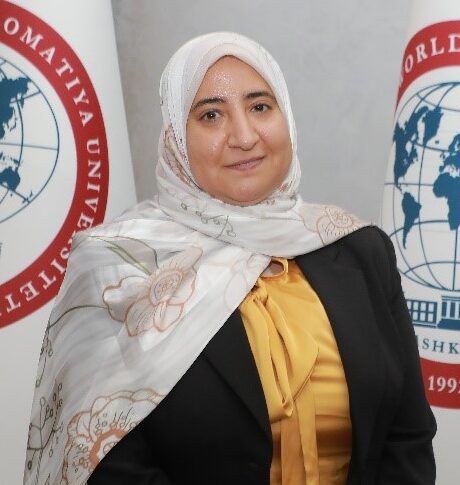
DR. ASMAA ELZIENY
Dr. Asmaa Elzieny, Researcher and Academician from Al-Azhar University, reaffirmed that, in Islam, women’s education is not just allowed but a religious duty. She explained that Al-Azhar is already offering scholarships for Afghan students, with special seats reserved for women, and expressed readiness to expand teacher training programs to strengthen local Afghan educators. She reminded participants that the Grand Imam of Al-Azhar had strongly condemned the Taliban’s ban on female education, calling it shocking, un-Islamic, and against both Sharia and the Qur’an. She also emphasized Al-Azhar’s unique role as a respected global authority in Sunni Islam, giving it the credibility to offer moderate interpretations that could help guide Afghan society. Her remarks blended religious clarity with concrete support.
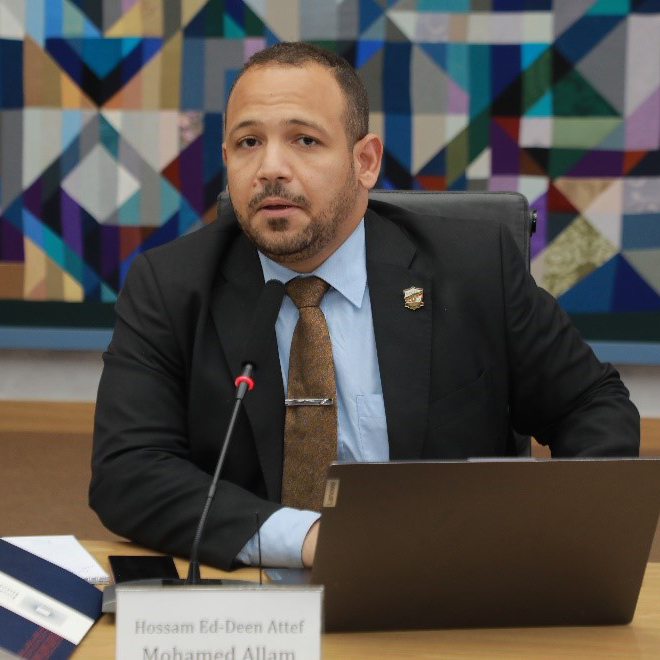
DR. HOSSAM ED-DEEN ALLAM
Dr. Hossam Ed-Deen Allam, lecturer at Al-Azhar University, suggested building a regional network of scholars to promote pluralism and women’s rights. He described Egypt’s Family House initiative as an example of how faith-based coexistence and education can strengthen societies. He proposed that such a network could issue joint statements, monitor rights violations in Afghanistan, and push for inclusive values. He also recommended drafting a regional charter on pluralism and citizenship, setting up peace hubs to coordinate support for women’s rights, and using digital platforms to spread positive narratives. He reminded participants that true peace is not just the absence of war, but also the presence of justice, protection for the vulnerable, and opportunities for women and minorities.
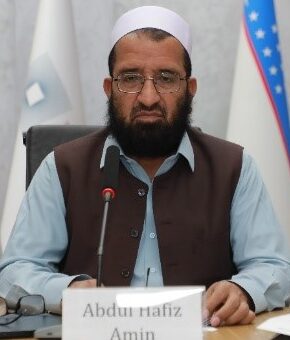
MR. ABDUL HAFEEZ AMIN
Mr. Abdul Hafeez Amin, a renowned Kabul-based Religious Scholar, reflected on the long-term impact of excluding Afghan women from education. He explained that without female professionals in health, education, and governance, Afghanistan will face a dangerous gap that could harm future generations. He called for regional scholarship programs dedicated to Afghan women and urged neighboring countries to strengthen cooperation in infrastructure, trade, and security so that Afghans are not left isolated. He emphasized that religious scholars have a responsibility to provide faith-based leadership that reassures communities while encouraging inclusion.
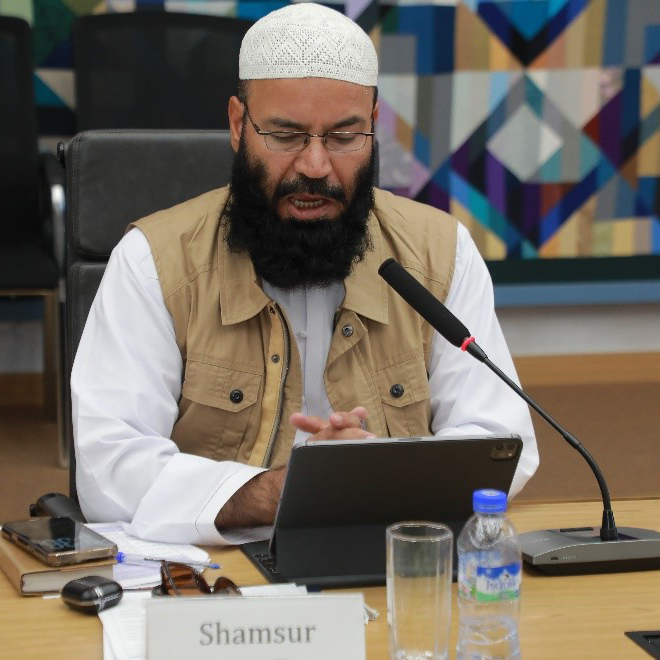
MR.SHAMS UR RAHMAN FROTAN
Mr. Shams ur Rahman Frotan, an Afghan Religious Scholar, stressed that Islamic teachings themselves offer the strongest basis for protecting women’s rights. He said scholars should actively provide both moral and scholarly backing for Afghan women, pointing to examples from other Islamic societies where women play a full role. He highlighted the need for soft engagement with the Taliban—avoiding direct confrontation but continuing to apply diplomatic pressure for women’s rights. He framed Islam not as an obstacle, but as the very foundation for women’s access to education and participation in public life.
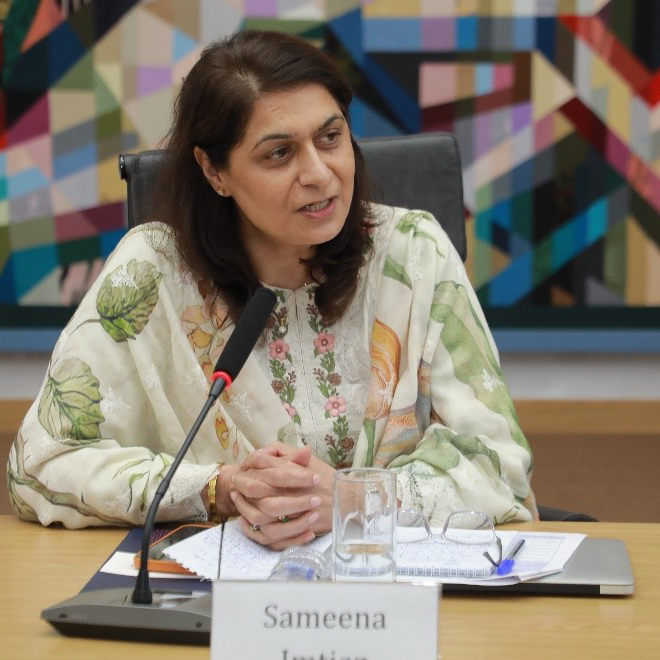
MS.SAMEENA IMTIAZ
Ms. Sameena Imtiaz, Head of Programs at CRSS, highlighted the importance of online platforms and women-to-women dialogues in advancing peace efforts. Drawing on CRSS’s long experience with dialogue initiatives, she stressed how vital women-to-women exchanges have been. She noted that Afghan women raised under extremist interpretations of Islam have been deeply marginalized, and reversing this damage could take an entire generation. She underlined the power of digital platforms to keep conversations alive across borders and to amplify Afghan women’s voices. She also argued that broader awareness of Islamic teachings that support women’s rights is essential to counter restrictive narratives.
DR. SAJID JAMIL QURESHI
Dr. Sajida Jamil Qureshi, Associate Professor at International Islamic University Islamabad, stressed that any regional engagement with the Taliban should be directly tied to women’s rights. She cited Quranic verses on justice and equality to show that women’s right to education is firmly grounded in Islam. She urged organizations like the SCO, along with civil society networks, to put pressure on the Taliban through political, media, and grassroots efforts.
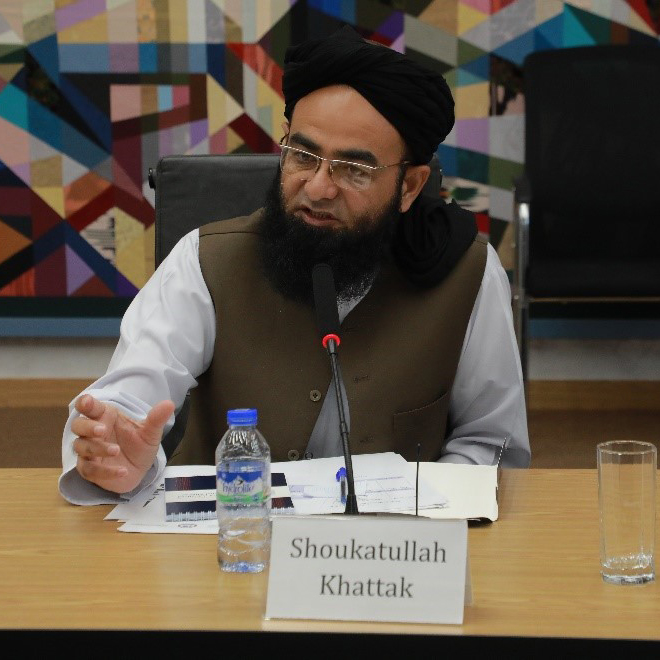
DR. SHOUKATULLAH KHATTAK
Dr. Shoukatullah Khattak, a Pakistani Religious Scholar from Dar-ul-Aloom Haqqania Akora Khattak, highlighted how digital tools and religious diplomacy can work together to influence Afghan society. He noted that digital platforms can spread messages of peace and tolerance, especially to Afghan women and youth who are often excluded. He also pointed to Uzbekistan’s historic religious and cultural influence, suggesting it could be used to promote ideas of coexistence and inclusion. He called on regional governments and scholars to work together in promoting interpretations of Islam that stress compassion and tolerance, using both traditional and modern communication channels.
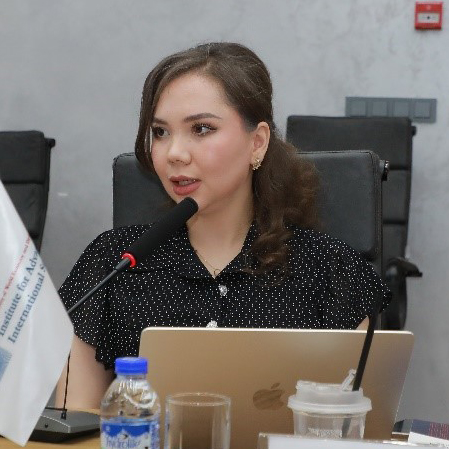
DR. YULDUZKHON IMOMOVA
Dr. Yulduzkhon Imomova, Senior Research Fellow at IAIS , discussed how Central Asia approaches Afghanistan with both opportunity and caution—seeking cooperation while also guarding against risks like drug trafficking and instability. She suggested setting up safe educational zones inside free economic areas can provide Afghan women with secure spaces to study. She also recommended that Afghan universities and degrees be formally recognized so that graduates can find opportunities in regional economies. Her ideas went beyond short-term humanitarian relief, focusing instead on long-term structural solutions. She argued that recognizing Afghan education would motivate families to keep supporting schooling. In her view, education and economic development are not separate paths but interconnected drivers of regional peace.
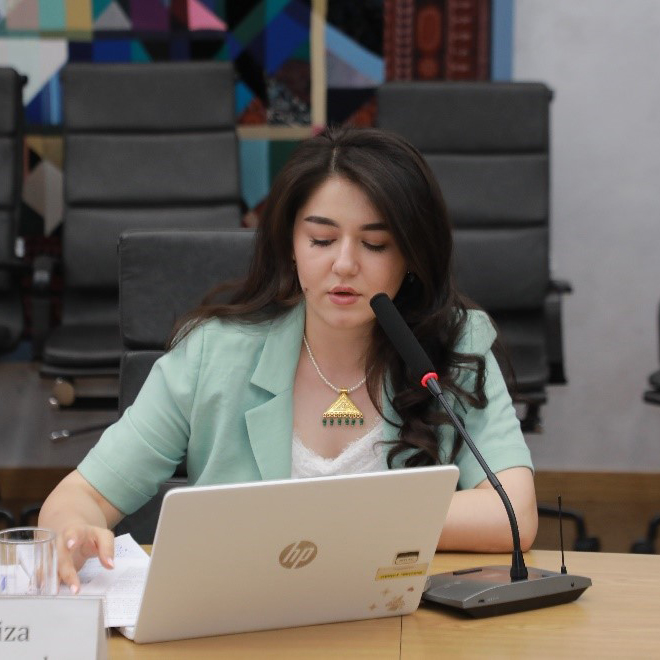
MS. AZIZA MUKHAMMEDOVA
Ms. Aziza Mukhammedova, Research Fellow at IAIS, drew attention to the distorted narratives about Afghan women circulating in Central Asia, arguing they are shaped more by control-based policies than by Afghan culture. She called for community-based solutions such as mobile schools and local education initiatives that can reach Afghan women in inaccessible areas. She also recommended microfinance and empowerment programs, pointing to successful case studies from Africa that could be adapted for Afghanistan. She stressed that civil society organizations must take the lead in empowering Afghan women at the grassroots level, combining cultural sensitivity with practical support.

AFGHAN WOMEN SCHOLARS
Afghan women scholars asserted that supporting Afghanistan is an investment in regional stability, urging culturally respectful but firm advocacy for women’s rights, including education and regional scholarship programs. Furthermore, they urged Muslim countries to empower Ulema to advocate more strongly for women’s education, underlining the importance of religious influence and Islamic unity in securing women’s rights.
Conclusion and Way Forward
The Tashkent conference ended with a strong agreement that peace in Afghanistan cannot be achieved through politics alone. Instead, it needs a combination of faith-based diplomacy, academic cooperation, and inclusive development. Scholars, religious leaders, and policymakers agreed that empowering women—especially through education—is essential for lasting stability. Participants emphasized the need to move from dialogue to concrete actions, such as forming regional scholar networks, establishing joint academic platforms, and using digital tools for education and counter-narratives. Practical steps like visa-free economic zones, recognition of Afghan academic credentials, and community empowerment programs were seen as crucial for rebuilding trust and creating opportunities. The path forward involves continuous lobbying and advocacy with the Taliban government vis-à-vis girls’ education and women’s right to work, increased people-to-people exchanges to bridge perception gaps, and regional investment in Afghanistan’s peace and prosperity—not as charity, but as a shared responsibility for a more secure and connected future.