



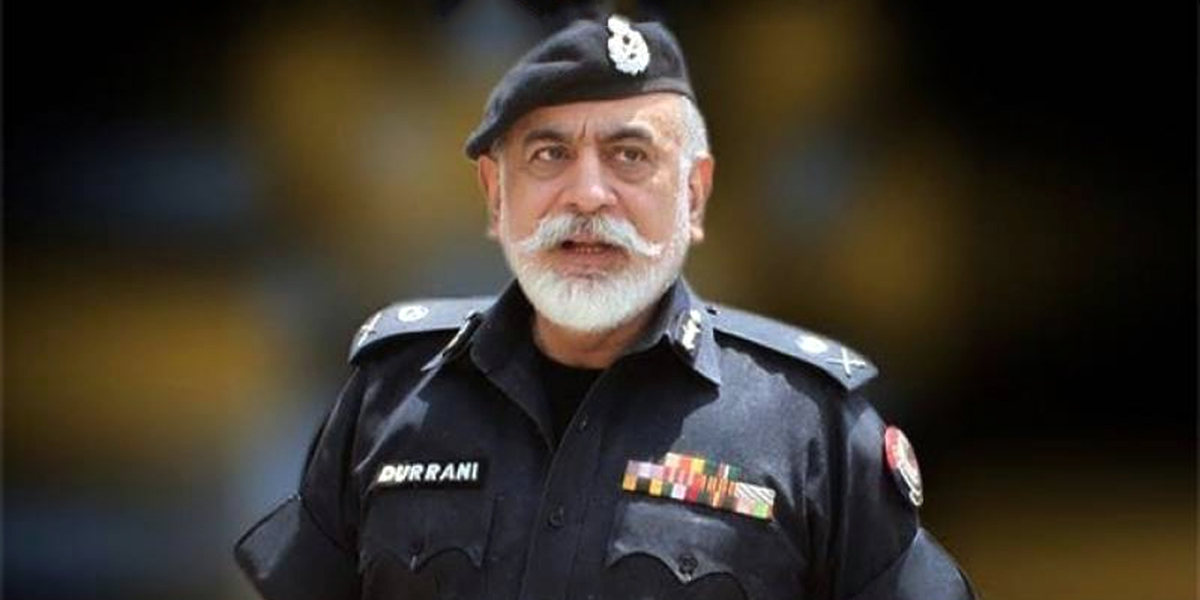
The Centre for Research and Security Studies (CRSS) is deeply saddened to know of the untimely demise of Nasir Khan Durrani, former Inspector General of Police (IGP), Khyber Pakhtunkhwa (KP). As chief of the provincial police, Durrani worked tirelessly to professionally reorganize a police force that had been in the forefront of the fight against terrorism since the beginning of the questionable war on terrorism nearly two decades ago.
Police force in the KP, which shares a 1350-kilometer border with Afghanistan, had been battered and demoralized when Durrani assumed the charge in 2013. He went on to reorganize the entire police force and professionalize their services with the establishment of several specialized training schools including explosives management, riot control and commando training for counter-terrorism missions.
Durrani had always believed that the police succeeds only if it wins the trust of the common man. That is why, in an unprecedented move, Durrani made himself available to the public round the clock and established a quick response mechanism for addressing complaints of corruption or responding to unusual crime or security situation, through facilities like Police Access Service (PAS) and Police Assistance Lines (PAL).
Dispute Resolution Councils (DRC) was one of his excellent initiatives as part of his efforts to reduce the burden on criminal justice sector institutions and help common citizens by addressing their grievances through an alternative dispute resolution mechanism. The DRC mechanism proved to be a staggering success, with many districts of KP reporting upto 75 percent success rate in resolving conflicts at the community level.
CRSS is proud to have worked with the KP police after Durrani opened up to the idea of advocacy for a public-private partnership through a round of consultations. This allowed CRSS and KP police to collaborate and implement a community policing initiative Ulasi Police with dialogues, public fora, and TV and radio-based advocacy campaign at the core. The initiative aimed to address the long-standing public-police trust deficit and minimize the gaps between the public services on offer and policing needs of the communities. The discourse as part of the effort also generated a critical public feedback to be considered for and assimilated in the police reforms.
Durrani has left an inspiring and a rich legacy behind, which can be only be continued by following his vision for the reformation of criminal justice sector in Pakistan. CRSS salutes his services for the nation.