



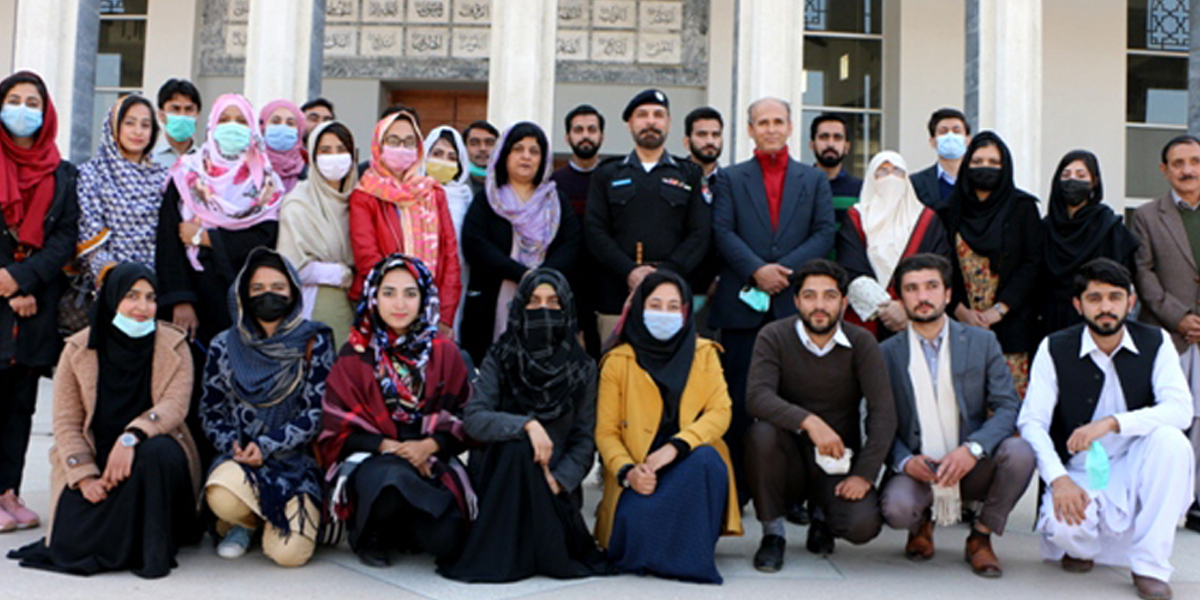
The most important ingredient that goes into development of a cohesive society is public-private partnership that also upholds rule of law. Punishment comes as a last resort in the enforcement of rule of law. However, there are many other levels positioned prior to that, including but not limited to responsible and active citizenship, volunteerism, community policing, public-police cooperation and public education on rights and responsibilities.
These views were expressed by Mr. Mir Wais Niaz, Deputy Inspector General (DIG) Police, Hazara during the 31st round of Ulasi Taroon Youth Capacity Building Workshops, organized by the Center for Research and Security Studies (CRSS) at and in collaboration with the Hazara University , Mansehra.
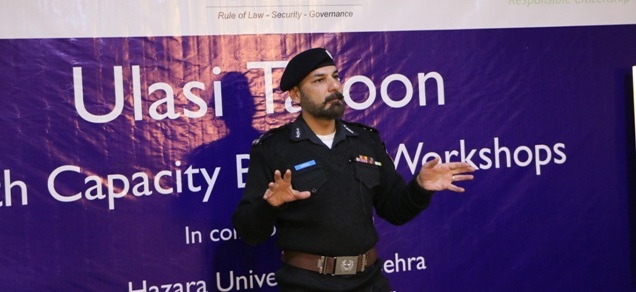
The DIG police Hazara said that while it is the responsibility of state to enforce law, rule of law is truly upheld with the law-abiding citizenship and citizenry cognizant of their rights enshrined in the constitution and laws enacted for their benefits. Working and friendly relationship between the citizens and law enforcement institutions only helps them to deliberate – in a democratic way – solutions to address the issues of communal and national concern. This relationship can alone strengthen rule of law more than anything. In the contemporary times, the scope of rule of law has been extended from offline to online domain, especially with the advent of world wide web and excessive application and use of social media.
To address the public-police trust deficit and former fearing to interact with the latter, the institution should be seen as a service and not a force. Also the more the interactions, the less the trust deficit. While we expect police to be friendly in their interaction and behavior with the public, the same goes for the citizens to respect the members of law enforcement fraternity. They are all important stakeholders for social peace and harmony, and should empathize with each other. Despite its reputation and all the complaints and bitter public perception about police, it is still one of the most accountable institutions of the country with a strict internal accountability mechanism.
Clash of social order and social contract is what weakens rule of law and takes a negative toll on social cohesion the most. This means that besides the law enforcement by the state, there is an equal and fundamental onus on the citizenry for constitutional awareness and education, and activism. To address the longstanding public-police trust deficit, the institution of police has introduced a range of services to facilitate citizens in a dignified manner. However, the police infrastructure also needs to be updated to enable the institution ensure seamless provision of these services to the public.
Public service messaging is also key to foster friendly relations with and onboard citizens to uphold rule of law. It should be used to educate citizens on their rights and duties as responsible citizens. These initiatives are crucial to making them part of the solution, instead of viewing them as part of the problem. The police training at all levels should also aim behavioral change that breeds friendly interaction and relations with public. Police to population ratio is also a very crucial factor in the crime-free and peaceful society, he concluded.
Ms. Amna Sardar, Former Member, Provincial Assembly of Khyber Pakhtunkhwa, Pakistan noted that the future of democracy in Pakistan looks promising manifest in a number of socio-political, economic and administrative factors. The political factors are, including but not limited to, emergence of new national level political parties, successful completion of democratic tenures, increasing political awareness among the masses, improved voter turnout in elections, and responsible role of politicians.
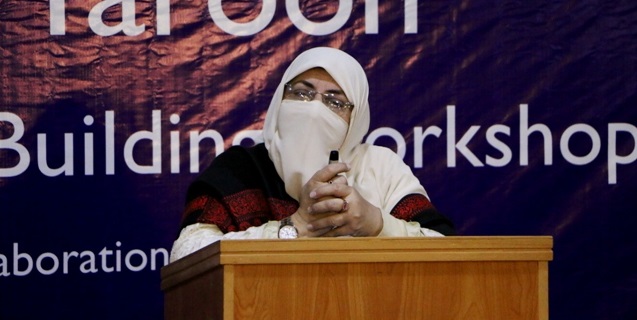
Role of media for public education and awareness augurs well for the democratic future of the country, however, it comes with a huge responsibility. The more the socio-political and economic participation of women, the stronger the democracy. Another promising factor is how the key state institutions are also exhibiting responsibility and adhering to the respective domains. It is a crucial factor affecting governance in the country i.e. relationship between the key state institutions. Therefore, they should have a cooperative and synergized relationship, and observe their respective constitutional limits.
The way Pakistan has gone after terrorism and its counter-terrorism resolve augurs well for the future of democracy and peace in the country. Poverty, social inequality, lack of social mobility, and unequal distribution of resources only fans polarization in the society. Therefore, a democratic governance should be considerate of these inhibiting factors.
Citizens’ political awareness only helps with their participation in the democratic processes and ultimately strengthens democracy. Good governance comes through effective, efficient, transparent and accountable public service delivery and resource management. As a matter of inclusive governance, women should have opportunities to play their role in the socio-political and economic development.
Prof Dr Jamil Ahmad, Vice Chancellor, Hazara University, noted that education has a broad scope, it should never be attributed to just formal education. The youth should utilize opportunities of both formal and informal education for their leadership development. Ulasi Taroon Youth Capacity Building Workshops cover several key areas critical to social peace and cohesion, as a foundation for development and connected future. Students should make the most of this initiative both for their personal development as well as communal development. Youth is our hope and should endeavor to live up to the national expectations for their participation in the peacebuilding, development and prosperity.
Ms. Shagufta Khalique, educationist, said that social cohesion only strengthens through acceptance, equality and rule of law. Acceptance of diversity is a precondition for peaceful coexistence. Also important is to build understanding about other faiths for interfaith harmony in the society. Communication and empathy is critical to conflict resolution and youth as future leaders must equip themselves with these skills.
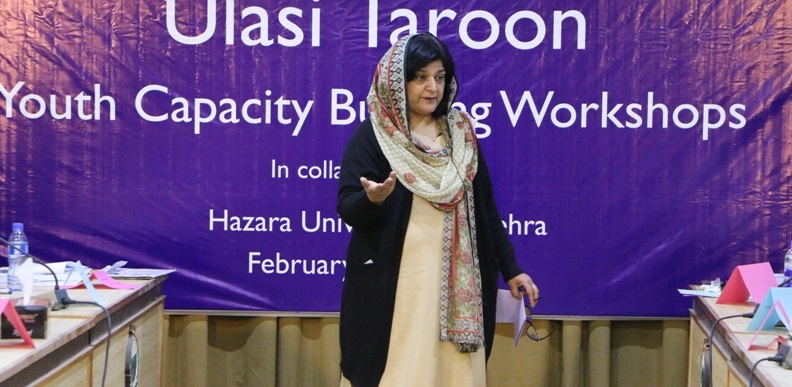
Shams Momand, Project Manager, CRSS, stressed that youth must comply with the core constitutional values of respect, equality, tolerance and rule of law to foster social cohesion in the society.
Mr. Malik Mustafa, Team Leader, Ulasi Taroon CRSS said critical thinking is the core skill youth need to master for complex problem solving. It is about using logic and critical inquiry to draw inferences and involves developing ones’ understanding on the basis of all the available information and using research-based evidence to support your arguments.