



– Honourable Chairperson Mr. Fahim Dashti,
– Your Excellency Ambassador Karan Pierce of UK,
– Mr. Abaceen Nasimi,
– Mr. Kawun Kakar,
– Distinguished members of Pakistani and Afghan delegations,
– Ladies and gentlemen,
First of all let me thank the organizers for holding this event and providing me with an opportunity to interact with all of you. The civil society meetings play an important role in bringing our two countries closer. The journalists, writers and civil society members can guide people in their own way. If I may quote Ezra Pound, who says “Artists are the antennae of the race”. And to me every creative writer is an artist whether he is a poet or a journalist, whether he writes a poem or a column, whether he speaks one language or the other. It’s they who teach love, who tell positive things, who bring people together. Such intellectuals are our asset because they help humanity when politicians fail, they speak love when others are talking hate. And hence,
Ladies and Gentlemen, we pin our hopes on writers, intellectuals and journalists. The media is the fourth pillar but it can guide the first three pillars. It can lead the people. It can make or break. But this important role also brings responsibility. If you highlight 90% positive things, you can serve the interest of the two nations and bring the two countries close. However, if you chose to highlight only 5-10% negative issues, you can poison the minds of people on both sides of the border.
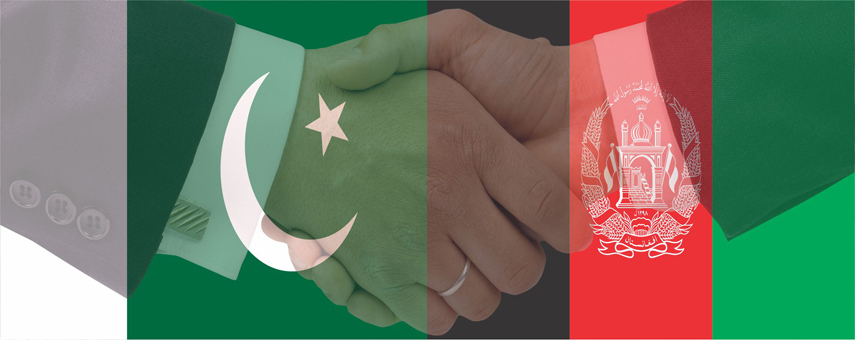
Ladies and Gentlemen, Pakistan–Afghanistan relationship is special and unique. The two countries share common history, religion, civilization, culture, language and ethnic bond that is truly people-to-people. The fraternal ties between the two brotherly countries transcend the boundaries of time and are reinforced by our common faith and cultural affinities. The vision of Pakistani leadership hinges on close and cooperative relations with Afghanistan for which we have made serious efforts especially since the National Unity Government (NUG) took charge in Afghanistan in September 2014. We have made our point abundantly clear that peaceful, stable and economically developed Afghanistan is in our vital interest.
Afghanistan and Pakistan face many challenges. But we are certain that through continued and positive interactions between the two governments, we can forge a multi-faceted and all-encompassing cooperative relationship.
President Ghani’s visit to Islamabad in November 2014 was a watershed moment in the history of the two countries which helped resetting the agenda of constructive bilateral engagement. We firmly believe in forging a comprehensive and enduring Pak – Afghan partnership based on mutual trust and confidence.
With this in mind, Pakistan made all out efforts to facilitate Afghan peace process between the Tehrik-e-Taliban Afghanistan (TTA) and the Afghan government. This was the first official interaction between the two parties and all sides agreed that the results were ‘overwhelmingly positive’. The second round was scheduled to take place in the end of July but unfortunately, the process was scuttled due to untimely confirmation of the death of Mulla Omar.
However, since then we have repeated our offer a number of times saying that Pakistan is ready to facilitate the resumption of peace talks if the Afghan government wants us to do so. Prime Minister Nawaz Sharif, in his recent meeting with President Ghani in Paris two days ago, has reiterated this offer. But I am sad to note that a regional country has already started opposing peace talks and is trying to shrink the space for Afghan government.
The Pakistan government is fully cognizant of the fact that only peace in Afghanistan can ensure an economically vibrant region. We believe in our national poet and philosopher Allama Iqbal Lahori who more than eighty years ago declared Afghanistan as heart of Asia. He said:
Aasia yek paikar-e-aab-o-gil ast Millat-e-Afghan dar aan paikar dil ast
Dar fasaad-e-oo fasaad-e- Aasia Waz gushad-e-oo gushad-e- Aasia
Ladies and Gentlemen, Peace in Afghanistan is going to be a game changer. It is peace in Afghanistan that will lead to the prosperity of the whole region. Due to its lucrative geo-strategic location Afghanistan, is the transit country for two energy projects i.e. Central Asia-South Asia Electricity Transmission Project (CASA-1000) and the Turkmenistan- Afghanistan-Pakistan-India (TAPI) gas pipeline which are key to overcoming energy crisis in Pakistan. We are happy to note that progress on both the projects is satisfactory and these would complete on proposed deadlines.
Pakistan is Afghanistan’s principal route to foreign markets and its largest and most important trading partner. Our annual trade stands at US $ 2.25 billion. In the last few years Pakistan has enhanced its cooperation with Afghanistan in petroleum, natural resources, education, industries and production, agriculture and livestock. In the area of trade in services, Pakistan has earned a good reputation in banking and insurance, telecommunications; IT-based services, engineering consultancy, architecture and accountancy.
In the field of education, Pakistan is offering 3000 scholarships to the Afghan students in various fields including medicine, engineering, agriculture, business management and computer sciences. Perhaps many of you don’t know that more than 30,000 Afghans have graduated from Pakistani universities and 500,000 children of Afghan refugees are studying in Pakistani schools. Despite financial constraints, Prime Minister Nawaz Sharif increased the volume of bilateral assistance to Afghanistan from $ 385 million to $ 500 million. Under this program we Pakistan is doing a number of projects here in health education and infrastructure.
Torkham-Jalabad additional Carriageway, Nishtar Kidney Center in Jalalabad, a 400-bed Jinnah Hospital Complex in Kabul and Naeb Aminullah Logari Hospital in Logar are under construction while we have already built during last few years an Engineering Faculty in Balkh University, Faculty of Arts at Kabul University, a Science Block at Nangarhar University and Rehman Baba School in Kabul. A Hostel for this is under construction which can accommodate upto 2000 students.
The 10th Session of Pak-Afghan Joint Economic Commission was held in Islamabad recently in which both sides had agreed to work together to eradicate problems faced by the traders and businessmen and enhancing bilateral trade to US $ 5 billion by 2018.
And as all of you know, we are also hosting over 1.6 million registered Afghan refugees in Pakistan for almost four decades and same number of Afghans reside there illegally. We have been working with the Afghan side for a viable strategy that would allow repatriation of Afghans living in Pakistan in a dignified and sustainable manner. It has been made abundantly clear from our side that no legal Afghan refugee would be forced to leave Pakistan. Over 50-60,000 Afghans cross into Pakistan daily of which we issue visas to around 1000-1500 Afghan nationals only. There is a need to come up with effective border control mechanisms that could curtail illegal cross-border movement which affects security situation in both the countries.
At the end, I would like to add that cooperation and not confrontation holds the key to fledgling peace process in Afghanistan. This process can be slow, at times irritating and may move in a to-and-fro pattern but a negotiated peace deal is the only option. It takes two to make peace, but only one to make a war. Forums like these provide people of both the countries to sit together and come up with tangible solutions that could bridge the existing trust deficit between the two countries.
Pakistan's Ambassador to Afghanistan, Syed Abrar Hussein, delivered this speech at the inaugural session of the 2nd Meeting of the Civil Society Group under the Pak-Afghan Track 1.5/11 at Kabul on Dec 2, 2015.
TOP STORIES
TESTIMONIALS
“Fiscal empowerment, robust trade, and economic connectivity can act as buffer against radicalisation and extremism.”