



On July 31, 2013, an Islamist website posted a 22-minute audio recording of a message by al Qaeda leader Ayman al-Zawahiri promising that al Qaeda would spare no effort to free all its prisoners held at Guant├Ãnamo Bay. He said, ‘the (hunger) strike by our brothers at Guantanamo unmasks the true ugly face of (the United States of) America’. Though he did not specify what tactics al Qaeda would use to free these prisoners, he named three prisoners who were at the highest on their priority list that they aim to free from Guantanamo Bay. These are; Omar Abdel Rahman, Aafia Siddiqui and Khaled Sheikh Mohammed.[1] The authenticity of the audio recording has not been verified yet, however, the recent massive jailbreaks in Iraq, Libya and Pakistan all occurring within days of one another, freeing hundreds of hardened al Qaeda militants points to the seriousness of al-Zawahiri warning.
On the 21st and 22nd of July, over 500 prisoners broke free from two Iraqi prisons, Abu Ghraib and al-Taji. Suicide bombers driving cars loaded with explosives blasted their way through the gates of the prison into the compound while many armed insurgents attacked the prison guards with mortars and rocket-propelled grenades. Some suicide bombers also barged into the prison on foot to facilitate their fellow militants in freeing the prisoners while several militants remained stationed near the main road to cause delay in the arrival of security reinforcements. A day later on July 23, 2013, al Qaeda in Iraq (AQI) claimed responsibility for the attack under the banner of the Islamic State of Iraq and the Levant. The leader of AQI claimed the attack was their greatest achievement in the ‘Breaking the Walls’ campaign launched by him in July 2012. Surely, the attack demonstrates the level of AQI tactical capabilities in planning, resourcing and carrying out such dangerous and violent assaults involving year-long preparations.[2]
This was followed by a massive jailbreak in Libya only five days later. In this case more than 1,000 inmates escaped from al-Kweifiya prison in Benghazi on July 27, 2013 after a riot broke out in the prison and armed militants, gathered outside the premises, started firing gunshots in the air. Prisoners began escaping as chaos fell. Coincidentally, there were nationwide protests going on in the country which had kept the security forces occupied. The ongoing protests were against the killing of Abdel Salam Al-Mosmary, an outspoken critic of the Muslim Brotherhood and a political activist. Whether the protests had something to do with the prison riots or not was not confirmed.[3]
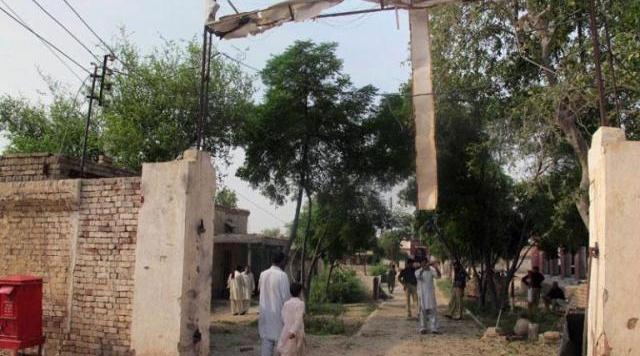
Only two days later, on July 29, 2013 another well-executed jailbreak occurred in Dera Ismail Khan, Pakistan. The tactics used in the jailbreak resembled those employed in a similar jailbreak last year in Bannu in which 400 inmates got freed.[4] Up to 150 armed militants assaulted the D.I. Khan Central Jail by blowing up the gates with heavy weaponry. Militants used megaphones to locate specific prisoners and targeted their cells. The firefight continued for three hours into the early morning of 30th July freeing 248 prisoners including some 25 ‘dangerous terrorists’.[5] Among the hardened militants, Walid Akbar also escaped prison who had been sentenced 1,616 years of imprisonment for his involvement in the Ashura procession bombing last year.[6] At least thirteen persons, including six policemen, died. Tehreek-e-Taliban Pakistan claimed responsibility for the attack. 48 of the 248 escapees surrendered themselves back to the police two days later and were rearrested. [7]
What is astonishing is that while the Bannu jail was situated outside the city in a comparatively deserted location, the Dera Ismail Khan Central Prison was situated virtually in the center of the city where the Police Lines, Frontier Corps ¿fort–, and the military cantonment were only a stone throw away. Despite being located in such a high security zone, over one hundred armed Taliban were able go past dozens of security checkpoints, set up booby traps, use IEDs and cutting off the jail electricity supply at the same time. Not only did they enter the prison from the front door firing over 30 rockets into the jail killing some inmates, they were able to also easily go back using the same ‘high security’ route after freeing all their men. Amidst all this, they also managed to take away four female prisoners and a female guard as ¿war booty– along with them. What is even more alarming is that there had been prior intelligence of the attack given to the concerned authorities who had also prepared an ¿action plan– to prevent this attack.[8]
Though al-Qaeda affiliates only claimed responsibly for two of the recent jailbreaks, all these four jailbreaks were the result of high level coordination between the attackers and the inmates who created diversions, recruited inside help and used local events, such as the protests against the assassination of a cleric in Libya, to divert and delay any action by security forces. In all these jailbreaks the attackers used suicide bombers to blast through the prison walls, with some armed militants wielding guns, mortars and rocket-propelled and hand grenades lobbed at the prison officials while blasting open prisoners– cells to free their men. Some attackers used megaphones to call out the names of specific inmates to free them while in case of the Abu Ghraib jailbreak in Iraq, militants had disguised themselves in prison guard uniforms demonstrating that the prison guards had aided them in executing the jailbreak. The level of coordination in these well-organized jailbreaks manifests the months of prior planning that must have preceded these jailbreaks.[9]
Seeing the similarities in the devious strategy and modus operandi employed in these jailbreaks, the attacks can only be seen as a connected series of events as part of global terrorism. One cannot see them as separate incidents of terrorism in isolation of the other happenings only some days later or before. Particularly, the Dera Ismail Khan Central Prison incident reminds us of the terrorist attacks on the Elite Force Training School, Manawan Police Training Center and the FIA building in Lahore in 2009. The strategy and planning used in those attacks were repeated in the D.I. Khan jailbreak last week. Nine terrorists were killed in those attacks along with thirteen security officials and five civilians who were involved in retaliatory actions carried out by the law enforcement agencies. Tehreek-e-Taliban Pakistan had claimed credit for those attacks also.[10]
Large jailbreaks have previously occurred in Afghanistan and Pakistan in June 2011 and April 2012 respectively. A historically significant one may be the Yemeni prison break in February 2006 when 23 inmates escaped from the jail by digging a tunnel from their cell to a nearby mosque. Among those who escaped two, namely Nasir al-Wuhayshi and Qassim al-Raymi, would become founding members of al-Qaeda in the Arabian Peninsula in January 2009. Since then, many jailbreaks have taken place in Yemen with the help of al Qaeda militants.[11] In June 2011, a jailbreak in the main prison of Kandahar in southern Afghanistan was carried out. According to militants involved in the plot, more than five months were spent in digging a 1,050-foot tunnel into the prison below government checkpoints, watch towers and concrete barriers. The tunnel was dug from a house not too far away from the prison. 480 prisoners were sent out through the tunnel within 4 1/2 hours without a single gunshot being fired. The inmates had also somehow freed themselves from their locked cells.[12]
The April 15, 2012 Bannu jailbreak, a northwestern city of Pakistan, resulted in the escape of nearly 400 inmates including some hardened al Qaeda militants. It started when 150 armed insurgents carrying guns, grenades and rockets launched an attack on the prison at 1:00 AM in the morning.[13] The operation lasted two hours. According to some escapees– narration, the insurgents driving at least fifty fast-moving SUVs were heavily armed with state-of-the-art weaponry which they fired into the prison to force their way in. All the roads leading to the prison were blocked by them in advance to delay the arrival of security reinforcements. They also specifically targeted six barracks where ‘dangerous insurgents’ were being kept.[14]
Terrorism experts in the region believe that these jailbreaks have been a result of poor legislation, continuous support of the political systems to religious factors and the negligence of the law enforcement agencies towards the activities and behavior of religious groups.[15] However, the question plaguing everyone mind is regarding al Qaeda long term objectives through this wave of jailbreaks. According to some analysts, Al Qaeda has some regional interests, which include the ousting of the Shiite-aligned Syrian President Bashar al-Assad while supporting Islamists in the Middle East to attain power; or some of the goals already achieved through recent Arab Spring uprisings which have politically destabilized the region already.[16] And thus now that hundreds of important al Qaeda militants have been let loose, al Qaeda can work on achieving its regional interests by aiding the anti-government forces in Syria or counter the Karzai government in Afghanistan or continue to spread terror and further destabilize Pakistan with the help of the escaped al Qaeda militants.[17]
The recent successful jailbreaks freeing nearly 1,700 prisoners point to the vulnerability of prisons in securely containing dangerous criminals and terrorists. INTERPOL issued a security alert on 3rd August calling upon all of its 190 member countries to help ‘determine whether any of these recent events are co-ordinated and linked’. The Interpol alert also asked its members to convey any intelligence that could help thwart future jailbreaks which may be in the offing. On August 2, the US issued a worldwide travel warning along with an order to temporarily close down all its embassies in the Islamic world for fear of any further attacks by al Qaeda against US interests in the Middle East or North Africa. For fear of an imminent al Qaeda jailbreak, Britain, France and Germany also announced the closure of their embassies in Yemen on Sunday and Monday.[18] The reason for all this alarm directed at Yemen is due to the stronghold of al Qaeda building in the country over the past few years.[19] Britain Foreign and Commonwealth Office (FCO) has pulled out many of its staff from Yemen capital, Sana–a, while the British nationals have been warned not to travel to the country.
Surely the recent developments have added a new angle to global terrorism. The formation of ‘Ansar-al-Aseer’, an organization particularly tasked to free jihadist prisoners, by the Pakistani Taliban and the Islamic Movement of Uzbekistan shows the War on Terror has entered into a new phase.[20] What implications these released prisoners would bring to revive the strength of al-Qaeda in the world and challenge global security, including that of the US and Europe, only time will tell.
(Sitwat Waqar Bokhari is a CRSS Research Fellow)
Notes
[1] Reuters Edition: U.S. “Zawahri vows al Qaeda to free Guantanamo inmates.” July 31, 2013.
[2] Sareen, Sushant. “Pakistan in Paralysis: Jailbreaks and a State in disarray.” Institute for Defence Studies and Analyses. August 2, 2013.
[3] Stuster, J. Dana. “Jailbreak Season Continues as al Qaeda Issues Threat Against Gitmo.” Foreign Policy, July 31, 2013.
[9] Waltz, Michael , and Mary Betg Long. “Al-Qaeda’s New Strategy: Jailbreaks.” Foreign Policy, August 2, 2013.
http://www.ahmedrashid.com/wp-content/archives/afganistan/articles/pdf/AlQaedasnewtacticprisonbreaks.pdf (accessed August 5, 2013).